

Economic downturns force us to reevaluate our pasts and redirect our futures — and as unemployment rises, many of us are doing just that. The Dane County unemployment rate is up to 3.9% from 3.1% one year ago, and the steely pins of downsizing and termination continue to poke holes through the veneer of Madison’s recession-proof bubble.
It is not all gloom and doom, though, as certain occupations remain robust and continue to hire.
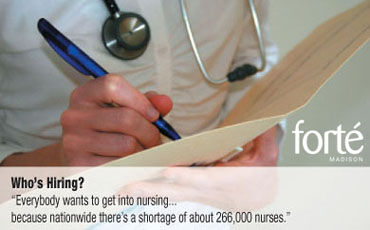
The hottest job and educational program in Madison is in nursing, says Alfonso Studesville, a counselor at Madison Area Technical College. “Everybody wants to get into nursing,” he explains. “That’s because nationwide there’s a shortage of about 266,000 nurses, primarily because so many of them are retiring or getting older and only working part-time.”
This nursing boom is the result of the longevity of America’s seniors. As the senior population ages, it demands and expects more accessible health care resources. Baby Boomers are now pushing into their senior and retirement years at a time when the centenarian population is at record-high levels and hospitals across the nation are experiencing nursing shortages.
“The allied health fields are strong because of an aging population that’s not limited to Madison but statewide and nationwide,” says David Dies of The Wisconsin Educational Approval Board (WEAB), a postsecondary education agency in charge of performing annual reviews of schools.
Studesville explains that the economy “is in survival mode right now” and urges people not to hesitate when switching careers. “It’s a mistake to wait and delay on making a decision,” said Studesville. “We have people who are fresh out of work just now coming in. We have long waiting lists so it is not as if you can start tomorrow. Think ahead.”
Herzing and MATC both have extensive wait lists for nursing. The wait list at MATC “is at least a few years,” says Studesville. The starting pay for a nurse in the Madison area, varying on the hospital, he adds, is between $45,000 and $60,000.
Computer technician and support jobs are still in high demand in the Madison market. “They are not going away and that’s for sure,” says Dies. “Madison’s unique because we’ve got the university and so many non-profit and profit organizations, and the state government, and a lot of cutting edge work here that needs technical support.”
High demand notwithstanding the job security of computer technicians links tightly to the broader economy, making it more susceptible than nursing to the same mercurial economic ebbs and flows felt nationwide. “While still a good career choice,” says Studesville, “techs are still seeing the same layoffs here and elsewhere.”
Studesville reveals that the third-highest demand he sees is coming from the travel and tourism and service industries. “When the economy weakens, people tend to stay local and flock to the local indoor water parks and places.”
Dies and Studesville agree that the best way for job seekers to finesse their way through the current economic downturn is to adapt and adjust their skills to changing social, economic and business conditions. “Your education is your passport to do all the things you wish for,” says Studesville. “In times like these you have to be ready, prepared and have to have the right credentials.”

