

Each year, In Business Madison compiles a list of the organizations celebrating significant milestones in Wisconsin’s Capital Region. Often those names are familiar thanks to their longtime presence in the community.
One nonprofit marking 25 years in 2026 is the Specialty Care Free Clinic, an essential resource for uninsured people in our area. But by its own admission, the Madison clinic is not as well known as one might think after more than two decades in service.
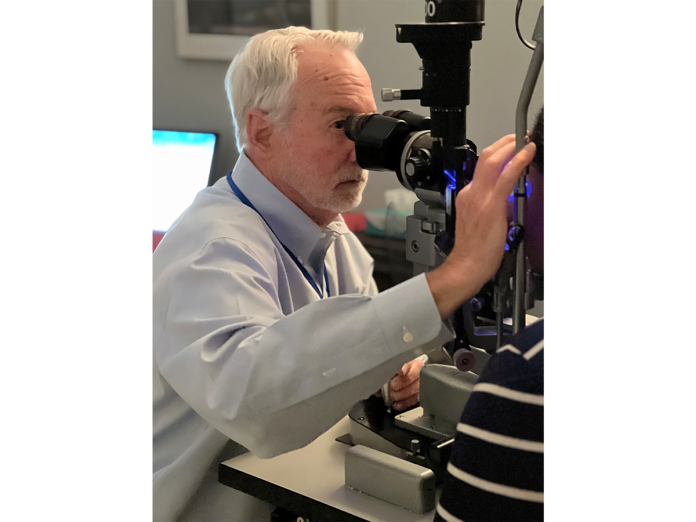
Its mission is straightforward: Medical volunteers provide free, specialty health care to uninsured patients from 12 south-central Wisconsin counties. Such health care includes more than 20 specialities including cardiology, dermatology, general surgery, gynecology and ophthalmology, among others.
“The Specialty Care Free Clinic fills a really unique role within the community and within south-central Wisconsin as a whole,” said Sheila Olk Martin, executive director of the clinic. “There are no other free specialty care clinics that I am aware of within the whole state.
“I don’t even know if there are any within the country that operate like we operate.”
Patients must have a referral from a primary care provider to use the clinic’s services. (Primary care clinics that take uninsured patients are listed on the Specialty Care Free Clinic website, scfcwi.org).
The clinic was started by three local physicians in 2001 who observed health disparities firsthand. They noted that patients without insurance waited longer to see a doctor so their illnesses had progressed further and were more difficult to treat.
“We’ve always had a chunk of uninsured people and we fill that niche for people who have zero insurance and have a very serious, complex medical issue that is not in the scope for primary care to address,” Martin said.
Its office, located at 1409 Emil St., had 1,623 visits from 1,058 unique patients last year. In 2025, providers saw patients who spoke 28 different languages.
Martin is anticipating that the clinic’s services will be in more demand this year, as fewer people have signed up for health insurance through the Affordable Care Act Marketplace. According to the Centers for Medicare & Medicaid Services, 289,213 people in Wisconsin signed up for coverage for 2026 compared to 313,579 in 2025.
“I don’t know if we know all the reasons why, but certainly increased premium expenses are a compounding factor as are some of the enhanced subsidies probably going away,” she said.
The clinic relies on donations and a dedicated group of volunteers to operate. They range from medical professionals like physicians, optometrists, physical therapists, nurse practitioners and physician assistants — both working and retired (as long as they maintain their medical license). They also have a group of volunteer interpreters who assist.
“Our capacity is directly proportional to the number of volunteers that we have, and knowing that it is possible we will see increased demand for our services, we are very focused on trying to recruit additional specialists to come volunteer with us right now,” Martin said.
It’s heartening to know that this place exists for people who regularly face difficult decisions — like choosing between paying rent, buying groceries or accessing needed medical care.

