

Excerpt from IB’s radio program: In Business with Jody & Joan
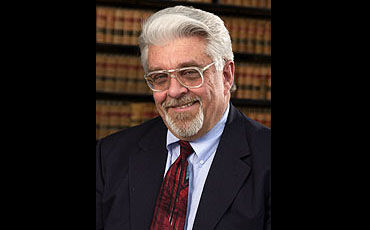
Jody Gynn Patrick and co-host Joan Gillman asked guest Ralph Cagle, a mediator and attorney as well as UW Law School professor: Is mediation the same as negotiation? Here is his answer to that, and to a few of our other questions about how to negotiate!
Answer: They are really related. The difference is that in mediation, a third person essentially helps people to negotiate [toward] a resolution. Mediation has become an industry in the last 20 years. It started off largely as a reaction to people’s impatience and unwillingness and dread, in some cases, of the litigation process. And it has developed more broadly than that, but it’s a little different than negotiation. Negotiation is where you and I meet, head to head, to try to deal with an issue.
What is the negotiation continuum?
Conversation is the start of the process. At some point, we have a difference. Or, you and I might just have put together a heckuva great idea and we’ve got to work it out; that’s part of the negotiation process.
In the business world, some Fortune 500 companies have a compact between themselves that if they have a dispute, before they even approach litigation, they will attempt to mediate. Businesses can reserve to themselves certain matters to resolve on their own.
Principles of negotiation?
There is a prime directive or first principle: that is, to really understand the dispute (or understand the possible deal) from the other person’s perspective. That, I think, is the starting point for effective negotiations. Easier said than done; rarely can people really do it. If you’re buying a business, understand the seller’s needs, for example. What are their real interests? One of the problems in negotiation is that we don’t deal with the world of interests; we deal with the world of positions. “I want $5 million for my business” — while that’s a position that can’t be ignored, what is their real interest? We can argue about that sum, but is it to get money quickly? Are they interested in seeing the business continued on? Do they want to keep family members involved in the business? Might they do some of the financing; does that have some opportunity? It’s looking beyond the position to understand what people’s real interests are.
One of the problems with negotiation is that once we get into the process, it gets a little hot and heavy; tough for some people to control their emotions. That would be my second big tip: self-control is a very, very important part of this process. Step back a little bit. You have to have those moments where you’re actually on the ceiling watching the process unfold, and not being drawn into it too much. So often, someone gets mad. They feel defensive or take it as a personal insult.
Reading people is hard to do during the give-and-take of negotiations. Sometimes we have sort of instinctive reactions to certain things, and you’ve got to be sensitive to that in the negotiation process. Someone once said that about 70% of the signals in any meeting are non-verbal. You’ve got to be careful also of the signals that you’re sending. I love interpersonal face-to-face: you can read a lot about the other side and you can communicate a lot.
How do you deal with hard bargainers? People who are going to stick to a position with no room for negotiation?
First, ask yourself “Why are they doing this?” Is this the only club they have in the bag? If so, this is going to be a bit of a struggle. Most hard bargainers have learned it, either working in organizations where that is the ethos or, most typically, they have just gotten away with it, so why not do it again? One thing to ask yourself is “Why is he doing it with me? Am I sending a signal that maybe I’m susceptible to that?”
You always have the possibility, further down the line, of negotiating around it. But you have to send a very, very clear two-part message: “This is not going to work” [followed by] pointing out ways that it can be done. Then start talking about their interests. (Remember? Always know their interests.)
When they make these sort of ultimatum threats, another [strategy] is simply to ignore it. Bring the conversation back to something more constructive. Find something that’s pretty easy to negotiate to get the momentum going in a different direction. And test their reaction, looking at their body language; sometimes it tells you things. Sometimes this one of the places where mediation plays a big role. Mediators can come in and make this work a little bit better. You’ve hit a button and it makes it very, very defensive. So let’s talk about something else for a while. Maybe we can find some agreement, even if it’s tiny, to get the momentum going in a different direction.
Change something. Change the topic, change the room, change something about the environment that gets a little sense that we can start afresh.
Sometimes it’s very useful to negotiate what the rules of negotiation are. Negotiate and agree on the ground rules. Send the message that this isn’t getting us anywhere.
When we’ve reached these real hard impasses, we have to look at what we are doing to stimulate that as well.
What if you’re a person who finds it hard to say “No”?
That’s one of the problems that some people have in negotiation. You have got to be able to say no in this game. Mean it and communicate it. And it doesn’t have to be a firm “no” — it doesn’t have to be a mad “no.” It has to be “no, as it is” and has to be “No, as were going right now.”
The people who have the deepest commitments to relationships are the ones who most have the ability to say no to certain things and to draw lines and boundaries in a constructive way. If not, it does become a very skewed power relationship. And the ability to say no is often one of the most effective ways to build a relationship.
Put it all together for us: Give us the outline to negotiate!
The single best thing you can do in any single negotiation is to come in prepared. That is one of the great ways to deal with hard bargainers, too. They are not likely to fool you if you are prepared. Preparation works for any type of negotiating skills.
I think awareness is really important skill of negotiators. It comes back to that idea of having a certain capacity to be cool in a situation, but it is seeing what is going on, too, because this is a pretty unpredictable enterprise. [Ideally], it is very interactive and you have to move off the other person’s actions. So reading what is going on and being aware of what is going on — even the nonverbal stuff — is a really, really important skill.
I think confidence is a really important thing as well. Of course, that is easier said than done, but have a certain confidence in your position, in what you’re representing, in your skill set. Then you are going to be a more effective negotiator. So the idea is just building a set of skills that help build confidence — and remove a lot of the irrational behavior.
For more information, listen to the podcast here.

