
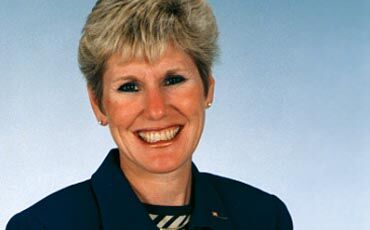

Londa Dewey, President of The QTI Group joins Jody Glynn Patrick and Joan Gillman (Wisconsin School of Business) on WTDY as their radio talk show guest.
Londa, what are you seeing in terms of employment “right-sizing” in this market?
It’s a tough, tough environment. Recently we did a survey in the market, and it was fascinating. 142 businesses responded representing 45,000 employees in the area. 61% of the companies that responded said they were changing their salary budget. On average, salary increases are 1.7%, with 40% of the respondents saying they were freezing salaries. We didn’t ask the question of how many are reducing salaries, but through anecdotal information, people are reducing salaries as well. So there are a lot of changes going on.
If you do an across-the-board cut, then it’s going to affect everybody the same way, but there are certain people within your organization who are incredibly valuable to your future. You want to make sure you treat them that way. There are some really creative strategies where people have invited their employees to think like owners and say “Well, what you want to do?” And people have voted to take every Friday off in the summer and not be paid for those days. So reduced-hour strategies are going into place.
Some companies are just not replacing positions when people leave. That’s difficult, if someone in a key position leaves, but they’re filling it with more temporary folks. We’re finding more and more requests for hired-in temporary staff coming through.
So the key thing is to think long-term about your business, be strategic, prepare yourself for growth, and yes, it’s a tough time, but it’s not going to last forever. Those that are focused on being successful for the long-term are those that are going to emerge stronger.
And you’ve got to keep the employees who are going to help rebuild the company as the economy rebuilds….
Exactly, and that’s all about employee engagement. Engagement is really being able to access that discretionary effort of employees – those folks who just love to come to work, love what they do, where their skills to match their job, and they are with people they enjoy.
You have a background in the banking business to help you put this economic marketplace in perspective [former President of U.S. Bank]. Can you also future-think for us?
First of all, we are very lucky to be in Madison. But we’re definitely feeling this economy in Madison. If you look what happened previous to this economic downturn, gross domestic product was driven by consumer spending. And the consumers’ spending was driven by consumers’ ability to access debt. A lot of that has changed overnight. And so I think the economy is going to come back, but it is not going to look the same as it looked before. I think we’re going to a different watermark in this economy. Those businesses that are going to survive are going to adjust, and they are going to adjust very quickly. They are going to adjust variable costs and fixed costs. They are going to reinvent themselves. They are going to determine what it is that nobody is doing that their customers need right now.
And the faster they adapt, the faster they are going to be successful. In a way, it’s an exciting time for those businesses, because there is a lot of innovation that happens during difficult times. I think we are going to have a different kind of economy, and I think it’s going to be based upon some kinds of businesses that we have here. You know, every business isn’t affected the same way. But it is those that have a vision and those whose vision ties with their customers’ needs; those that deliver that will be successful.
Who is in the job market right now? Is it just the “first cut” or are companies shedding quality employees, too?
Probably 50% of the people we place were not necessarily looking for a job. That’s one of the dangers if you’re with one of those companies just cutting things across the board. Good talent is sitting there saying, “What about me? I’m scared about my future.” Those folks are vulnerable to moving toward a new business [opportunity].
In this economy, do you really see as many people willing to jump ship? Because at least they have the security of knowing they have a job, right?
I’m going to say yes and no. Some people are ready to do something different, and they see this as an opportunity to get out; those are people who probably aren’t as engaged in their job, so then it’s probably not a perfect fit. Some people are scared to death to make that change because they say, “If I’m the new employee, and things don’t go well, I’m going to be the first one out the door.” So I do think that yes, in a way, employees are “stickier” in this environment than they have been in the past. Although again, some people are really ready to go.
How can you keep key employees engaged?
The best way to empower people is through sharing information and knowledge, and also by gaining knowledge through employees. I think people working with your customers have the absolute best ideas of ways to take your business forward. And those business owners who are not engaging those folks in those conversations are missing an opportunity.
If we see market strain ahead, should we cut one person (which may make all the remaining employees suffer), should we asked them all to voluntarily cut all of their hours, or should we think about cutting benefits instead? What’s the best decision today?
Businesses are looking at all of those different options, and that really came through in our survey. A lot of businesses are instituting a change in terms of variable pay versus base compensation. So one strategy is that people take a reduction in their base salary, but they have the opportunity to maybe even earn more if things get better through a variable-pay program. A second option is through benefit programs. I’m seeing reductions in profit sharing plans, in 401(k) plans, and a real hard look at healthcare type plans, so benefits are another place to look. Another thing some companies are doing is a voluntary reduction of hours. But to really specifically answer your question, I would take a step back and say, strategically, what does our business need to do today to be most successful? And I would define “success” based upon what your customers need. Then I would work backwards to say, “What do we need to do, from a human relations perspective, to effectively make that happen?”
Also, if you have a special talent, and there is not a lot of demand around that talent right now, you could redeploy that talent in a different way. You could get into a different line of business. That might be the best thing that ever happened to you. So I would start with a strategy. I would then look at the skill sets that you have, and then determine what your plan should be from there, knowing there are a lot of different options. You want to put the one in place that fits best with your strategy.
Advice for students and high school graduates having a tough time finding a job today?
My advice is to find something you love to do. Improve yourself, because you will be valuable. There is another trend that’s happening that nobody is paying attention to – they were before the economy changed, but not anymore – and that is that baby boomers are retiring. They might not be retiring quite as quickly as they were before, because of the market declines; however, just because of age, people are going to be retiring, and there is a lot of knowledge and experience that is going to be walking out of great businesses in the next 10 to 15 years. And relationships.
So those businesses that are forward-thinking are planning for that, and they are thinking, “Who do we need to bring in? What young people, do we need to bring in to replace some of this great talent within our business today?” So my advice to young people graduating today is to be patient, be willing to take a job for less money than you know you’re worth, prove yourself, gain great experience, and leverage that in the future.
Devil’s advocate: Am I more likely to bring in that raw talent, or am I more likely to leverage the 30-year-olds in my company who already have some experience and relationships established, and start grooming them now.
I think it depends upon the performance of those 30-year-olds in your business. People in the business who show adaptability, who are great team players, who are willing to learn and stretch themselves, get out of their comfort zones – those are the peoples that companies want all day long. That effort, that attitude. If somebody has a bad attitude and its not showing the effort, even if they have talent, they are not going to have as easy a time staying in that position.
Now let’s go on the other side of the fence. Some of our friends are getting 200 and 300 resumes per job opening now. Should job applicants send a standard resume? How can someone make sure their resume stands out from 200 others?
If you’re a candidate writing a resume, I would [suggest] a core resume, but I would also spend a lot of time researching the job your want to be interviewed for. Highlight the skills and experiences that you have that fit with what they are looking for in that job. I also think that the more creative you can be in the opening of an objective cover letter or paragraph to catch peoples’ eyes, the better. And if you know somebody related to the company that you’re wanting to interview for, placing a phone call just to make sure that your resume is viewed in this environment – especially given the level of competition for it – that’s a really good way to get your resume noticed as well.
I would [highlight your] experience for that position. People want to know that you have been working for a period of time. If you have big gaps in employment, you would want to explain in the cover letter why those gaps exist. And assume that you the information you post on Facebook [or Twitter] or other sites like that, is going on a billboard. The same goes with your voicemail and your cell phone. It’s amazing how many people have their cell phones ring during an interview, and the ring tones are not necessarily appropriate. It’s also amazing how many people don’t have an appropriate voicemail message on their home voicemail. You really have to think about all aspects of your life and present yourself in the most appropriate way.
If our resume succeeds in getting an interview, what tips do you have for success?
Again, do your research. Research the person you’re interviewing with, and the company. I really like to take the time, if I were doing the interview, of imagining working in the company – to think about why I’m a great fit.
Not only are people trying to understand if your skills are a good fit, they are trying to understand if you are a good fit from a personality perspective. Are you going to be a good team player? Are you going to fit into the culture of that company? So I would really spend some time thinking about that.
I also would prepare the top five answers to why they should hire you. Think about experiences in your life that show why the top five points are good points. Be prepared for the question of “why you?”. Or “Why have you made the changes that you made?” [Think about] basic questions like these: “Tell me about how your boss would rate you. And how your boss would describe you. How do you describe your boss? Describe the work environment where you were the best you could be. Describe the work environment where you were the worst, where you were unhappy – what was going on? What was that like?”
I would prepare for all of those questions. Behavioral interviewing is something you’re going to see out there; people are going to ask for specific examples of things that you’ve done, because things that you have done in the past will predict how you work for them in the future. So again, preparation.
For the complete interview, listen to the podcast here!

