

For Ronald Reagan, it was about channeling Clint Eastwood: “I have just one thing to say to the tax increasers: Go ahead, make my day!” (They tried, but Reagan is more known for revenue neutral tax reform than tax increases.)
For George H.W. Bush (the elder), it was “Read my lips, no new taxes.” That promise didn’t last a full term, which helps explain why he only served one.
For Bill Clinton, it was the promise of a middle class tax cut that never materialized. Never mind, said Clinton; the federal budget deficit was larger than he thought when the pledge was made. Clinton, himself, recovered politically, but not before Republicans took over the Congress in 1994.
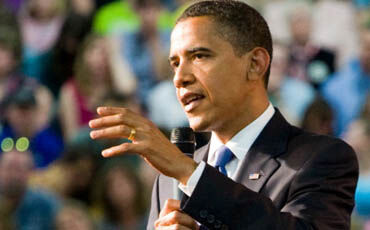
How, then, will Barack Obama fare in keep his commitment not to raise federal taxes on people making less than $250,000 a year, including small business owners?
Well, so far so good, unless you count higher cigarette taxes (picky, picky.) No significant tax legislation has yet been enacted in 2009, so the President has thus far held firm to that commitment, according to Madison-area business attorneys interviewed by IB. However, his ambitious spending plans could make the promise hard to keep in the long run — especially since only about one in 50 U.S. households will make more than $250,000 this year.
“The real test is going to come when this administration does push through its tax agenda, which looks like it will happen after the health care legislation comes to fruition,” said attorney Dave Reinecke, who practices estate planning and business succession law for of Foley & Lardner’s Madison office. “Who knows when that’s going to be? It could be this fall or it could be next year.”
In general, tax practitioners are somewhat skeptical about the future viability of the pledge. In addition to Reinecke, our expert law panel consists of attorneys Fred Brouner of DeWitt Ross & Stevens and Stephen R. Tumbush of Murphy Desmond.
Expiring Tax Rates
Some critics think Obama is well on the way to breaking the pledge because he’s prepared to let the Bush tax cuts expire after next year, which would roll federal income taxes back to their 2000 levels. But that’s true only if he goes beyond the tax rates for top income earners, which are now set at 33% and 35%, respectively, and they would revert to 36% and 39.6%. The 36% and 39.6% rates were in effect for most of Bill Clinton’s presidency.
“My understanding, and I don’t have the legislation in front of me, is that the President and Congress have already agreed to let the Bush tax [rate] cuts on the most affluent expire, which are the top rates but not the rest of the rates,” Brouner said. “I think they’ve been pretty consistent across the board in terms of resisting anything that is an obvious tax on people who make less than $250,000 a year.
“He’s certainly attempting to keep that campaign promise.”
What Does the Future Hold?
Tumbush said the proposed 2010 federal budget has limitations on the full use of personal exemptions and itemized deductions; because of these limitations, taxpayers reach the $250,000 threshold sooner than they would have been without these limitations. Said Tumbush, “Some commentators have put a number on it, like $230,000, but I think in theory that if you have less of a deduction now than you did before, you’re going to have higher taxable income, which allows you to hit this $250,000 threshold easier than without the loss of these full deductions.”
The obligation to pay for health care reform is another area where the president could break his pledge. Both the House and Senate have produced reform bills, but the Congressional Budget Office has thrown a monkey wrench in the works, estimating that the Senate version would cost $1.6 trillion over 10 years, much higher than the Senate Finance Committee’s goal of holding the 10-year cost below the $1 trillion mark.
To raise about $544 billion in revenue for the proposed health care overhaul, the House version could slap a surtax on individuals making more than $280,000 and couples making more than $350,000 a year, but House Speaker Nancy Pelosi is on record as saying that those income levels could eventually be set at $500,000 and $1 million, respectively.
In either case, there may not be enough people at those income levels to cover the cost of Obama care, meaning he might have to dip below $250,000 or look at other revenue sources. “It’s going to be a little hard to get every single cost incurred out of that [$250,000-plus] group,” Brouner said.
Tumbush believes the combination of cost pressures, including the obligation to fund health care reform, could undermine the Obama tax pledge. He said the combination of record budget deficits — $1.58 billion for 2009, according to revised administration estimates — low interest rates, and the potential of higher inflation, could put pressure on the administration to raise taxes, and not just on the “deemed wealthy” making more than $250,000 or $280,000 or $350,000.
“It’s difficult to keep borrowing money overseas to pay for our deficit when we have such low interest rates,” Tumbush noted. “You either have to increase interest rates, which entice more outside investors, or come up with money from another source.”
Reinecke said there is no way the administration can get remotely close to a balanced budget by raising taxes only those making over $250,000 a year. With regard to the health care surtax, even if taxes aren’t raised on people making $250,000 or less, he noted that small business owners definitely would be “feeling that hit.”
Capital Gains
Another potential breach would come if Obama raises the rate on capital gains taxes, which are applied on the sale of non-inventory assets like stocks, bonds, and property. Obama has proposed raising the capital gains tax rate from 15% to 20%, but would that hit people making under $250,000? Only if they engage in economic activity that triggers it, Brouner indicated. “It’s kind of an optional tax,” he explained. “If you don’t want to incur the tax, don’t sell the property.”
Still, if that increase is enacted, Reinecke says: “There certainly will be people earning less than $250,000 who will pay higher capital gains taxes.”
With capital gains rates, there is a point of diminishing returns, Brouner added, meaning that if the rates are set too high, it would discourage the type of economic activity that triggers the tax. “With capital gains rate increases, my understanding is that if you get them up around 25%, people will sit,” Brouner said.
Hidden Taxes
Another way the President could break the spirit, if not the letter of the pledge, is by raising taxes on corporations, particularly oil and gas companies, by eliminating tax breaks. Critics of those tax breaks say they are subsidies to the oil and gas industries that are paid for by everyone else, but since higher business taxes are rarely absorbed and always passed on to consumers, the other side characterizes such measures as hidden taxes.
According to one estimate, the government would raise $31.5 billion over 10 years by eliminating tax breaks that benefit the oil and gas industry. “I would call it a hidden tax,” Brouner said. “They [corporations] are going to pass that on as one of their costs. Everyone across the board is going to pay that. If you consume fuel, you’re going to pay that.”
“I would say that technically, it’s not a violation,” Reinecke said. “In substance, it is a violation because the burden is going to fall on everybody who buys gasoline.”
Reinecke believes the same theory holds true for the cap-and-trade bill that recently passed the House. While the fate of the bill is iffy in the Senate — in this economic climate, the public is in no mood for higher energy costs — and may not get to the President’s desk, Obama supports the concept of curtailing carbon emissions from economic activity. Critics of this approach to addressing climate change have labeled it “cap-and-tax” because it would result in higher taxes and utility costs, and those costs would be borne across income levels.
Still another trap for the President will come in the estate tax area. Under legislation signed by President George W. Bush, the exclusion on estate taxes has gradually risen and now stands at $3.5 million per person and $7 million for a married couple. In 2010, the estate tax is repealed, though Reinecke believes that Congress, before year’s end, will enact an extension of the 2009 exclusion through 2010, and then allow the law to run its course, meaning the exclusion will revert back to the pre-Bush level of $1 million in 2011.
If that happens, Reinecke would not construe that as a technical violation of the tax pledge, but added it certainly is substantive violation because there will then be individuals who make well less than $250,000 a year who will be subjected to higher estate taxes.
“The reason I say it’s not technically is because the new administration will say, ‘Well, it’s not our proposal. It’s just that that was build into the law that existed when we took office. It simply allows the Bush tax law to run its course,'” Reinecke said. “In substance, it’s a tax increase because allowing the Bush tax law to run its course is substantively not different than passing a law that reinstitutes the old pre-Bush rates and exclusions.”
Seeking Shelter
While much of the focus has been on middle income tax earners, the old tax shelter concept could come back with a vengeance if tax rates on the wealthiest earners approach earlier levels. Given increases contemplated by letting the Bush tax rate cuts expire, rate increases contemplated for health care, and rate increases at the state level, Brouner said the top rate could reach 50%. (In the current state budget, Wisconsin’s top rate rose from 6.75 to 7.75 for single individuals earning over $225,000 and for couples earning over $300,000).
Back in the days when he practiced more pure tax law, Brouner said the top rates were as high as 90%, and later 70%, and then lawmakers patched it with a maximum tax on earned income (income you worked for as opposed to investment income) of 50%.
“An awful lot of energy was devoted to reducing folk’s taxes,” Brouner recalled. “A lot of creativity got applied to structuring the compensation for executives to minimize the impact of higher rates of taxation.”
That was before President Reagan reduced the top rates to below 40% in 1981 and reformed the tax code in 1986 to simplify rates and de-emphasize tax shelters.
Brouner noted that the old rates led to compliance problems, which could resurface. “The ’86 [tax reform] Act eliminated a lot of ability to use tax shelters, but the real fertile minds who want to structure those kinds of deals are not going to do so if there is not going to be a demand for it,” Brouner said. “If there is a demand for it, there will be ways to rig deals in order to arguably obtain tax advantages for high tax bracket tax payers. So, you’re going to have a compliance issue, maybe a lot of a compliance issue.”

