
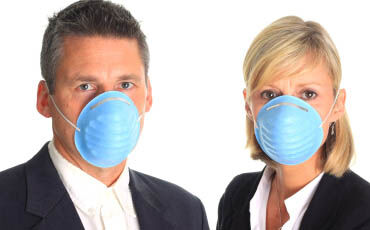
Whether you buy into them or not, the numbers attached to the predicted H1N1 outbreak (sometimes inaccurately called the swine flu) are stunning. According to the White House, anywhere from 20% to 40% of all Americans could come down with H1N1 flu symptoms and anywhere from 30,000 to 90,000 will die.
Whoa!
You can choose to take those projections on face value, as a worst-case scenario, or pure scaremongering poppycock, but Wisconsin, where five deaths have been linked to the virus, has more confirmed cases than any other state. Even a limited outbreak could disrupt a business, especially if it involves key employees.
Fortunately, it’s not too late to develop a crisis- or business-continuity plan, even as health officials prepare vaccinations with a mid-September timetable in mind. The spread of H1N1 can be prevented with healthy basics like smart hand-washing habits, at home or the office (hint, hint), but continuity planning also can limit the damage to individual businesses.
Job one: Create a crisis management plan with assigned roles and tasks for employees. “It’s not too late for employers to take appropriate action to plan for this type of disastrous situation,” said Kyle Gulya, an attorney with von Briesen & Roper. “Right now, if they are seriously concerned about it, they are in a position where they should act soon rather than waiting for the disaster to happen.”
Springtime Lessons
Attorney Rochelle Klaskin, managing partner for Godfrey & Kahn’s Madison office, told IB that many lessons were learned from the H1N1 pandemic this past spring. First, business and nonprofit organizations should have a draft of internal communications as well as a plan ready if and when employees need to be notified of a reported occurrence. This helps provide consistent messaging throughout the situation.
If you do not have it in your plan, understand what must be done in the case of an outbreak (i.e. the cleaning of work stations, notifying exposed employees, reporting to the county, city and state officials, etc.).
Planning also should include making a list of the Wisconsin Department of Health Services contacts so you can easily call to report a case or ask questions.
Review any “to do” items identified from the spring and make them a high priority. “School occurrences are already indicating the quick speed to which the infection is spreading throughout communities and organizations,” Klaskin said. “Address company ‘to-do’ items now.”
Even a well-crafted continuity plan is no substitute for good health habits and a little common sense. So as part of their continuity plans, business organizations should now stock up on company-provided resources to help with hygiene and enforcement of good habits, including the distribution of hand sanitizer, handouts on good health practices, and Kleenex, because these items will sell out nationwide.
Klaskin has said it makes sense to place hand sanitizers at every desk or work station — a common practice in hospitals and medical clinics — and that employees expect these measures to be taken.
Use technology to set up alternative work sites (especially the ability to connect from home), have data backed up in a second data center, communicate the plan, and practice it.
Mobile communications like Blackberries and iPhones, which can be used to access e-mail, the Internet, and even documents from work, are another way to stay connected, but they must be policed. As Klaskin noted, if an employee is checking e-mail when he or she is not supposed to be working and the employer is not paying for that, the employee may have a potential claim under the Fair Labor Standards Act.
When revising a preparedness plan, employers also should take a hard look at which employees actually should have remote access to business systems.
It’s also an ideal time to update family and medical leave policies and practices, and evaluate policies regarding use of paid time off, attendance, and absenteeism. Confidentiality also is important because if a worker does contact H1N1, he or she is protected by laws governing the confidentiality of health information in the workplace.
The goal is to minimize disruption and come out of a crisis in the strongest possible position, so analyze the structure of your workforce to understand its weaknesses, and then offer cross-training opportunities to avoid having a concentration of power, knowledge, and resources in any lower-level position — especially if those employees are key members of your crisis-management team. Gulya said if one or more of those workers are shut down by a health crisis, it can create difficulties for the employer and fellow employees. By cross-training, and then correspondingly updating job descriptions, a business can protect its interests and increase each worker’s value.
Gulya has one more bit of advice. If you’re sick, no matter what the misery, stay home. Don’t try to be a hero by showing up for work, or you could turn out to be the goat. “If you’re too sick to work and if you’re contagious, absolutely stay home, especially if your employer has set up mechanisms where employees can perform their job duties remotely for temporary amounts of time,” he stated. “That’s something that businesses can look at to help continue an operation if something happens.”

