

The following is the first in a series of features on Wisconsin companies that are doing promising work in the global fight against cancer.
RNA is something that most people learned about in grade school and quickly forgot about. Some hyper-attentive students may remember that it stands for ribonucleic acid, but beyond that, it’s just another one of those essential-for-all-life trivialities that escapes the notice of your average mall-goer.
But one Madison company is hoping that some cancer sufferers will soon have good reason to put RNA back on their radar.
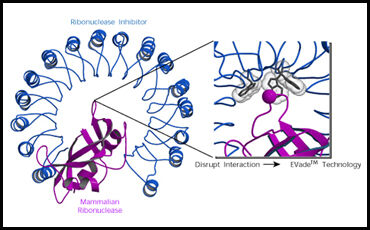
The company, Quintessence Biosciences, is currently conducting Phase I clinical trials of a drug called QBI-139, which takes an unusual approach to killing cancer cells. Instead of targeting DNA, as traditional chemotherapy does, or proteins, as some newer targeted therapies do, QBI-139 is designed to degrade RNA, inhibiting protein synthesis in cancer cells and killing those cells.
While that might not sound too exciting to the average man on the street, if all goes well, it could turn out to be a godsend to many cancer patients who suffer demoralizing side effects under traditional chemotherapy, and whose cancer could ultimately become resistant to newer targeted therapies.
“Chemotherapies that target DNA tend to work by basically killing rapidly dividing cells, and that’s a feature that most tumor cells do have,” said Laura Strong, president and chief operating officer for Quintessence Biosciences. “But you also do have some normal cells that turn over very quickly, and those include things like your hair follicles and your bone marrow, and that’s why you see side effects for that particular drug like myelosuppression [decreased bone marrow function] and alopecia [hair loss].
“So when you think of different drugs that have different mechanisms of action – for example, targeting proteins or RNA or DNA – you’re going to end up with different side effect profiles for each of those, because they each work in a different way.”
The prospect of avoiding the kinds of side effects that typically accompany chemotherapy treatments is no small thing, but circumventing drug resistance by potentially attacking multiple “signaling pathways” in cells – something some of the newer targeted therapies don’t do – could be equally as important.
And that’s where much of the promise of Quintessence’s approach appears to lie – it could be a best-of-both worlds kind of therapy, incorporating the broader effects of chemotherapy while giving patients the option of a gentler drug regimen. At the same time, it could be used to complement other therapies that have already been shown to work by different mechanisms.
“There are a variety of signaling pathways that control things like the growth of the cell – when a cell is going to divide, things like that – and those are the kinds of signaling pathways that have been targeted by these newer, what are called ‘targeted therapies,’” said Strong. “And there’s a lot of benefit to that in the sense that you can, say, target a growth pathway with a new drug, and the benefit is that you wouldn’t necessarily impact, for example, rapidly dividing cells like bone marrow. But the downside to that is your cells actually have multiple of the growth pathways, so you can knock one down, but you often have a lot of overlap and redundancy built into your cells, so it will just … communicate by a different pathway. …
“So our drug really is positioned distinctly from both chemotherapy and targeted agents. From targeted agents kind of in the way we discussed in terms of going after more than one pathway, and from the DNA agents, our drug doesn’t appear to be going after rapidly dividing cells.”
A long road
While QBI-139 appears to hold great promise, then, it has a long way to go before that potential can begin to be realized.
QBI-139 has shown strong anti-tumor activity in a variety of models in a laboratory setting, and now it’s moved on to Phase I trials, which involve giving the drug to patients whose cancers have progressed on all approved therapies. Phase I is just the first step in clinical trials, but to Strong, it’s an important first step.
“A lot of drugs never even get to this point, so in that sense, we’ve made it a long way already, but we have a long way to go,” said Strong.
Indeed, according to one recent study, only one in 10 drugs entering early-stage Phase I clinical trials is eventually approved. Cancer drugs generally face an even steeper climb, although biologics like QBI-139 do somewhat better than average.
Given those long odds, you’d think drug developers like Strong might get discouraged, but she remains unfazed:
“I think to do this job, you really have to have a firm belief that what you’re doing is going to work, because the odds really are stacked against you, and at various points you may get data that suggests that your chances are more like one in 10 than nine in 10, and I think working through that and understanding that’s really true, I guess it’s a balance – needing a balance between the kind of realism about the data you’re getting from your development as well as the optimism to believe that you can make it past the hurdles.”
The business side
Beyond the science and the well-known rigors of FDA approval, another challenge for companies like Quintessence is securing the financing to continue research. A recent column by Tom Still, president of the Wisconsin Technology Council, noted that Wisconsin companies involved in developing cancer treatments are emerging at the right time given the interest major pharmaceutical companies have shown in refilling their research pipelines. At the same time, Strong sees challenges related to the state of the economy as a whole over the last few years.
“I think you see a lot of challenges, and the challenges often come in the form of access to capital, and with our more limited capital supply, if you look at the venture capital numbers overall, you see that venture capital is constricting,” said Strong. “You see the deals over the last four years, five years have changed from being more in the realm of mergers and acquisitions to being more in the realm of licensing deals.
“So you see some of those changes happening, and I think what we’re all sort of adapting to – and for some of us we’re adapting to it in the midst of our existing business model – but we’re all sort of adapting to a complete change in the market. And so is there optimism that we’re going to come back to a point in the very near future where we’re going to have a lot of IPOs in the biotech space? I don’t know that that’s true, but I think there’s optimism that continued innovation will happen and that we’ll find creative ways to bring in money to advance new innovations.”
Whether or not the time is right for biotech companies, Quintessence seems to be well situated geographically. The initial discovery of the ribonuclease approach to cancer was made at the UW, and Quintessence licensed that intellectual property for its research.
The company also benefits in other ways from the “biotech ecosystem” that exists in Wisconsin, said Strong.
“I think one of the things [we have going for us] is that you see a lot of biotech businesses that come together around science and actually take the science to commercialization because they’re built on a business model where you’re talking about actually selling products, generating revenue, and building sustainable businesses,” said Strong. “And I think that here in Wisconsin, you have the potential to grow this nice biotech community. When you look at companies like Promega …, when you look at companies like Tetrionics, which is now part of SAFC, you look at these companies and you build this core of people who understand how to take innovation and commercialize it, you end up with a group of people who are trained and can go off and do that same thing themselves.
“It provides a community where you have options. If your company gets bought or you want to start a new company, you have a lot of options in terms of resources and human capital to really build them.”
Sign up for the free IB Update – your weekly resource for local business news, analysis, voices, and the names you need to know. Click here.If you are not already a subscriber to In Business magazine, be sure to sign up for our monthly print edition here.

