
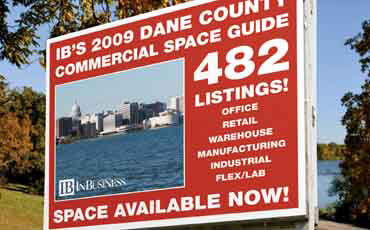

Given the state of the economy, it’s a tenants’ market in commercial real estate, as the delicate balance between landlord and tenant is out of whack in favor of those who lease. But if you think office tenants are in a commanding position, one in which they can dictate their own terms, you may be in for a rude awakening, according to a panel of experts IB summoned to discuss commercial real estate. In this, our annual Commercial Space Guide, we set out to determine exactly how much leverage tenants have to improve their lease arrangements.
As it turns out, they do have some power to make better deals, but it’s not a “my-way-or-the-highway” proposition. Landlords are willing to work with you, especially if your business is really challenged in this economic environment, but property owners are business people, too, and they will expect something in return.
IB spoke to two tenant representatives, Annette Gelbach of Gelbach, LLC, and Tim Rikkers of Commercial Tenant Advisors, and to two landlord representatives, Chris Richards of Grubb & Ellis/Oakbrook and Patrick Carpenter of First Weber Realtors. Their insights offer a glimpse of what tenants can realistically expect when they approach landlords about renegotiating their lease.
Tenants in Charge?
Our experts have little doubt that this current office market is indeed a tenant’s market; the only issue is to what degree do tenants have the upper hand in lease negotiations. And when? With the expiration of the lease approaching, or with a couple of years to go on the lease?
“I think it depends,’ Carpenter said. “I wouldn’t think that they [tenants] are going to get very much right now if they’re not going to extend that lease.”
Gelbach called the present “a great time to be a tenant,” in part because on the buyer side of the transaction, the incentives are a little better. Oftentimes, she said the tenant is just looking to not overpay for space, but in this economy she said the landlords will want to consider renewing the lease earlier than usual, so there is a quid pro quo aspect to lease negotiations.
A great deal depends on the individual landlord’s position in the market, especially the demand for the office building (and location) in question. Perhaps property owners are in a position to talk incentives, or they are more inclined to offer a lease renewal but only at the market rate. “You need to really look at the whole picture versus what can a tenant get,” Gelbach said.
Rikkers believes we’re all in a tenant’s market in one form or another, especially in Greater Madison, a commercial real estate market that is really not constrained “a tremendous amount” by land. “You can always continue to build west,” he said. “There are plans to build [University] Research Park II. There are plans to expand Fitchburg, so we’re never really going to find ourselves constrained by geography.”
According to Rikkers, the tenant’s market is exemplified most by the fact that not only are tenant representatives seeing concessions, they are seeing landlords that want to be creative and make deals. Instead of saying, “Here’s the lease, here are the terms and conditions,” he said landlords are now saying, “Okay, well, let’s really understand the tenant’s needs, let’s figure out whether or not we can craft the transaction to support the business.
“That’s what we’re seeing with the concessions.”
Not every landlord is created equal, however. In the Far West submarket, Richards points out that there are three or four landlords with big chunks of space, and they are in a better position to dictate terms in their particular submarket. In general, however, he said landlords are aggressively making deals because there is only so much space in everyone’s portfolio.
The Incentives
Gelbach frequently gets the question “should I renegotiate my lease?” and she has a stock answer. “That depends on your situation,” she stated. “If you’re a healthy business, and you have four years left on your lease, and you’re going to the landlord and saying, ‘I want to reduce my rent,’ there has to be a win-win. You have to look at the long-term because the landlords are in business, too.”
In this particular environment, where there is an over supply of Class A office space, what kinds of lease improvements can tenants expect to get? That answer is driven by the landlord’s big picture, Gelbach noted, including rental rates and what their bottom line is “after the rent.” Some building owners need to keep the rental rate at a certain level because of their financing requirements.
“It depends on what their hot button is,” Gelbach stated. “With certain landlords, I’ve seen that they don’t really touch the rent, but they’ll do a lot more incentives in build-out allowances and other incentives. With other landlords, they’ll negotiate that base rent. It really depends on what their goal is, how long they’re keeping that property, and what their investors think.”
“It’s about understanding the motivation of the landlord,” Rikkers concurred. “Some landlords want to drive monthly rents to get a higher capitalized value, but then they’ll give away the farm on some free rent or on the concessions. So the net effect is the same, it just looks different on the face.”
On new deals, Rikkers has seen significant incentives, including not just free rent, but significant free rent, and even moving allowances. How significant is the free rent? “A rule of thumb is a month free per annum,” he said. “So on a 10-year deal, 10 to 12 months of free rent. That’s a lot.”
With landlords, Richards said the majority of what he’s seen isn’t necessarily a renegotiation of current square footage, but future space beyond their current lease term. “It might be a group that says, ‘You know, I’m in 5,000 square feet. I’m not using this. There’s two years left on my lease. What if I were to downsize to 2,500? Would you be willing to take a look at that?”
“Ultimately, what it comes down to is when the landlord says, ‘Well, certainly we’ll take a look at it, but what we want from you is a three-year extension beyond that initial two years, and we’ll drop you down to that 2,500 square feet.” Being in a current lease situation, you don’t have a ton of leverage with the landlord to drastically lower rent because that’s what the market indicates.”
Rikkers, whose firm recently completed some lease restructurings — he doesn’t like to do a lot of them because everybody takes a hit — said demanding a reduction in rent because the market is down isn’t going to fly. The situation is not analogous to refinancing a home to take advantage of lower interest rates, it’s about two parties to a contract working to ensure their mutual survival. Rikkers noted that landlords, especially some of the larger ones, are not “in the business to put people out of business.” So if a tenant demonstrates a business case such as a significant decline in revenues or personnel, they may be able to get reductions in their square footage and costs.
“And for that assistance, we’ll commit to a longer term, we’ll help you pick up some money on the back end, and maybe our business gets back and we’ll expand,” Rikkers said. “That’s where I think we’re seeing some of the concessions in that regard, and it’s a tribute to the landlords to say, ‘Alright, let’s look at this.’
“I think if it’s presented properly, you can make the case to help the tenant out of that situation.”
In the case of retail space, the tenant is the one who may not have the required flexibility because the retail tenant might simply require a certain level of square footage. “If it’s an office space, and they’re able to work in less square footage and make that work, it makes a difference,” Carpenter said. “In some retail settings, they need so many square feet, and they can’t downsize. Right now with the retail sector, if any landlord can keep a tenant, I know they want to work with them, maybe in a temporary setting, to keep that business going.”
Turn the tables for a moment and imagine the economy is booming, with low vacancy and absorption rates in the office market. Then imagine your landlord raising the rent when you’re in the middle of a lease term. That’s why a renegotiation has to be a win-win proposition, even if a tenant faces the last resort — a costly move that risks business disruption and, potentially, a loss of customers.
“If a tenant’s going to go dark, if they’re going to have to leave, the landlord is going to want to look at those financials and see how they can work with the tenant,” Gelbach said, “and then maybe as the business continues to grow or does better, then they’ll add that back on, or negotiate a longer lease term. There’s all these different ways you can negotiate, depending on what works for both parties.”
In addition to lease extensions, Gelbach said landlords may ask for other things during a mid-term renegotiation, including a briefing on your financial condition. “I think that if a landlord is going to give a lot of concessions, oftentimes they’ll say, ‘Look, we’ll go back to our lender and get this approved, but we have to understand that this is ironclad,’ and so what they’ll want to do is understand the tenant’s financials more clearly. If the financials are not particularly good, they’ll say, “I’m going to need some additional guarantees.’”
On the tenant side, renegotiated leases can be loaded with personal guarantees, but such guarantees are justifiable from time to time, Rikkers asserted. He cited the situation of a tenant that is going to go bankrupt under its current lease, and the landlord is willing to make the necessary concessions but wants some guarantees in return. “It makes sense because what you’re doing is you’re saying to the landlord, ‘You give me a giant concession, and I’ll guarantee performance’. That’s one thing we’re seeing.”
According to Richards, the appetite of some landlords have them deviating from a triple-net structure to a gross-lease structure. Triple net is when a tenant pays their pro rata portion of the building’s operating expenses, which are variable. With the gross structure, a tenant knows essentially what he or she is paying per month regardless of whether the building’s taxes go up, or the insurance increases, or the utilities increase drastically.
“One of the things, above and beyond the free rent and the lower rates and increased T1 lines, is some landlords now are more willing to provide a gross lease structure,” Richards noted. “That’s certainly not to the landlord’s advantage, but it’s something that kind of crept into the market for good, nice-sized tenants.”
Another reason this is an advantageous time to talk about renewing a lease is that landlords are more willing to understand a tenant’s business model and work within a sensible structure. Said Rikkers: “Let’s say that you’ve got a group that says, “We’re 15 people now, we expect to grow by 20% a year, being fully staffed at 136. And you’ll have landlords saying, “Okay, you can lease 10,000 square feet in year one, but we’ll do a phased take-down whereby you only pay us for 7,500 square feet for the first 12 months, and then bump up to 8,500 square feet, and then by month 25 you pay the entire amount.” It’s another form of lease concession or rental abatement, but it’s designed to accommodate the tenant’s growth. And again, that comes back to demonstrating to a landlord that we’re not just pulling this out of the air. We’re asking you to ride along with us and help support our business model.
“I think you’re also seeing more advantageous terms and operating expense adjustments,” Rikkers added, “and then little things like where landlords used to be able to charge significant dollars for outside signage. Now, that’s often added as a carrot — free building signage.”
Remote Possibilities
In the age of technology, a number of factors come into play, and not just the importance of robust telecommunications and Internet connections. The potential impact of more companies looking at their monthly lease rates and going to a remote office structure, or at least having more employees work remotely from home, could result in significantly more vacant office space.
Carpenter thinks remote offices already have had some impact on the plans of landlords and tenants, and could have even more in the future. “
Maybe they’ve got 5,000 square feet of space, and they were planning to expand in a few years. That may go down to 3,000 or 4,000, or it may just stay the same. So I think with kind of net absorption of the space, they may not be losing individual tenants, but the landlord may need more tenants in their building to make it work.”
Rikkers thinks technology is affecting space in certain industries and occupations that lend themselves to remote work. He cited the mortgage industry, insurance, and outside sales representatives that can use Salesforce.com and a secure Internet connection. Under that scenario, a business can have a small, central reception area, perhaps a human resource office, and everybody else could be working from home.
“You’re seeing that more often. It hasn’t hit Madison as much, but I certainly think it’s coming to pass,” Rikkers said. “I was talking with an individual the other day. Their company is a 5,000-square-foot tenant going down to 250 feet, but they’re only losing 20% of their sales force because they’re sending everybody home.
“The old adage is that if you’re at your desk, you’re not making any money anyway, so it works. I think we’re going to see that more and more as people look at their commercial real estate overhead and say, ‘Well, let’s outsource that, outsource that to private homes.’”
For tenants with high leasing costs, Gelbach said working remotely can really save on the bottom line. “I think it goes back to the culture of the business,” she said. “Can they still serve their customers? Can they keep the culture of what’s going on within their company by having people working from home?”
Gelbach hasn’t seen many remote offices or workers in Madison. Thus far, it’s been a characteristic of larger markets, where employees take into account large commute times.
Richards isn’t sure how widespread the practice of remote work will become, but he concedes that it allows for staff flexibility. “I haven’t dealt with instances where a tenant went from 5,000 down to 250 square feet, but I’ve certainly dealt with the owners that say, ‘Well, so-and-so and our sales force is going to work out of their home, but they’re still going to maintain a cube of space versus a private office.”
“Could it affect things long-term? Yes, but I don’t see it as a drastic situation to the point of landlords trying to figure out what they’re going to do with their space. I don’t see it driving things that much.”
Class Warfare
Asked if there are differences between the way all these dynamics work with the newer Class A buildings, as opposed to Class B or C buildings, and our experts answered in the affirmative. Due to the opportunities for payback, Class A buildings are much more likely to get makeovers than the other two classifications.
“If you’ve got a ‘C Class’ building, or even a ‘B,’ it’s usually not cost-effective for the landlord to put the money into the building,” Carpenter said. “I would say that for the lower class, or the older buildings, the landlord would be probably less apt to make the changes because it’s just such a huge cost for what they can get out of it in rent versus a Class A building.”
According to Richards, rents at Class B and C buildings have not fluctuated much over the past five years. The owners of these buildings can’t necessarily get a return on investment for that upgrade in the form of a higher lease rate, but they can with Class A space. “You take a building like the US Bank building on the Capitol Square. You do some improvements there, and you can start asking for higher rents with that sort of facility,” he said. “But if you’re looking at a Class C property on Odana Road, you can sink hundreds of thousands of dollars into the property, and I’m not sure you’re going to get anything more than the $14 gross.”
Regarding the US Bank building, Rikkers said Urban Land Interests recently bought it, and it was probably the least energy efficient building in the state. Urban Land has retrofitted the structure, he said, and it’s going to save $400,000 per annum on energy costs. “It goes straight to the bottom line,” Rikkers said, “so conservatively, that adds $4 million to the value of the building overnight. You take that to a ‘B’ building over on the near west side, and you can’t get the spread.”
According to our experts, landlords are still more likely to invest in common areas and office improvements than in more energy efficient lighting, even with today’s focus on “green” measures in construction, building materials, and energy.
Yet, as Rikkers explained, improved lighting does a couple things. First, it supports the business culture, and second, it can lower your operating expenses, increase efficiency, and “make people happier” and more productive, he said.
“There’s a number of different kinds of lighting,” he said, citing overhead lighting, and daylighting in solar tubes and windows. “There’s a company out of Plymouth, Wisconsin, Orion, that makes a very, very high-efficiency bulb that you can retrofit.
“But I think that lighting, in and of itself, isn’t enough,” he added. “You have to look at it in the entire spectrum of the space, including HVAC and down to basic improvements like low-VOC (Volatile Organic Compound) paints and carpet.”
Rikkers said Commercial Tenant Advisors is working with a group whose business is to help companies understand the energy efficiency of space. He said it’s been a good education for his group because it has
improved their understanding of green concepts.
Richards said he’s heard of landlords investing in energy efficiency more in industrial warehouse settings than in office settings. “Big warehouses that might use the old-school lighting, they’ll come in and revamp it,” he said, “because typically 99% of the time, the industrial tenant is the one paying their utilities, and so that’s an incentive to them. They’ll put in higher efficiency lighting, which should lower overall costs, which should make this building more competitive in comparison to the XYZ building.”
In triple net structures, Carpenter has seen cases in which, rather than retrofitting an entire building, landlords might be more willing to renovate a particular space. “Right now, with vacancy as high as it is, for a landlord to go in and revamp the whole building, spend all this money, and redo lighting, he’s probably more apt to say, ‘I’ll take that dollar per square foot off that and I think you’ll save in the efficiency of the lighting off the rental rate’ instead of sinking in those [large] dollar amounts.
“Now, obviously, the LEED buildings and some of those high-efficiency buildings have that built in, but retrofitting it … I don’t personally see a lot of landlords choosing to spend their money that way right now.”

