
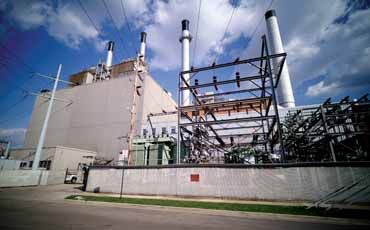

Proponents characterize it a necessary nudge, and critics assail it as Constitutionally challenged politics, but the Obama administration’s decision to impose CO2 restrictions by administrative rule (if necessary) means that businesses will feel the affects of climate-change regulations no matter what Congress does with controversial cap-and-trade legislation. That, combined with the widely held belief that the proposed cap-and-trade program would deliver an economic whacking to Midwestern rate payers, and the showdown over climate change legislation could rival the brawl over health care reform.
The broader business impacts of the federal government’s attempts to restrict CO2 emissions means higher electric rates for homes and businesses. However, many worry that bills sponsored by U.S. Reps. Edward Markey and Henry Waxman, which passed the House of Representatives in June, and U.S. Senators John Kerry and Barbara Boxer, would create disparate regional impacts. Now that the measure appears to be stalled in the U.S. Senate, the goal of Midwestern utilities like Alliant Energy and Madison Gas & Electric is to devise a cap-and-trade program that protects customers from sky-high rate increases, which would undermine one of Wisconsin’s competitive advantages — relatively affordable energy.
“There is no question that the cost of energy will go up,” said attorney David Crass, part of the Climate Change Group at Michael Best & Friedrich. “No matter what the size of the business you own, large or small, all of us are consumers of power. So with the cost of compliance with a cap-and-trade program, particularly in Wisconsin, where 70% of our load comes from coal generation, the cost of doing business will go up.”
For reducing CO2 emissions from covered sources, the House bill sets the goal at 83% of 2005 levels by 2050. Early Obama administration estimates put the industry cost of “cap-and-trade” at $646 billion, but that estimate more than tripled to $2 trillion before the House bill was passed. While proceeds would be used for purposes like renewable energy projects and the development of carbon capture and storage technology, critics claim the added cost burdens will send jobs overseas.
Forget recent doubts that have been raised about the science of climate change. With official unemployment at 10%, the concept faces longer odds in the U.S. Senate because of the state of the U.S. economy, which is why the Environmental Protection Agency says it will regulate CO2 emissions in the absence of legislative action. The EPA’s recent endangerment finding, in which it determined that global warming is hazardous to human health, sets the stage for the agency to classify carbon as a pollutant under the Clean Air Act and regulate greenhouse gas emissions nationwide via its permitting process.
Since ruling by bureaucratic fiat would involve more of dictatorial cap, rather than a less onerous cap-and-trade approach, the Obama administration believes that recalcitrant lawmakers, including those in its own political party, will swallow the lesser of two bitter pills. The move might have the opposite effect, however, as Democrats in swing states could choose to let the administration sizzle in its own juices in an election year where economic issues are likely to dominate the debate, and business interests, armed with what climate change skeptics believe is mounting evidence of scientific fraud related to global-warming data, are prepared to challenge the EPA in court.
Regional Roiling
Kristine Euclide, vice president and general counsel for Madison Gas & Electric, said MG&E and other utilities would prefer the predictability of a national legislative program over a piece meal series of rules and regulations from the EPA.
Electric utilities, however, are lobbying for what, in their view, is the right kind of national program because standing in the way of cap-and-trade are claims of regional disparity. Utilities in the Midwest, which are mostly of the carbon-emitting, coal-fired variety, believe they will bear the brunt of climate legislation, while states like California, which rely more on cleaner natural gas and nuclear power, will reap a financial windfall.
Mark Thimke, a partner with Foley & Lardner and a member of the firm’s Environmental Regulation and Energy Industry teams, characterized cap-and-trade as a market-based approach to controlling greenhouse gas emissions “where you let the market set the price of the tax because you are putting a value on GHG emissions.” Utilities can either control emissions or buy emission rights, “so in some ways, it’s an economic transaction,” he noted.
By capping CO2 emissions at a maximum level and giving individual companies subject to the program a certain amount of credits (allowances), the government is creating an artificial market because there is a limited amount of greenhouse gases that can be emitted. Affected businesses can either trade to get credits that allow them to emit, or they can sell credits in a trading mechanism that allows somebody else to emit. “That establishes a market mechanism to set a price on carbon,” Thimke said, “and that price on carbon is what some entity, be it a utility, be it a paper mill, or be it a cement kiln, pays for the emission of that greenhouse gas from their facility.
“If they have extra [allowances], they can sell them. If they need more, they can go out and buy them.”
According to Thimke, the big fight over cap-and-trade is who gets free allocations for a period of time to allow industries to adjust to the new regulatory world. Since electric utilities on the coasts tend to be lower-emitting natural gas or zero-emitting nuclear plants, the number of credits they are allocated will determine the extent to which they can be sellers. In contrast, Midwest utilities are primarily coal burning and high emitters, so to the extent that the Midwest is not allocated enough allowances, its utilities have to buy from those that are allocated more than they can use. “Studies tend to show the Midwest utilities will be higher-cost energy producers because they will have to buy these credits to continue to burn coal,” Thimke noted.
The position taken by a coalition of Midwest utilities is that distribution of allowances should be based strictly on emissions, not factors like retail sales, which enable utilities in other regions to be sellers. The coalition is lobbying Congress to model current legislation after the cap-and-trade program used to reduce sulfur dioxide and prevent acid rain. In their view, the acid-rain blueprint would give coal-dependent utilities enough allowances to help transform their generation fleets, include effective cost-containment mechanisms in case the program does not work as planned, and set timelines and targets that are aligned with reasonable expectations of when carbon capture and carbon storage technologies become commercially deployable.
With the acid rain program, 97% of the allowances were given away freely to the utilities, and they were slowly transitioned out. There also were technologies available back then to reduce sulfur dioxide (SO2), whereas carbon capture and storage technologies still are years away. In the early 1990s, SO2 emitters could install scrubbers in their plants and buy low-sulfur coal, and utilities used the value of their allowances to finance those steps.
As a result of the acid-rain program, energy consumers did not gasp when opening up their utility bills, but the Midwest utilities contend that under the Markey-Waxman and Boxer-Kerry bills, there would be a massive transfer of wealth from the Midwest to the coastal states. Under the best-case scenario, the coalition estimates rate increases of 10% to 15% in the early years, and up to 20% by 2020. “They do well under the bill, while our customers will be paying the price for decades to come,” stated Zach Hill, senior manager of federal affairs for Alliant Energy.
Despite anticipating the regulation of CO2 several years ago, and responding with a plan that increased renewables and called for an end to coal burning at its older Blount Street plant, which can run on natural gas, Euclide said MG&E would still need to purchase allowances in the proposed cap-and-trade market. Euclide, who is not convinced the Clean Air Act is well-suited for regulating greenhouse gases, said there may be mitigating factors on cost. “The cost will certainly go up in short term,” she acknowledged. “The thought is that this will be market-driven, and the extent that technologies come along and other fuels become more competitive, I think that still needs to be analyzed.”
Crass believes cap-and-trade for CO2 cannot be patterned after the same approach for SO2. Acid rain legislation applied only to electric-generating power plants, he noted, but the move to limit carbon emissions is broader. “The complexity of it is, in part, due to the enormity of what they are trying to undertake,” Crass noted, “and the number of industry sectors that will be touched by this.”
Crass would not be surprised to see regional coalitions form among senators. According to Crass, so-called “blue” Democrats, led by U.S. Rep. Collin Peterson, D-Minnesota, negotiated significant concessions in the House bill regarding the impact of agriculture, as well as who will write the rules on what qualifies as an offset trade. “I would expect that you would see the same type of effort as this thing moves forward,” Crass said. “Lawmakers of both parties, in a certain region that is disproportionately impacted, will form strange bedfellows and negotiate hard for their constituencies.”
While he also believes regional impacts must be addressed, Crass said Wisconsin entities eventually could benefit from a cap-and-trade program. As the program goals are ratcheted down over time, he noted there is an offset market created in which carbon offsets are traded and sold. Given Wisconsin’s investment in renewable energy programs, he said the state stands a chance of gaining some market impact as the climate change program moves forward.
“I don’t want to paint it all as doom and gloom for Wisconsin because given the inroads we’ve made in renewable energy production, opportunities will be created for producers to participate in that offset market,” he noted.
One unavoidable cost, no matter which political constituencies work their will on cap-and-trade, is the cost of retrofitting plants to accommodate carbon capture. The size of the plant footprints needed to accommodate those technologies is likely to be considerable.
In addition, not every businesses is in a position to track emissions, let alone reduce them. Recently, the EPA issued its final rule on greenhouse gas emission record keeping and reporting. As of Jan. 1, 2010, the agency is requiring entities that emit more than 25,000 tons of CO2 per year to monitor and record their greenhouse gas emissions, and report those to the EPA by March 1, 2011.
Despite the competitive advantages of doing so, a recent study by IFS North America found that only half of U.S. manufacturers have the ability to track environmental compliance, including their carbon footprints, with existing computer systems.
According to Chuck Rathman, an analyst with IFS in Milwaukee, businesses also will be forced to track emissions due to the green supply-chain mandates of companies like Wal-Mart, who now require their suppliers to document what they are doing for environmental compliance.
Rathman said there is no established file format for sustainability data, and Wisconsin has a lot of industrial manufacturers whose industry customers are covered by cap-and-trade or are embarking on sustainability programs that will influence how they make purchasing decisions. This will compel technology vendors to design new products for these industrial manufacturers, but “that’s a whole other level of sophistication required of mid-market vendors,” he noted.
State of Affairs
After cap-and-trade and the EPA, further back-up comes in the form of regional cap-and-trade programs being developed by states in the Northeast, the Midwest, and the West. The idea is that if the national program does not move forward, these regional programs, which have several of the same components (including reduction targets and offsets) but emphasize the competitive advantages of each region, would advance. For example, the coastal states may have reduced coal burning, but the Midwest plan contains offsets for eco-friendly forestry and agricultural practices.
In addition, the recommendations contained in Gov. Jim Doyle’s Task Force on Global Warming will be introduced in a bill in the Wisconsin Legislature. The bill sets a target of 25% renewable energy by 2025 with steps along the way to measure progress. The bill also would establish a Climate Change Coordinating Council to evaluate whether the state is achieving its CO2 emission goals.
“It prepares Wisconsin for a clean-energy economy in the future, and it requires some investment to do that,” said State Senator Mark Miller, D-Madison, its chief sponsor. “I think it’s to our advantage to be at the forefront of that train, rather than the rear.”
There will be costs associated with that, but no new taxes or charges are established in the bill. Miller noted there is an existing revenue stream that is part of everyone’s electric rate, and that pays for energy efficiency programs. That charge has not been expanded, Miller noted, before adding that utilities can make the investments necessary to transition to the 25% renewable energy goal.
One of the issues the task force addressed was the possibility of revisiting the state statute that has blocked the construction of additional nuclear power plants. In essence, the bill would modify, in accordance with the task force’s recommendation, the criteria under which a nuclear plant would be considered in the future. Euclide, who served on the task force, said the nuclear recommendation came with certain caveats. “If we did all the energy efficiency recommendations and all of the recommendations for increasing renewables, the defacto moratorium could be revisited,” she said. “Having said that, I think the biggest hindrance for nuclear is the economics. They are extremely expensive to build and extremely risky to build.”
The Economic Capper
The state of the economy is the prime motivator for Congress to delay action on climate change legislation, especially if other major emitters like China and India continue to balk at a global solution. If the U.S. were to act unilaterally, or even in concert with the other Western democracies while two major economic competitors drag their feet, that would raise more concerns about the outsourcing of American jobs to China and India.
Crass doesn’t view that as a deal breaker, but he acknowledges the stress it could put on lawmakers, especially in a Congressional election year. “When you’ve got those parties [India and China] not being willing to play, you question how much stress to put on an already fragile, slowly recovering American economy,” he said.
Congress could forbid the EPA from spending money to implement a carbon-reduction program, but that depends on which political party controls Congress. Administrative threats aside, the longer Congress waits to act legislatively, the worse cap-and-trade’s prospects become. “It’s more problematic as we go into an election year,” Thimke noted, “and the election is dominated by a faltering economy.”
Sign up for the free IB Update — your weekly resource for local business news, analysis, voices and the names you need to know. Click here.

