

(page 2 of 2)
So Refined
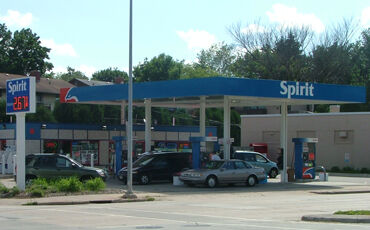
The independent market includes independent refiners and independent dealers. Crawford cited efficiencies in providing a more direct, closer-to-home supply of gasoline from Minnesota by way of Canada. Canada is the source of the crude and the oil is refined at an independent refining facility in Hastings, Minnesota, located south of the Twin Cities. As a result, Crawford said the cost of getting the product to Wisconsin is fairly cheap.
He could not precisely quantify the savings, saying the level varies. “Wherever you buy at an independent store, it usually comes from an independent refinery,” he explained. “So it gives the independent dealer a cost advantage that he can pass on to his customer. When you have lower costs, and you have majors located around you, you can be a little bit more competitive at the pump because your cost of product is lower on the independent market.”
In contrast to public perception, most of the major refineries are actually pretty close to home, concentrated in the Chicago area. But major oil companies still have a higher cost of doing business in many other areas, including the global exploration and harvesting of crude. If you’re dealing with a specific independent refiner, Crawford said their sole job is refining that crude, not trying to support a brand.
His expansion plans are focused on rural markets, but it may also play in urban areas where brand conflict exists. The rural markets intrigue Crawford because where there is a small community with a store selling less than 500,000 gallons per year, not many majors are going to consider those dealers. They also are going to pass it by, he said, because of the high cost of doing business there. Crawford said he can bring Spirit into such communities “with no problem.”
In terms of geographic growth potential, he cited central and northern Wisconsin, where you start to get into the more rural sections of the state. These are places where there might be only one gas station every 15 or 20 miles, its contract is up with a major that doesn’t want to re-up, and the dealer does not want to become “Jack’s Gas Station.”
Crude Observations
Crawford, on the extent to which Americans are aware that the two largest sources of oil purchased by Americans are Canada and Mexico, not Saudi Arabia and Iran: “I do not believe that many people know that. The last time I checked, about 7% to 10% of our crude comes from the Middle East.”
On why gas prices haven’t gone through the roof in the aftermath of the BP oil spill: “Suppressed demand is part of it, and the reality of it is that the majority of our oil comes from Canada. The amount of oil being spilled in this … it’s a horrible disaster. It’s terrible, but given the amount of crude that we go through, it’s a drop in the bucket.”
“The same scale accident happened on the west coast of Mexico, the same magnitude, in the 1990s and it wasn’t as big of a deal. That one didn’t touch us, but this spill is something that’s going to affect us greatly. It’s going to affect the environment. It’s an environmental disaster, absolutely, but for the loss of product, in the grand scheme of the world, it’s not a lot of crude. It just happened to be close to home to where it’s going to affect us environmentally, and it’s really sad because it’s going to affect these areas for a long time.”
On other opportunities for growth: “It’s very difficult these days to build new gas stations. We have a lot of them, and I think we’re going to see a loss of stations in the years ahead because of decreased demand. People are conserving. It’s definitely not a growth industry, but if somebody is in a market where a major is exiting, and somebody wants to remain competitive in their market … I think the other thing is that people are dealing in price. If you dealing with an independent in town, and they are always pricing beneath you, it becomes very difficult to sell your product. But they can’t price it even higher, and the price is higher because of the flag that is flying in front of the store.”
“There are dealers in Wisconsin like Quik Trip and PDQ. They are all company-owned, employee-owned businesses. It’s a model where you lose control of the store. You don’t own the store, whereas with this, you can remain independent and operate under a competitive price model with a good image. I think the big deal with this is that it’s an image that can be recognized across the country. Many people don’t know that majors don’t exist in every state. Every oil company does not have a presence in every state. With this kind of model, you can actually operate in every state across the country.”
Crawford, who also is a marketer for British Petroleum, on whether there still is a backlash against BP stations: “People actually are trying not to blame the dealers. We saw an initial backlash, but it was very short lived. I think it’s more difficult, in this day and age, in an urban environment. There is not as much connection with the store and the community you’re a part of, versus in a rural community. Most of my stations exist in smaller communities, so it’s harder for them to look at their friends and neighbors and say, ‘I’m not going to come here anymore’ because they have been doing business with them for years.”
“From what I’ve heard, we’ve seen more of a difficult time in congested urban markets versus the rural markets. Personally, my business is not impacted greatly.”
On oil industry consolidation of the past 20 years: “There were a few buy outs, but most of it was mergers. [Mobile] picked up Exxon after the spill [the 1989 tanker spill in Alaska]. During the current crisis, BP’s price dropped far enough where it would be very easy for someone to acquire it, but at the time BP was the largest oil company in the world. So it’s very difficult for someone to acquire BP, but Mobile acquired Exxon at a time when Exxon needed someone to help take over that [clean-up] responsibility. Most of them get bought and close down after merging.”
Sign up for the free IB Update — your weekly resource for local business news, analysis, voices and the names you need to know. Click here.

