

It’s always something. Energy prices go up and down. Global warming threatens. Emission standards are tightened, and the costs of vehicles increase. Plastic bags suddenly become the bane of modern society, after being the mainstay for years.
In the teeter-totter world in which we live, we hang on to any tiny morsel of good news in hopes it will propel us into a more positive future. Will it happen today, we ask? Next month? Next year?
At the University of Wisconsin Extension, a statewide independent entity of the University of Wisconsin, a new online degree program promises hope to businesses serious about surviving in a world that, left unchecked, could seemingly implode upon itself. The Sustainable Management Degree, which launches this September, is the first online bachelors degree program of its kind to develop “green collar” managers who will be primed to provide profitable solutions to help businesses preserve the environment and improve their communities.
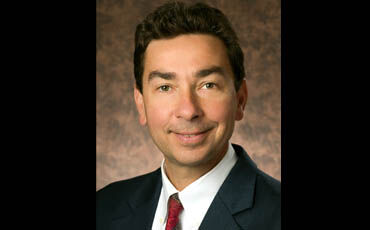
Credit the University of Wisconsin System for taking a thoughtful stance when redefining its role in the relatively new green business environment. “Green issues are hot right now,” said David Schejbal, Dean of Continuing Education Outreach and E-Learning for the UW Extension. “We knew this was coming,” he said, adding that he doesn’t expect the world to cool down anytime soon, water to flow freely, or the air to clean itself. So how will this impact business?
“If I’m a business owner,” Schejbal said, “I’m looking at the rapidly changing forces in the business climate: Energy prices are going to increase; water prices will increase and water itself could possibly become scarce; there will be increasing state and federal regulation on carbon emissions… Business will be affected by this, and the likelihood that my business expenses will go up is very high.”
Schejbal was hired in 2007 to take a serious look at developing an adult student initiative as part of the University’s growth agenda aimed at cultivating the number of degree holders in the state and increasing economic competitiveness. At issue, he said, is the fact that Wisconsin lags behind its Midwest neighbors in the percentage of those with bachelor degrees (35th in the nation overall), but has a large percentage of two-year associate degree holders (8th in the nation). Schejbal’s goal is to tap those adults and non-traditional students who may still be interested in completing their bachelor degrees.
Designing a Degree
With a 20-year interest in sustainability, Schejbal had conversations with more than a dozen large employers throughout the state to find out what their competencies were, and to discern their needs and interests. Then he contacted all of UW’s campuses statewide, offering each the opportunity to partake. Four campuses self-selected: UW-Parkside, UW-Stout, UW-River Falls and UW-Superior, and last summer, the curriculum began taking shape.
“We used information gained from employers, and from talking to prospective adult students about the services they would want and need, then spent the fall refining the structure of the program, developing the administrative focus for the applications process, et cetera, in an effort to propose the project in spring of this year,” Schejbal said.
In May, the Sustainable Management online degree program was approved by the Board of Regents, and since then, Schejbal reports the reception “has been quite good.” Over 100 students have called to inquire and nearly 15 have applied for the degree thus far. Students are able to choose which of the four campuses they want their degree from, and each campus reports having applicants now under review.
Sean Sullivan, 45, from Columbus, Wis., has worked for a national soft-drink distributor for fourteen years, and his wife of Chinese descent, started a foundation to help Chinese orphans with neurological diseases. Sullivan hopes the Sustainable Management degree will allow him to help make a difference across the globe. “I learned that [many birth defects] are caused in part to food and radiation pollution, so this degree could give me the opportunity to help me make a difference in this area,” he said.
Across the great pond, Whisper, 34, and Gerald Wells, 40, of Munich, Germany, have also enrolled for the fall semester. “Everything we do in America has an effect abroad, and vice versa,” said Whisper, originally of Phoenix, Ariz. “We have been able to see how carbon emissions in the U.S., China and other countries have helped to contribute to Germany’s loss of their last glacier.” The couple looks forward to opportunities the degree might provide them, such as management, business consultation, entrepreneurialism and even teaching. “We believe that, aside from technology, a change in mindset will be needed to address the pressing environmental, economic and political issues of the 21st century,” she said.
Offered at $350 per credit, the UW-Extension’s Sustainable Management degree program is a two-year, 63-credit, 21-course offering. Applicants must already have 60 transferable credits, which Schejbal believes makes it appealing to adult students. Every course is taught by a regular faculty member from any of the four participating colleges. Classes are taught daily, but because of the online nature of the program, students can engage in the course at any time of the day or night. There will be plenty of opportunities for students to engage with one another and work on group projects, all online, and a Facebook site has already been established. “We really designed the curriculum to be very simple,” Schejbal said. “There are 21 courses, and no electives. So if the students complete the courses with a passing grade, they graduate.”
Exactly what that “graduation” will look like is still up for discussion, according to Schejbal. “We’ll probably have the ability for students to engage in a ceremony by video, and we’d like to make them part of the campus ceremony.”

