
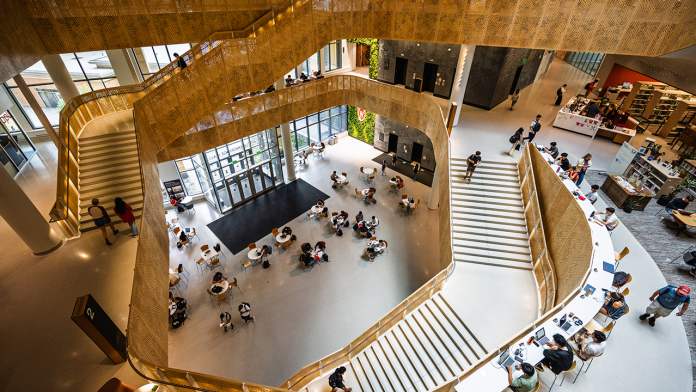

For the first time in more than four decades, the University of Wisconsin–Madison has launched a new college on campus, positioning the university and the state on the cutting edge of one of the most consequential technological shifts of the century.
The College of Computing & Artificial Intelligence, or CAI, officially opened its doors July 1. But while the college is new, its foundation is decades old: three established academic units — the Department of Computer Sciences, the Department of Statistics and the Information School — now sit within the college.
The college’s home is Morgridge Hall, the seven-story research and education facility built with more than $250 million in private funding. Over 100 faculty members are now part of CAI, bringing expertise in computing, data, information and statistics under one roof, alongside two major campus research centers.
At the helm is Remzi Arpaci-Dusseau, the college’s founding dean and a professor of computer sciences who has spent 26 years at UW–Madison. All eyes are on him — but he doesn’t seem to mind the pressure. In many ways, he asked for it.
“There’s nothing better than to be working on something important,” Arpaci-Dusseau said. “We’ve been pushing to have this happen for some time.”
That means making sure the college is able to both “meet the moment” and teach fundamentals that are lasting, he said. It’s a particularly challenging task when artificial intelligence is changing faster than universities can easily predict. For Arpaci-Dusseau, the answer isn’t to chase every new development. It’s to build an academic foundation that can withstand and anticipate the changes.
“When I started thinking about, ‘Hey, should we think about a college in this space?’ this AI tidal wave was coming. I also very much felt a responsibility,” Arpaci-Dusseau said. “This is going to be a big change. Are we just going to watch it happen? Or are we going to try to help shepherd the change that is happening?”
That responsibility is in the DNA of the college, he said, and his excitement about the possibilities is palpable. So is his concern for the future as worries mount from industry leaders on the speed of AI development and the technology’s potential dangers. The fall semester coincides with a very public and ongoing debate over whether to slow down progress in the technology following urgent warnings that advanced AI could lead to human extinction.
“It sounds like a sci-fi movie, right?” Arpaci-Dusseau said. “Yes, we’ll continue to build better technology so that when it is unleashed on the world, it’s not an, ‘Oops,’… but also making sure the people driving it have the right frameworks of mind, so they know we believe we’re all working towards building a better world together.”
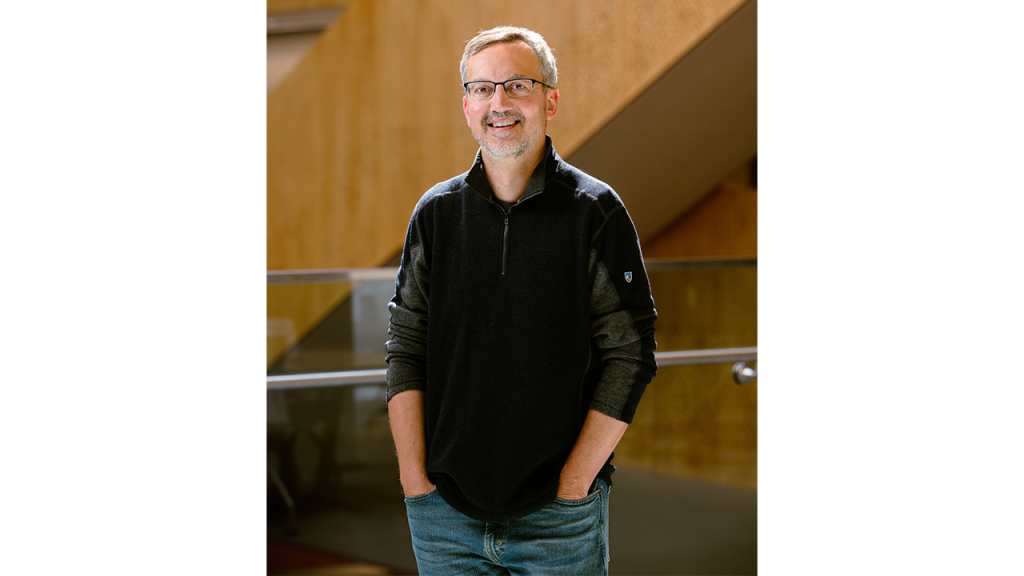
Photo: Beau Meyer
A foundation decades in the making
The idea for the College of Computing & Artificial Intelligence predates the current AI boom.
In 2018, UW–Madison administrators and faculty recognized that computing, data and information were becoming increasingly central to multiple fields across the university. Computer science enrollment had grown dramatically, from a few hundred students to roughly 1,000 undergraduate majors graduating in a single year.
The university responded by creating the School of Computer, Data and Information Sciences and launching a data science major in 2019, which is now the university’s second-largest, Arpaci-Dusseau said.
Then came AI.
Arpaci-Dusseau had seen something similar before. As a graduate student at the University of California, Berkeley in the 1990s, he watched the rise of the web transform Silicon Valley and the technology industry. The AI moment felt similar.
“It felt like there was going to be a significant change in the world of technology that would also be impactful to everybody and how they do their work and think about education and research,” he said. “We started to think about what we could do structurally on campus to make sure we’re ahead of it and we’re ready for it.”
That raised a question: How could the university organize itself to prepare for that change rather than simply respond to it? Bringing computing, data and information together around AI offered one answer.
“Moving those three departments as a unit to form a new college with AI as a centering point, as opposed to just something that we happen to study among many things, felt like a good direction to go,” Arpaci-Dusseau said. “We’re not just starting from scratch.”
The Computer Sciences department dates to 1964 and is the second-oldest department in the country. The Information School has roots stretching back roughly a century to the university’s library science programs. All of that history may prove useful as the college confronts the speed of AI development.
Still, anecdotally, skeptics of an AI-focused college question the risks of prioritizing a technological shift over enduring educational needs, particularly amid concerns from the public and policymakers around the environmental and ethical implications of the technology. Forty percent of Americans predict the impact of AI on society will be largely negative, according to a June Pew Research poll, and only 16% believe AI programs will have a largely positive impact.
School districts across the country continue to grapple with how to implement AI in classrooms. The Madison School District announced at the start of the school year administrators will continue to limit students’ access to artificial intelligence features on school-issued devices, blocking and disabling tools like ChatGPT and Google’s Gemini.
None of those concerns are simply noise to Arpaci-Dusseau. He said he takes the public’s concerns seriously, starting most talks by asking, “Who’s worried about what’s happening in AI?” A lot of hands go up.
“I see the full range of worry to excitement, and a lot of those live in a single person, myself included,” he said. “It’s reasonable that people have concerns. This technology is important and it’s powerful and it can change things. What can we do but make sure we have clear eyes when we’re looking at these things?
“When I was a kid, I found the computer a fascinating thing. I still remain incredibly amazed by the fact that I can have a conversation with a program. I can think about things and talk to a computer about them. If you’re not amazed by that, you’re kind of missing something. There is something really cool going on… but with that comes responsibility.”

Photo: Beau Meyer
‘Year zero’
CAI currently has four undergraduate majors: computer science, data science, information science and statistics. The college will spend the coming years examining what those programs — and the broader undergraduate experience — should look like in an AI-driven world, Arpaci-Dusseau said.
“What does the whole degree look like?” the dean asked. “What should anybody entering the world that comes out of our college have as their experience?”
There is no definitive answer yet but up to Mike Swift, the associate dean for academic affairs at CAI, to help determine. Faculty will spend this year developing new classes, pathways and curricula, including coursework designed specifically around emerging AI capabilities.
“AI is upending a lot of education,” Swift said. “We feel as the College of Computing & AI, we have both an opportunity and a responsibility to think deeply about how to invest in our instructors and our courses and make them more ready for a world with AI.”
Swift calls it “year zero.” It’s his job to create an academic mission for the new college, from learning support to curriculum to career services. So, “everything but research and sports,” he said.
“We’re learning a whole new college doesn’t happen overnight,” Swift said. “We are building up the foundation this year. We’re also thinking ahead to what we want to build on top of this.”
One new course, “Demystifying AI,” is designed for students across the university who will learn how the technology works and what it can do. A course on AI-assisted software development approaches the technology from a programmer’s perspective, teaching how students can use AI to design and write software more efficiently and incorporate it into the applications they build.
The college will also reassess student learning.
It is becoming more and more challenging for instructors to distinguish between student or AI-generated work, Swift noted. In Computer Science 200, an introductory programming course, instead of completing programming assignments independently at home, students will do most of that work in a lab setting with teaching assistants and peer mentors.
“In some cases it’s just fine if AI did it, but we don’t really know what they learned,” Swift said. “We want to create environments where students can’t use AI… instead of relying on students’ willpower to not use AI when they’re under a lot of stress.”
To both Swift and Arpaci-Dusseau, that process will require students and faculty alike to distinguish between what AI can do and what people should ask it to do. It’s a theme in just about every conversation: The college’s role is not just to teach AI but how it should be used.
“These are very powerful tools and technologies,” Arpaci-Dusseau said. “We often talk about the ‘can’ versus the ‘should.’ There are a lot of things AI can do. Whether it should do them or not is a different question.”

Photo: Beau Meyer
Research and partnerships
One of Swift’s primary goals is to prepare students to enter a workforce being reshaped by artificial intelligence. But that preparation cannot depend on waiting for the technology to stabilize.
“It’s easy to get overwhelmed and say there is so much that is changing so fast that we don’t know what to do,” Swift said. “It’s commonly something I hear from other places: Things are changing so fast that we’re just going to wait until things settle down.
“But we have to start thinking about how we can adapt.”
Research will help answer those questions and is central to CAI’s mission, not only to advance the frontiers of computing and artificial intelligence, but also to understand the technology’s implications across fields and communities.
For Patrick McDaniel, CAI’s associate dean for research, that work reflects one of the university’s most important roles in society: pursuing questions whose answers may take years to emerge while also examining the immediate risks and consequences of new technologies.
Universities, he said, have a responsibility to ask difficult questions about security, reliability, fairness, privacy, economic disruption and human values — questions that commercial enterprises may have less incentive to pursue.
“The role going back centuries in society is to answer these tough questions, or even to just pose them,” McDaniel said. “We probe the edges of a new technology’s capability, and then we understand how it can be used, how it can be misused, and what the downstream effects are on society and the economy and underserved communities.”
For UW–Madison, CAI’s research role extends beyond the college’s own departments. The university’s breadth — from medicine and engineering to agriculture and the social sciences — creates opportunities for researchers to work across disciplines.
It is “one of the great advantages of the University of Wisconsin,” according to Arpaci-Dusseau.
“It is good at practically everything. Not only is it truly a premier research university, but it has expertise across innumerable domains,” he said. “The university has recognized that this is a big technological shift, and we now have a unit that can be at the center of helping shape how we think about research, education and service because of that.”
McDaniel has met with associate deans for research across the university, and the questions are remarkably consistent: How can each discipline use AI, and how will AI affect its work?
That makes CAI’s role greater than just supporting research within its own departments. The college is intended to become a connector, linking its own faculty with the rest of the UW–Madison campus, the broader University of Wisconsin System and organizations throughout the state.
“We have a unique responsibility because our mission is broader than building just the next product or understanding what the advantages of some technology may be,” McDaniel said. “I’m an employee of the state of Wisconsin, and so my role is to figure out how AI will impact Wisconsin and the people in it.”
That statewide duty will also shape CAI’s partnerships with industry, McDaniel said. The goal is not simply to attract financial support, but to create relationships in which researchers and organizations can identify problems, test solutions and better understand the technology’s risks.
“It’s partnerships, not sponsorships,” he said.
Researchers need industry partners to help identify practical problems, understand how AI is being used and develop solutions that account for both effectiveness and risk. In turn, businesses can benefit from research that evaluates technologies more systematically. It will require an increased level of two-way exchange between universities and industry to “steward our way through this future,” McDaniel said.
McDaniel pointed to conversations with Epic, the Verona-based health information technology company whose founder, Judy Faulkner, is a UW–Madison computer sciences alumna. As Epic integrates AI into its products and processes, the company and university are working to formalize a partnership with CAI.
The details of the potential partnership remain in progress, according to both Epic and the UW. McDaniel said the aim is for researchers to help develop new approaches while also determining how effectively those technologies work and how easily people can interact with them.
A partnership could also give the university carefully managed access to real-world data while allowing Epic to benefit from the UW’s scientific methods and research expertise.
“That symbiotic relationship is going to happen over and over,” McDaniel said.
CAI is also developing conversations with partners in big technology, finance and medicine, as well as with tribal councils in Wisconsin, according to Arpaci-Dusseau. McDaniel said more collaborations and partnerships will continue to emerge in the coming months and years “crossing the entire span of the human experience.”
“The impact of AI is so deep and so profound that everyone needs an answer, and they’re looking for help,” McDaniel said. “We are pursuing these aggressively and have been quite successful.”
For Arpaci-Dusseau, those relationships position UW–Madison to play a role in determining how Wisconsin, as a state, responds to AI.
“We’re well positioned to move the needle in this space,” he said.
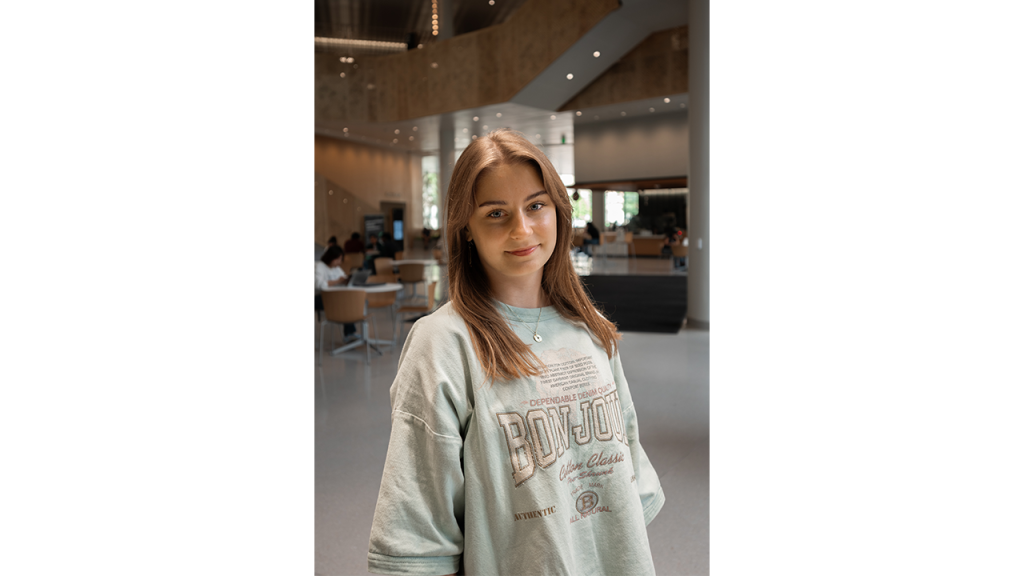
Photo: Beau Meyer
‘Education first’
Professor Shamya Karumbaiah studies the “can” versus the “should” query in UW–Madison’s Department of Educational Psychology. Her research focuses on constructing a scientific and critical understanding of equitable and responsible use of AI in classrooms.
The extreme conversations she’s seeing happen around AI aren’t “productive or beneficial,” she said, but not surprising. Humans have a tendency to chase after the latest, shiniest tech and hope it’s a panacea.
“Either people are entirely for AI or they’re entirely against AI… but it can’t be an entire problem or an entire solution,” Karumbaiah said. “It’s probably somewhere in the middle.”
At least, that’s her own approach in the Responsible AI for Learning Lab she runs for the university. She believes AI is, simply, a tool, and should not replace teachers or shortcut learning.
A good rule of thumb is to go “education first” instead of “AI first,” she advised.
“Go teacher practices first. Go education research and theory first,” Karumbaiah said. “We know students learn better when they are collaborating with other students, when they are actively engaging in their learning, when they’re problem solving, when they have more agency.”
Gabrielle Czeremuga is going into her senior year at Madison, studying both computer sciences and information science. Transitioning into CAI didn’t feel like a big shift to her, other than a new name for her school and a new building where her classes are held.
She sees the new college as a greater investment in her own education.
“This is just the next step in this growth, putting effort into the education of computer, information, data science. It’s not really a big change for me,” Czeremuga said.
She has seen the reverberations of AI in her classrooms more vividly, however. It’s not just a change in how she, herself, does homework or the types of assignments from her professors, which she contends are more project-based than ever before. And it goes beyond the assumption in classrooms that AI will inevitably be used by students.
Czeremuga said she can see how the way she is learning is shifting in real time.
“The way I learn has adapted. It is a little bit more efficient; I’m able to complete more than I have in the past,” she said, “but I wouldn’t say I’m learning any less than I did before.”
It’s no surprise that AI is altering the way students learn. In fact, it’s a given for Swift, the associate dean.
Students aren’t going to office hours as frequently because they’re talking to AI instead, he said. It can provide student feedback on work. It might even give grading assistance to TAs.
Rather than fight that change, Swift is thinking about what professors can do with that freed-up time.
“We can now put that time into talking to students about what they’re learning, answering this question of, ‘What is it we really want students to know?’” he said.
Swift has been a professor of computer sciences for over 20 years at Madison. He’s seen a split of students ranging from incredibly resistant to AI — “They feel like when they use AI they’re not learning things and want to do it the old way” — to others who are going to do everything with AI if they can.
It’s a dichotomy the college will need to confront eventually, he said.
“There’s a big range in what students want. There’s a moral opposition to AI — we’ll have to address it. How do we teach the students who may be uncomfortable with AI or don’t want to use it?” Swift asked. “To some extent in computer science, at least when I talk to people in the business, pretty much 100% of them are using AI as much as they can. Students will have to get there eventually.”
For Czeremuga, it boils down to controlling her own use. She said not using the new technology isn’t a feasible option anymore, especially if that would mean putting herself “below other students.”
“I do know it’s a tool,” she said. “I like to keep AI away from my design work because I like my brain a lot. I like using it; I’m not going to let AI take that away from me.”
Correction: An earlier version of this story misstated that biostatistics and medical informatics is part of CAI; the department is part of the School of Medicine and Public Health. In addition, two research centers are housed in Morgridge Hall but aren’t organizationally part of CAI.

