

Trucker hats were historically referred to as a feed cap or gimme cap (as in, “gimme a free hat”), because of how they were distributed by agriculture companies.
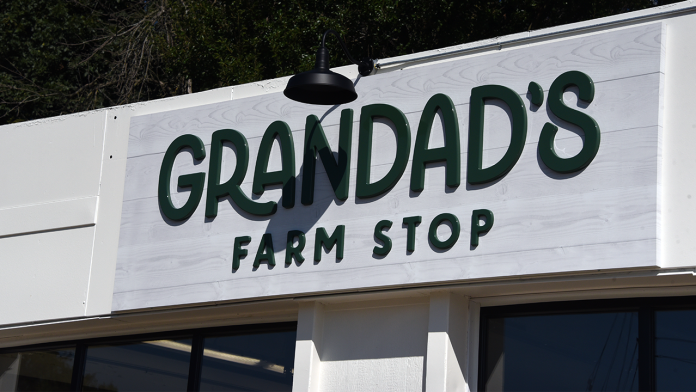
Patrick Randolph’s new business, Grandad’s Farm Stop at 3802 Mineral Point Road, features a white and blue feed cap as its logo because his grandfather, a farmer, could always be seen in one.
The patriarch’s hat could serve as a symbol for his entire family.
“My whole family’s in agriculture,” said Randolph, who opened the farm stop Sept. 17 on Madison’s far west side. “Granddad was a farmer. My other grandfather, he was a vet. My dad was in animal sales. My uncles farmed, or were in agriculture in other ways. So it’s always been part of our life.”
For Randolph, who worked in higher education before leaving in 2021 to manage a small community supported agriculture farm, the business brings him full circle with his family’s legacy.
While working at the CSA, Randolph thought, what if there was another place for farmers to take their excess produce, and drop it off for people to sell?
Enter the farm stop. It’s a way for farmers and other makers to sell food at market prices in a permanent location.
It’s what Randolph found at Argus in Ann Arbor, Michigan. Argus opened a farm stop in 2014. Another organization, Local Roots in Wooster, Ohio, began something similar in 2009 with a group of volunteers who built a local food market to promote community development.
The farm stop is like an everyday farmers’ market that looks similar to a traditional grocery store. Each item is labeled with the farm and where it is from. And Grandad’s tries to sell the food as close to a market price as possible, with about 70% for the producer and 30% for the stand.
According to the American Farm Bureau Federation, about 15% of every dollar on average goes to a farmer when it comes to a regular grocery store.
With the farm stop, Randolph hopes to help address another problem across Wisconsin: the consolidation and closure of farms.
“Wisconsin, just like every state, is losing so many farms,” Randolph said. “We’ve lost like 65% of our farms since, like, my parents graduated high school. Dairies are closing, and we have a lot of people who want to grow amazing food, but we make it so hard for them.”
People need land, equipment, labor, know-how, logistics and social media for marketing. That’s in addition to places to sell the goods.
“I’m not claiming the farm stop model can fix our local food systems, but I just want to make it a little bit easier for the farmers to make a living and… take their businesses wherever they want it to go,” Randolph said. “Whether they just want to have a little extra money to go on vacation with their families, they want to take a Saturday morning off or they really want to pour the time that they would be at markets into… growing their business.”
He points to the Argus farm stop as a successful model. Argus has paid out over $30 million to its producers since it opened its first store. It now has three.
“Our top 75 producers all received an average of $47,000 in 2025,” Casey Miller, external training manager at Argus Farm Stop, said in a statement. “Those numbers, $30 million, $47,000, are our consignment payouts back to farms, not sales. We are located in Washtenaw County, Mich., which now leads the state in the number of new vegetable farms opening. That turnaround is not solely due to Argus, but we are certainly part of it.”
A growing venture
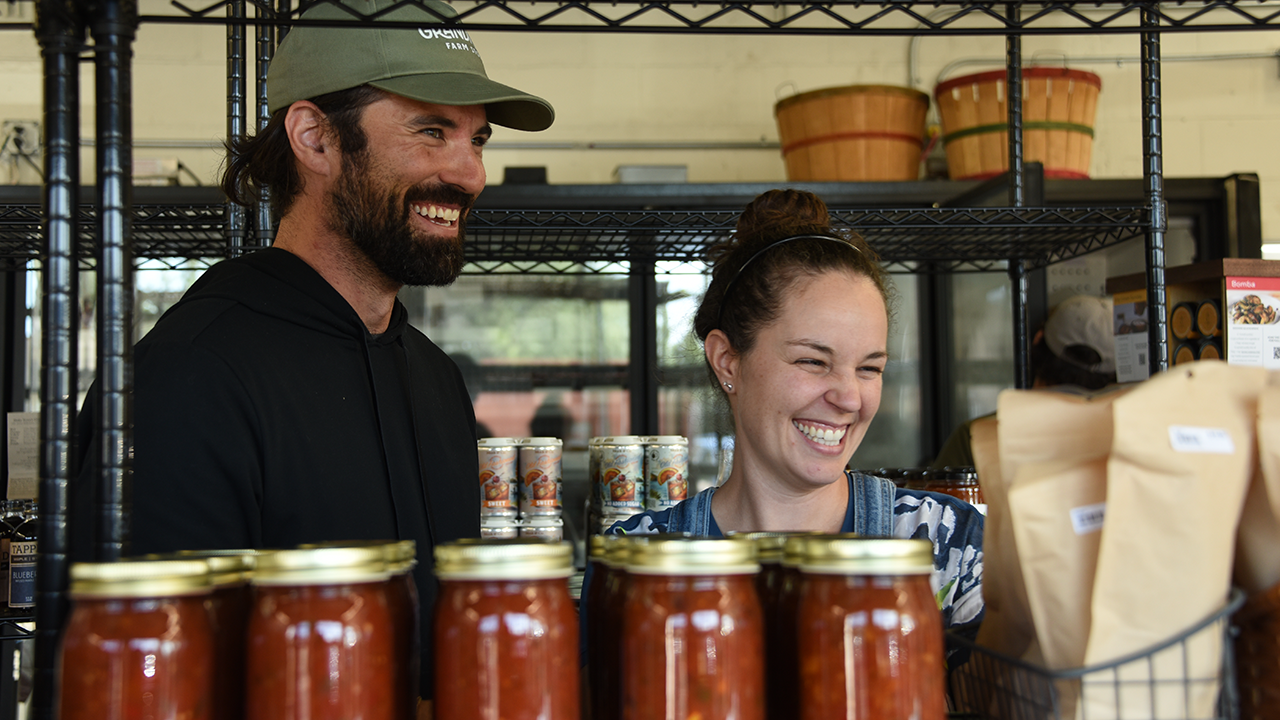
Grandad’s Farm Stop was once a towing station, built in the 1960s. Randolph is leasing it.
It took quite a bit of work to get the location up to where it is today. The garage side of the building houses the grocery store portion, and the rest is a cafe with coffee from local roasters like Ruby Coffee Roasters in Nelsonville, as well as pastries made in town.
The business offers a place “just to also highlight the local food producers, the local bakers, give people a chance, the small places that don’t have a storefront yet to sell in a retail setting,” Randolph said.
Helping to get the work done was a small grant from the city of Madison to improve the facade. Randolph said his business was approved for a matching grant of $40,000.
Full glass doors, outdoor seating and ADA-compliant lighting were all in the works last month as the business prepared for its opening.
In the future, Randolph hopes to host neighborhood events in the parking lot and bring in artisan markets and other farmers for a farmers’ market, and even host live music.
“We’re really going to try and make it a third space for the community,” Randolph said. “It’s all centered around local food and local agriculture.”
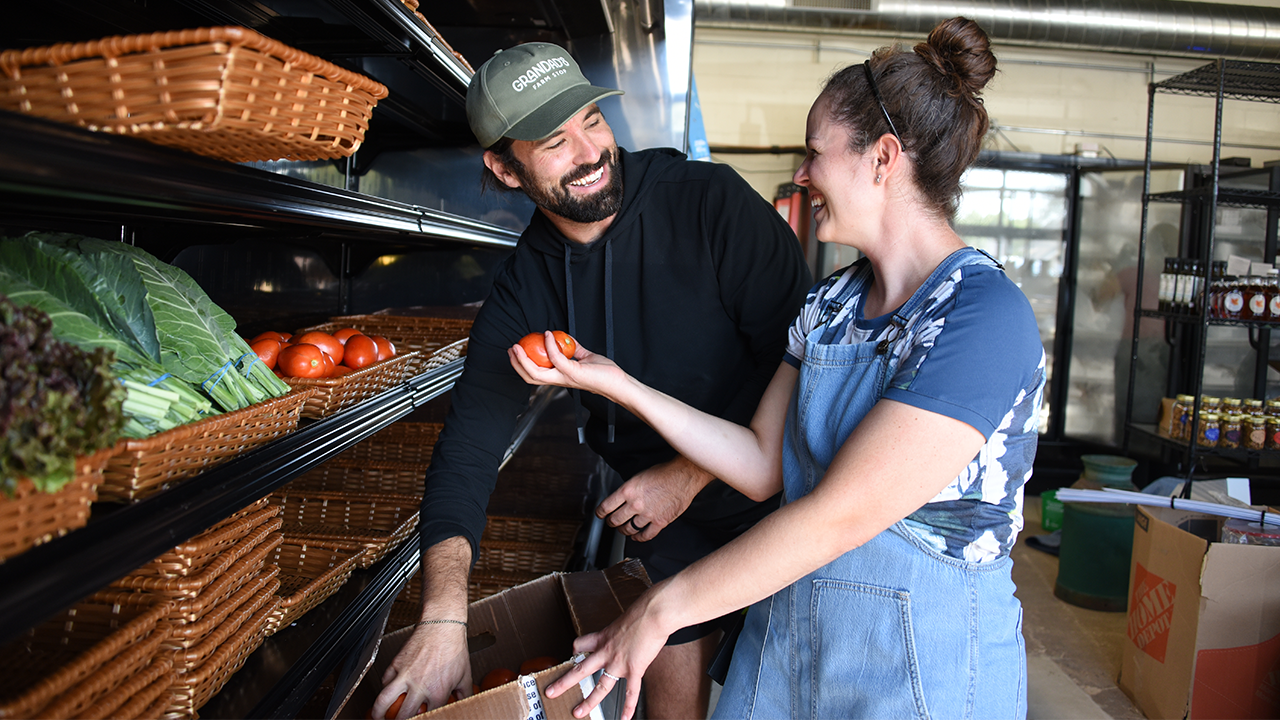
As of early September, Randolph had about 70 farmers and vendors signed up to sell their wares at Grandad’s. They include food producers with products like eggs and milk, maple syrup, meat, vegetables, Bloody Mary mix and granola.
Alicia Madigan, founder of Uncle Tony’s Kombucha, found Grandad’s when searching for a new account as its third birthday approached. Madigan has sold in smaller coffee shops and artisanal stores around the Sauk Prairie area. She found Randolph on social media and it felt like a natural fit.
“Working with other small companies is definitely my preference; I like being able to promote one another and there is an appreciation for each other’s back stories,” Madigan said in a statement.
Having a consistent home rather than, say, a farmers’ market was also seen as a great way to keep her business running smoothly.
“Efficiency is obviously important to all successful businesses, but especially when you are the sole employee,” Madigan said. “The farmstop model helps me to keep my brewing schedule and quantity much more consistent than a once-weekly farmers market would.”
Randolph said he wanted Grandad’s to be as much of a one-stop-shop as possible, so kombucha next to fresh vegetables only adds to that shopping experience.
In building his business, Randolph also worked with Lily Gross, who opened Radish Farm Stop in southwest Minneapolis in early August. Gross and Randolph, who met at the first farm stop conference at Argus in 2024, visited Argus to learn all about the farm stop model.
“We’ve been able to bounce things off one another, support each other and also inspire one another to keep moving forward,” Gross said. “We’ve helped keep each other from throwing in the towel.”
“We’ve been partners in crime across state lines the past three years,” Randolph added.
The National Farm Stop Conference has grown since 2024. It last brought in 240 people from 38 different states to Ann Arbor. According to Argus’ Miller, there are over 30 farm stops open around the U.S.
For Gross, she found the stop to be busier than expected when she opened, making all the hard work and effort worth it. Randolph hopes his Madison farm stop is received similarly.
“The family’s excited, especially because granddad meant a lot to everybody, and he was really the patriarch,” Randolph said. “It’s scary, it’s a lot, it’s stressful, but you know, we’re gonna get it done. People will be surprised how many vegetables you can actually buy fresh, local, in the non-growing seasons.”
Correction: An earlier version of this story incorrectly credited the source of a grant that Grandad’s Farm Stop received.

