


POYNETTE — In April 2025, Leah White and her aunt moved into an apartment in the new Point Gardens, an 80-acre development just beyond Dane County’s borders in neighboring Columbia County. White said she was seeking housing at an affordable price point and a community that felt safe, healthy and connected.
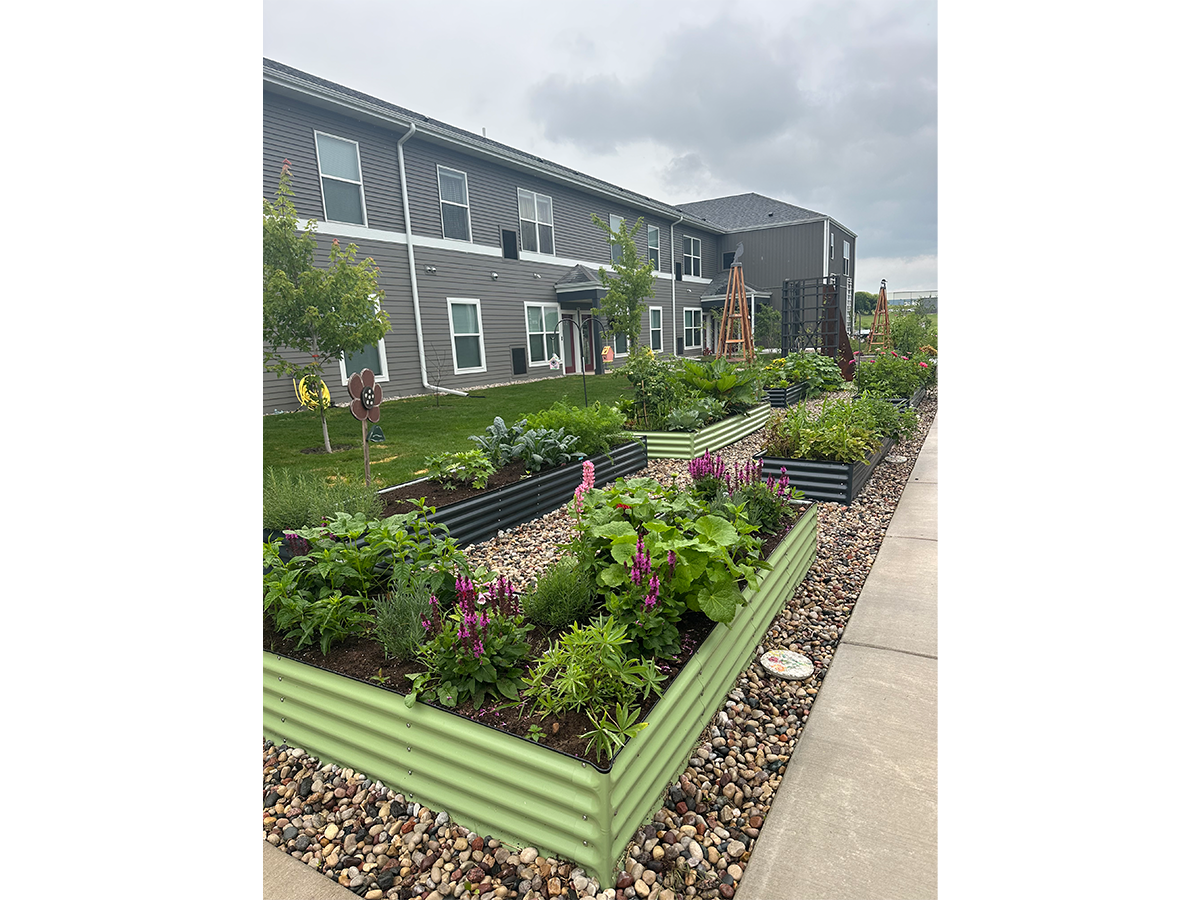
Her window overlooks a courtyard of community gardens that have yet to awaken, but they’re beautiful during the growing season, she said. White has cultivated tomatoes, strawberries, lettuce and rhubarb.
“I feel like this is the type of neighborhood I had when I was a kid, where people are starting to know everybody, all the kids know everybody,” she said. She added that her new home, while not inexpensive, is more affordable and nicer than other nearby options and offers a better quality of life.
“It’s quiet, and you have lots of space,” she said. “It’s all brand new. … And there are opportunities (to meet people) here, mainly because of the gardens.”
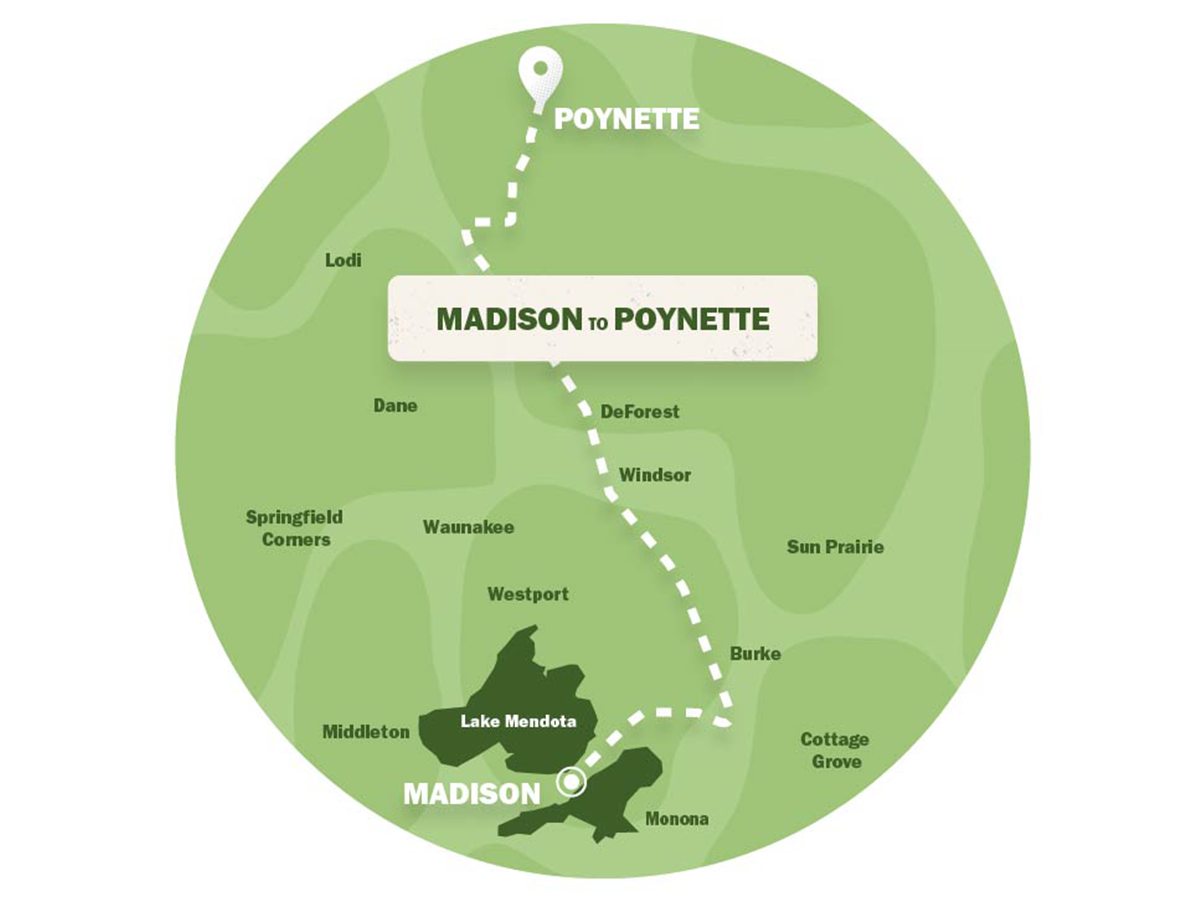
Point Gardens is a joint effort by Madison developer Randy Alexander, founder of Torque Companies; the village of Poynette and Pennsylvania-based seed supplier Burpee. Located less than 30 miles from downtown Madison, the development looks to address Dane County’s critical need for workforce and middle-income housing from a small town just outside of it.
Dane County’s housing crisis has been driven by several factors. According to a report released in August 2025 by the Regional Data Group, “Data on Dane County’s population, housing and jobs over the past 40 years show exponential growth curves rather than straight-line trends. Jobs have grown faster than population, with more workers living outside Dane County. Households have increased faster than housing units, resulting in lower vacancy rates.”
The RDG projected the county population will reach 887,000 residents by 2050, with an average growth rate of 16.5% per decade from 2020 until that time.
The crisis also disproportionately affects certain segments of the population, locking some families out of homeownership with high competition for a limited quantity of affordable units.
Point Gardens, which began construction in 2023, offers one- and two-story single-family homes that range in cost from the high $300,000s to low $400,000s, and one- and two-bedroom apartments with starting monthly rents in the low-to-mid $1,000s.
By contrast, as of the end of January, the average Dane County home value was $450,517, according to Zillow, rising 2.5% over the last year. And Rentometer reported in March that monthly rents for Dane County’s average one- and two-bedroom apartments ranged from the mid-to-high $1,000s.
Rooted in wellness
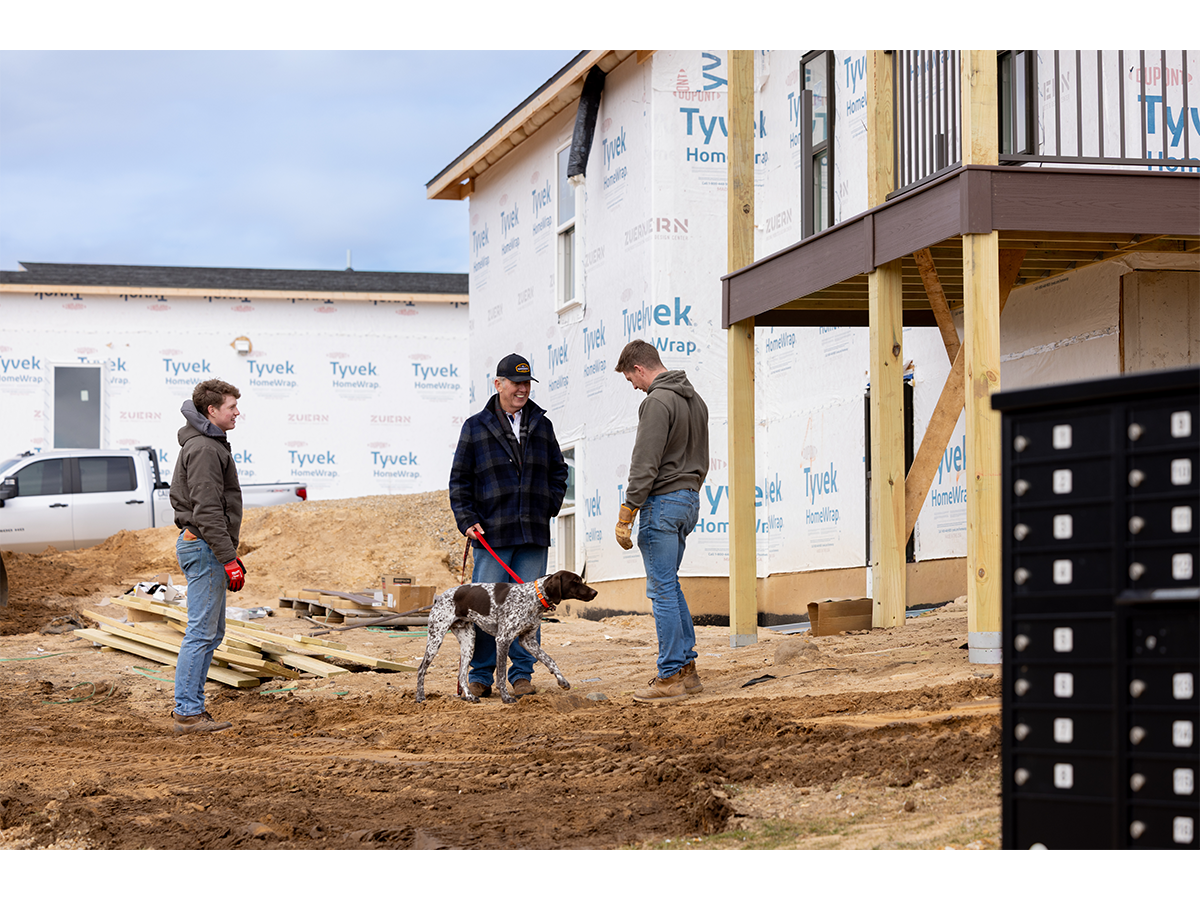
Roughly 40 of Point Gardens’ 300 planned homes and all 128 apartments have been built so far, and the $110 million project will ultimately house around 1,000 total residents — a boon for home-seekers working in and around Dane County, and for the tax base of Poynette, which has seen little growth in recent decades.
As its name suggests, Point Gardens was designed with an emphasis on nature and wellness. When complete, it will include a 12-acre public park with century-old oak trees, walking paths and trails, and — most notably — every home will have a raised garden bed subsidized by Burpee, along with a free year’s supply of plant and vegetable seeds.
“It’s (about) your health, your well-being,” said George Ball, Burpee’s executive chairman, who is a longtime friend of Alexander’s. “As people, we began to stay in one place over time, and that created families, that created communities. In a way, Point Gardens is kind of a reiteration of the basic notion of family life and social life … and gardens were the impetus. Plants give you nutrition … and people are connected.
“Most housing developments, they’re all the same,” he added. “This is the polar opposite.”
Alexander said the project has a clear social benefit, coupling its pragmatic aim to create more workforce and middle-income housing with an altruistic desire to connect residents outdoors around activities that promote health and wellness.
“There’s a lot of talk here (in Dane County), but there’s no action to back it up as far as I know,” said Alexander. “What are you going to do about (housing), city of Madison or city of Middleton or city of Verona, if you really care about that community?
“I have no interest in building McMansions, expensive homes for people that easily can afford them. … I want to help that family, that service worker that is otherwise priced out of the single-family home market or priced out of Dane County because they can’t afford to buy there.”
For its part, the city of Madison has set a goal to create 15,000 new homes by 2030, and its Housing Forward initiative launched in 2021 to address the city’s housing needs through a number of programs. And Dane County Regional Housing Strategy’s priorities for 2024-28 include increasing the number of housing units for low- and moderate-income households and overall; providing housing and resources for the most vulnerable populations; preserving the affordability of existing housing and offering more pathways to homeownership.
Why Poynette?
Alexander said his primary motivation for designing and developing Point Gardens in Poynette stemmed from the adverse effect Dane County’s housing crunch has on low- and middle-income families.
“It’s your teacher, your police officer, your service worker. They’re the people that have to drive the furthest to work in Dane County,” said Alexander, “and I don’t mean 15 miles away. I’m talking 60-70 miles away.
“That has a huge impact on family. If your mother or father are both gone for (an extra) three hours a day when you consider the commute, that’s wasted time, effectively. Or you have the situation where you’re living in something substandard.”
Through discussions with Poynette’s village administrator, Craig Malin, Alexander said he saw quickly how Poynette would be a more “economically viable” option than Dane County for this new kind of workforce housing development.
“The land values in Poynette are substantially lower, the entitlement cost and the entitlement process was streamlined … and finally, they use what’s called Pay-Go TIF to fund the infrastructure — that’s the water, sewer, streets, stormwater and underground utilities for the entire development,” he said.
Pay-Go (or Pay-as-you-go) tax incremental financing incentivizes development by reimbursing a developer who funds upfront infrastructure costs with money from property tax increases generated by the project over time.
“(Dane County will) have to do this if they want to cater to middle income housing,” said Alexander. “(A project) is not a good idea if you can’t afford to build it, and it’s not a good idea if the market isn’t there to accept what you’re going to build. … There was a big challenge, not just to create something for families that are otherwise priced out of the market … but also to try to do something a little bit more unique.
“Plus, if you live in Middleton, and you have to come downtown to work, (Poynette) is not any further in driving time, and probably less fuel cost because you’re basically on the interstate, versus cutting through traffic everyday.”
Poynette’s Malin said the development will be mutually beneficial. In early 2022, plans for Point Gardens were brought forward to replace plans dating back to the early 2000s that would have removed the site’s old oak trees and created a more conventional subdivision with larger lots “that could have been any place in America.”
“I thought (we) could do much better than that,” he said. “I (wanted to do) something that builds value over time, and that’s not conventional subdivisions. … The first thing to do was protect those trees, and the second thing to do was … be smart about the market.
“If you look at the communities that add value over time, they have open space and they have community amenities. The plan was very carefully created to be both financially successful for the community, and the developer … but also to actually have social and environmental goals.”
He said historically, Poynette’s growth has lagged because the village lacked the right “tool kit” for developers.
“We didn’t have TIF,” he said. “I remember showing the village board a picture of central Wisconsin with all the towns on it that had TIF programs, and we were the hole in the donut.”
Malin added that developments like Point Gardens help small towns like Poynette preserve their unique character and economic vitality.
“The reality is, we’re a little distance away from the economic center of the region,” he said. “There’s 15 miles of farm fields between here and the edge of the sprawl. Way back when I was in Illinois, I used to go … to small towns 15 miles away from the edge of sprawl and say, ‘You’re about to be bulldozed over. You’re about to look like all those other places. You might want to think about getting some zoning that can save you.’
“This (development) is significant. It’s going to add 900 or so residents and ultimately produce about $40 million of (tax) increment, about $12.5 (million) of which is dedicated to this project … so that means more than $25 million for other community projects.”
Overall, the project is projected to bring $91 million additional assessed value to Poynette, according to Malin.
Diana Kaschinske, Poynette’s village president, said that while community feedback on the plans for Point Gardens was initially mixed, that wasn’t reason to abandon them — it was reflective of the project’s novelty.
“Mixed feedback is not negative,” she said. “It’s just something new. … This development is something that has never been done in Poynette. Point Gardens is not boring — it’s fresh, it’s bright, it’s a ‘first’ in our little small town. … And there’s something for everybody.”
Malin added that, meanwhile, feedback from Point Gardens’ residents has been glowing.
“People who live there love it. They’re looking forward to us getting the park built … and that will happen this year.”

Grow your own way
Point Gardens’ “biophilic design philosophy” aims to integrate nature through a variety of housing types, gardens and landscapes.
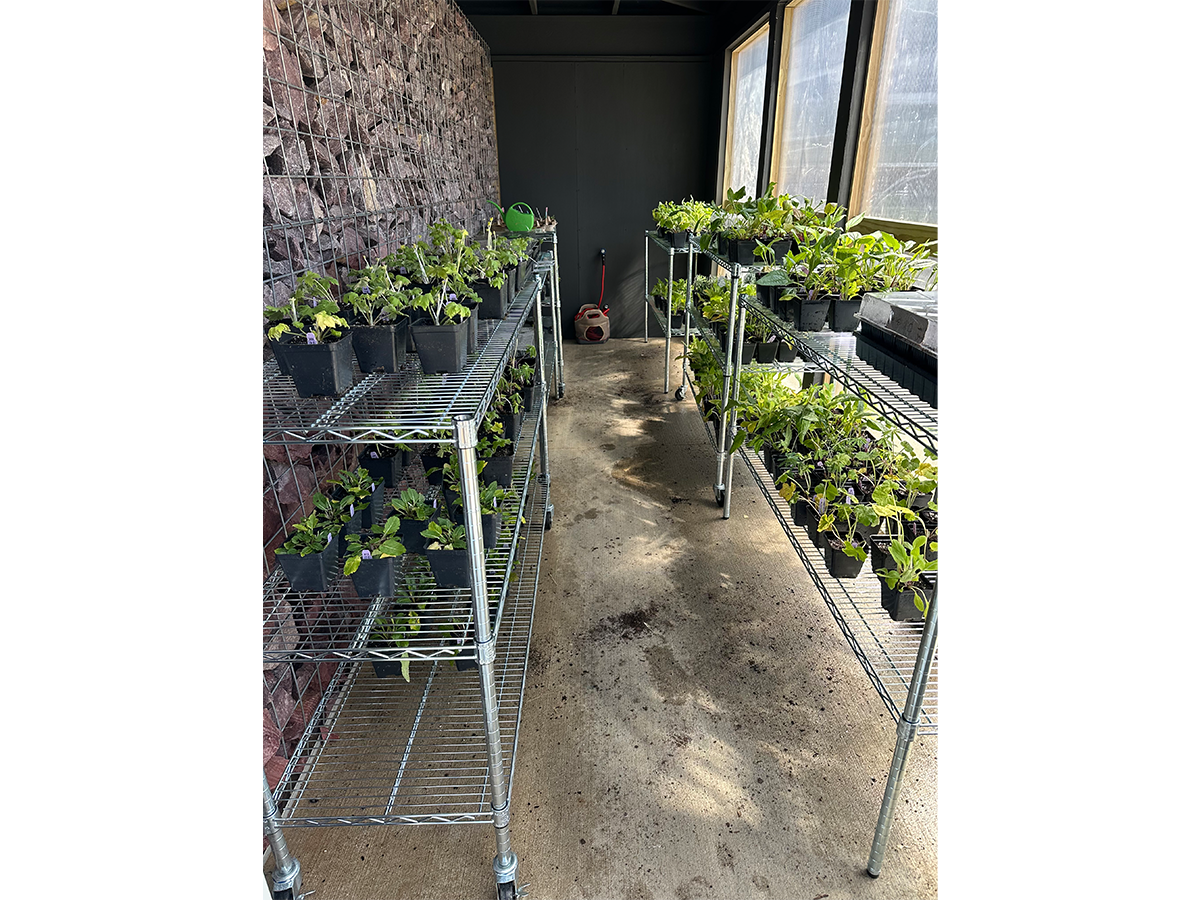
It will be home to Poynette’s second-largest and highest elevated park. Social spaces like gazebos, grill areas and a greenhouse foster resident interaction. Combination bike and pedestrian paths, water retention basins that allow fishing and ice skating and trails connected to the parks system provide recreational options and create cohesion throughout the development.
“It started with saving the trees, and now we’re adding in walking paths and gardens (and) you start to meet your neighbors,” Malin said. “Community is built into the plan — it’s not an afterthought.”
“In the summertime … you go up there, and you see these new buildings, and all the people that live up there. They’re working in their gardens, which are beautiful,” said Kaschinske. “People are out there. They’re interacting. … It’s a neat, neat development. It’s something we’ve never had.”
Alexander said his relationship with Ball of Burpee inspired the development’s more specific focus on community connection through growing plants and vegetables.
“Gardens not only have health (benefits), but psychological health (benefits) as well,” he said. “I told George I had this opportunity and (said), ‘How about you sponsor it and provide horticultural support … to all the owners on what to grow, how to harvest your garden, how to care for your garden after harvest?’
“(He would) provide seeds and plants, provide a greenhouse and subsidize above-ground planters for every home.”

Residents also receive twice-yearly in-person guidance from horticultural experts and access to a web platform that provides additional plant-focused instruction.
“We have one of the greatest garden climates throughout the country, the best soil, certainly, in the Midwest,” said Ball. “Your nutrition (is improved) very greatly from a home garden with home-grown and perfectly ripened vegetables.”
Moreover, he said a study conducted roughly 20 years ago at Rutgers University by Jeannette Haviland-Jones, a professor emerita of psychology, showed that having flowers and plants around could positively affect people’s mental health.
“It elevates the mood in such a deep way, and she proved this,” said Ball.
Solid fences aren’t allowed between yards in Point Gardens — they must have at least a 50% transparency. Alexander said increased opportunities for interaction among neighbors are important to avoid isolation and increase mental wellness, and Point Gardens resident White agreed.
“What I observed going through COVID was that everyone was very isolated, and I feel like in this neighborhood, if that should happen again, you could keep that distance but still have the social factor,” she said.
“Living in a small town is much different than living in the city,” said another resident, who preferred to remain unnamed. She used to live on Madison’s north side and said at the time, “I knew my neighbor next to me, and I knew my neighbor across the street. Other than that, I didn’t know anybody.
“This is a different way of life (when) you come to Poynette. … We do a lot of gardening activities. They bring in people to give away starter plants, or flowers to pot. They explain everything to you if you’ve got questions.
“We have a blast, harvesting the garden and that kind of stuff. … It was really a fresh start for my son and I.”
The development’s emphasis on nature and wellness also translated, in a broader sense, into a design that increases efficiency and sustainability. Narrower street designs reduce the amount of material needed for their construction — as well as impact from stormwater runoff by decreasing the amount of impervious surfaces — and promote pedestrian and bicycle safety.
Houses in the neighborhood are roughly 35-37% more energy efficient than the state standard, Alexander said, and they are set up for optional solar paneling, according to residents’ preferences. They also are equipped for electric vehicle charging.
“We have about 13 different (home) designs and a lot of variety on floor plans,” he said, “and we really worked hard from a design standpoint to make them very efficient to own and operate. … We worked really hard to keep the prices low. … The energy efficiency is better, and you won’t go to the wrong house if you have a couple beers.”
He added that high home maintenance costs can present a burden for low- to middle-income homeowners.
“This is about helping people,” he said.
Room to bloom
Alexander said the apartments at Point Gardens have been filling up as fast as they’ve been built, and occupancy in the rest of the neighborhood is steadily climbing, despite high interest rates.
Only so many spec homes are built at one time, but new construction continues as these sell. And while full neighborhood occupancy could take as long as 10 years, he said, “We’re at an advantage. We’re a price leader for quality. The incubation period may just take longer.”
Poynette’s Malin said the development can provide the right fit not just for young couples or individuals, but for retirees looking for modest-sized homes and lots, and families seeking a close-knit neighborhood.
“My first house was 1,400 square feet … but it was a great house. We loved that house,” he said. “Having a small house that’s manageable works well for a whole lot of people who don’t need a swing set in the backyard, and you don’t really need a swing set in the backyard if you can walk within 90 seconds to the second-biggest park (in Poynette).
“I appreciate life in Madison — it’s a fine life! But if you want to have access to that urbanity but live in a cute small town around (it), this is the place.”
Project snapshot
▶ Project cost: $110 million
▶ Location: 115 Boneset Ave., Poynette
▶ Total planned single-family homes: 300
▶ Total apartments: 128
▶ Projected full occupancy: ≤10 years
▶ Projected additional assessed value (to Poynette): $91 million

