


Chief financial officers. Human resource managers. Operations and technology directors.
These aren’t just high-level jobs. More than ever before, growing organizations are turning to highly skilled professionals to fill these gaps in their companies — but they’re using fractional employees to do so.
A fractional service provider is an expert who offers their services on a part-time basis to multiple clients. It’s not just a part-time job and typically not on a project-to-project basis like a contractor. And it’s more than just a rebranded name for a consultant.
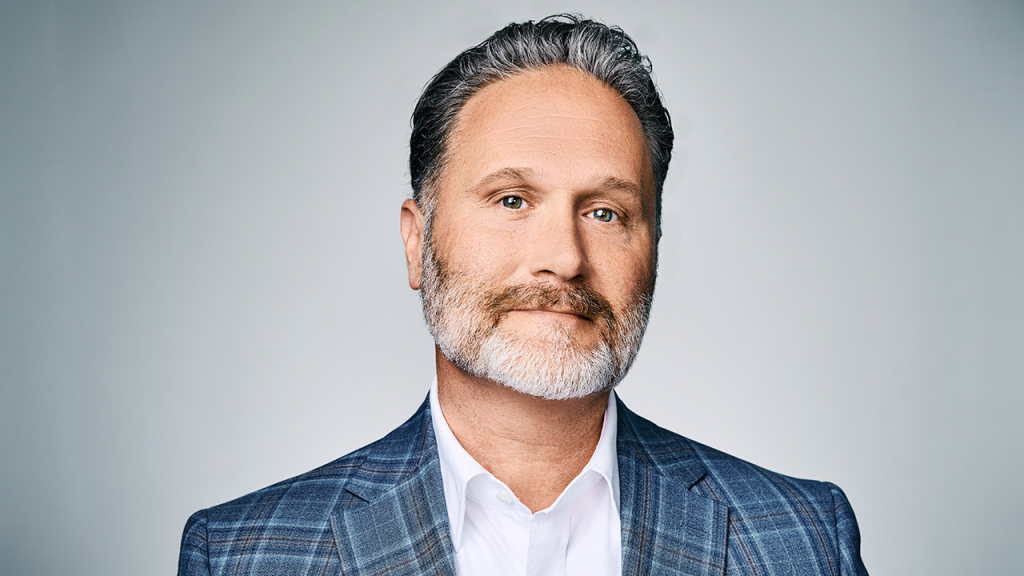
Across the region, the fractional economy is booming, according to Zach Brandon, president of the Greater Madison Chamber of Commerce. He sees it as a natural evolution of the gig economy.
“Almost a decade ago, we were looking at what an economy looked like where some percentage of workers were either by necessity or by opportunity cobbling together multiple jobs in order to make ends meet,” Brandon said. “They are different sides of the same coin. On the fractional side, it is really more about opportunity and less about necessity.”
More and more, firms providing a plethora of fractional offerings are popping up, Brandon noted.
“It really is a near-perfect evolution of the value of labor and the need for capital. It allows efficient capital use and it allows labor to dictate terms and do what they want. As a growing piece of the economy, it feels like a win-win,” Brandon said. “Now you’re building companies around it, and it’s just evolving in very interesting ways.”
Part-time expertise without full-time costs
For companies like SustainableHR PEO, the opportunities have multiplied threefold. While the business’ aim originally was to be an outsourced accounting partner in smaller organizations — mainly nonprofits — it became increasingly apparent to Mike Brand, co-founder and partner of the firm, that there was also a need for payroll, HR and benefits assistance, too.
Now, SustainableHR PEO provides a multitude of fractional services, including recruiting, controllership and interim finance department support.

“There’s a lot of part-time need for expertise without the full-time employee costs… and there’s clearly a need and a way to make money in this space,” Brand said. “The industry niche is the biggest key.”
Fractional service providers can offer a different level of expertise, Brand said, that has become attractive to businesses in the past decade. Companies hiring out for these services not only get specialized knowledge and years of experience but also “the backing of a whole firm.”
“You get more than just an individual’s expertise,” Brand added.
Companies considering fractional roles should start with the question, “What do we do where the value of our investment is better allocated toward people doing the day-to-day work?” said Brandon, with the Chamber of Commerce.
The answer to that is changing. He added there’s a reason many fractional roles start with a ’C’ — CFO, CMO, CIO, CRO, COO and sometimes now even CEO. If the fractional economy is rooted in opportunity, the roles themselves are rooted in significant skill sets.
“We feel certain that the fractional services economy is a positive manifestation of that gig economy dynamic, so much so that we have a fractional CFO,” Brandon said.
Hiring a full-time chief financial officer for the chamber would cost the nonprofit well into the six figure range, a luxury they can’t afford for a “sliver of a responsibility,” Brandon said.
“What fractional allows us to do is to buy a piece of a highly skilled person’s time; it gives us flexibility and, maybe most importantly, it gives us efficient capital use,” he said.
The role is a new addition to the chamber as of this year, he added, and a reflection of the economy’s changing landscape. The goal of building the chamber’s 48-person board is to represent every industry, sector and size, Brandon said.
“It may be the truest proof point, when you have a fractional service provider on the chamber board,” he said. “That tells you their time has come.”
Relief for a stretched workforce
Businesses still need consultants, contractors and freelancers, according to Brandon, as well as full-time experts on staff, too. The biggest differentiator is expense — and also the relationship between employee and company.
“None of this is designed to put one over the other. There are different types of relationships. Many times consultants are transactional; they get you from one thing to another,” Brandon said. “Fractional roles — at least how we’re using them, how we’re seeing them be used and how they’re developing — are more permanent.
“To me, the difference is the long-term relationship and the depth of that relationship.”
For the time being, many fractional services are aimed at accommodating nonprofits, and to Nick Curran, CEO of the Madison-based firm Numbers 4 Nonprofits, it’s clear why.
“Budgets are really tight and that means, generally speaking, you’re not able to offer the best, most competitive salary for top-end finance people. You end up with high turnover in the position or finding out that people aren’t qualified to do the work that you hope that they would do,” Curran said. “That’s why we have come to exist.”
Numbers 4 Nonprofits has provided fractional accounting services to area nonprofits for 20 years.
From Brandon’s perspective, who benefits the most from fractional services can be boiled down to who has the most need for efficient capital use.
“That’s nonprofits and startups. Universally, that is a true statement,” he said. “It makes sense that’s where it would start.”
Now, 81% of nonprofits use an outsourced finance and accounting partner, according to the 2026 nonprofit leaders report from BTQ Financial. Among them, 59% describe the impact as “significant” or “transformational,” and 98% report at least a moderate improvement.
“The trend is that workforces are stretched. You’re always looking for a little bit of additional help, and when you’re bringing in a fractional, they should be bringing the experience and expertise so that you don’t have to spend a lot of time training them,” Curran said.
The future of fractional
Fractional begets fractional. While Numbers 4 Nonprofits provides fractional services, it also relies on them for its own human resources
and tech services needs.
“I wouldn’t be where I am without having that piece of my business outsourced or fractional,” Curran said.
It has helped Numbers 4 Nonprofits expand. In the last decade, the organization has grown between 10% and 30% each year, with the exception of 2020 because of the pandemic, said Curran.
“We plan to keep serving as many nonAto be there,” he said. “We exist for a reason. We definitely see a need in the nonprofit community for high-level finance people and the cost savings associated with that, too. So we’ll keep growing, we’ll keep serving, and I think nonprofits will continue to seek that out.”
While a fractional employee is still less costly than a full-time one (and employers don’t need to provide benefits), Brand with SustainableHR PEO said it’s often more than a consultant or part-time worker.
And as more businesses opt for this model, Curran said there’s a natural adjustment period.
“There are a lot of people who are used to that comfort, that security blanket of being able to go down the hall to talk with their CFO or finance person,” he said. “With fractional, especially if they’re remote, you won’t just be able to pop in. That takes some getting used to. You have to be a little bit more planful with how you work with us.”
As the fractional economy continues to flourish, Brandon said navigating new unknowns are going to be part of the equation. Organizations will need to test the limits and depths of how this employment model best operates.
“Ten years ago we didn’t know what the gig economy was going to be. We certainly don’t know 10 years from now what the fractional service economy will be,” Brandon said. “That’s what’s exciting about it. My guess is there are a lot of people thinking about it, maybe a little afraid of it.”

