



In today’s dynamic business environment, investing in professional development is essential for organizations aiming to remain agile, innovative, and competitive.
According to the 2024 edition of iHire’s Hiring & Job Search Outlook Report, 42.7% of job seekers value growth and advancement opportunities, while 37.5% prioritize professional development opportunities.
Empowering employees to grow and develop fosters a culture of learning, increases employee engagement, and enhances retention, ultimately driving business success.
But what constitutes professional development? Is it regular lunch and learn meetings with staff to discuss emerging industry trends? Or a certificate course through an online learning resource or local business school? What about graduate studies? All of the above, and more?
Broadly speaking, professional development in the workplace refers to a structured and continuous process designed to enhance employees’ skills, knowledge, and abilities, aiding their current roles, and preparing them for future career advancement. This encompasses various activities and initiatives aimed at acquiring new competencies, refining existing ones, and staying updated with industry trends and best practices. Implementing professional development can range from traditional training programs and workshops to modern approaches such as mentorship, coaching, job rotations, and online learning platforms.
The takeaways from professional development opportunities go well beyond just getting paid to spend a day in a classroom listening to a lecture you may already know all about. Among the benefits for both workers and their employers from professional development are the following:
Enhancing skills
Professional development focuses on learning new skills and improving existing ones. Whether it involves technical skills, communication abilities, or industry-specific knowledge, managers and team leaders can offer personalized coaching to enhance employees’ skill sets, resulting in improved job performance and organizational benefits.
Keeping up with trends and technology
In most industries, new trends and technologies are constantly emerging. To maintain success and relevance, teams must stay updated. Professional development provides continuous learning opportunities, access to updated resources, and networking with peers and professionals in the field, keeping employees informed about the latest developments and technologies relevant to their careers.
Improving job satisfaction
As employees become more proficient and knowledgeable, they often experience increased confidence and a sense of accomplishment, leading to higher job satisfaction. When employers invest in development initiatives, it demonstrates a commitment to employees’ growth, significantly impacting their satisfaction and motivation.
Enabling personal growth
Supported employees are more likely to feel engaged and fulfilled in their roles. Employee development often involves networking with colleagues and experts, leading to valuable connections, collaboration, and mentorship opportunities. Engaging in professional development is crucial for personal growth, empowering individuals to expand their capabilities, advance their careers, and achieve their full potential.
The following are examples of just some of the types of professional development practices that exist for employees:
Continuous learning platforms
Across all sectors, continuous educational initiatives are vital for enhancing employee engagement, job satisfaction, and knowledge retention. By investing in online learning platforms, organizations can promote professional growth and adaptability. This is achieved by offering tailored courses, tutorials, and resources that align with the team’s skills and industry dynamics.
Skill-specific workshops
Hosting workshops or seminars focused on specific skills or technologies is crucial for team success. These sessions, led by internal experts or external trainers, provide targeted learning opportunities that cater to the team’s needs, enabling employees to acquire new skills or deepen existing ones directly related to their roles.
Cross-training opportunities
Cross-training encourages team members to learn skills beyond their primary responsibilities, increasing flexibility and enhancing overall productivity. This approach enables employees to handle various tasks and serve as backups during absences or peak workloads.
Mentorship programs
Implementing mentorship programs addresses the unique needs of both the team and the organization. Mentoring offers personalized career advice, guidance, support, and networking opportunities. A well-structured program provides team members with valuable insights, confidence, and connections essential for professional growth.
Soft skills development
In any workplace, soft skills such as leadership, time management, and empathy are crucial for effective communication, collaboration, and relationship-building. Enhancing these skills not only improves individual performance but also fosters stronger interpersonal connections, enhances leadership capabilities, and promotes innovation and creativity within the organization.
Job shadowing
Job shadowing allows employees to observe and learn from more experienced colleagues. This practice helps employees acquire new skills, understand organizational goals, integrate with company needs, and gain a comprehensive understanding of various roles within the organization, resulting in a well-rounded and highly skilled team.
Diversity and inclusion training
Diversity and inclusion training programs aim to create an environment where all employees feel respected, valued, and included, regardless of their background, race, ethnicity, gender, age, or other characteristics. These programs increase awareness, promote empathy, and equip employees with the skills and knowledge to collaborate effectively.
Health and wellness initiatives
Investing in health and wellness initiatives supports employees’ physical, mental, and emotional well-being. These initiatives may include access to on-site fitness classes, nutrition education sessions, or healthy eating challenges. Additionally, sessions focused on mental health awareness, stress management, and work-life balance demonstrate the organization’s commitment to employee well-being.
The hybrid model advantage
As a learning and development leader, Paul Kern, senior director of learning innovation at the Wisconsin School of Business Center for Professional and Executive Development (CPED), has witnessed the continual transformation over the years of how learning and development programs are delivered to participants. Advancements in technology have significantly expanded opportunities to engage learners more effectively and effortlessly than ever before. Since the COVID-19 pandemic, the demand for hybrid or fully remote work arrangements has surged, driven by employees’ desire to balance work-life commitments.
As learners increasingly seek flexible learning options, Kern notes executive education can adopt innovative models, such as the hybrid approach. This model combines in-person and virtual learning, offering a digital platform accessible at any time while preserving the valuable face-to-face interactions that define executive education.
“Often, I hear that hybrid learning is a response to logistical challenges; however, a hybrid learning approach is a strategic approach built to enhance learning opportunities,” Kern states. “The approach allows for learners to engage with content at their own pace leading to a deeper in-person session for interactive learning. This format allows learners to come ‘primed’ with increased knowledge, questions, self-reflection, and personalized examples.”
In fact, according to Kern, a recent Gitnux Market Data Report indicated that hybrid models can increase student engagement by as much as 16% and increase subject matter retention by 17% compared to traditional classroom learning.
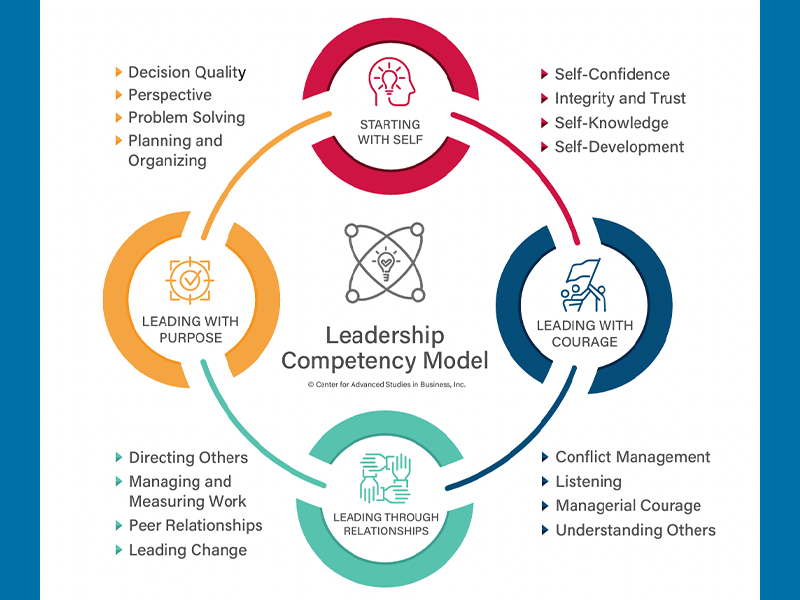
CPED’s new Emerging Leaders Academy is a professional development program delivered in a hybrid format. This academy is designed for early-stage, mid-level leaders and those who manage cross-project teams, providing an opportunity to self-reflect on key leadership competencies that support their growth journey and enhance their impact. The growth journey can be further enriched with an optional 360-degree evaluation and coaching session.
“During the needs assessment of the design process, it was clear that leaders were looking for professional development that would balance their busy schedules,” explains Kern. “This balance is a hallmark of a hybrid program. Not only does it allow for more balance, learners are able to engage with foundational concepts at their own pace and then come together for an in-person workshop to build deeper awareness.”
The Emerging Leaders Academy’s curriculum features self-paced online modules followed by in-person workshops. The self-paced modules enable participants to familiarize themselves with key concepts and engage in self-reflection. The in-person workshops build on these competencies, adding an additional layer of depth. To ensure these core concepts remain top of mind, microlearning bursts are deployed after each module.
The academy comprises four modules delivered over several months: Starting with Self, Leading with Courage, Leading through Relationships, and Leading with Purpose.
“During the initial cohort, 93% of learners reported they felt more prepared to discuss their personal leadership purpose and values, as they were offered the ability to self-reflect on concepts such as emotional intelligence, well-being, and servant leadership,” says Kern. “[Additionally,] 96% of learners reported they felt more aware of the qualities of a ‘courageous leader.’
“As the business world continues to face rapid change, the flexibility and adaptability of a hybrid professional development will begin to play a more pivotal role in reaching learners who need flexibility, a balance of experiences, and personalized exploration to enhance their growth journey,” Kern adds. “By embracing the hybrid model, your organization demonstrates it is not just adapting to change but leading the way and serving your employees in a way that meets their needs, not just the organization’s.”
Finding the right blend of professional skills
According to Kim Hegeman, a marketing specialist with the Wisconsin School of Business CPED, the ongoing discussions around leadership changes, upskilling, and reskilling, accelerated by the pandemic and the retirement of baby boomers, highlight a critical need in many organizations. Professional development is transforming from merely completing courses to embracing a lifelong journey of learning and growth.
Continuous learning allows professionals to apply new knowledge to their current roles or the roles they aspire to hold, continues Hegeman. Here are five professional skills that, with dedicated focus and development, she says can significantly enhance your career:
1. Communication
Effective communication is fundamental in organizations. Poor communication from managers can lead to various issues, and a lack of clarity regarding vision, goals, and values can cause organizations to fall short of expectations. Mastering communication skills is vital, whether it’s one-on-one interactions with team members or conveying larger goals to a group.
2. Problem solving and decision making
Problem solving is an indispensable skill for professionals, particularly those in executive positions. It is applicable in almost every business aspect, from resolving employee conflicts to addressing urgent issues. Developing robust problem-solving abilities is crucial for organizational success.
3. Planning
Closely related to problem solving is the ability to plan and stay organized. Planning is a skill that may not come naturally, especially for those transitioning from individual contributor roles to managerial positions. Cultivating this skill is essential for effective leadership and operational efficiency.
4. Leadership and management
Leadership development is a key focus area for many professionals. While some individuals may naturally feel comfortable in leadership roles, there is always room for growth and improvement. For those in leadership positions, continuously enhancing management skills is crucial for driving team and organizational success.
5. Flexibility and adaptability
One of the critical lessons from recent years is the necessity of being flexible and adaptable. This skill can be challenging to master, but it is increasingly demanded by both employees and organizations. Managers who demonstrate flexibility are better equipped to meet evolving organizational needs and support their teams effectively.
It shouldn’t be a surprise that with skills like these being so in demand, there are numerous programs from institutions like the CPED and others designed to train up-and-coming professionals in these areas, many of them intended to benefit employees who are new to leadership roles and have never been taught the nuances of managing other people.
Starting early
One way to get a jump on the continuing education side of professional development is to begin while future employees are still in school.
Rebekah Paré, the founder and chief strategy officer of Waunakee-based Paré Consulting and former associate dean and executive director for the College of Letters & Science Career Initiative and SuccessWorks at the UW–Madison, has made a career out of improving career centers at higher education institutions. She knows all too well that there can sometimes be a disconnect between what students are learning on campus and what employers expect of them once they’ve graduated, and success starts in the career center.
“We know that one of the top reasons, if not the reason, students go to college is to improve their employment prospects,” Paré said in a 2022 interview with Washington University in St. Louis. “Historically, university leaders and faculty did not feel it was the institution’s role to ensure student employment success. With higher tuition prices, legitimate questions about the return on investment of a college degree, shifts in enrollment, and the changing world of work, universities are beginning to recognize that career outcomes for students are important and that we all play an important role in preparing our students to succeed.
“Professors don’t have to do resume reviews,” Paré continued. “But if we continue to make career services that thing over there that is someone else’s concern, we will miss our most vulnerable students. Students will change jobs 12 to 15 times over the course of their careers, and they need to be prepared to adjust to the changing landscape. Faculty can help. They already are giving our students an incredible education. But if students leave unable to articulate what that is or why it matters or how they can serve an organization, we have missed the boat. So, we need to work together and help students recognize the connections between their academics, skills, and the world of work.”
University career centers can help bridge that gap, but much depends on students’ willingness to use those resources as well as how actively engaged area employers are with those centers. “The worst possible result of career advising is for a student to walk out and say, ‘I could have Googled that,’” Paré said. “So, our job is to create knowledge bases around different occupations and ensure that we are providing the depth of knowledge and a set of experiences that can prepare students well.
“At Wisconsin, I created a career community model that bundled similar types of occupations, such as marketing and communications or policy and law,” she added. “An adviser would be at placed at the center of each community to develop resources for students and advise them. We leveraged alumni to help build these resources and share their experiences with our students.”
Similarly, Paré noted that employers have a wealth of knowledge they are willing to share with students and advisers. “And faculty also have connections in their disciplines,” she stated. “The result is a flexible and nimble structure that is bringing in more and more information about jobs, opportunities, and training to students.”
Cardinal Heating & Air Conditioning: Creating its own path to success
The building trades have become increasingly popular in recent years as an alternative to spending at least four years working toward earning expensive college undergraduate degrees. However, learning the trades isn’t necessarily cheap, even if the path to a career is streamlined. Some apprenticeships are paid and/or provide guaranteed employment upon completion, but not all. And completing training also isn’t a guarantee that the tradesperson has all the skills that their future employer may want and need from its employees in the field.
Launched in late 2022, Cardinal University is an in-house professional training program offered by Sun Prairie-based Cardinal Heating & Air Conditioning that aims to fix that. The internal HVAC training program is intended to develop tradespeople in the industry, according to a statement from the company.
Cardinal University is a 26-week, paid training program that consists of classroom, lab, real-world, and virtual reality training. It is open to recent high school graduates and workers looking to make a career change. After completing the program, students can be hired as a residential installation or service technician with Cardinal Heating & Air Conditioning.
Cardinal is celebrating its 40th anniversary this year and the company has experienced significant growth in just the past eight years alone. Since moving the business to its current location on Sun Prairie’s west side in 2016, Cardinal has grown from 27 to 155 employees. However, with the launch of Cardinal University two years ago, the company has successfully trained 21 young professionals in the industry to date, rapidly accelerating its growth with technicians it knows are trained up to company standards.
During their Cardinal University training, students:
• Attend formal classroom training;
• Work through online modules;
• Receive hands-on training that aligns with the classroom modules in Cardinal’s lab featuring working equipment;
• Spend time in the field with an experienced HVAC technician to get first-hand experience bringing classroom training into the field; and
• Utilize company-provided tools to get the job done correctly and efficiently.
Once training is complete, HVAC technicians enter the field able to:
• Install, maintain, and repair ventilation and air conditioning systems and equipment;
• Identify maintenance risks on equipment;
• Diagnose electrical and mechanical faults for HVAC systems;
• Clean, adjust, and repair systems;
• Perform warranty services;
• Comply with service standards, work instructions, and customers’ requirements; and
• Assist with customers’ queries.

