
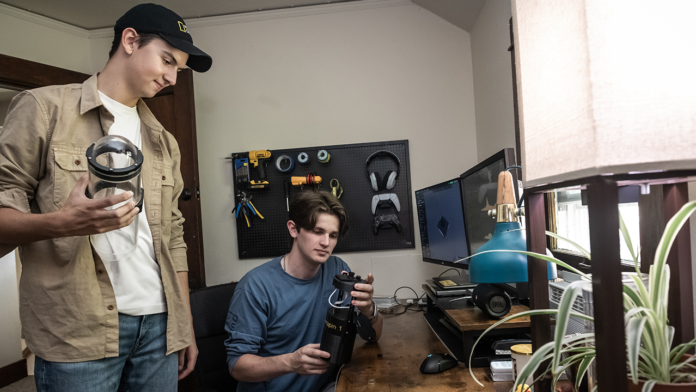

When Massachusetts native Soren Goldsmith began to document diamondback terrapins in the salt marshes near his home, they were as elusive as the Teenage Mutant Ninja Turtles.
Simply put, he couldn’t photograph them because they’d evade humans like the ninjas using a smoke bomb — poof! Gone in an instant.
The geological engineering student at the University of Wisconsin-Madison and National Geographic photographer needed to come up with a way to photograph these turtles in an environment that spends half of its time wet, and the other half dry.
Figuring out how to create a device to photograph the turtles proved to be a challenge and opportunity to expand his photography and technical skill set. At the same time, it was a way to further document the vulnerable creatures and the marshes so they may be protected from disappearing in the future.
Working with fellow student Ethan Arterburn, he has since started a business selling amphibious camera traps named for the work that inspired it, the Terrapin 1 camera.
Tackling a cool challenge
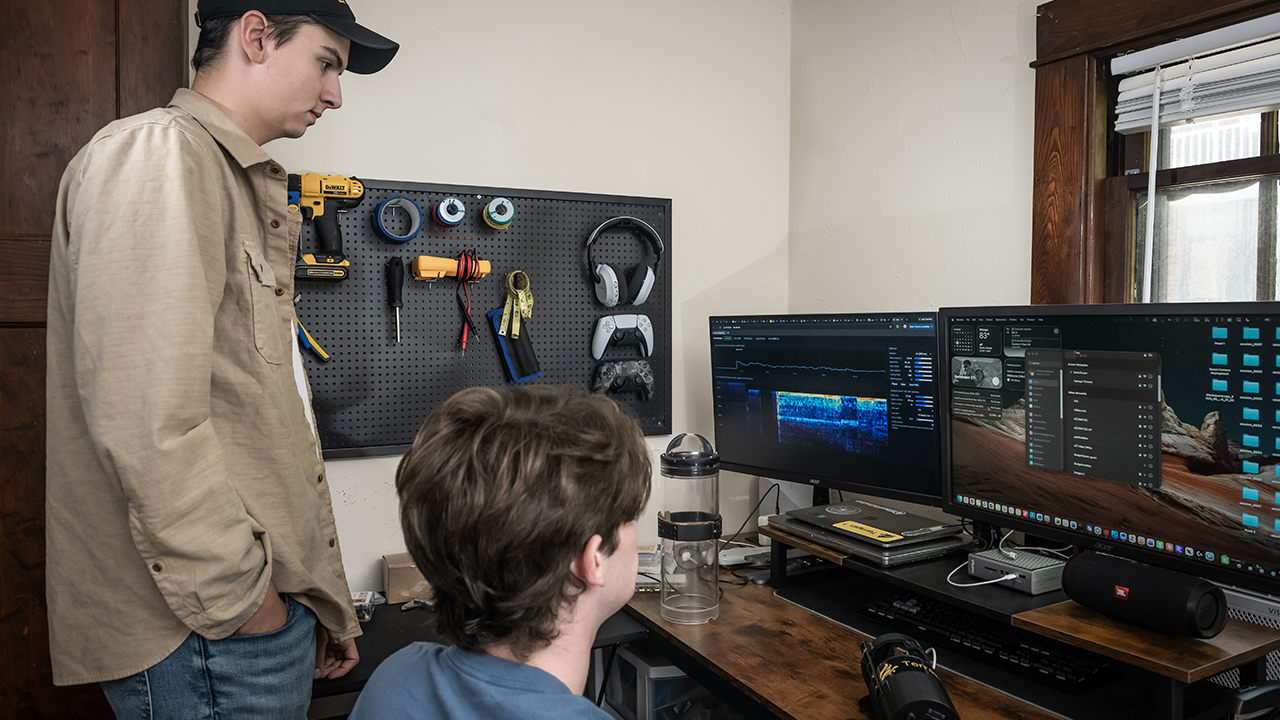
Goldsmith and Arterburn launched their business, Goldburn, after successfully building the first camera trap and photographing the marsh.
“This business was started without me and Ethan having any intention of actually starting a business,” Goldsmith said.
Goldsmith had been shooting wildlife photos for years. During his sophomore year of college in 2024, he had the opportunity to work on a National Geographic-funded project. He is classified as a National Geographic Explorer, meaning his work is funded by the organization.
He proposed a project on salt marshes to National Geographic to document the diamondback terrapins.
“I tried a whole bunch of things and they weren’t working, and I realized I needed a very specific kind of tool to get the photos that I was after,” Goldsmith said.
There was nothing on the market he could purchase.
“I really did try everything,” Goldsmith said, before thinking, “I wonder if I can build this.”
That is when he connected with Arterburn, a mechanical engineering student, to pursue building a device that would work for the project. They worked with other engineering students at the university, and after a couple of months, they had something.
“It was giant, it was blue, it was really heavy,” Goldsmith said. “And it actually worked. I actually got photos of the turtle.”
Successfully producing the large blue trap posed many challenges. Standard trap cameras for wildlife on land use infrared sensors, but will not work in water as infrared is absorbed quickly.
They decided to use visual light detection and optimize it for “super low power usage,” a challenge, but “cool to tackle.”
Resources at UW-Madison like the makerspace (Grainger Engineering Design Innovation Laboratory) were a huge asset. Located on the engineering campus, the lab provides numerous tools and expensive machines to bring projects to life.
“They basically have a plethora of tools and equipment to accomplish whatever you want to do,” Goldsmith said.
The success of the project prompted some media coverage from places like PBS News, which led to people inquiring about the device.
“They’re like, ‘Oh, this would be perfect for my project,’” Goldsmith said.
And then a lightbulb: “Huh, this could be a business; we could sell these. Not just because it would be cool to make money from doing it, but also because, just in my personal philosophy, it’s cool to photograph new things and find new ways to see the world and understand the world,” he said.
A natural approach
Crafting a camera trap for consumers meant making it smaller, cheaper, more accessible and easier to use.
“We had to redesign it from the ground up,” Arterburn said. “We made one that works, but you can’t really produce that for sales.”
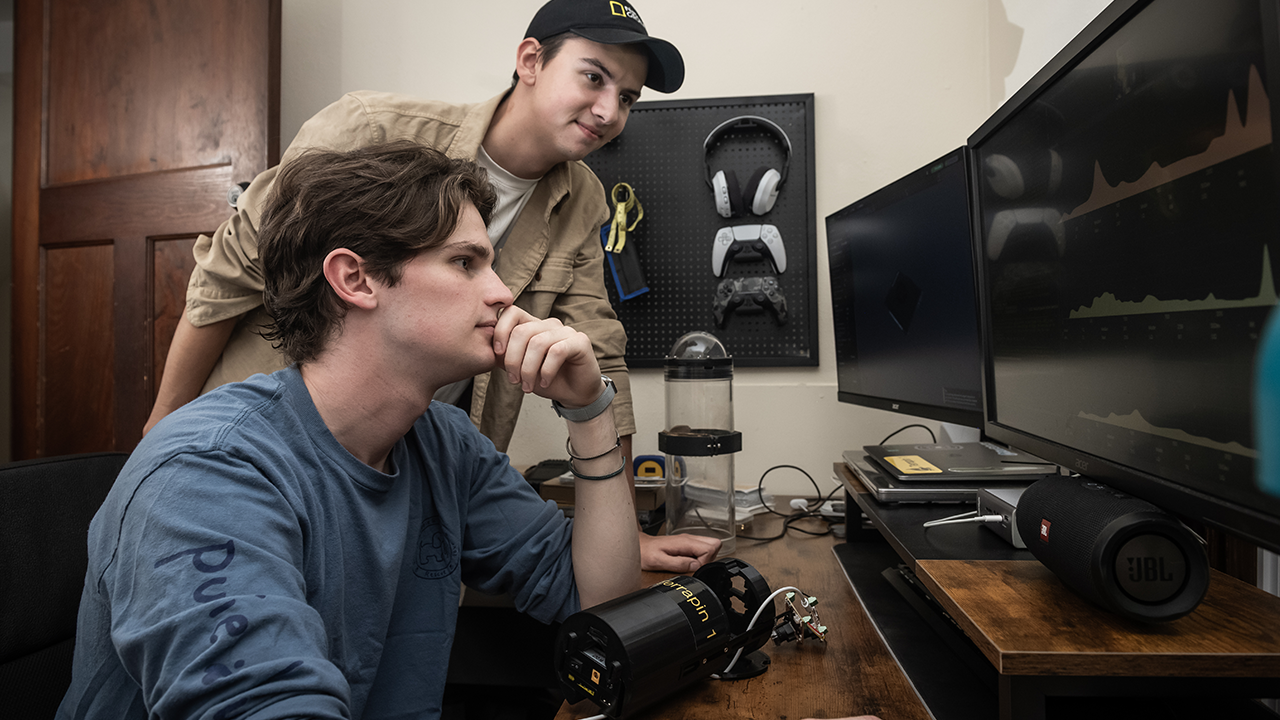
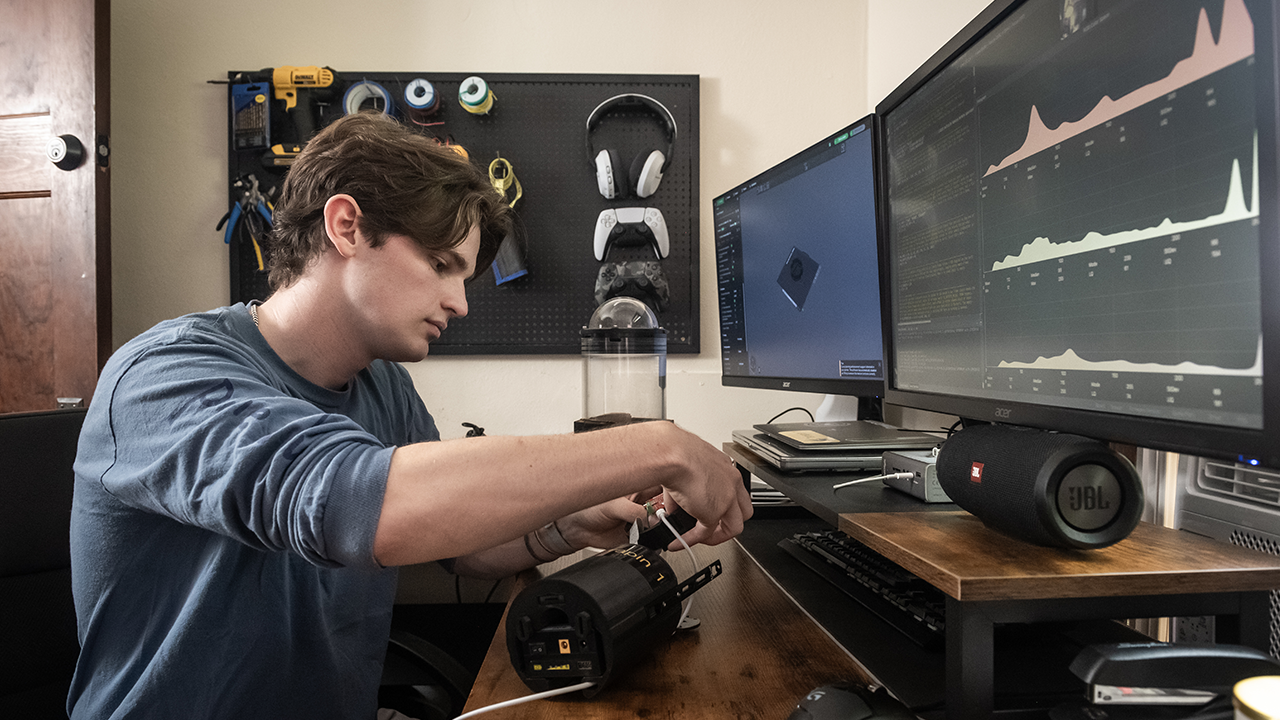
He said they took every single part and figured out how to make it better, smaller and more efficient. Now the camera trap, initially named IMPACT, is the Terrapin 1. It’s a black tube just over a foot long with a 4.5-inch diameter that looks like a domed cylinder with an electronics board.
It shoots in high definition (720p) when purchased as “research grade” with the included camera inside, while the “photography grade” edition allows for the use of any DSLR or mirrorless camera that has a shutter release port. It also has an expected battery life of about two weeks.
The business began about a year ago, though was officially incorporated in 2026. The first client camera shipped in April.
“And since then we have sold to a whole bunch of people and it’s been really cool,” Goldsmith said.
The primary buyers have been researchers or those going to do studies in remote areas where they don’t want to disturb the environment. Goldsmith said the Terrapin allows for a more natural approach rather than a dive, baited camera or other method.
“Ours is very flush with the ecosystem,” Goldsmith said.
They’ve also had interest from retirees and nature enthusiasts, nonprofit workers and conservation organizations. Goldsmith said they’re moving into getting clients from bigger industries, noting the potential to sell to the Wisconsin DNR, larger government monitoring projects and even offshore infrastructure like wind energy plants.
The duo is still trying to find their niche, as there is a big difference in budget between a hobbyist and an industrial client.
“People are really excited about it,” Goldsmith said. “And people are capturing visuals of fish that wouldn’t be possible with any other kind of camera.”
‘Quintessentially salt marsh’
If not for the elusiveness of the turtle, the camera trap may have never come about. In a nod to its importance in the development of the new technology, the Terrapin camera is branded with a turtle and named after the creature.
“The salt marsh ecosystem is what I was really interested in, and I wanted to have a main character of the story,” Goldsmith said. “And so I was interested in the terrapin because they, in my opinion, were like the coolest animal that was quintessentially salt marsh.”
His surprise at the difficulty of photographing them, and his sense of wonder and problem solving now provides a way for people all over the globe to photograph the environment in a new way.
Both seniors are hopeful of the device’s future and its role it can play in research.
“I think Goldburn is definitely going to be around long term, but it is a big question of, is this a full-time job or part-time job?” Goldsmith said. “It really depends on how much we’re able to scale up our sales in the next couple of months here and if we can attract some larger-quantity clients.”
Ultimately, Goldsmith said the most exciting part is showing the world something new about the planet.
“What’s really cool is taking a photo of something that’s never been seen before,” he said. “I feel like I’m so busy working on this that I don’t have time to go out and take photos as much anymore, so I’m dreaming about that day that I’ll have more time to go out and use it myself.”