

University of Wisconsin-Madison student Elena Motonishi’s personal experience managing asthma became the basis of an entrepreneurial venture that offers support when medical professionals cannot.
Her web platform, called Lobelia, is an AI-powered personal asthma management platform that uses health data, environmental factors and more to provide users with personalized risk assessments and advice.
“I realized that even though we do have a lot of medical support from doctors, we didn’t have enough of a support system in-between doctor visits,” said Motonishi. “I’ve lived with asthma for a while, and daily management has been a little bit challenging, so I wanted to build something that makes that process easier.”
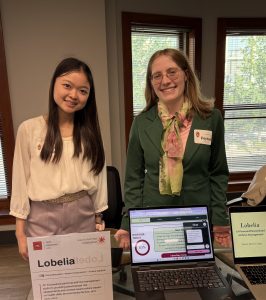
Photo by Brittney Kenaston
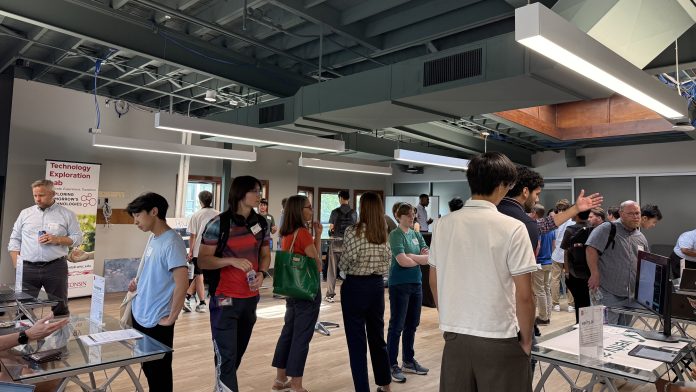
Motonishi and her co-founders, Peyton Howardsmith and Vinisha Agnihotri, were among several UW-Madison student entrepreneurs showcasing AI-related ventures at an End of Summer Tech & Entrepreneurship Celebration held Monday at 1403 University Ave. on campus.
The event, part of the first day of Forward Fest in Madison, was hosted by the UW Tech Exploration Lab, founded just last year, and the new Wisconsin Entrepreneurship Hub, which works to foster innovation and support campus entrepreneurs with a variety of services and resources.
Monday’s celebration brought together students, founders, industry professionals, researchers and alumni. It provided a window into new companies and innovations coming out of the university and demonstrated UW-Madison’s plans to strengthen its position as a hub for founders across disciplines.
The student ventures showcased at the event, in addition to Lobelia, included:
- Verity.ai, a program that reads the user’s math or chemistry work as they write it on a tablet, flags any lines where their thinking went wrong and helps them learn to fix it;
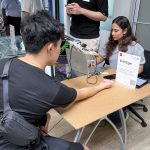
- VeinSight, a low-cost, AI-assisted system that aims to help clinicians reduce failed IV attempts by visualizing veins and ranking potential access sites;
- Praxora, which provides medical students with AI-driven clinical simulation and diagnostic games for low-pressure, on-demand practice interviewing patients and reasoning through cases;
- BluWorld, a social network that helps users connect with the city they are in, identifying interesting destinations and tasks in the style of a virtual world;
- Flow AI, an intelligent campus information assistant that aims to help students navigate university life; and
- EdgeHarness, a harness or guard of sorts for small, local large language models (LLMs) that helps improve their reliability for real office tasks by having them plan, check and correct their own mistakes.
The celebration also introduced Agentic AI Club, a new student organization building consumer-facing products with agentic AI to help automate digital tasks.
Cecily Brose, innovation and commercialization specialist at the Entrepreneurship Hub, discussed the university’s goals surrounding entrepreneurship and supporting new ventures — starting with the lofty aim to “become the No. 1 public university for founders.”
“We have set the bar high,” Brose said, joking. “We didn’t set a date yet, but we’re going to achieve this. And this is only going to happen with everyone working together. … This is a collective ecosystem.”
Brose said the hub’s major priorities include developing pipelines for founders across disciplines, building pathways for recruitment, development and launch; and helping faculty, staff and students translate research into companies by coordinating with entities like the Wisconsin Alumni Research Foundation, research centers, venture partners and funding sources.
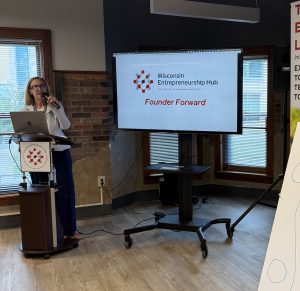
Photo by Brittney Kenaston
In addition, the hub is focused on aligning entrepreneurship programs across the campus to reduce fragmentation and improve visibility and coaching opportunities for founders. It will also work to strengthen UW-Madison’s connection to venture capital and startup ecosystems.
“Entrepreneurship has been something that has been strong here on campus forever,” said Brose. “This is in our DNA. … What we’re going to be doing here at the hub is going to amplify all of the wonderful things happening across campus. We are here to make sure … that we are all moving forward together.”
Sandra Bradley, the UW Tech Exploration Lab’s executive director, outlined its fall plans.
The lab, led by the Wisconsin School of Business in collaboration with the Wisconsin Institute for Discovery, focuses on emerging technologies across disciplines and fosters partnerships with industry, alumni and funders.
It helps students assess if ideas are worth building through mentorship and hands-on experimentation, while connecting them with industry partners, researchers, campus partners and faculty.
The lab encompasses over 400 students across campus, more than 120 ventures and projects and over 100 mentors.
“One of the things about the lab is it’s really intended to bring people together… and then we build stuff!” said Bradley. “ The thing that really attracts people to the lab … (is) we really found this opportunity to come at innovation entrepreneurship from a problem-first perspective. What problem are we trying to solve? Can we bring multidisciplinary teams in and identify use cases for emerging technologies — especially applied AI today?”
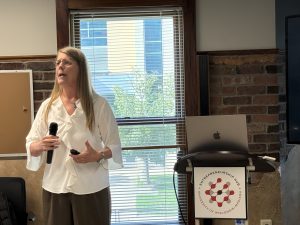
Photo by Brittney Kenaston
Students can apply to one of the lab’s three tracks each semester, Bradley said. The lab’s Venture Pathway is focused on taking ideas to prototypes to ventures; its Industry Innovation track centers on solving real industry problems; and its Innovation Translation track transforms UW research ideas into ventures.
Bradley noted that industry partners and researchers can join the lab through sponsorship or other involvement, while alumni and donors can invest to fund a fellowship or founder lab.
“(We want) to be able to activate all of that industry … with those alumni insights, and participation from the broader community,” Bradley said. “The more we can create connections, the better we can do.”
Bradley said this fall, the lab will host weekly, monthly and special events.
Weekly events will include lab and virtual office hours for students to collaborate and receive feedback, as well as Build Nights co-run with Transcend, a UW-Madison student-led entrepreneurship and startup organization that helps connect student founders with funding and mentorship.
Monthly networking and Industry Problem Drop events will bring together student teams with industry partners who present a real problem for teams to work on in four-week sprints. There will also be monthly founder and mentor guest office hours for direct conversation with student teams.
Meanwhile, Bradley announced that BuildFest — a 30-hour, campus-wide innovation event where multidisciplinary teams turn ideas from across emerging tech tracks into working prototypes — will take place Sept. 26-27 this year.
Demo Night — the lab’s end-of-semester showcase, where students present their projects, prototypes and innovations, expo-style — will be held on Nov. 19.

