
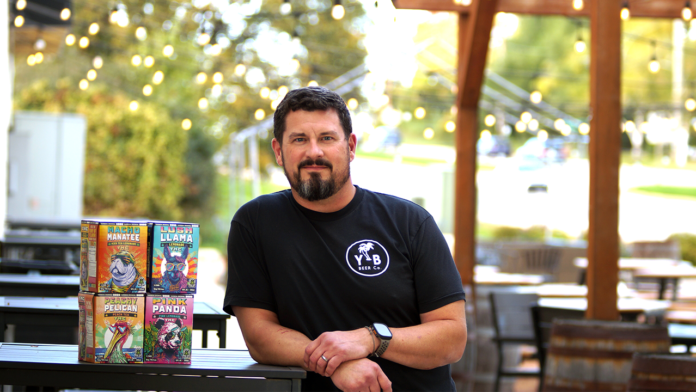

The looming federal ban on THC products in Wisconsin is causing local businesses selling and making such products all sorts of grief.
“It’s a disaster,” Karben4 co-owner Ryan Koga said. “I mean, it really is a disaster. I think it’s tragic.”
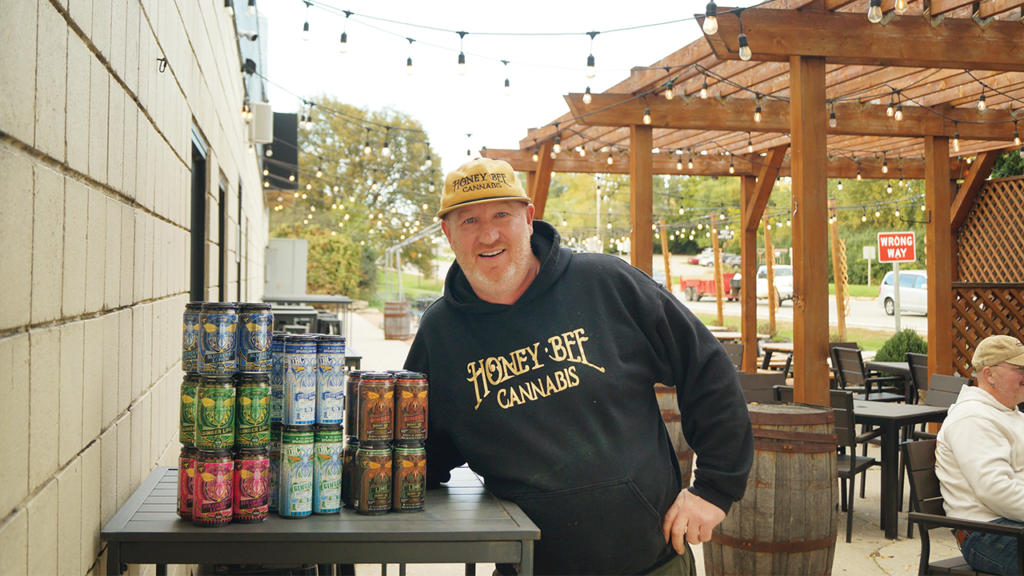
Koga is a brewery owner who makes a Karben4 line of THC drinks and who also co-packages products for other brands like Honeybee Cannabis, which makes THC drinks. Beer sales have trended downward nationwide since the COVID-19 pandemic, according to the Brewers Association, and THC has helped some breweries like Karben4 to keep production close to capacity and making money.
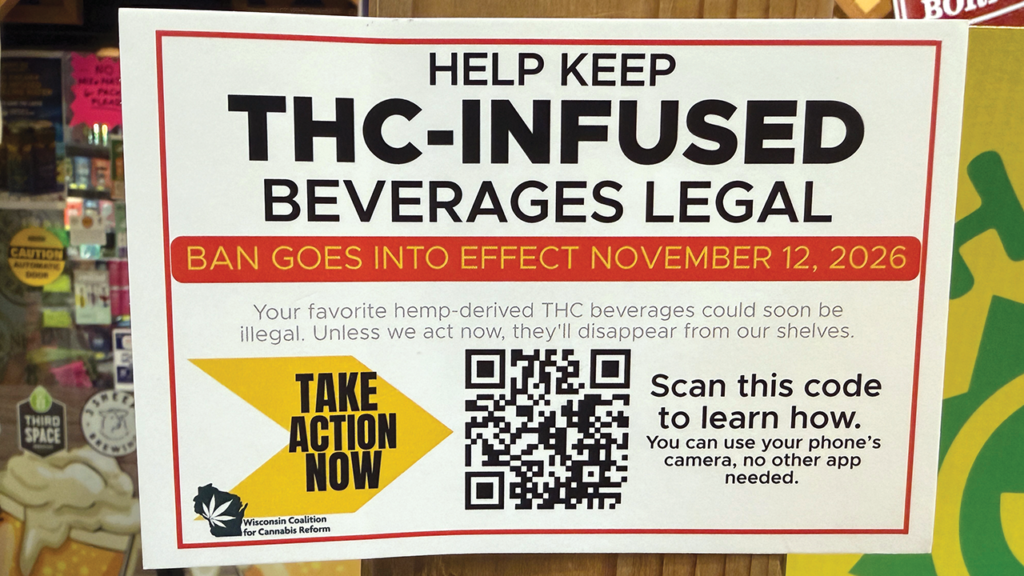
Hemp-derived THC products became legal at the federal level with the 2018 Farm Bill. The language allowed for delta-9 THC in a set percentage for certain products (typically about 0.3% delta-9 THC on a dry-weight basis), opening a THC industry in places like Wisconsin, where cannabis is illegal. But Congress closed the loophole last year in a budget measure, which goes into effect on Dec. 11.
That means that unless something is done, producers, retailers and entrepreneurs will lose access to an industry some have cultivated since the Farm Bill went into effect. The fear is the government won’t work out an answer for the industry in time — whether at the federal or state level — to keep the THC industry alive.
Legal limbo
Senator Mitch McConnell, who championed the Farm Bill as a way to help farmers by adding hemp as a cash crop, ultimately voted to close the loophole.
The measure gave THC makers and the government one year to figure out a plan going forward, before President Donald Trump signed a monthlong THC ban extension to this December.
Congress now must determine the next move, while an industry valued at $28 billion nationwide — Wisconsin’s is estimated to be worth $700 million — waits in limbo.
Koga said the vote to get to this point is a move that really goes against the American entrepreneurial spirit. He said people like him and Honeybee — which has been around for over seven years — found a way to develop the products working within the system, “and then to just, in a kind of illegitimate political move, it gets shut back down again.”
For instance, Koga and Honeybee founder Wade Woods worked with the Department of Agriculture, Trade and Consumer Protection for proper labeling. Working with DATCP wasn’t something they had to do, but they wanted to get approval in anticipation of regulations that could appear if the state were to legalize THC products with its own set of rules.
Koga and Woods said they want codified rules and regulations to keep the industry afloat and safe.
Politicians on both sides of the aisle, like U.S. Rep. Andy Barr (R-KY), U.S. Sens. Amy Klobuchar (D-MN), Rand Paul (R-KY) and Jeff Merkley (D-OR) have all supported finding a solution to keep the low-dose hemp products legal.
According to NPR, more than five bills have been introduced in Congress to save the hemp industry.
But Koga still finds it frustrating.
“I don’t know why we have to have a gun …held to our head in terms of them getting the legislation going,” Koga said. “If they didn’t mean to create the loophole, then they should take the lesson that they should pay closer attention to what they’re doing.”
High stakes
Woods said he is lucky he is the only employee of his business, Honeybee Cannabis, but with the impending ban, he doesn’t know whether he should make more products or not. Some retailers are out of his canned THC drinks, but he isn’t sure if he can make more, suffer a ban, and then just sit on it — or have to destroy it.
It’s a bit of a catch-22 in that he won’t have a product if there is an extension, but he could have a product he can’t sell if the ban stands.
Some places like Kwik Trip began letting THC products run out in August in anticipation of the ban, according to a worker at the Prairie Du Sac Kwik Trip. He said the company stopped receiving product in August to let it run down in case it does become illegal to sell. Locations like Prairie Du Sac have completely empty shelves, though they are keeping product tags there in case something changes.
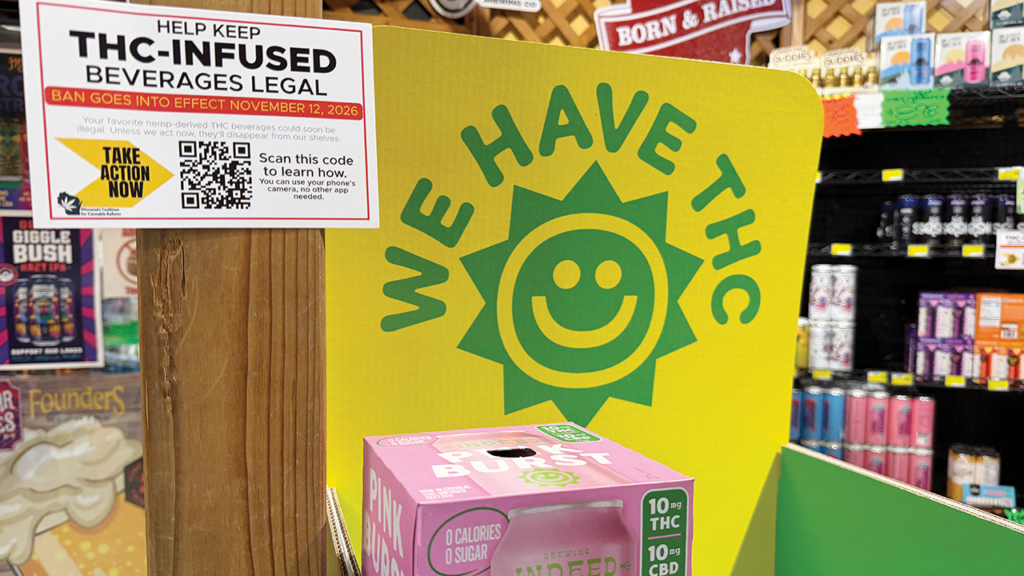
Others like the Jenifer Street Market in Madison are continuing to stock core brands until about the end of October — but only popular SKUs. Jenifer Street Market co-owner David McKenzie thinks if the ban stays in place, people will rush to buy out the products, “like toilet paper on the shelf during COVID.”
If the ban deadline is extended, he will keep items stocked. But he said he “can’t be sitting on that product,” if the ban hits.
McKenzie said the market was one of the early adopters of THC, with a section filled with THC drinks and snacks, which co-owner McKenzie said is a pretty big space considering the store taps out at about 10,000 square feet.
The “stoner corner,” now makes up about 15-20% of the adult beverage sales at the market.
“So, yeah, it will definitely hurt,” McKenzie said.
Steve’s, which has stores at 3618 University Ave. and 122 Junction Road, is mostly a seller of wine, beer and spirits, but THC has been an expanding segment.
Beer and THC beverage buyer Dan Schwalbach said THC makes up about 10% of sales and is growing.
“It’s definitely been a significant number,” Schwalbach said. “It’s been a big growth area of our business and continues to do so. The stigma is kind of lifting among a lot of people with it becoming legal. We see a lot of people coming in for the first time and having questions.”
With retailers unsure about the looming ban, Schwalbach said distributors have trimmed product lines from their portfolios so they’re not sitting on so much product if it suddenly becomes unsellable.
Frank Beverage Group, a large distributor of adult beverages, stopped doing returns of THC products in September, and only will take back products due to breakage because of the forthcoming ban, a Frank customer service representative and McKenzie confirmed.
“They don’t want to be caught with a bunch of products they can’t do anything with,” Schwalbach said.
Places like Comedy on State and Honeybee lose out on a win-win combo of THC and comedy.
“THC products have accounted for 5% of our total bar sales in the last year, including products such as Honeybee THC seltzers and Lodo THC Spirit,” Comedy on State Operations Manager Cece Bittner said. “Having THC products has given our customers an important alternative option to alcohol and has helped offset our losses as alcohol sales have dropped in recent years.”
Woods is one of the first and few to put his THC drinks on tap. Since 2023, he’s gone through about 350 kegs of product overall. Comedy on State sells Honeybee on tap, and Woods said it will make them about $40,000 in revenue this year, though Comedy on State said they could not reveal sales figures to confirm.
“And it’s like, where do we go with that?” Woods said. “Because if this goes away, we’re not picking that $40,000 up probably anywhere else.”
For Koga, it means possibly laying off people in areas of production, canning and more.
Being a co-packer with other brands and also having their own THC brand makes up one-third of Karben4’s yearly production volume.
He has grown a team around that, as well as infrastructure.
“To have the rug pulled out of nowhere is very difficult,” he said. “When you’ve spent all this capital on infrastructure you have to have it full and really be going.”
That could mean finding new contracts for beverages like sodas or drinks with adaptogens, but even that can be a challenge due to technical limitations at the brewery.
Plus, Karben4 is at a good size for startups, but if a client needs a bigger batch of product, it’s possible they only work with them once before they move on.
“If I can’t fill in that volume, then inevitably we have no choice but to kind of resize the team or figure out what we’re doing again.”
Woods said he thinks if THC is banned, there could be some brewery closures because it’s become such a big part of their business. And from a retailer perspective, Schwalbach said he’s seen THC products help breweries that weren’t able to sell as much beer as the market shrunk post-COVID.
“It would really hurt a lot of businesses, especially small businesses, because they’re the ones making it and selling these things,” Schwalbach said. “It’s also been a lifeline for the alcohol industry.
“It’s a lot of money to leave on the table just because.”
Coming down from the high?
For now, all producers and retailers can do is wait and speculate.
Koga wouldn’t mind oversight and an excise tax like alcohol has to keep the industry moving along as normal.
Woods hopes the current extension means something is being worked on to keep the industry going, but he wonders if nothing happens, what is next?
“If come Dec. 12, do the feds show up to Karben4 and put us all in cuffs because we have inventory still?” Woods said. “Just a lot of unknowns.”
Schwalbach, too, is confused as a retailer. Can he sell products made before Dec. 11 past Dec. 11? Or is it a hard cutoff point?
“Nobody really knows what to do,” Schwalbach said. “It’s been a roller coaster. That’s tough from a buyer standpoint.”
And producers said it’s not as though there isn’t a way forward.
“There is 100% a way for hemp to be treated like alcohol and tobacco,” Koga said. “It’s certainly a vice industry, not denying that, but it’s not hard drugs.”
Jenifer Street Market’s McKenzie admits that some of the THC goods seem like the Wild West with 12-ounce cans of product with 50 milligrams of THC. But he said the government would be smart to extend the ban deadline and add legislation slowly, rather than just kill the industry.
“It’s foolish from a revenue standpoint,” McKenzie said, referring to money that the state and federal governments could bring in. “You’re taking a pretty big product that probably is collecting good revenues. They’re just totally going to eliminate it. And then maybe bring it back? I feel like there’s better ways to approach that, and I’m hoping that’s what happens.”
Schwalbach said it just makes sense from a business perspective to have it around.
“There’s demand for it. It’s helping keep small businesses going,” he said. “It’s a really big industry and it’s helped a lot of brands that were struggling before.”