
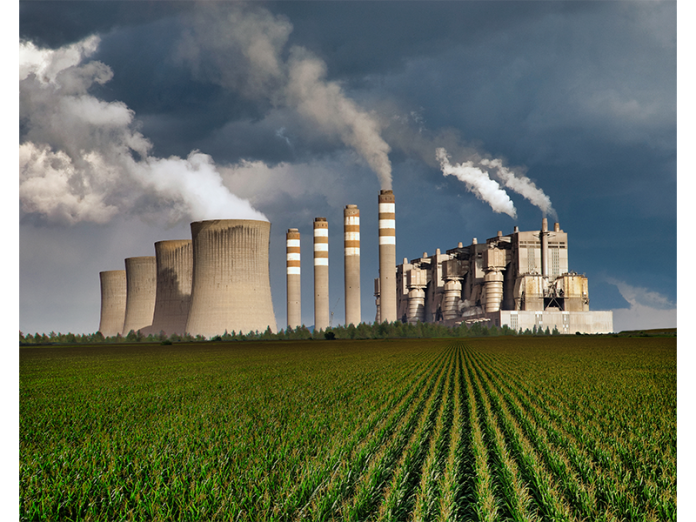

President Donald Trump’s April executive orders aimed at reinvigorating what he called “America’s beautiful clean coal industry” might not have the desired effects thanks to the changing economics of energy, according to local energy executives and environmental advocates alike.
The orders, which will likely face a court challenge, are so sweeping they appear designed to take the country back to the regulatory framework in existence before the Obama administration began the transition away from coal. But with hundreds of coal-fired power plant closings having already taken place, and more being planned, their economic viability is an open question.
Environmental groups charged the orders, if fully implemented, would increase pollution, carbon emissions and utility bills for homeowners and businesses.
Marching orders
The executive orders pertaining to coal read like an environmentalist’s worst nightmare. They call for the secretary of energy to determine whether coal used in the production of steel meets the definition of a “critical material” and “critical mineral” under the Energy Act of 2020, and if so, to add it to the relevant lists. This would identify coal production for energy as a national security imperative.
They also direct federal agencies to identify coal resources on federal lands, lift barriers to coal mining, prioritize coal leasing on those lands, and require agencies to rescind any policies that seek to transition the nation away from coal production or otherwise establish preferences against coal as a resource for energy utilities.
Another Trump executive order lifts Environmental Protection Agency restrictions on coal-fired power plants, allowing certain coal plants to comply with a less stringent version of the EPA Mercury and Air Toxics Standards rule for two years. The move ensures these plants are not prematurely forced offline due to what the Trump administration calls “unattainable compliance requirements” under rules developed during the Biden administration.
Trump’s justifications state that so-called “clean coal” is essential to national and economic security in that it supports hundreds of thousands of jobs and adds tens of billions to the U.S. economy each year, and that it will be “critical to meeting the rise in electricity demand due to a resurgence of domestic manufacturing and the construction of AI data processing centers.”
Therefore, the executive orders also seek to promote coal and coal technology exports, accelerate development of coal technologies, and push for coal to power new AI data.
In a point disputed by environmental groups that favor cleaner sources of energy such as wind and solar power, Trump claimed coal-fired electricity generation will lower electricity costs.
What is ‘clean coal’?
According to the World Nuclear Association, coal is still the world’s most abundant and widely distributed fossil fuel source. Burning coal produces over 15 billion tons of carbon dioxide, most of it from power generation, which is released into the atmosphere.
To address this issue, the development of new “clean coal” — the technologies that make coal combustion more environmentally friendly by reducing the emissions of harmful pollutants — is being pursued so coal can be utilized without significantly contributing to global warming.
The biggest challenge with this goal is bringing down the cost so clean coal is economically competitive with nuclear power and its near-zero carbon emissions for baseload power, which is the minimum amount of electricity demand required over the course of a given day.
There is little doubt that America’s coal resources are vast, with an estimated value in the trillions of dollars, but representatives from Clean Wisconsin and the Sierra Club argue the trade off in pollutants, even with a cleaner version of coal, is not worth the cost.
They also argue that coal, which makes up 16% of U.S. electricity generation, isn’t necessary to stabilize the nation’s electricity grid. Several coal plants in Wisconsin have already been shut down and more are scheduled to be closed in forthcoming years, they said, and on average, renewable energy costs 30% less than coal for the same energy output.
New coal plants also are expensive to build. While the actual cost depends on factors such as location and specific technologies used, the International Energy Agency estimates building a modern coal-fired power plant can range from $1.8 million to $4.5 million per megawatt (one million watts) of installed capacity, which is much costlier than the construction costs for solar and wind generators and natural gas plants.
Jeff Keebler, chairman, president and CEO of Madison Gas and Electric, said MGE does not expect the president’s executive orders to affect its plans. MGE is working to achieve net-zero carbon emissions by 2050 and in the interim reach an 80% reduction by 2030. Along the way, it plans to suspend coal-fired generation at its Columbia Energy Center and use coal only as a backup at the Elm Road Generating Station until it fully transitions to natural gas.
Keebler said most of MGE’s regulatory environment is handled through state government and even at the federal level, he does not envision new investments in coal generation.
“I don’t see people building new coal plants,” he said. “The plants are really expensive to develop and we know there’s better renewable technology than there ever has been in the past. When you develop a plant, it’s a 30- or 40-year plant, and we know administrations will change and rules and regulations will change.”
In May, nearly one month after Trump’s executive orders on coal were announced, MGE said it has received regulatory approval to build more solar and battery storage capacity at a new energy center in Fitchburg.
“We’re still on track for our net-zero carbon goals and our 80% reduction by 2030,” Keebler said. “We’ve been developing a lot of renewable generation. We know we need some natural gas generation to balance out the renewable generation.”
Environmental edict
Ciaran Gallagher, energy and air manager for Clean Wisconsin, said not only has the regulatory space changed, the economics of energy is vastly different than it was 10 years ago.
Coal plants in Wisconsin and across the United States are closing because they’re not economical and operating at a financial loss, “and to keep these aging and unprofitable coal plants up and running would drive up costs for ratepayers, both residences and businesses alike.
“Solar and wind and (natural) gas are by far cheaper than coal,” Gallagher said. “Solar and wind, just the technologies, have evolved so much in the last decade, and there have been learning curves in factories producing the technologies and the installations on the ground.
“They’re just both competitive to build, and then once you have solar and wind on the system in a competitive energy market, sun and wind is free, so the market is always going to choose solar and wind that’s available over coal,” she said.
While clean coal pollutes less than standard coal, it is still dirtier than green energy alternatives, Gallagher said. Burning it emits massive amounts of greenhouse gases that contribute to climate change, and it also emits fine particulate matter, which is a health danger.
“That fine particulate matter, the soot air pollution particles, are so small that when you breathe them in, they not only get embedded deep into your lungs but also into your bloodstream,” Gallagher said. “Breathing in this type of air pollution doesn’t just cause asthma and respiratory issues but heart attacks.
“That’s why fine particulate matter is both regulated by the EPA under the Clean Air Act because it is harmful to public health and has a direct linkage to early death,” she said.
One criticism offered by coal advocates, who point to the intermittency of green energy sources, is that it provides a more reliable source of baseload power. They cite recent energy shortages in Germany and the April 28 blackout in Spain to demonstrate that the intermittency of solar and wind argue for an “all of the above” energy policy.
Adam Jordahl, director of environmental and energy policy for Wisconsin Manufacturers & Commerce, said any energy grid needs reliable baseload generation that constantly produces a stable supply of electricity.
He said this is even more important in Wisconsin — given the state’s long, cold winters and generally unpredictable weather — and there is significant volatility in how much energy the alternative sources can produce.
While some media reports link Germany’s recent energy shortage to disruptions in Russian natural gas since the invasion of Ukraine, the closing of nuclear power plants, and a slow transition to renewables, Jordahl said the amount of electricity produced in Germany through its renewables has fluctuated significantly based on weather patterns.
A December 2024 edition of Fortune said Germany previously had a calm winter where wind facilities didn’t generate as much as expected.
“Based on that intermittency, there may be years in a system that is heavily dependent on renewables when you may have to spin up those coal and gas generators again to meet the demand,” Jordahl said.
Failure to plan
Environmental groups argue the answer to the intermittency issue are ongoing advancements in, and the expansion of, battery storage and demand-response programs to help match solar and wind output.
Laurie Williams, director of the Sierra Club’s Beyond Coal Campaign, said coal isn’t always readily available due to the winter freezing of stockpiles and other factors, and Gallagher said the reliability of the grid is affected by the entire system of resources, not just renewables.
Gallagher also said meeting the future surge in electricity demand expected from data centers and AI means clearing bottlenecks that are preventing solar, wind and batteries from connecting to the grid and coming online faster.
Williams said the U.S. needs an interconnected grid that allows it to move power from parts of the country that don’t need it during a cold snap to those that do need it.
The nation has what she called “fairly opaque entities” called regional transmission management organizations that states like Wisconsin, which belongs to the Midcontinent Independent System Operator, have joined to help bridge the connection of electric systems between states.
“One of the problems in Texas when they had that horrible blackout situation (in 2021) is that Texas is essentially an island of a grid, and they were not able to import from the states to the north of them when they needed it,” Williams said. “You’ll hear folks pointing to recent coal retirements as the problem, but really the problem is the failure to build and make accessible transmission that will bring the renewables online fast enough.”

