
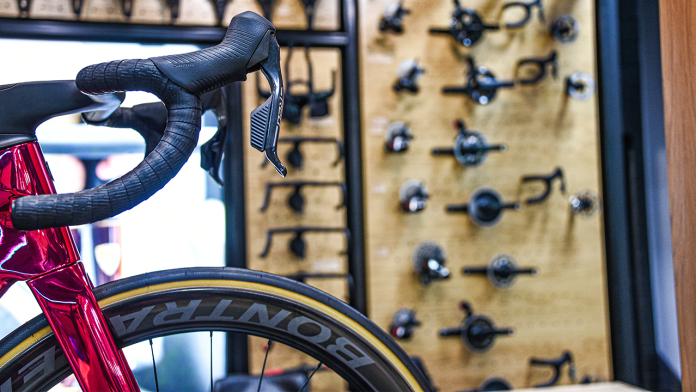

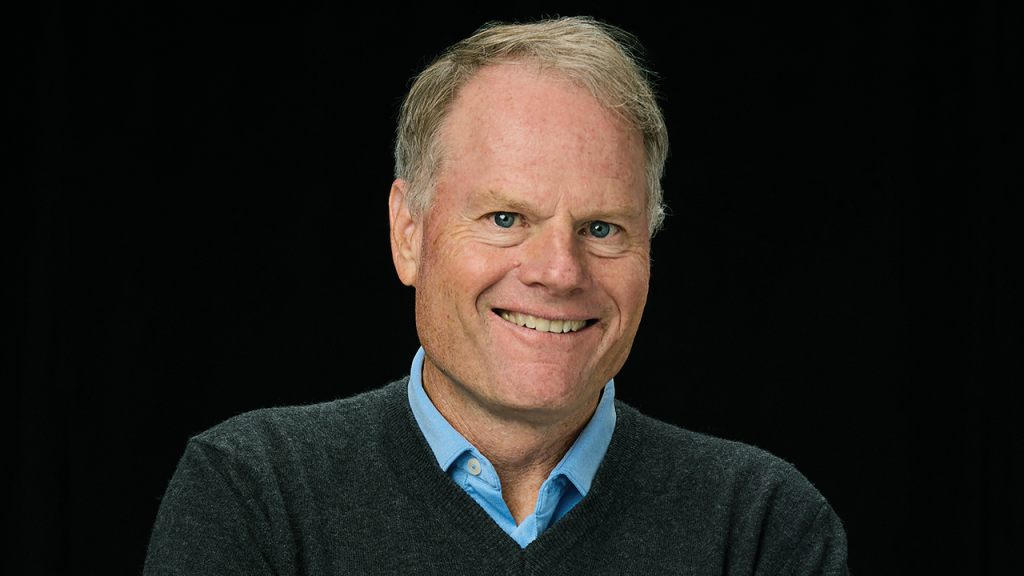
WATERLOO — On weekends, Trek President and CEO John Burke and his wife Tania go for 110-mile bicycle rides.
They pedal from Madison to Mazomanie, from Mazomanie to Spring Green, from Spring Green to Sauk City and then home.
“It’s the old dairy roads,” Burke said, explaining why it’s so easy and enjoyable to hit the bike trails for riders in Wisconsin. “If you take a look, there’s shoulders on the road, they’re safe to ride. They’re all over the place, and they’re amazing.
“And other states don’t have this.”
That accessibility and “the beauty in this state” makes the round-trip excursion one of the best rides in the world, he said.
Since 1997, Burke has led the company his father Dick co-founded 50 years ago, maintaining Trek’s headquarters in a bucolic part of the state. While Trek has been a key player in fostering the local biking culture in Wisconsin, it has also blossomed into a global brand worth around $2 billion in 2024 and has grown fans around the world. Just as kids can be seen riding Trek bikes in Madison neighborhoods, top-tier athletes ride Trek bikes in international races like the Tour de France.
“I remember as a kid more than 50 years ago coming to Madison, and they had that protected bike lane going down University Avenue,” Burke said, noting the city’s cycling roots. “There are thousands of bicycles every day on that protected bike lane, and if you take a look at the bicycle infrastructure that’s been built up around Madison, it’s significant.
“If you take a look at how much those trails get used, that really helps to create the cycling culture in the state.”
At the same time, recent events like the COVID-19 pandemic and unpredictable tariffs have upended the bike industry. It has led to some layoffs and challenges, but Burke is optimistic Trek will keep riding along.
He would love Trek to continue for the next 50 years, but he’s blunt about the odds.
“I typed in, ‘successful company, 50 years old, chances of making it to 100,’ and the answer is 8%,” Burke said. “I’m playing against history. That’s the game.”
50 Years Of Innovation
Trek began in its famous red barn — down the road from its current campus at 801 W. Madison St. in Waterloo, about 30 miles northeast of Madison. In pursuing its mission to craft a high-end bicycle for the American consumer, Trek has lifted the industry up in a myriad of ways, while also forging new paths in the bicycling world.
In 1976, Trek put together a squad of Wisconsin bike builders, Mike Appel, Dick Nolan and Tim Isaac. They built silver-brazed lugged bike frames to rival Europe’s finest, laying the groundwork for decades to come. Trek produced 904 frames that year.
The company became a fully fledged manufacturer in 1980. In 1981, it needed a bigger space, so Trek bought land a mile away from the red barn for $10,000. They had to wait to move to the plot of land as the farmer who sold it to Trek had to harvest his corn first.
In 1983, Trek made its first mountain bike, the Model 850.
Then came oversized alloy tubes and aircraft-grade adhesive to mark a shift away from steel. Trek moved from welding steel to bonding aluminum tubing in 1985.
In 1987, the company introduced light carbon bike frames made with aluminum bonding techniques, a first step to revolutionizing frames with light, yet strong carbon material. Trek started manufacturing carbon components at its headquarters in 1989 which led to the creation of its proprietary Optimum Compaction, Low Void Carbon in 1992.
In 1996, Italy’s Paola Pezzo won a gold medal at the Summer Olympics in Atlanta, riding a Trek OCLV Carbon Gary Fisher bike.
Lance Armstrong began working with Trek in 1999 in a relationship that would last 14 years, where Armstrong rode Trek bikes to Tour de France victories. The company cut ties with the athlete in 2012 when a U.S. Anti-Doping Agency report concluded Armstrong had used performance-enhancing drugs.
While e-bikes are all the rage now, Trek made its first, the ElecTrek, in 1999. It weighed 55 pounds, had a Yamaha motor and a range of 20 miles. Today, Trek’s e-bike business is huge (and the bikes are much lighter).
Burke estimates about 37% of Trek bikes sold are e-bikes.
“It’s had a huge impact on the business,” he said. “I mean, if you ever ride an e-bike, I equivocate it to somebody who got their first iPhone, and they go, ‘Holy shit.’ They just come back with a huge smile.”
He said the bikes have been able to bring more people into bicycling.
“More people can enjoy cycling, more people can go up hills, more people can go further,” Burke said. “It just opens up a lot of doors.”
In the 2000s, Trek focused on multiple endeavors as it coasted through the bike business. It launched Project One, its bike customization project, allowing customers to pick paint and parts to create a bike that is uniquely theirs. Its racers won Tour de France titles while it ensured there was more equity for women racers. And it launched new products like the mass produced 29ers bikes and started
a travel company called Trek Travel.
Over the decades, Trek has grown its global presence. It has branches in Hartmannsdorf, Germany where it builds over half of all Trek and Diamant (a German bike manufacturer Trek bought) products for the European market. It also has locations in the United Kingdom, Netherlands, Brazil, Australia, Taiwan, China and offices in over 20 countries.
That reach was evident at its 50th anniversary event in June. Visitors heard a variety of languages spoken around the company headquarters as enthusiasts and biking media converged in rural Wisconsin to ride and talk bicycles, and cover the company milestone for global bike aficionados.
Trek’s spokes also have extended into charity work. In 1990, hundreds gathered in Waterloo for the first Trek 100 ride to benefit the Midwest Athletes Against Childhood Cancer Fund. To date, the annual event has raised over $24 million. The company has partnered with World Bicycle Relief to send Buffalo Bicycles, bikes built to carry heavy loads over rugged terrain, to rural areas in Africa. And the Trek Foundation protects land and develops trail networks for the public.
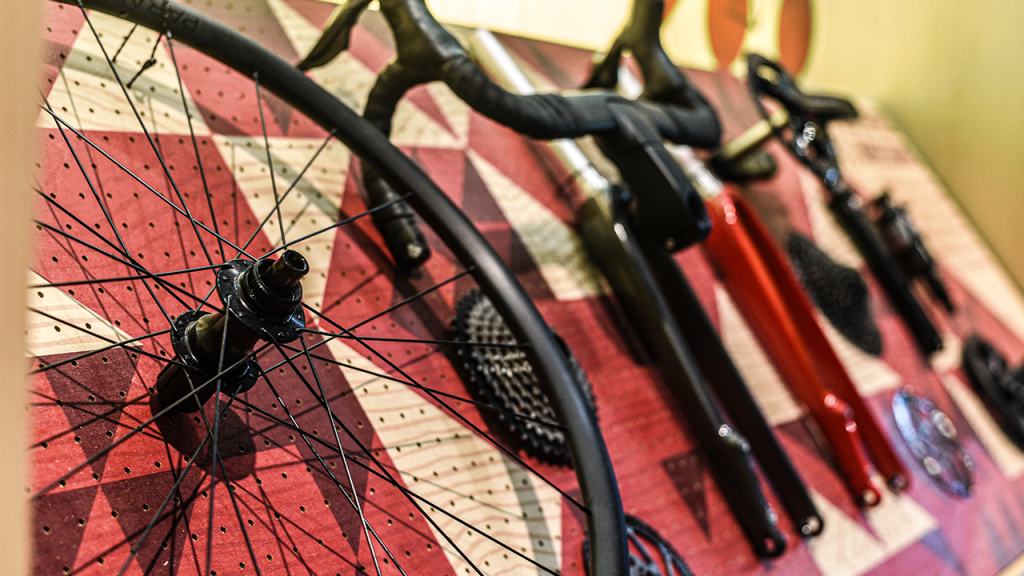
Photo: Louis Livingston-Garcia
A place for tinkerers and creators
Entering Trek means entering a state-of-the-art facility with workers at the top of their game.
The building itself is cavernous, with space for office work and multiple labs and stations to paint bikes, break bikes, craft frames, test how a bike reacts to different terrain and much more.
The corridors tell Trek’s story in signed racing jerseys, company values (“Do the right thing,” “Protect our planet”) and pennants for different races. Muddied bikes from famous races, historic photos and even the foot-pedal sinks outside the bathrooms add to the all-encompassing cycling atmosphere.
The Project One paint studio employs painters, decalers and more who design a customer’s dream bike.
A small staff of engineers and those who still delight in the child-like joy of smashing things work in the Break Room, or test lab, where parts and pieces of bikes are put under stress tests in order to make a product to a high standard. Data from broken rims are uploaded to the cloud so Trek engineers can use it in real-time.
The Prototype Lab looks like a CAD machinist’s dream, with staff working to prototype different bike pieces and products. In all, nine people, including programming machinists, CAD specialists, design engineers and prototype specialists work in the lab. There are two weld stations with custom fixtures. A stripped down bike frame from a pro racer sits on a work table.
Jarod Brown, an engineering prototype supervisor, has been with Trek for 31 years, in the shop since 1999.
“Our responsibility is to make prototypes for product in all of Trek,” Brown said. He said the team supports a Dutch design office and even analyzes custom bike frames from racers like Emil Johansson, a mountain biker, to see if there are any weak points of a frame after a crash.
There’s a product review room to decide what makes or doesn’t make it to store shelves, whether it be racing shoes, bike bells or bicycling shirts and socks.
And the Performance Research Lab with a giant, modified treadmill helps Trek staff evaluate how bike suspensions and tires react to gravel, pavement or whatever a bike may be ridden over. If there isn’t enough suspension, a rider may compensate in a way that drains their energy. Riders are strapped into a harness and can even wear an oxygen mask to test out how their body is reacting to different stimuli. How is a ride made smoother? What is the metabolic input? Trek answers these questions in this testing facility.
A cafeteria is named after the supper club where Trek found its name: the Pine Knoll Supper Club. The headquarters has its own video and photo studios.
“A banner in one of the painting rooms reads, Nobody else can do what WE do.”
Pandemic highs and tariff lows
In 2020, when the COVID-19 pandemic began, bicycling experienced an unprecedented explosion of interest.
“You know, the bike business was really predictable for 20 years, super predictable, and Trek’s share continued to climb every year, and did really well,” Burke said. “Then the bike boom came.”
Burke thought COVID was going to be a “major disaster” for the company. The entire world had seemingly shut down overnight, after all.
“We’re planning for Trek to be down like 40%, like it’s going to be a disaster — and somebody walks in here and they go, ‘I was just on the phone with David’s World Cycle down in Orlando,’” Burke said. “‘There’s a line outside his store to buy bikes.’”
Burke was taken aback, and about three weeks later Trek warehouses were out of stock.
“Like, everybody bought a bike,” he said. “It was unbelievable. Our business, 2021, ’22, it’s like fish jumping into a boat.
“Then, all of a sudden, the volume drops off the cliff.”
Inventory was coming in, creating a bubble where bicycle companies had too many bikes to sell. Trek worked to sell that bubble of inventory, and Burke said things went back to mostly a normal situation.
“One of the things I’m most proud of at Trek is we can change,” Burke said. “You don’t survive 50 years without making a lot of changes.”
And because of that flexibility, Burke tells people that the company has done its best work in the last two years to set up its future.
But he acknowledged Trek has still had to trim its staff several times with layoffs. And tariffs have hit the bicycle industry hard.
Burke said they’ve endured the tariffs and their uncertainty, but said it is hard to run a business with a government seemingly making decisions on a whim from week to week.
“The tariff thing has had a huge impact on Trek,” Burke said. “It’s the tariffs that we’ve paid, it’s the unpredictability of trying to run a business, it’s pissing off countries all over the world who buy Treks.
“I mean, these are neighbors and friends.”
Burke bemoans the lack of facts and understanding that good government matters. Each time a decision is made on tariffs, he said it affects Trek’s future and its 5,000 employees.
“And when you piss off everybody in Canada, it impacts our business,” Burke said.
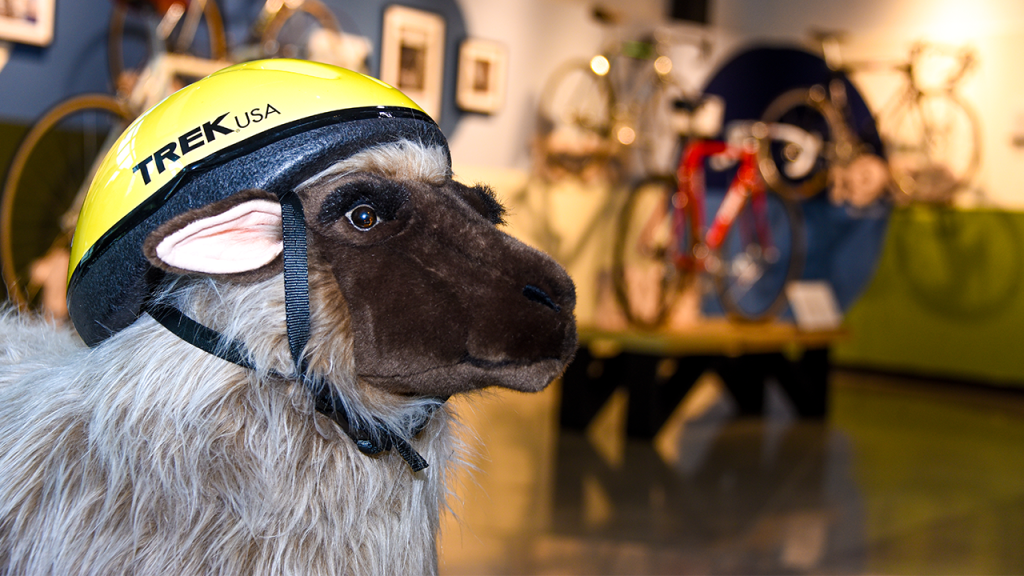
Photo: Louis Livingston-Garcia
Setting the pace
Despite challenges, Burke is still working toward the goal of hitting 100 years. It’s a bit trickier than riding over 100 miles on a Saturday, but he has a plan.
The company is set to introduce 19 new bicycle platforms, or different models or types of bicycles, in the next 14 months.
“So there’s a ton of new product that’s coming out, some really great stuff,” Burke said.
He’s also particularly proud of the company’s Net Promoter Score, which measures customer loyalty and satisfaction. Andrew Dutton, Trek’s director of brand marketing, said Trek has an NPS score of 95.
“The Net Promoter Score is based on a daily internal report we receive from Listen360, who calculates Trek’s score,” Dutton said in a statement. “We follow the report incredibly closely and have partnered with Listen360 for many years.”
That customer focus is one of the company’s key pillars.
“There’s just a core competency of taking care of customers that’s been super key to Trek,” Burke said.
And he also wants to field the best team at Trek, whether it’s someone in the Break Room crushing components for data on a new bike frame, or someone writing copy for a bike’s online page.
Burke said that means doing a good job hiring people, training them to become leaders and ensuring Trek is a great place to work.
In 2023, 2024 and 2025, Trek made the Great Place to Work/Fortune 11 Best Companies to Work For lists.
“Trek is one of the best places to work in the world, and we do all those things to make sure we have got a great place to work,” Burke said.
This snowballs into producing “awesome products that our customers love, and we work really hard to make sure everything we put out is awesome.”
The path ahead
Bicycling is not an industry that is going anywhere soon. As far as Madison goes, People for Bikes ranks the city 482 out of 3,019 cities when it comes to its bikeability. Its network score is a 52, with the average score for all cities sitting at 36.
According to a 2024 report from the Wisconsin Department of Transportation, the total economic output of bicycle-related industries in the state in 2022 was $5.36 billion.
Just under 30,000 people are employed in the industry, with labor income at $1.4 billion and taxes, both state and local, at $264 million.
“Wisconsin has the largest domestic concentration of bike industry companies, headquarters and related manufacturing in the nation,” the report stated. And in 2024, there were over 115 bicycle events in the state like Wisconsin Bike Week and the Trek 100.
And Wisconsin is ranked 16th out of the 50 states in the percentage of commuters who bike.
As for outdoor activities, bicycling ranks among the top five nature-based outdoor activities for Wisconsin residents, according to the 2019-2023 Wisconsin Statewide Comprehensive Outdoor Recreation Plan.
Like Burke said, the percentage of a business successfully making it to 100 is low. But Trek has endured so much already, and Burke has a sturdy framework in place.
“What’s our ability to put the best team on the field?” he said. “What’s our ability to really make awesome product that our customers love? What’s our ability to have… committed customers, and what’s our ability to provide incredible hospitality?
“We’re so much further in all those categories today than we were five years ago, 10 years ago. We need to continue to accelerate change, especially in this day and age. Change is incredibly fast, and so that’s how our success will be, or our failure. We will either be able to do that or we won’t.
“We need to do that.”

