

From the pages of In Business magazine
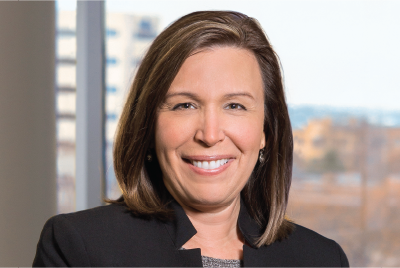
Promoted to Chief Nursing Officer at Group Health Cooperative of South Central Wisconsin a year ago, Kristin Lueschow, 45, reflects on the medical profession, her love of learning, and a longtime passion for dirt bikes.
While studying for her master’s degree, she and her husband frequently spent weekends cheering their two boys on to victory in hare scrambles.
“I’ve owned and ridden a dirt bike for years,” she says. “I never raced but I’ve filled gas tanks, attended to wounds, and done race support.”
Lueschow is championing another cause these days, leading over 320 employees in GHC-SCW’s Clinical Operations department.
Health care and nursing have changed dramatically since she first entered Madison College’s respiratory therapist program in 1992. Of primary concern now, and as the population ages, is a general shortage of health-care workers, and in particular, nurses.
In 2017, a Journal of Nursing Regulation report projected that between 2016 and 2030, the U.S. would lose over 1 million registered nurses to retirement.
Meanwhile, the Bureau of Labor Statistics anticipates 438,100 new RNs by 2026, but it’s not enough. An additional 203,700 RNs will be needed each year through 2026 to fill newly created positions.
Lueschow shared her thoughts in a recent conversation.
Why did you choose to study nursing?
I’m a caregiver and love knowing the impact I can have on people’s lives. There are days when I wish I was working bedside and caring for patients again, but I don’t regret anything.
What’s involved in your new role?
Our department is responsible for the care delivery outside of our providers. We oversee the call center (the main hub of all communications), scheduling appointments, transferring patients to care teams, the reception teams, and the urgent-care nursing staff, as well.
So, how bad is the nursing shortage?
It’s not just nurses, but health care in general. All of Madison’s health-care organizations are short medical assistants or students, and it’s affecting daily staffing levels.
It wasn’t unpredicted, but now a lot of nurses are leaving health care and nurse educators are retiring. In fact, I represent only one percent of nurses in the state with masters’ degrees. We can’t expand nursing programs if we don’t have the people to educate students. Like so many professions, the workforce shortage is creating a level of burnout, and if you don’t have adequate staffing, other areas suffer.
Another issue is health equity, meaning that everyone has the opportunity to be as healthy as possible. So how do we remove obstacles that prevent people from being healthy? Nurses need to focus on the social determinants of health. They are the drivers, but it takes a lot of time and care coordination. That’s both the exciting and challenging part of health care.
What’s the answer, in your opinion?
We have to get in front of high schoolers and make those connections earlier so we can encourage them into the field. Frankly, I don’t know why people wouldn’t choose nursing! Nothing is hard if you’re passionate about it!
Can current workforce projections be reversed?
We need resilient leaders in health care and grit from people who are passionate about care delivery and have a vision and a strategic plan to make sure that we not only have engaged employees but keep them engaged.
The future of health care in general is positive if we can retain the amazing people we have, but there are huge challenges ahead. Things are changing so rapidly — technology, health-care reform — there’s never a dull moment.
What makes you most proud?
That I continued to pursue my education and finished my master’s degree until my kids were almost in their teens. I wasn’t the smartest kid in high school, but the learning grabbed me. I’d study at night after the kids went to bed.
As for being a nurse, it’s the little things nurses do every day that makes such an impact. I still remember patients I cared for years ago, some even by name, and I hope it goes both ways.
Click here to sign up for the free IB ezine — your twice-weekly resource for local business news, analysis, voices, and the names you need to know. If you are not already a subscriber to In Business magazine, be sure to sign up for our monthly print edition here.

