
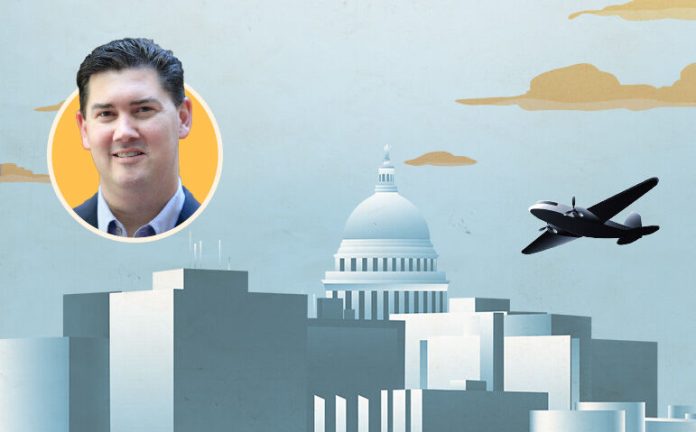

Southwest Airlines has given the business world a textbook example that providing fabulous customer service and maintaining high employee morale in a low-cost environment is possible — and profitable — in today’s corporate world.
But what’s the real story? As a key developer of Southwest Airlines’ legendary customer-service and leadership-training programs, Jason Young knows that great culture does not just happen. A customer service value can be created and nurtured to flourish into a customer-service culture. And employees can be treated as true partners in the success of the business through shared values, shared vision, and shared effort.
As a former senior-level manager at Southwest Airlines, Young learned the value of a successful workplace culture. During his 10 years with the airline, Southwest was consistently rated number one in customer service and employee satisfaction. Young was a key driver in creating and developing the company’s innovative training programs for its successful leadership and customer service culture that have become renowned in today’s business world.
Now Young will share those strategies with the audience at the IB Expo & Conference, Oct. 19 at the Alliant Energy Center, as this year’s keynote presenter. He recently gave IB a sneak peek at what’s in store for attendees.
Taking to the skies
A graduate of New Mexico State University in Las Cruces, NM, with a degree in business administration that emphasized marketing, specifically sales and sales management, Young joined Southwest in September 1988 fresh out of college.
Young was hired in a customer service role and tasked with helping to unveil a new ticketing system. That role quickly turned into a training manager role, which saw Young traveling from airport to airport helping new hires and existing employees to learn the new point-of-sale ticketing system.
“It was more the luckiest thing that could have ever happened timing wise, because I was able to get into Southwest right at a time when they were looking for someone who was willing to travel 100% of the time,” Young notes. “Being single and fresh out of school it sounded like a great gig.”
Young held that role for about four and a half years before accepting a position as manager of customer service [for Southwest] at Los Angeles International Airport. The year he spent in L.A. was a fantastic learning opportunity but what it really made him realize is that he prefers developing people, not airport management.
When opportunity knocked to get back into a development role, Young answered. “I transferred back to our leadership development center, which Southwest calls the ‘University for People.’ We did system-wide customer service and leadership development initiatives. About that same time Southwest was experimenting with some new culture initiatives, and so they started a program called the Culture Committee. I was on the first Culture Committee, which really started giving me this understanding of how culture impacts performance and employee engagement, and how it helps sustain customer loyalty and satisfaction.”
Young spent his remaining years with Southwest in that capacity before leaving in 1998 to pursue other career opportunities.
Not like other air carriers
Young notes Southwest was always a different kind of airline company.
“Even in the beginning Southwest never started to compete with other airlines,” Young says. “They were trying to compete with the car and the bus. [Company cofounders] Herb Kelleher and Rollin King, and the other founders said let’s create something that’s fun but also something so the normal person can travel. It wasn’t a stuffy, only for the elite and wealthy, or only for the business class airline. It was intended to be an open opportunity for everyone to fly.”
Young believes that philosophy as a part of Southwest’s DNA helped the company flourish. He also lauds Southwest’s early focus on the internal customer.
“It was well known that the most important part of [Southwest’s] business was taking care of the internal customer, taking care of the employee. I heard Herb say it so many times, ‘If we take care of the employees they’re going to take care of our customers.’ The way I like to say it is if you meet needs in employees that aren’t being met anywhere else, they’re going to meet needs in customers that aren’t being met anywhere else. They created a space where people enjoyed going, there was a culture of appreciation and care, but also a high culture of accountability. In those environments I think employees can thrive and I think the consumer can feel that.”
(Continued)
During Young’s 10-year tenure with Southwest the company more than doubled its employee count, a growth boom that can be difficult for many companies to manage while maintaining a cohesive corporate culture amid all the new faces.
Young credits Southwest’s labor structure — the company is fully unionized, while many other air carriers during the same period were not — for easing that transition.
“Southwest [management] said, ‘Hey we’re all trying to do the same thing. We’re trying to create the best possible environment for employees so they can give the best possible service to the customer.’ That partnership with unions and that ability to work through labor negotiations in a positive way was, I think, really a differentiator that gave Southwest an edge.”
Young also learned an important lesson along the way about business, that wasn’t initially easy to accept until hindsight gave him some perspective.
“At one point I had this idea that we should make our training into a profit center; we could go out and do training for other companies,” Young explains. “I remember the response back from the senior planning committee was, ‘We’re a transportation company, not a training company.’ I didn’t get it then but a few years later I started to see that we just needed to stick to what we did best. We weren’t a training company. And now I can see why Southwest is so successful, because they tend to just stick to what they do best.”
Sharing secrets
During his IB Expo presentation on the Southwest Way, Young plans to share a number of the best practices and business strategies that have made Southwest an industry leader, and which attendees can immediately take back to their own companies and implement.
Some of Young’s insights include:
- “Southwest has a lot fewer employees per aircraft than most of the other airlines. That just means by definition you have to be more effective and efficient to operate. You have to have a strong sense of direction and purpose, and an environment where you’re supported. I would call that supervisor support — supervisors who are taking pressure off of the frontline staff and not trying to put pressure on.”
- “Southwest looks for ways to find people doing things right. That’s a concept that a lot of companies don’t get. But if you want to have a sticky culture where employees want to hang around, find them doing things right and then let them know about. It’s not a specific recognition program, it’s a culture of finding people doing things right and then verbalizing it.”
- “The airline industry decided to charge for bags and Southwest said no, we want bags to fly for free. Then they did a national ad campaign around something they already didn’t do. That was brilliant because it’s a sense of fair play for the consumer.”
Young will also offer a few nuggets about Southwest that most of the public doesn’t know about why they do what they do, including fast turnarounds and even some of the company’s uniform choices.
“All of these things transfer to the audience and they’re going to have to ask themselves, ‘Well, are we doing that for our customers?’ My goal through the Southwest Way discussion is to get people thinking about if they’re creating these types of principles in their organization. And I’ll even share some things that Southwest sometimes missed on. Bad things happen to good companies, so I’ll talk about how Southwest has used that to put systems in place to respond positively to those negative situations.”
The keynote breakfast costs just $35 per person or $230 for a table of eight. Reservations can be made online at MadisonBusinessExpo.com.
Click here to sign up for the free IB ezine – your twice-weekly resource for local business news, analysis, voices, and the names you need to know. If you are not already a subscriber to In Business magazine, be sure to sign up for our monthly print edition here.

