
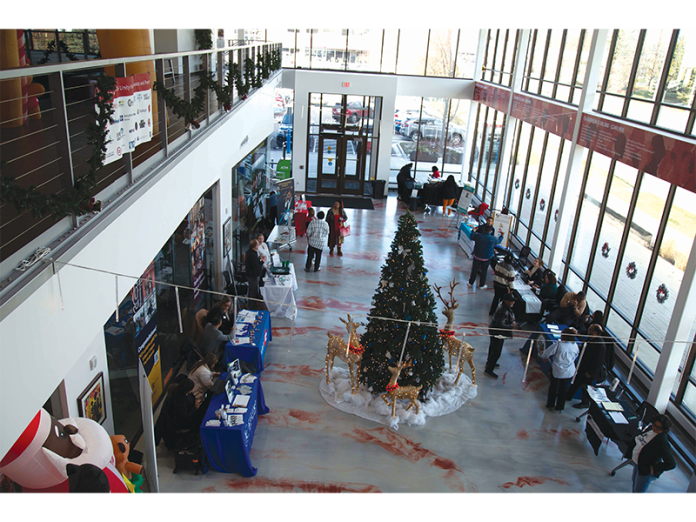

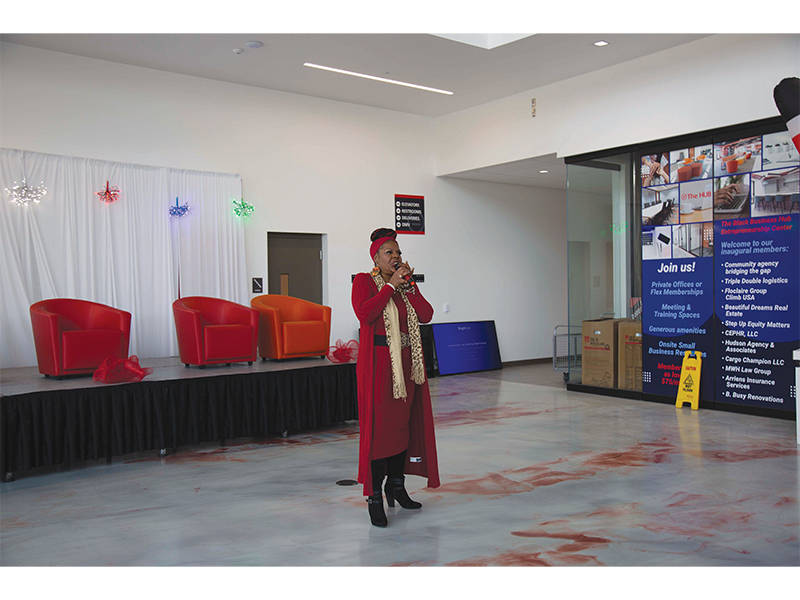

As the new year begins, the Urban League of Greater Madison (ULGM) is one organization making good on its resolution to bolster entrepreneurs and small businesses led by people of color through its Black Business Hub.
Training programs and onsite resources at The Hub are designed to support businesses from the idea phase to established ventures looking to grow.
“The Hub’s supportive environment of like-minded entrepreneurs was a big draw — it aligns with our mission of fostering connections and contributing to the local business ecosystem,” says Vincent Carey, founder and CEO of Triple Double Logistics (TDL), a Madison freight brokerage company which opened at The Hub in September.
“Since the move, we’ve started working with companies that have supplier diversity goals, which has been both rewarding and educational. The Hub has been instrumental in helping us align with businesses that share our values and long-term vision.”
Ruben Anthony, ULGM’s president and CEO, says The Hub addresses disparities and creates a space for Dane County’s underrepresented entrepreneurs. “There are 10,000 businesses in Dane County that have more than one employee, and of those businesses… only 0.4% of those businesses are African American-owned. … I know we can do better than that, and the community is expecting us to do better than that.
“We are looking for a way to help businesses who are at different stages of the business development cycle — new businesses, startup businesses, existing businesses, business leaders that are looking to expand. We want to create… an economic development place for these folks.”
Support structures
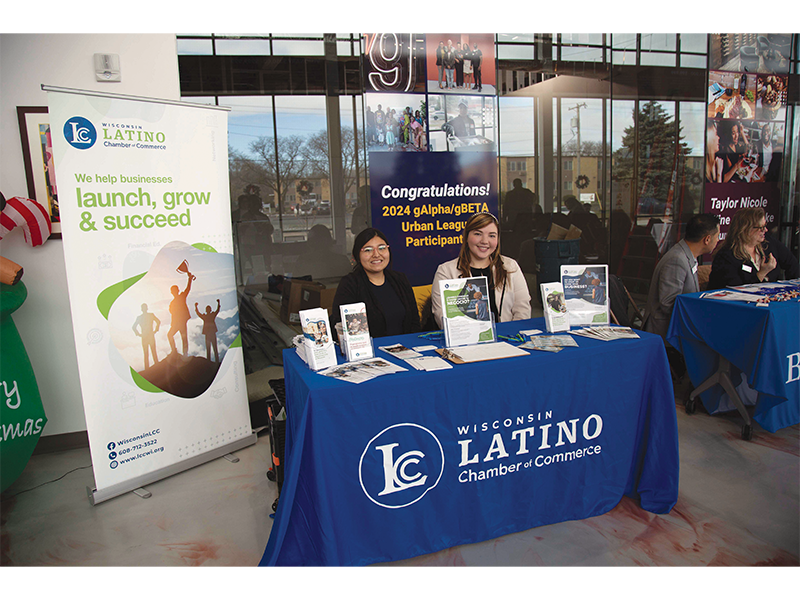
The Hub offers key incubation and expansion opportunities through gener8tor, which provides the gAlpha and gBeta accelerator programs in partnership with ULGM. Anthony says The Hub has already seen two gAlpha cohorts with approximately 45 total participating businesses, and two gBeta cohorts with five business participants apiece.
GAlpha is a four-week program for companies in the idea stage. It is conducive to larger class sizes and aims to get businesses off the ground, according to Molly Dill, managing director for gener8tor Wisconsin. GBeta, meanwhile, helps established businesses accelerate growth, with a focus on sales, marketing, and building out the business structure. Dill says gBeta cohorts consist of only five companies to allow for individualized coaching and mentorship.
“The Urban League program is … specifically targeted to Black entrepreneurs and other entrepreneurs of color. It’s main street small business all the way to high-tech startups, depending on what the right mix is for the cohort,” Dill says.
“We introduce folks to mentors who are niche experts in HR, marketing, legal, alumni from our programs that have been successful, just to really surround them with support and areas of expertise that they need.”
Entrepreneurs, established or aspiring, can apply to programs online at gener8tor.com/apply and interview to be selected for an upcoming cohort with a pitch specific to their business.
The current gBeta cohort, set to graduate the program in February, illustrates the program’s capacity to serve a diverse array of business types:
Bee Made It, founded by Brandon Dimmer, prepares homemade desserts and Southern style baked goods;
House of Flavas, owned by Jodie Jefferson, is a well-known restaurant and catering service that offers Southern and Chicago-style dishes;
See My Ears, owned by Gregory Taylor Sr. is a hearing center that diagnoses hearing impairments, sells hearing aids and assistive devices, and trains professionals to identify behaviors that indicate hearing impairments;
Shante Studios, founded by Lanicia Joyner, provides a suite of services including photography, event planning, shows, networking, and workshops; and
Wisconsin Martial Arts & Fitness Center, owned by Charles Dean, teaches classes in martial arts, jiu jitsu, and fitness, also offering adaptive programming for people with disabilities.
“Entrepreneurship can be very lonely,” Dill says. ”A lot of times it’s someone doing it on their own, and it can be just a little bit easier if they can have additional resources and support.”
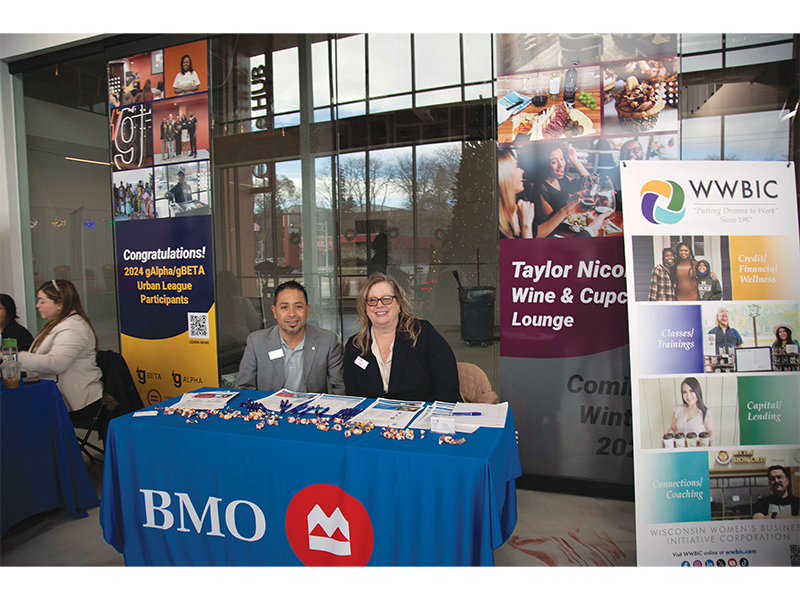
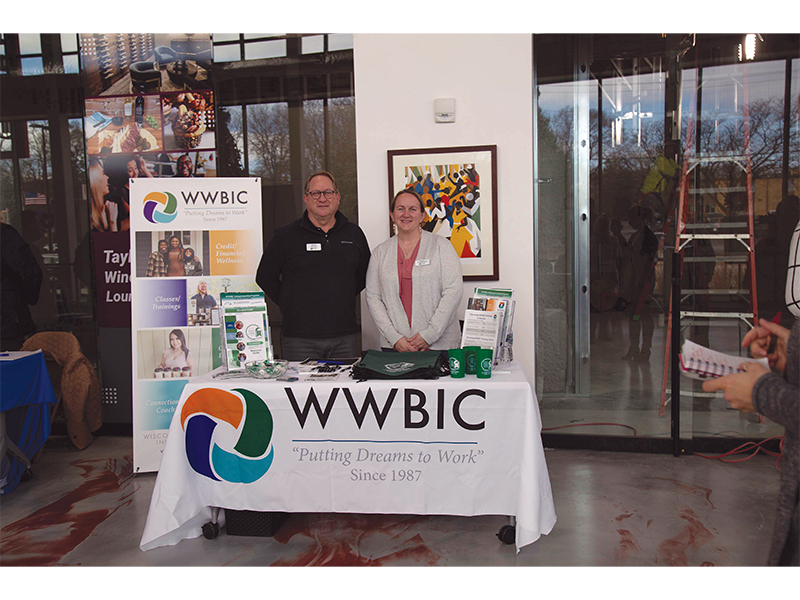
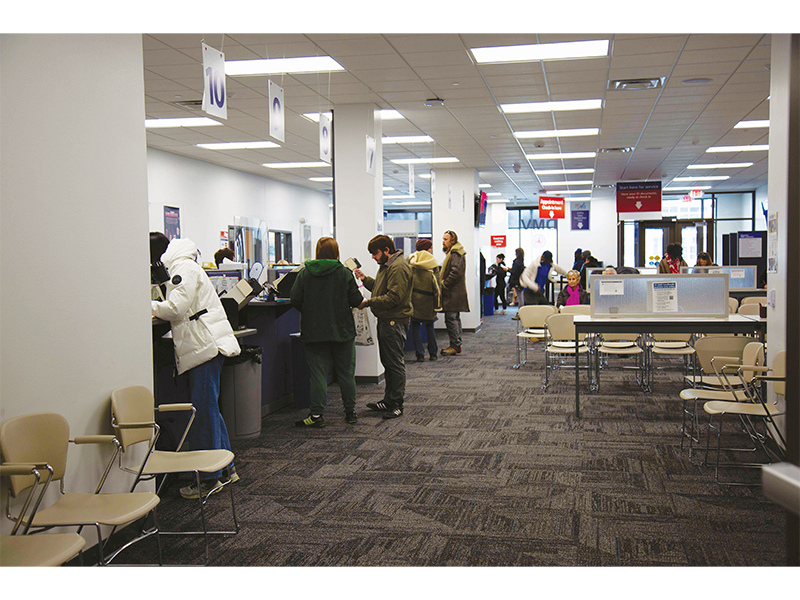
The Wisconsin Women’s Business Initiative Corp., the Madison Black Chamber of Commerce, and the Wisconsin Economic Development Corp. (WEDC) are also working together in The Hub to fuel new ventures. They join onsite attorneys, banks and credit unions, and the Department of Motor Vehicles to provide key assets for the business and greater community.
“In addition to bringing our staff of 120–130 folks into the south Madison community and being part of that renaissance, we also have a number of partners that we work with on a regular basis,” says Sam Rikkers, WEDC’s deputy secretary and COO. “The synergies that we’re able to have … are just really neat.”
Those partnerships with local organizations are key to making WEDC’s services accessible to small businesses, he says.
“A lot of our direct programs are not the ones that individual entrepreneurs will take advantage of. … We believe that it’s more effective for individual entrepreneurs to be connecting with folks at the community level.”
Rikkers also believes that The Hub’s cooperative environment is providing critical ammunition for local economic revitalization.
“The Madison economy is pretty dynamic, but there are certainly spots where more dynamism can flourish, and so we’re excited. That’s already happening in south Madison along the Park Street corridor and beyond, so we hope to be part of the success story.”
Strategic planning
Carey says locating TDL at the Hub was a strategic move. Being centrally located in Madison in a new, modern building makes the company easily accessible to clients and partners.
“Triple Double Logistics has experienced tremendous growth,” he says. “We’ve exceeded six figures in total annual sales, a major milestone for us, and we continue to build strong partnerships with clients and carriers.”
Looking beyond the strides TDL has made in its new home, Carey says it’s all about having a greater effect across Dane County.
“We want to make a meaningful impact in the Greater Madison Area by creating opportunities and driving economic growth. For TDL, this includes plans to acquire assets to better serve southwest Wisconsin and to create more jobs for local residents.
“The Black Business Hub plays a critical role in this mission. It’s a hub for innovation and empowerment, particularly for minority-owned businesses, and it’s helping to redefine what’s possible for our community. Together, we aim to inspire others to pursue their dreams, support supplier diversity initiatives, and contribute to the vibrancy of Madison’s economy.”
Melissa Kidau, who is preparing to open Jamaica Blue Mountain-inspired coffee shop Rasta Barista with co-founder Sei D. Kidau in The Hub, echoes this sentiment.
“Our location in the Black Business Hub, with its growing ecosystem of businesses and proposed developments, provides an excellent opportunity for growth and community engagement.”
Rasta Barista is scheduled to open this spring. Its menu will offer coffee, teas, pastries, a jerk chicken panini, Jamaican-style beverages, and more. The beans are sourced from Jamaica and will be roasted in-house.
“Infused with Rastafarian or Jamaican influences, Rasta Barista could foster inclusivity while promoting cultural appreciation and understanding,” Kidau says. “Its success could encourage more Black-owned businesses to flourish. … Additionally, its role in attracting visitors and increasing foot traffic to The Hub could boost the overall vibrancy of the neighborhood, benefiting surrounding businesses and revitalizing the area.”
For aspiring entrepreneurs not quite ready to launch a brick-and-mortar operation, Anthony says The Hub can still provide a starting point. Its commercial kitchen is open to community members looking to make and sell consumable goods, and a training room provides space for classes provided in collaboration with Madison College.
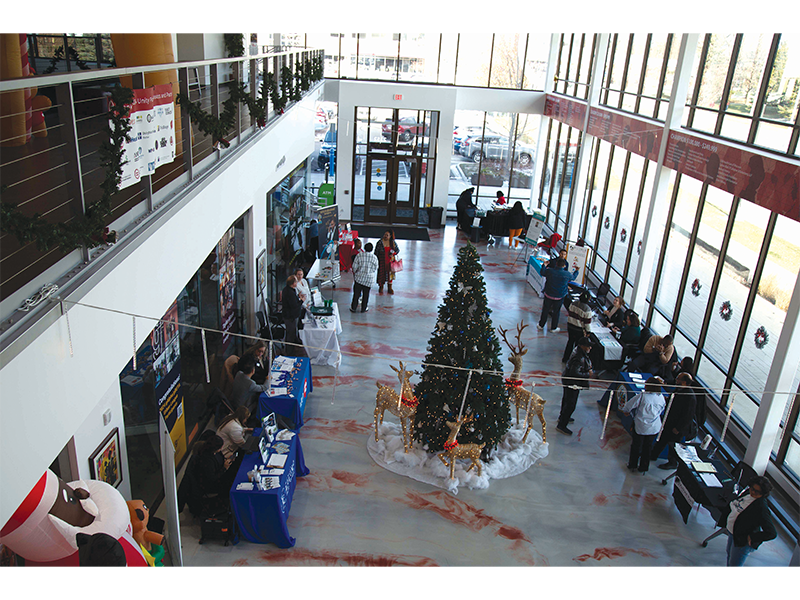
A coworking space at The Hub has over 90 spots, in which Anthony says over 20 businesses have already taken up permanent residence. And its event spaces have already seen heavy traffic from pop-up events, markets, and celebrations over the past few months.
Joe Vanden Plas contributed to this report.

