


Yodelay Yogurt was once hailed as one of the success stories of the University of Wisconsin Center for Dairy Research, which helped owner Markus Candinas develop an authentic Swiss-style yogurt that gained a loyal following among local shoppers.
In a 2017 interview with the center’s Dairy Pipeline publication, Candinas said he wanted to create a new, artisan yogurt like the one he enjoyed as a child in Switzerland. He went on to develop an award-winning, fruitier, and naturally tart alternative to Greek-style yogurt.
“I wanted to create something different and I was deeply influenced by the European style,” he told the publication.
Now, Yodelay Yogurt has disappeared from store shelves, its production facility has shut down and the company was sued by one of its investors. The company’s milk provider and food distributor said they have not received an order from Yodelay in more than a year. At the same time, its website is still active and no official announcement on the state of the company has been made.
Candinas, also the owner of Candinas Chocolatier in Verona, has not returned repeated calls from In Business Madison seeking comment.
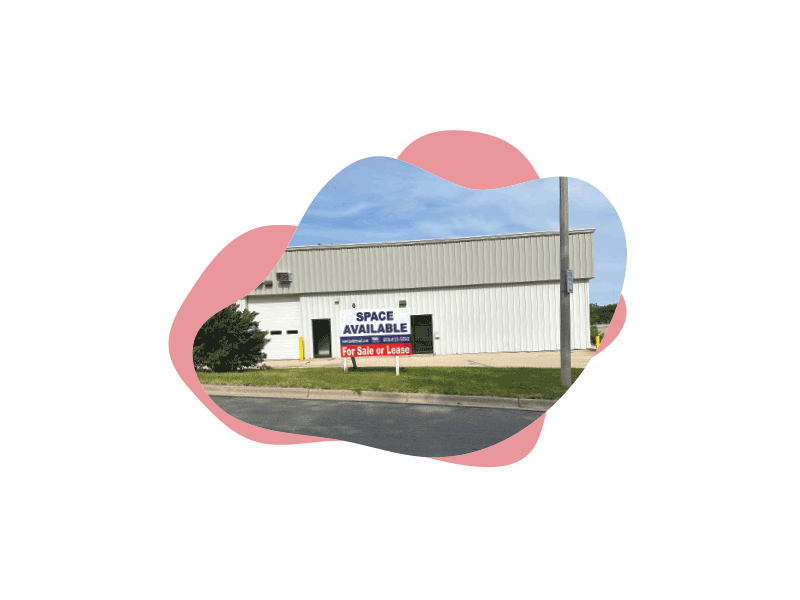
Yodelay’s Madison production facility, 3309 Latham Drive, is listed as “permanently closed” in Google. The plant is being marketed by Welton Enterprises Inc., a Madison build-to-suit real estate developer, to prospective buyers who would inherit production equipment left by Yodelay. There were no business operations going on when the 10,000-square-foot building was sold, according to Paul Molinaro, vice president of Welton Enterprises.
“We interacted with (Yodelay’s) broker and their partner,” Molinaro said. “We never had any discussions with their owners. All we know is we bought the building and they were out of there and not operating. They left most of their equipment.”
Absent from groceries
Yodelay Yogurt first appeared in local stores in April 2017 and was available in raspberry, peach-raspberry, pineapple, rhubarb, tart cherry, blueberry, strawberry and pink grapefruit flavors.
The company website lists 50 local stores where Yodelay products can be found, including familiar names and stores in the Madison, Milwaukee and Chicago areas. Representatives of the Willy Street Co-op and Jenifer Street Market, which carried the yogurt, confirmed the product has been out of stock for several months.
Anya Firszt, general manager of the Willy Street Co-op, said the business had stopped selling Yodelay at its west side location due to slow sales, but was continuing to offer it at the Willy East and North stores until it became unavailable through its distributor, Certco Inc.
Contacted in May, Firszt said it appeared Yodelay was having distribution issues.
“We don’t know the future of it, to be honest,” she said. “Right now, it’s unavailable because Certco doesn’t have it, so I’m not sure what the future holds or if it’s been permanently discontinued.”
Certco Inc., an independent wholesale grocery distributor serving Midwest grocers and supermarkets, distributes over 60,000 items to more than 200 independent grocery retailers, but Yodelay Yogurt is no longer one of those items. All of the stores that Certco services had the option to carry the yogurt products.
Jon Aimers, category manager for Certco, said Yodelay was having production issues.
“So, we decided to discontinue them until they were back in production,” Aimers said. “That’s probably what you’re seeing out there.”
Aimers said Certco’s buyer reached out to Yodelay because their orders weren’t coming in “and they weren’t giving us any sort of communication.”
At one point, Certco distributed several varieties of Yodelay yogurt, but the last order it received from Yodelay was in June 2024. Aimers said Certco decided to discontinue the relationship in October 2024.
“Our buyer had been told that they were having a lot of production problems and they didn’t know when they would be able to fill our orders again,” Aimers said, “and so we made the decision at that point just to cut ties with them, and then if they ever got back into production, then we could revisit taking it back on again.
“I have not been notified whether they’re back in production,” Aimers said. “I had told them when we made the decision to discontinue the whole line, just let us know when you’ll be back up and running and we’ll see if it’s of interest to start carrying it again.
“Up to this point, I haven’t heard anything.”
Legal trouble
On Feb. 20 in Dane County Circuit Court, Yodelay Yogurt was ordered to pay $109,250 to the Sue Anne Ewens Family Trust in Milwaukee to resolve a commercial and trade contract lawsuit.
According to the original court filing, dated April 6, 2023, Ewens invested $500,000 in Yodelay and later sold her 12.5% of ownership for $700,000 to Candinas and Michael Hull, an associate of Candinas employed at Yodelay.
On the Yodelay website homepage, the company touts the partnership of Candinas and Hull, noting “years of traveling to Switzerland, a decades long friendship and a passion for yogurt led Markus Candinas and Michael Hull to create a unique and delicious Swiss Yogurt here in America.”
The lawsuit said the terms of the purchase required Yodelay to make quarterly payments to Ewens, beginning on or about October 1, 2017, of at least 5% interest on the $700,000 due under the agreement, or $8,750 per quarter. No such payments have been made and by the date of the lawsuit filing, Ewens claimed Yodelay owed the trust $201,250, which Candinas denied as part of his legal defense, according to court records.
Calls to Ewens’ lawyers from In Business Madison seeking comment were not returned.
In January 2023, Ewens placed all of her assets, including rights to payment, in the trust, which she asserted was the proper plaintiff to the lawsuit.
Hull was not a named defendant because in November 2021, he filed Chapter 11 bankruptcy in the Eastern District of Wisconsin.
Hull himself has a checkered business past. In 2019, Hull and then-business partner Christopher Nohl of Milwaukee were named as defendants in a Securities and Exchange Commission lawsuit which alleged they bilked dozens of investors out of millions of dollars.
The commission said that Hull, Nohl and the companies they controlled — Blue Point Investment Council, Chrysalis Financial and Greenpoint Asset Management, a Wisconsin-based private investment fund — artificially inflated the value of gemstones they sold to investors through a subsidiary called Greenpoint Tactical Income Fund.
The SEC’s complaint alleged Greenpoint Tactical had claimed annual returns of up to 65%.
“As alleged, the defendants helped generate these supposed returns by inflating the value of a private company that the fund invested in and by valuing physical gems and minerals in the fund’s portfolio through methods that failed to comply with the procedures contained in the fund’s operating agreement,” the SEC said.
Also according to the complaint, the defendants improperly charged the fund excessive management fees of over $13 million based on the defendants’ inflated and improperly determined valuations. From 2017 until the time the complaint was filed, the fund allegedly paid the defendants and their entities more than $5.9 million in fees while telling many investors that the fund had no liquidity to meet redemption requests.
The complaint also alleged the defendants and their entities engaged in self-dealing and failed to disclose their conflicts of interest, which included numerous undisclosed short-term loans to the fund, some of them with annualized interest rates exceeding 100%, and the fund’s undisclosed payment of service fees to entities owned by Nohl and Hull.
The complaint sought injunctive relief, disgorgement of ill-gotten gains and civil penalties. After a seven-day trial in August 2022, a jury in the U.S. District Court for the Western District of Wisconsin found Nohl, Hull and the various entities under their control liable for securities fraud in connection with their operation of the Greenpoint Tactical Income Fund.
Shortly after the SEC filing in 2019, the investment fund filed for Chapter 11 bankruptcy to protect it from creditors and enable reorganization.
A June 2022 Debtor’s Disclosure Statement filed in U.S. Bankruptcy Court for the Eastern District of Wisconsin in Milwaukee mentioned Yodelay Yogurt at several junctures.
At one point, the disclosure statement said, “The debtors (including Hull) principally rely on income revenue from GTIF (Greenpoint Tactical Income Fund) and GPRE (GP Rare Earth Trading Account, a subsidiary of GTIF) to fund their income plan along with income earned by Hull and his spouse (Angela) from Yodelay Yogurt, and forgivable loans/guarantees from Michael Hull’s brother, Patrick Hull.”
At another point, the disclosure statement said, “As for Yodelay, its business is starting to mature. It manufactures and sells yogurt. Hull and his spouse, Angela Hull, are working there on a full-time basis. Mrs. Hull has been receiving a $63,000 annual salary and Hull has started receiving a $120,000 salary. Both salaries, net of taxes, are included in the income to be distributed under the (Chapter 11 reorganization) plan.”
In 2024, Hull and Nohl testified that under their continuing management, they expected the fund would be able to liquidate several high-value assets to meet the plan’s payment obligations.

High hopes dashed
For Yodelay’s milk supplier, the craft yogurt was a quality product.
Bryan Voegeli is a fifth generation family farmer who runs Voegeli Farms in New Glarus, home to a herd of Brown Swiss cows. He said Yodelay’s last milk order was placed in June 2024.
Among Yodelay’s accolades were two Best of Class awards at the 2020 World Championship Cheese Contest, a three-day international cheese competition held in Madison just before the COVID-19 pandemic.
Yodelay took the top five spots in the Flavored Lowfat Yogurt category, the first time a single maker earned all awards in any yogurt category in contest history. Its rhubarb Swiss yogurt won first place, scoring a 99.95, the highest of all entrants in the competition.
Even though Voegeli didn’t manage the yogurt company, it’s clear he had a sense of ownership in the end product.
“It was a great product,” he said. “It was something that I had extremely high hopes for, and we had done an awful lot of work on it.”

