
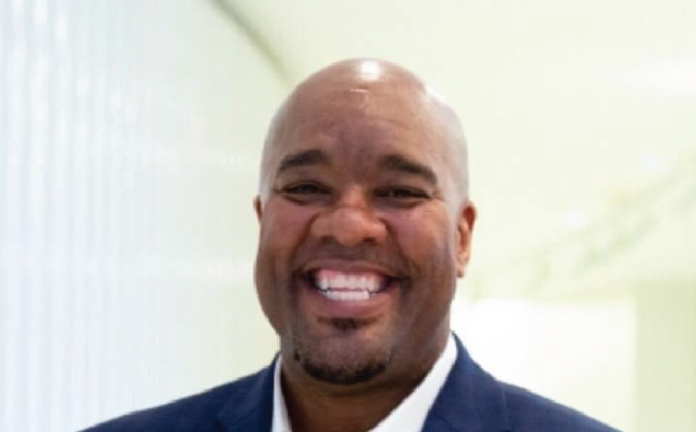
The police-involved murder of George Floyd in Minneapolis has sparked a national debate on police training, and even the proper role of policing, as communities across the country consider defunding police departments and reallocating those resources to address other community needs. Over the coming weeks, IB will discuss improving the human condition with a number of community leaders, including what the business community can do to be part of the solution. We start with Michael Johnson, president and CEO of the Boys and Girls Club of Dane County, who says it’s high time for people, especially elected officials, to be uncomfortable.
Following the police-involved murder of George Floyd, the term systemic racism has been applied to police departments all over the country, and some believe our entire society is undermined by it. The most far-reaching suggestions have been to tear it down — our entire system, not just police departments — and start all over, suggesting that reforming current institutions is futile. Do the people who espouse this have a legitimate point?
“On the whole issue around defunding the police, there are some serious, legitimate concerns being raised across the country. There clearly needs to be reform that must take place, and when I think of defunding the police, it should be a conversation around how you allocate resources they already have to ensure that communities of color feel protected. For example, I was told the city of Madison police budget is $80 million. If that’s the case, can we reallocated $10 million of that and help provide mental health services, or do you need police officers to go to every single call that’s made to the police department? In neighborhoods across the country, many communities of color are over-policed, and that creates a challenge in itself.
“When you continue to see issues around what happened with Trayvon Martin or with George Floyd or Ahmaud Arbery, and these issues continue to happen time and time again, there is some serious reform that needs to take place. When you look at the resources that are allocated to police budgets across the country, there is some room to do better community policing. We’ve been talking about it for far too long, and now is the time to begin to explore some of those things. The city, in terms of putting together an Oversight Committee, took a step in the right direction, but for years we’ve been having these conversations and now is the time to begin to evaluate the appropriate mix of resources to make sure that everybody in Madison, and in our country overall, feels safe.”
Can an institution be systemically racist even if it has an African American or Latino chief executive?
“When you think about systemic racism, and you think about it in Wisconsin, the data speaks for itself. The fact is that we have the largest racial achievement gap in the United States. When you look at health disparities, when you look at mass incarceration, and when you look at the disproportionate number of African Americans that are in those systems, yes, systemic racism happens in schools and it happens in our workplaces, even if a person of color may be in charge of a department. If you look at Wisconsin, most of the C-suite positions are held by board members who don’t look like me, CEOs who don’t look like me, VPs who don’t look like me, and so we have to do a better job of making sure that not only do we have more diverse workforces, but we have a diverse workforce that’s inclusive of communities of color and particularly Africa Americans.”
Would it be wise to have only minority officers patrol minority neighborhoods so at least there is more of a cultural understanding between officers and the community?
“No, I don’t think segregating people is the right thing to do. Having a good mix of people who are culturally competent and well-trained, that understand the culture of those communities, is what’s needed. I would not say hire police officers of one demographic to police a neighborhood. I would not be a fan of that.”
If police departments are defunded or disbanded, how will communities be policed? And would that be an effective approach to public safety?
“The only place it has really happened is Camden, New Jersey. That was a police department in that state that really didn’t defund the police, they reallocated resources of the police department. Every police officer had to reapply for a new job. When you think about defunding the police, and you look at the origins of it, I don’t think everybody is saying take away all the resources from the police department. They still have to be able to do their job, but at the same time, when you look at most municipal budgets, a large percentage of it goes to their local police department.”
If you could make one or two changes that could really move the needle, would they be cultural, economic, educational, or government/policy related?
“A few things. We introduced a couple of years ago a 15-point plan to Madison. Our No. 1 issue right now is the education of our kids. If our kids can’t read and can’t write at proficiency, we need to invest more in their lives and make that investment right now. I believe early childhood education should be free, and that should not be a barrier for young people in our society. Two, African American kids and kids of color need to be graduating from high school at the same rates as white kids, and why is that not happening in our state? And then the third one is making sure that from a public safety perspective, there is an array of funding opportunities for community policing that involves people from each local community being involved in what community policing looks like. That’s what I would be a fan of.”
What can business organizations realistically do to improve the situation, both inside their walls and outside?
“I would say a couple of things. One, our state still has this issue — not having a diverse workforce, diverse leadership, diverse boards, inclusive leadership, inclusive boards, and making sure that from an economic perspective, there is representation. Some of the issues we see around poverty is a lot of people of color are underpaid, underemployed, have not gotten adequate education that’s needed, and the data backs all of that up. You need to let the data drive the decision that we make. The problem that we have in Wisconsin is that we know what the issues are, but for some reason systemically the funding is not there to address these issues. I heard somebody say the other day, ‘You can’t fix a wound, a big, gaping wound with a small band-aid, and we’ve been band-aiding a lot of these problems.’ So, I would say for local companies, having a diverse workforce, being committed to hiring African Americans, and making sure from a philosophical perspective that you’re supporting agencies that support Black children.
“From a municipality perspective, same thing — increase representation in city government at the elected leadership level and at the executive level, and make sure that your funding priorities are aligned with the challenges that our communities face. Sometimes, that doesn’t happen. We have these town hall meetings and we have these discussions and we have these focus groups. We talk to people in the community when it’s time to align your budget priorities around those issues, and it doesn’t match up sometimes.”
Do you have other observations, perhaps on something we’ve neglected to ask?
“Leadership at times like this should be uncomfortable. Any time there are groups of people who feel marginalized and are dying at the hands of those who are there to protect and serve us, we all should feel uncomfortable right now and really stretch how we think, how we respond, and how we act on these issues.”
Click here to sign up for the free IB ezine — your twice-weekly resource for local business news, analysis, voices, and the names you need to know. If you are not already a subscriber to In Business magazine, be sure to sign up for our monthly print edition here.

