

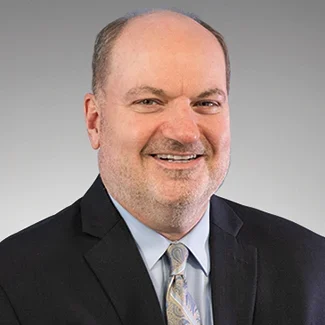
Lon Sprecher is retiring May 1 as president and CEO of Dean Health Insurance, and he’s sailing into the sunset amid choppy seas in the health care industry. One of the largest HMOs in Wisconsin, Dean provides managed health insurance to more than 325,000 customers in southern Wisconsin and has $1 billion in annual revenue. But like every other health-related enterprise, it has been immersed in adapting to the Affordable Care Act. Despite its current unpopularity, Sprecher believes the ACA will be successful in the long haul, provided certain adjustments are made. In this Take Five interview, he talks about those adjustments and his plans for an active “retirement.”
IB: Ten years from now, will we look back at the Affordable Care Act and say, “Yes, it successfully bent down the cost curve while providing universal or near universal access to medical insurance”?
Sprecher: The Affordable Care Act is in the first of probably a three- or four-act play. If it stays exactly the way it is now, I don’t think 10 years from now we’ll say it bent the cost curve. It has very significantly improved access to health care, but there will have to be additional tweaks to the Affordable Care Act in order to zero in on the cost-control aspect. Using CMS, which is the Center for Medicare and Medicaid Services, as kind of a bully pulpit will help define some practice protocols that are not defined right now. That will help specialty care take out costs that are probably unnecessary and unwarranted. So there will be additional tweaks to Obamacare over the next two to four years, but in 10 years, we probably will be able to say that with the second, third, and probably fourth acts of the ACA, that it was effective.
We’re just finishing Act 1. There will have to be an Act 2 after Jan. 2, 2015 that focuses on the cost-containment aspect, as opposed to quality and access.
IB: Is there widespread talk of CMS having this role? Is that built into the law?
Sprecher: That’s not been built into the law, but it’s a natural path that CMS has been on over the past four to six years. It’s going to have to accelerate in order to really get at the costs and the need to take unnecessary costs out of the system. At Dean and SSM Healthcare, we’ve been focused on what we call our Medical Value Program, which is taking unnecessary cost out of the system. What we’ve been doing, if specialty care doesn’t have defined care protocols for certain procedures, we’re trying to define our own protocols that maintain our quality but take out unnecessary costs.
An example is total knee replacement. Four years ago, it was an average three- or four-day stay in the hospital, and then for probably three-quarters of our patients, four days or so in a skilled- nursing facility. The best places to get an infection are the hospital and a skilled-nursing facility, so now we’re about a day to a day and a half in the hospital. Most of our cases, unless there are complications or issues with home care, go home. Our readmission rate is one of the lowest, and our infection rate is one of the lowest in the country, and we were average [in that category] before. So that’s a key example of where protocols need to exist that say, “This is the best practice for care, for both cost and quality.” Specialists and other doctors know how to provide that care with guidelines, but there is a lot of specialty care that doesn’t have guidelines yet.
IB: How much has this protocol writing been taken on by providers? How common is this for hospitals to take that on by themselves?
Sprecher: It’s very common in provider-owned health plans like ours, like Unity, like Geisinger in Pennsylvania, like Intermountain in Utah. So it’s fairly common there. It’s getting to be somewhat more common with the nationals like United Healthcare and Aetna. They obviously cover a lot broader geography, so it gets a little tougher for them to bend the cost curve geography by geography, whereas the bulk of provider-owned health plans have part of a state or a full state and it gets a little easier to have a direct link to the doctors in terms of changing their behavior and their patterns. That’s easier as opposed to more of an arm’s-length contract between a national payer and clinics and hospitals.
IB: Some ACA critics contend that because of the way we have reformed health care, we’ve simply replaced one set of perverse incentives with another. Are they onto something, or do they protest too much?
Sprecher: They are probably protesting too much. Some incentives are there. I’ve talked about CMS using their purchasing power for practice protocols. I talked about our knee-replacement protocol. We really are just in Act 1 of truly reforming health care, and truly moving from a volume-based system — meaning the more procedures you do, the more tests you do, the more you are rewarded — to one of value, meaning quality and lower costs. We’re not there yet as a system, either Dean or SSM. We’re on the road to that. Somebody like us is probably farther down the path than most other providers and payers, but I don’t think it’s perverse incentives.
If nothing else, there has been a sentinel effect for Obamacare in terms of providers worrying about what the next shoe is going to be, and really starting to look inward to what they are going to be doing patient by patient. That’s where it really starts, patient by patient, doing just the right amount of care, at the right place, with the right provider. A number of providers and payers are going to the primary care medical home, which is encouraging and rewarding primary care docs for practicing at top of their license, rather than the middle or bottom. That creates less demand for the most costly specialty care because the primary care docs are capable, with the right kind of support, of doing more of those procedures that, if they were on an every-15-minute, new-patient schedule, they’d have to kick the patient out and say, “Well, I’m going to send you to the EMT because basically I don’t have time to deal with your sinus infection.” The primary care medical home is a good initiative to get at the cost issue. Like I said, Obamacare, if nothing else so far, has had a very good sentinel effect.
IB: What do Acts 3 and 4 look like? Is that where the change in care delivery becomes even more widespread?
Sprecher: Acts 3 and 4 will see CMS taking an even more active role in defining practice protocols. What is the definition of good medicine and good practice going forward? It’s rewarding, even more than they have in the past, quality care and not rewarding care that is either over the top or is really a gap in care.
The other piece of the puzzle is centered on population health management and total cost of care. A number of us are involved and engaged in that. A number of providers and payers are not even close to being engaged in population health management or total cost of care. Our definition of population health management is proactive disease management. You identify the so-called frequent fliers, the folks who show up at the emergency room, the folks who have multiple full morbidities like COPD, high blood pressure, diabetes, etc. You proactively deal with those folks because they are the ones who cost the system. It’s the old 80-20 rule — 20% of the members drive 80% of the cost. The secondary focus is keeping the healthy people healthy for a longer period of time.
So Act 3 and Act 4 are going to be a combination of proactive disease management, of seriously managing those people who have significant issues, and then a fourth act would be zeroing in on the folks who are currently healthy to reasonably healthy and trying to prolong their healthy state and hopefully prevent it from becoming a comorbidity state.
(Continued)
IB: You will be trying to keep people out of the hospital as part of that cost management. How will that impact care delivery, especially in the home setting?
Sprecher: A number of other payers and providers have been moving what used to be in-patient stays into outpatient stays, moving three-day stays into one-day stays. That trend will definitely continue and probably accelerate. The other piece is more telehealth, virtual visits, consultations by video, consultations by Skype with specialists so that the patient doesn’t necessarily need to go in and see the specialist. That can be a three-way Skype with the primary care doc, the patient, and the specialist. Telehealth is going to become even more critical than it is today. Everybody is talking about telehealth, but it’s kind of in fits and starts. That’s clearly another piece of Act 3 in addition to proactive disease management and proactive patient management.
“It’s premature to say that Marcus Welby is going to come back from the grave and the PCP [primary care physician] does home visits, but with smartphones and Skype and a variety of handheld apps, Marcus Welby can come back in a virtual sense for home visits. It won’t be the doctor climbing into his Mercury station wagon going from house to house, like it was back in the 1950s and early ’60s.
IB: What do you plan to do in your “don’t-ask-me-to-do-a-darned-thing” years?
Sprecher: I was actually a pretty avid fisherman up until about 14 years ago. We live on Lake Mendota now, and I haven’t put a line in the water in years, so there will be a little bit more fishing involved. I’m also looking at some consulting gigs in the health care industry and also looking at trying to do some things from a volunteer perspective to help make Greater Madison and Wisconsin a better place to live. I’m looking at some ways to help startup companies in Wisconsin and in Madison, in particular. As a CEO, you pick up certain talents that a lot of entrepreneurs don’t have, so there are a number of us looking at helping some startup companies as well.
Between potentially teaching a class — I used to be an adjunct professor at the UW, so teaching is in the future here — helping startups is in the future, and consulting within the health care industry is in the future. I’d like to land a couple of not-for-profit as well as for-profit board of directorships. I’m not rocking chair material.
IB: What species of fish are in mortal danger with you on the loose?
Sprecher: My targets in the past were bass, crappies, and walleyes. I don’t think it’s time to put them on the endangered species list just yet.
Click here to sign up for the free IB ezine — your twice-weekly resource for local business news, analysis, voices, and the names you need to know. If you are not already a subscriber to In Business magazine, be sure to sign up for our monthly print edition here.

