

The business benefits of diversity have been extolled for several years but only modest progress has been made in diversifying American businesses. Recent racial unrest stemming from the police-involved murder of George Floyd has brought renewed attention to the value of diversity, equity, and inclusion in corporate culture and society as a whole, but will business organizations be able to leverage it?
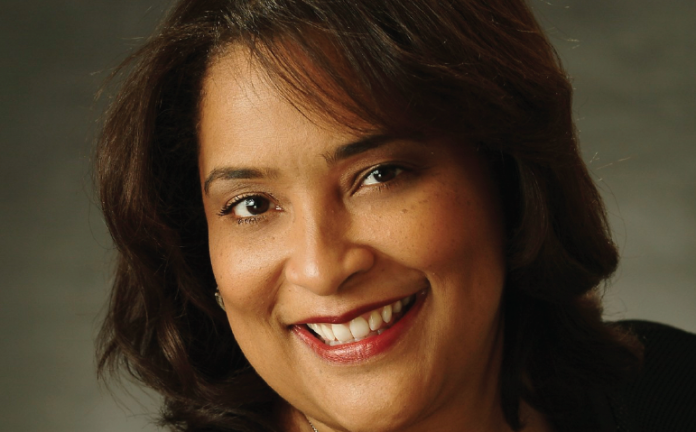
To explore the value of diversity and its role in driving change, we reached out to Deborah Biddle, the author of our Mosaic Marketplace blog, and the founder and chief consultant of The People Company LLC, a diversity and inclusion, consulting, training, and coaching firm. In this Take Five article, she talks about what it’s going to take for society and business to meaningfully address racial inequities.
At the risk of dating myself, I’ve seen several instances of racial unrest dating back to the 1960s, and it always seems that what follows is over-promising and under-delivering. What will it take this time for some real and lasting solutions to occur?
“I wish I knew the complete answer to that because then I’d be nominated for a Nobel Peace Prize [laughs]. What I would say is that it’s very clear that we can’t go back to business as usual when you think about our society overall or the businesses and organizations that we have. A lot of innovations have come out lately such as diversity and inclusion statements or antiracism statements and statements against police brutality, and it’s great that people are having this awakening, although it’s really a reawakening and a reawakening and a reawakening. But it can’t just be there because people of color and employees at these various organizations have and continue to openly call out racism as part of their communities and their spheres of influence. People want to see more than just lip service. They want to see a call to action.
“We know that what we’ve done historically doesn’t work. We have these diversity interventions that we’ve been implementing in schools, in the workplace, in the community, and in the private and public sectors, and they haven’t really worked out well. So, instead of looking at ways to make people fit their structure, we need to focus on ways that we can transfer and empower innovations in our systems and processes to fit the people — and not just some of the people but all of the people. When we think about moving toward racial equity and racial justice, the culture has to be one in which we’re thinking about the personhood, that citizenship if you will, and the overall humanity of each individual person. It’s a culture where people have the ability to go into public spaces, they can have the ability to be educated, or go to work and have the dignity around who they are, their history, and have their personal stories be acknowledged so that they can be valued and respected for who they are. When that happens, we’ll see a little progress.
“We also have to recognize that there are power structures. We’ve got to admit that. Everyone is aware of the influence that they wield. They just need to admit it. If we look at our country from its founding, from the very beginning all the way through the mid-1960s, we don’t see a time when the impact of slavery or Jim Crow [segregation laws] wasn’t negatively affecting and legally separating white people from black people. When I think about my own lifetime, even to this very day I see the impact of the founding of our country, so to ignore that is not helpful. If we’re going to learn from it, we have to own it. Everybody has to own it, walk in it, and try to make different circumstances for everyone.
I’ve heard it said that everyone has to feel uncomfortable — and by everybody, that means people in both political parties and every citizen — if we’re really going to arrive at solutions. Do you subscribe to that, as well?
“It does require people to be uncomfortable. It’s never easy to have these conversations around race, but as a black woman, sometimes when I have to hear or be in a space with white people who want me to explain the experience of what being black is like, it gets weary for me sometimes. Have you heard the term racial battle fatigue? It’s the fatigue of having to always be the one to explain, always be the one to bear the burden of making everybody else comfortable, to have to give the examples, to be looked at when you’re the only person of color in the room and having to represent the entire spectrum of people and ideologies that might exist within a culture.
“That gets to be tiresome, wearisome, and then there is the retraumatization of having to live through that experience over and over again. Having to retell these stories. Sometimes, white people don’t realize what it’s like for us to have to go through that on a repeated basis, and I often hear about how people should be gracious enough and be willing to make that sacrifice so that everyone else can grow. So, that’s one way to look at it — perhaps people could do some work on their own so that they can grow, rather than depending on underrepresented people to do the work for you.
“That’s one of the things in terms of being uncomfortable as a person of color. For white people, the discomfort comes when we start talking about even the mention of the words white people. Those two words can cause discomfort for white people, and you have to get to a place where you can hear those words without this feeling of unease that you mentioned racism, whiteness, and privilege in a room of white people. You’re going to have an uncomfortable situation, and so this discomfort that is inherent in these conversations just has to be embraced as part of the process of moving forward. The uncomfortable part is going to be required for us to transform, and we may resist a little bit, but there is always discomfort whenever you try to grow.”
If you could make one or two changes that really move the needle, would they be cultural, economic, educational, or government/policy related?
“There is room for change in every one of those areas, and it requires us as individuals to look at ourselves realistically, to realistically look at our situations in the mirror and ask how might I be contributing to the problem? How might my organization be contributing to the problem? How might my friends or associates or work colleagues be experiencing some of the tensions we see going on in the workplace? Are there people in my neighborhood that are experiencing different treatment than white people? Are their children being treated differently? Are we not ignoring the stories of people who have had some troubled times and really paying attention to what’s happening in our institutions? And then, really listening to those conversations and trying to sympathize and understand. A lot of times, we hear people talk about race or about their stories with it, and because we can’t empathize with it, we either dismiss it or we just don’t want to hear about it. So, in order for us to make progress in the economic space or the educational and government spaces, we have to really hear and empathize and then make a deep commitment to the work that it’s going to take to be truly equitable, diverse, inclusive, and antiracist.
“And know that this work happens over a long period of time. It doesn’t end with one training class or one article that you read. It’s a lifelong learning process because it took us centuries to get where we are. Yes, we’re a little bit better but we’re by no means done. We’re not done, and we just have to recognize that while we’re in the process of trying to make change.”
Is this about more than police brutality? Is it also about economic deprivation? It seemed like the economic shutdown due to COVID-19 impacted people of color the most.
“Oh, sure. The recent unrest, of course, is about all of that. What COVID-19 did was open the eyes of people who didn’t want to see it until now. This is nothing new to the black community and underrepresented communities. I guess it’s great that white people and people of influence and people in power finally recognize it, but let’s not stop with the recognition. Let’s actually commit the time and the resources — people resources, financial resources, and time — behind coming up with solutions — and not just a one-time, quick fix, but engaging in this and digging in for the long haul.”
What can business organizations realistically do to improve the situation, both inside their walls and outside?
“As we’ve been talking about, I believe that organizations have to commit, and commit to equity, inclusion, diversity, and antiracism. That means being aware of whether your organizational practices, policies, procedures, and programs have an impact on, or result in, systemic discrimination. Analyzing the data in your organization or whatever your sphere of influence is, examining that around race and the impact for racialized groups of people, and being aware of human rights matters. A lot of time, people with privilege, including myself sometimes, we go through life and we really don’t think about what’s happening to other folks. So, really becoming aware of what’s happening from a human rights perspective before somebody complains about it.
“So, be proactive. That means fostering the kinds of environments that are respectful of human rights, that are intentionally antiracist. Having a comprehensive antiracist approach. Kicking it up a notch from your diversity statement and your diversity policy and actually having a comprehensive, antiracist statement and policies and being proactive about having monitors for the behaviors and the practices in your organization. Implementing strategies and not just a one-time training but a deep commitment to the ongoing development of people, communicating policies, changing initiatives, and embedding those values into your organization over time.
“Then, regularly evaluating them. So, I’m not just saying we’re going to do this, start a new program, and then never measure the effectiveness of it. Hold people accountable to those goals and objectives, and if it means you have to tie somebody’s paycheck to it, then do that. However, you need to hold the people with the power accountable. That has to happen or you’re not going to meet your objectives. Creating the kind of place where people who have issues can feel free to speak up about their concerns, so people can’t say they didn’t know and that nobody told them about it. But you’re actively seeking that information and people feel safe to share it. As much as possible, looking at every nook and cranny, under every rock, to see where there may be discrimination. It may be in process. It may be in hiring. It may be in advancement and development, in the educational system, or in the government, but really look to root it out and overcome it.
“I could go on and on and list all these things that we could do, but it requires looking at antiracism, equity, and inclusion in our decision-making, in the budget and funding that we do, and looking at how it impacts accountability, power, pay, and location in terms of our organizational activities and operations. Just making that commitment that we’re not going to rest, and that as much as it depends on me, I have worked to eradicate racism.”
You’re saying that diversity should be viewed as a business performance issue and the leaders should be evaluated on the outcome.
“Yes, for sure, and not just the leaders. All the way down the chain. If you expect your entry-level person to have some sort of competencies and ability around diversity or racial equity, then you need to articulate what those competencies are from the person who just walked in the door all the way up to the CEO and the board of directors, too, and you need to be holding people accountable for that behavior and for those expectations, especially at the C-suite level and those people who lead other staff and employees. And then be talking about that in the community so that the community can hold you accountable. There aren’t enough leaders and business organizations who are committed at a deep enough level.
“Maybe it’s because they don’t have a strong enough rallying cry or maybe it’s because they don’t see the business or organizational imperative yet. So, when leaders don’t personally commit to the work that’s necessary at the individual level, and they haven’t committed the long-term resources of talent, time, and treasure required to impact change and the idea that this work doesn’t have an end, that’s when you don’t see the business engaging for the long haul. They have to hold their organizations accountable though the metrics and performance measures.”
Click here to sign up for the free IB Ezine — your twice-weekly resource for local business news, analysis, voices, and the names you need to know. If you are not already a subscriber to In Business magazine, be sure to sign up for our monthly print edition here.

