

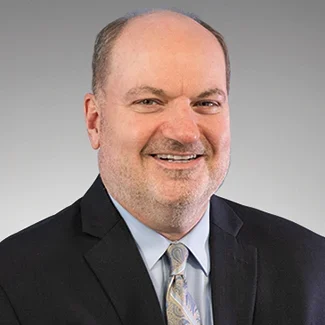
In business organizations all over the world, workers sit at their desks and dream about a management system without bosses. One such system that is slowly gaining traction is known as holacracy, which allows employees to organize around roles and work, rather than instruction from a supervisor, and empowers them to make decisions. It’s quite a departure from the norm, but organizations like HolacracyOne and evangelists like Olivier Compagne swear by it — even if they have to spend some time addressing a common misconception that holacracy is a type of non-management system. In fact, it doesn’t get rid of structure, it’s simply a different distribution of authority that, according to advocates, pushes down decision-making and makes organizations more nimble.
Compagne references a book titled Holacracy, The New Management System for a Rapidly Changing World, and resources such as the Holacracy Constitution. In this Take Five interview, he uses the metaphor of the computer operating system to describe holacracy.
IB: When you’re explaining holacracy to someone who is unfamiliar with it, what points do you make?
Compagne: Holacracy is a specific model of self-management, and there are many different ones. It’s basically a way to arrive at what the traditional model of management hierarchy is trying to get at, which is making sure people are organized to work effectively and making sure the work is aligned. So we have structure, we have alignment, and we have accountability. Holacracy is one way to achieve that, but differently, very differently, without the traditional hierarchy, without relying on that hierarchy to make sure that things are organized.
By defining specific roles, and organizing those roles around the work of the organization instead of giving people the power to direct each other, it’s about giving specific pieces of work to roles and the whole organization being united around those roles. Another way to explain it is by using the metaphor of the operating system. It’s a different operating system for the organization. You have a lot of approaches that organizations take to improve their processes, like Agile or Six Sigma, and holacracy is one layer deeper than that. It’s not something you bolt on to an organization’s structure. It’s a replacement. It’s really a fundamental change in how power is distributed in an organization.
IB: How hard is it to learn this way of doing things?
Compagne: There is definitely a learning curve because it’s so different. It’s not intuitive at the beginning because it pushes against the paradigm of what we’re used to, of having people in power or authority direct other people. It takes learning new ways of achieving the goal and getting things done because instead of taking direction from a superior, how do you do it now? It takes time, definitely, and also it’s much easier to do with a coach, someone who already knows how to do it because it is challenging your role in the organization. It’s challenging you personally in your work because it’s going to push back against your habits and the way you’re used to getting things done. You’ll have to learn new ways, so if you don’t have someone to help you, to show you that you could be breaking a rule, for example, it will be difficult to hold that discipline for yourself.
(Continued)
IB: I would imagine you would need an organization of self-starters or even self-leaders?
Compagne: When you see the roles in the organization, you have the authority to make decisions and the accountability that comes with it. I would say you have a lot more freedom than in a traditional company because you do not have a manager or boss telling you exactly what to do. It’s more like, ‘Here’s what we need,’ and then you have to figure out what’s needed to get that done. Of course, you can get some input if you don’t know the best thing to do in a given situation, but in the end it’s you making the decision.
| “It’s not something you bolt on to an organization’s structure. It’s a replacement.” — Olivier Compagne, partner, HolacracyOne |
IB: Is that why some are reluctant? They might not welcome that level of accountability?
Compagne: I think it’s more of a habit thing. Some people just want someone else to tell them what to do. It’s not true in the sense that most people, in their own lives, are not afraid of making decisions about themselves. They don’t wait for someone to tell them what to do, but in the work environment … my point here is that they are capable of doing it. They can do it, but in the work environment, they have this pressure and because they are being held accountable, not for themselves but to others and to the company, that makes it more scary.
IB: How do you recommend that mistakes be handled?
Compagne: You need to make sure things don’t crash and burn. It truly depends on the specifics of the situation. In a holacracy, you actually have more structure than you have in a traditional management hierarchy, and so there are multiple ways to process those kinds of issues. One way would be very simply, and not unlike traditional management hierarchy, to remove the person from the role.
Maybe another reason why he made a mistake is that he failed to do something the organization thinks he should be doing in that role, but he doesn’t think he should be doing it. If that’s the case, we have a mismatch in expectations about what it means to do that work. Holacracy actually provides a whole process for aligning those expectations, such as the governance process. The governance process is all about evolving the organization to mutual expectations.
IB: How do you advise companies to make the transition from the hierarchical structure to holacracy?
Compagne: With companies that are really big, we advise that they try it in segments, and then see how it works over time before they decide to roll it out to other departments or the entire company. With smaller companies, we usually tell them just dive in. Adopt it companywide for a few months. Then we work with them directly. We actually coach and facilitate things, especially in the first three months, when it’s more intense. Then, slowly, we fade in the background and actually let them do the work of facilitating.
IB: What type of organizations are interested in it?
Compagne: It’s not primarily larger companies. It’s primarily smaller to mid-sized companies. We’re seeing more mid-sized companies. They used to be smaller and they are growing and they realize they need some structure. They’ve kind of been winging it, but they don’t want to fall into the traditional management hierarchy that they were trying to get away from when they were a startup and small.
Click here to sign up for the free IB ezine – your twice-weekly resource for local business news, analysis, voices, and the names you need to know. If you are not already a subscriber to In Business magazine, be sure to sign up for our monthly print edition here.

