
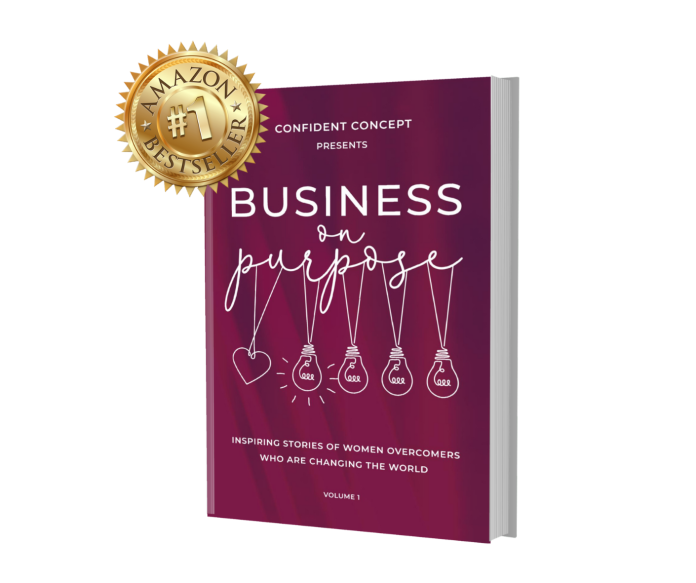
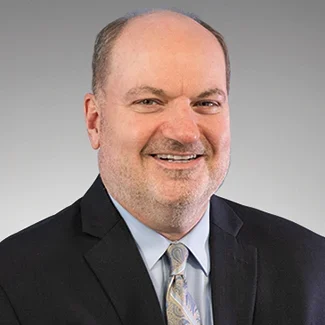
Brienne Hennessy likes to give voice to entrepreneurs by helping them transition from woundedness to worthiness. The owner of the Madison-based Your Vocal Vitality was invited to contribute a chapter in the best-selling book Business on Purpose: Inspiring Stories of Women Overcomers Who are Changing the World, a compilation of stories from 20 women entrepreneurs and executives. The invitation came in part because the book’s publisher, Danielle Mendoza, founder and CEO of Confident Concept, is a satisfied customer of Your Vocal Vitality.
Hennessy shares her story in Chapter 12, titled “Valuing Your Voice,” about what it was like leaping from a relatively secure job in health care (voice clinics) into entrepreneurship — during a pandemic, no less. In this Take Five interview, Hennessy leaves a “voice message” for everyone to consider.
Content warning: At the risk of being canceled, this author admits to some implicit bias from his past.
What fundamental thing do you hope readers take away from your chapter of the book?

“That you and your voice are worthy to be heard. I believe that because the voice is a conduit to accessing and owning our inherent self-worth, the more often that folks feel and communicate and live from this place of worthiness, and loving themselves, the better their lives will be.”
Why has so little attention been paid to our voices and what they reveal about our health and our emotional state?
“I find that when something is always with us, it tends to function with relative consistency, and we take it for granted. It’s there and we don’t think much of it. But during those 14 years I was working in voice clinics, most folks would come in and have voice injuries or issues that were already showing up. And they would lament, ‘Why my voice? Why now? I’ve been talking for 30, 40, 50 years’ — whatever the case may be — or ‘I never realized that my voice could have this kind of trouble.’ That was on one end.
“On the other end, there were extreme cases I worked with in the laryngeal cancer population. Those folks no longer had their larynx, their voice box, their vocal folds, so they are physically without a voice in the way that most people think of. I feel that with anything that has to do with our physical bodies, there is a healthy state, and there is a diseased state, and we can massively influence that healthy state with preventive and proactive care.
“One of the analogies that often comes to mind is heart disease. Everybody knows about heart disease. You have to eat a balanced diet with healthy nutrition. You’ve got to exercise, minimally, three times a week at moderate intensity. They’ve done a really good job getting that message out there, and so that’s the kind of awareness I want for our voices too.”
The voice can really fool you, and I first discovered that in my perceptions of singers. When I first heard Cass Elliott’s voice, my young male mind thought she must be a model. Something similar happened regarding the differences in the singing voices of Christine McVie and Stevie Nicks of Fleetwood Mac. This is without seeing them first, so when you’re working with people about their voices and how they are perceived by others, what do you stress?
“This is a great question and very interesting. I feel that we can go in so many directions with it.”
Keep in mind that I was a teenage boy when those impressions formed.
“Yes, exactly. [laughs] Human nature, right? This highlights to me the pervasiveness of bias that we as humans just all have. That is point blank a part of all of us. So, yes, our voices can be perceived in ways that don’t appear to match the visual image that we’ve concocted or what we see in front of us, or what we’ve only known in our lifetimes. And so, I’m curious as I was thinking about this. It sounds like you thought because of how Cass Elliot’s voice sounded, that she would have a certain appearance.”
That’s right, I’m afraid.
“I find myself, because I’m always a ‘why’ person, so why couldn’t she be a model? Is it possible that even the comparison, for example, that suggests that there is a certain body type or physicality that should be model mode, or what they should sound like, is implicit bias that we’re not even aware of. So, it’s something to consider because you’re right, age and time of life when it happens does matter. But also, I often say, we do ourselves and others a disservice if we’re ‘shoulding’ all over ourselves. And so, where can we be discerning about the limiting bias and beliefs that are within? There is explicit bias. There is implicit bias, and I find that’s really rampant in the voice world, particularly because we have our own narratives. We have these beliefs and it’s our job to reflect on that, disrupt those, and create healthier beliefs.
“So, for example, voice and gender have a lot of bias. Voice and level of power, or authority, have a lot of bias baked in. Women often get chastised for sounding shrill or bossy or bitchy or like a man, but on the flip side, there are some men that are dismissed by their voice if it’s too high, or if it has a soft volume and they speak very quietly. Then we look at women, so many women, even ones that I’ve worked with as clients, who were told that they wouldn’t be taken seriously if they didn’t speak lower like a man. So, it’s fascinating to me that we hold these nebulous narratives, but there is really the power in each of us to tap into our most natural voice. We can harness that. We can even love it, and that might sound like a stretch for some people, because a conviction that I hold is love your voice, love yourself.
“So, the more you can listen back to a voice, particularly your own, with kindness and compassion, the more you accept yourself. And if you do that, you’re speaking from a place that is the self-worth place that I mentioned. If you don’t prefer a voice, if you don’t prefer your own voice, then that might be something to reflect on. But also, if people are hearing you, and you’re speaking from a place that feels authentic to you, but they don’t like the way you talk or like the sound of your voice, they are not your people. There is just no other way around it. The sooner you’re OK with that, the faster it becomes more aligned to you thriving in the way you are meant to.”
Say there is a woman in an executive position, a supervisory position, and she’s aware that her voice is not perceived well by others. Is there a way she can deflect that, perhaps with self-effacing humor? How would you recommend she handle that?
“That’s a good question because it has to do with personality. I want people to feel that they are harnessing their natural voice, not trying to fit a voice onto their personality or change their personality. Some folks are very much upfront and very humorous about it. There are a lot of women that I’ve talked to who are, again, from a bias standpoint, worried about sounding like Minnie Mouse or too flighty — things of that nature. So, they could take that from a first, ‘Let’s just speak about what is here’ with their voice, but often I find that is a temporary approach. I want people to tap into what their voice is already capable of conveying, and in that, then they become more magnetic. Their voice sound isn’t necessarily the only thing that people are hearing. It’s truly, then, the energy behind that, the words behind that, and then there is more of a connection. I find the speakers themselves feel more at ease, more peaceful, and heard. So, it’s this biofeedback if you will.”
You chose an interesting time to make a career transition, leaving a seemingly “safe and secure” clinical job in September 2020, right smack in the middle of a pandemic, to start Your Vocal Vitality. Did the events of that year convince you to take the entrepreneurial plunge, or given what you experienced in the health care system, which you called the “sick care” system, had you been thinking about it for a while?
“Indeed, the timing was looked upon very curiously and skeptically by many people in my life. Prior to 2017, 2018, I never even fathomed having a business, and never even knew that was an option in my field. It didn’t interest me at all. It sounded like something foreign to me. But I also believe in the presence of divine source — God, consciousness, whatever name you choose to give it. For me, when I noticed that big life transitions are not usually something we plan out and go, ‘OK guys, see what I did? I planned out all the details.’ It’s usually very much the opposite and God is laughing like, ‘Nice human ego plan.’
“So, over those first few years, even before the pandemic, I noticed intuitively these nudges and these sparks of ideas that were coming forth for how I could serve in a way that served my style, my energy, and the people that I wanted access to. So, I started my business on the side while working full time in 2019 and then, yes, to your question, once the pandemic hit, once there was significantly increased stress across the board with fellow health care workers in the clinic — the patient care stress was so dramatic — that really shifted things for me with the disparities I saw, and what I loved about being there, and what I no longer loved about being there.
“For me personally, in my situation, I’m a single mom with a daughter, and I needed to be home with her for virtual school. There was no regular support that was going to be given from work or elsewhere to make that feasible, so it was time to take that big leap. Like most leaps, they are exhilarating and nerve wracking and stretched me out of my comfort zone, but I don’t think true self-growth happens without being outside of our comfort zones.”
In the book, you sense we’re in a period where an old paradigm is holding on for dear life and that the next evolution of collective well-being is within our grasp. Are you referring to health care, society, the business world, or all of the above?
“The past few years have revealed a lot of dysfunction, injustice, and inequity throughout the world in all sectors of society, so the answer is all of the above. Systems that have served us are no longer a good fit for where we are headed, and I believe it’s time for the collective to shift out of scarcity thinking, lack mentality, and a focus on disease, and put our focus on the abundance that exists. And that happens for me, in my personal world and the work that I do with clients, when we shift our perceptions based on the wisdom within — that divine inner voice, not based or controlled by what’s happening externally.
“So, when I spent too many years, all of my 20s into my early 30s, not knowing myself, dealing with life in a very reactive way, that took a toll. That took a heavy toll, emotionally, physically, and in my work world. Now, I’ve experienced a desire to respond, instead of reacting to life, with more intention, prevention, and ease. I feel like when we’re stuck in the past, and we focus on the past, we stay stuck in the past. It’s kind of a vicious cycle, but when we remain in the present moment, the now, where you and I are, and trust that everything is based on the choices we make and guided by that intuition to speak from that place, our wellness only gets better from there.
“Because we’re not separate, we’re all connected in this collective, and that ripples out and affects everyone. And so, we are evolving into a time of health and vitality. It just depends on where people are at with that willingness to shift … Those who are ready to stretch, who are ready to explore what it could look like, who are ready literally to feel a different power within their own voice and their own message, those are the ones who are going to see what’s possible for them.”
Are you referring to any particular system?
“As was loosely mentioned in the book, I think the health care system itself could do with, in the preventive realm, more action and less talk. There is a lot of, ‘This looks good on paper,’ but both in my experience in my work world and those who I’ve been working with over the years, the support, the ability to make that happen over time, is not at the level it could be.”
Click here to sign up for IB’s e-newsletters — your resource for the local business news you need to know. If you are not already a subscriber to In Business magazine, be sure to sign up for our monthly print edition here.

