

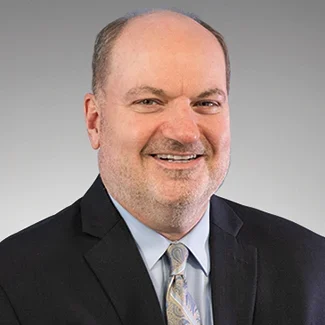
Wednesday, May 18 marks the return of the IB Expo and Conference following a two-year pandemic hiatus, and the keynote speaker is a former Harley-Davidson executive who can say a thing or two about business resurgence. In this Take Five interview, Ken Schmidt talks about how business organizations can get things revved up again.
At the Expo, you’re going to talk about how to position a business to ensure that it’s memorably different than competitors, and how to strengthen the company’s reputation so it attains fierce loyalty and referrals among customers — even when prices are higher. How has that objective changed because of the COVID-19 pandemic?
“The basic tenets of it have not changed, and I’ll tell you what I mean. Typically, what businesses do, and this predates the pandemic and unfortunately will continue afterward, is that businesses do a good job at whatever it is they do — whatever you make, whatever you sell, the service that you provide. Unfortunately for most companies and the leaders within those companies, to grow the business, to grow revenue, or to become more profitable, what businesses tend to focus all of their energy on is doing that thing that they do faster and cheaper. Efficiency has become the goal of all business, and that’s fine, but none of that means anything to a customer or potential customer. Nobody is ever going to ask you how efficient you are.
“To complete the thought, most businesses are good at what they do. What they don’t know how to do is compete and they think, ‘Well, you know, we have a marketing staff, or marketing people, and we’ve got a website, and we do brochures, and we do all this traditional go-to-market stuff.’ That’s not about competing. That’s simply going to market. Competing and improving competitiveness and becoming a dominant competitor is not a marketing strategy. That is business strategy. The people leading the business have to make it their priority to be intentionally, meaningfully, and memorably different than their competitors.
“If you were to look at any industry, say you Google banks, I can tell you what you’re going to see before you see it, and what you’re going to see are nine of 10 websites will be blue. They are going to have rates on the first page — credit card rates or loan rates — or say ‘follow us on social media’ to the point where if you cover their names up, you have absolutely no idea who is saying what because they are all presenting themselves the exact same way. In what universe would anyone want to be looked at and be seen as identical to a competitor, right? That’s just craziness.
“And then you can translate that out to just about any industry that you can possibly imagine. There is this thing that happens where businesses, without thinking about it, march in lockstep with their competitors. We’ll say what they are saying. If they say they are focused on quality, well, we’re going to say we’re focused on quality. If they say they have an ironclad commitment to customer satisfaction, we need to say that too. When everybody says the same thing, nobody listens anymore, and that’s what drives commoditization and low price as a competitive weapon — all the things businesses don’t ever want to do.
“It comes down to the fact that the leadership of the business is essentially looking at all the wrong stuff. They are looking at the business from the inside out instead of from the outside in, and as obvious as that sounds, it’s a huge competitive blunder that millions of businesses make every day.”
Can you give me an example of a company — maybe Harley-Davidson still is — that really does it the right way?
“Just take it a step further. People typically don’t know how to take what I’m about to say, but Harley-Davidson sells a commodity. What I mean by that is not pork bellies and coffee, it’s a well-made product, but to people who aren’t familiar, if you put a product on the street and cover the name up with a piece of tape and put a bunch of competitive products on the street and cover their name up, nobody knows who made what. There is tremendous similarity in product now, as there is in every industry.
“Anybody that does anything well from a product or service standpoint is immediately going to be copied by everyone else in their market category. That’s just a fact, and what the weak companies do in response to that is say, ‘Gee, we’re seen as indistinguishable from everybody else, so if we want to sell anything, we have to lower the price.’
“The reason Harley is as successful as it is now, and has been, is because a determination was made — and leadership was behind this, leadership fully supported this, and leadership made it a business priority — that we’re intentionally not going to play the game the way everybody else does. They [Harley competitors] are going to compete with product specs and horsepower and miles per gallon and acceleration times and speeds, and Harley is going to compete with camaraderie and socialization and individuality and words like freedom that resonate with people, that they see as different, that they notice as different — and I guess this is the important point — that also transcends the thing that’s being sold.
“There is a little known — well, it’s actually a rule that I use, and I talk about it in all my presentations or if I’m consulting somewhere or leading a seminar somewhere — and it’s if all you’re known for is what you do, you’re at a strong competitive disadvantage. Because if we’re going to create loyalty, if we’re going to drive long-term marketplace demand, if we’re going to create advocacy in the marketplace, the market needs to know us for who we are. Who we are trumps what we do every time because humans — that’s us — humanize everything. So, if I can make a human connection to a business because I feel like I know them, I know what they’re about, my values sync with theirs. I like their approach. I like the way they do things. Well, that’s who we are going to prefer, and when we prefer a business, we’re willing to pay more for the privilege of spending time with them.”
To accomplish this, how important is to create a “coolness factor” for the brand? With Harley-Davidson motorcycles, I suppose that was a natural imperative, but not every brand naturally lends itself to being “cool” or iconic?
“The coolness factor will resonate in a market where coolness is expected. At the end of the day, in any industry no matter what you want to buy, you can get what you want from anyone, and you know that, and I know that. You can go online and find — you name it — a roll of carpet, a rug, a bar of soap, and click and you’ll be able to find who’s willing to sell it to you for the lowest amount of money and hit the buy button. But, in a marketplace where all things are equal, we will, as consumers, seek out and buy from businesses that we like. If we like them, if we like their approach, that’s who we’re going to seek out and that’s who we are going to buy from.
“So, coolness is amazing, but likeability is way higher on the scale. If I don’t like you, I’m not willing to pay more for you. If I don’t like you, I’m not super likely to buy from you. The personality of a business means everything because that transcends what’s being sold. Anytime that you in your life, your friends, any time you talk about a business, if it’s a two-person mom and pop, if it’s a bank, if it’s a 100,000-employee conglomerate, if you talk about a business, you humanize the business by describing them with the pronoun they. ‘They stink. They rock. They’re awesome.’ That means people humanize everything.
“That’s all we know how to do. We used to think, and a lot of people think, that if we see a Harley tattoo for example, that people who have that tattoo are expressing their loyalty to a product, to a thing. And that’s the kind of thinking that got Harley’s business in trouble because it’s not about the thing, it’s about everything that transcends the thing. They are expressing their loyalty to the ‘they’ — the people, the lure, the magic of that mystique, the storytelling behind the brand … ‘I like your approach. I hate their approach,’ which means again that as businesspeople, our duty, if we’re going to out-compete the people who are simply pushing out product and competing on price, is to get people to know us and like us and see us for who we are. That means we have to take any opportunity to humanize our business by getting in sync with the people that we serve.”
In the digital age, we’ve heard a lot about disruptive business models. Your book, titled Make Some Noise: The Unconventional Road to Dominance, seems well aligned with that concept. It’s been three-plus years since the book was first released, but they have been rather disruptive years. If you had an opportunity to update the book in a second edition, would you change anything or would you have more examples to reinforce your central point?
“Well, I hadn’t really thought about it, but if I did, I would certainly have to say something about what’s been happening as a result of the pandemic and the fact that so much of our business lives and our purchasing behavior has replaced face-to-face by things done online, all of which obviously is good and bad. But what has kind of happened is that a lot of businesses, although their websites because that’s their primary mode of communication with their marketplace, have tended to make it a selling tool where as soon as you arrive at the website, at the home page, it’s all about check out our new stuff. Here is what’s new. Click here to buy. Check out our product, and that’s what customers buy and that’s what customers expect, but it doesn’t help them understand the parts of your culture that transcend what’s being sold.
“I want to like you. If I like you, I’m going to prefer you. Then, I don’t have to shop the category anymore. So, what are you doing that’s likeable? What are you doing that’s glorifying me, as a potential buyer of your products, rather than your products? I don’t need a litany of website copy telling me how great your products are because everybody has great products now. It’s not the 1990s or ’80s anymore. Nobody doubts that people are good at what they do. But what we forget about and what gets lost in the equation is that prospective buyer or the customer.”
So, that impulse to commoditize has been reinforced by the pandemic.
“Oh, gosh yes … and what are people doing? Kind of to my earlier point, they look at what their competitors are doing and saying, ‘Oh, my gosh, they are dumping even more stuff on the homepage. They are lowering prices or creating bundles or throwing in free shipping and so, we have to do it too.’ It just throws gas on the commoditization fire instead of talking to customers, instead of serving as a source of delight for people, which should be the goal of any business. They are in selling mode. Sell, sell, sell, and the way to sell is to promote product. That, to me, was the absolute biggest takeaway from everything that happened at Harley-Davidson — both the decline and the explosive, I mean the ridiculously explosive, growth through the 1990s and into the early 2000s. It was the realization that we’re not here to sell a product, to glorify a product, to manufacture and design a product, to provide great service. That’s what people expect from a business. That’s not what we’re here to do.
“We’re here to delight you in some way because delight is the strongest elixir that exists in human experience. Delight is what loyalty is. Humans will return faithfully, habitually, to anything in their life that delights them. That’s what loyalty is. We’re not loyal to products. We’re loyal to that delight. These people do a good job, and it makes me feel good. I like them. Well, heck, I’m going back to them. It’s as simple as that. A restaurant with poor service, you don’t go back to. The food was good, but you don’t remember that two days later, you remember that the service was either not great or was invisible. But when somebody makes you feel like a million bucks, that the restaurant made you feel special or made an obvious effort to delight you, well guess what? You’re going back.”
After some down years, primarily due to the preferences of younger consumers away from motorcycles and toward bicycles or anything that does not emit carbon, Harley-Davidson appears to be on the comeback trail, especially as pandemic restrictions started to ease. In your view, how much staying power does this have?
“They lost the plot for a while and essentially made the whole business about product again. We’re going to bring tons of new product to the new market and that’s going to excite the market, but that’s never been the lure of Harley or any successful company.
“Again, we have to emphasize the things that transcend the product. So now, you’ve got new leadership and a new philosophy in place that says, ‘Let’s go back to doing what we do well, which is delighting people. Make our emphasis about the users of the product, the riders or those who want to be riders, and glorify them. If we glorify them, they come back for more. They like that. That makes us more attractive,’ and I think you’re going to see a lot more of that. You’re going to see Harley having a more public face with rallies and events and activities that bring people together. First, because people really missed that during the pandemic but second, that’s what works best for the business.
“Yes, we’re always going to have great products, and we’re always going to design great stuff and put it in the marketplace, but we can’t do that at the expense of, or by ignoring, the fact we’re here to be a source of delight for people.”
Register to attend the 2022 IB Expo and Conference today.
Click here to sign up for the free IB Ezine — your twice-weekly resource for local business news, analysis, voices, and the names you need to know. If you are not already a subscriber to In Business magazine, be sure to sign up for our monthly print edition here.

