


The Dane County Regional Airport’s momentum is like a Boeing 737 reaching liftoff.
The airport is coming off its most successful year ever. Last year, nearly 2.5 million passengers took to the skies from Madison’s airport, a 6% increase over 2024. The previous record was set in 2019 before the COVID-19 pandemic, about 100,000 passengers fewer than 2025.
In recent months, the airport announced new direct flights to cities like Boston and the Raleigh-Durham area. Its south terminal renovation in 2023 added more space including six gates, and in 2024, low-cost carrier Breeze Airways started flying out of Madison to cities like Los Angeles and Tampa. At the same time, the airport is pursuing an international designation, which could fuel economic growth and boost tourism.

Such moves are part of the foundation for a forthcoming master plan to guide the airport into the next several decades. With Dane County estimated to reach 887,000 people by 2050, according to the Regional Data Group, the need for a modern, larger and more effective airport is critical to support business and leisure travel in Wisconsin’s Capital Region, advocates say.
“To be a global innovation hub, to be a place that imports the world’s talents and exports global solutions — the airport is the front door to that,” said Zach Brandon, president of the Greater Madison Chamber of Commerce, which has pushed for direct flights to business hubs and for the international designation.
The master planning process began late last year and will last for about 24 months. It is long overdue, said airport Director Mark Papko. The last airport master plan was completed in 1993.
“Airport master plans are typically done every 10, 15, 20 years,” Papko said. “Think about how much aviation has changed since 1993 — we’re destined for… a different-looking master plan.”
Coming to Dane County to head its airport is like flying full circle for Papko, who was hired as the director in July. He took one of the early steps in his career as an intern at the airport in 2013.
In the intervening years, he’s accumulated significant expertise to lead its next chapter. Papko previously served as director of operations and projects at the Duluth International Airport where he led a $200 million capital improvement plan and compliance initiatives for stormwater and PFAS management.
He has taught aviation as an adjunct professor at Lake Superior College in Duluth and was director of operations at Grand Junction Regional Airport in Colorado. And his resume includes operations roles at O’Hare International Airport in Chicago and at San Jose Mineta International Airport in California.
Looking ahead, nearly all facets — from rebuilding the 1960s-era airport control tower to more hangar space and a larger security area — are needed to usher in Dane County’s new era of aviation. And the road to completing a master plan and then implementing it won’t come cheap.
“If I had to guess, it’s going to be in the hundreds of millions of dollars of investment over the next 20 years,” Papko said.

Capitalizing on the Capital Region
The total economic output the Dane County Regional Airport contributes to the local economy is $2.6 billion annually, according to a new study released Feb. 18.
The airport supported 10,176 jobs in airport operations, tenant companies and more in 2024. According to the Dane County Regional Airport Economic Impact Report, the airport also generated $1.7 billion in direct business sales, supporting $425.3 million in wages and salaries. Activity by airport airlines and tenants resulted in direct business sales of $1.6 billion.
Airport operations and tenants generated $367.4 million in total taxes, including $152.5 million in state and local taxes. Additional visitor spending generated $15.8 million in taxes.
One point of data from the report states it simply: for every $1 of direct business sales, $1.52 of effect is generated.
The economic engine is fired by both business and leisure travelers. Flights are split 60% to 40%, respectively, Papko said.
In terms of visitor spending, the economic impact report estimated people spent $128.4 million on lodging, retail, recreation, food and beverage and local transportation in 2024. Each visitor spent $219 on average.
“The airport growth has a huge impact on our work, from providing more opportunities to attract meetings and events, to expanding the pipeline of leisure visitors,” Ellie Westman Chin, president and CEO of Destination Madison and a member of the Airport Commission, said in a statement.
“We are seeing strong visitation from markets like New York, Denver, Dallas and D.C.,” she said. “And the recent addition of routes to Boston and Raleigh will help us tap into an audience that shares a passion for the authentic experiences and cultural creativity that are at the heart of our community.”
Local health IT services firm Cardamom Health said the Boston flight will boost its business, as it just brought on a new investor from the city. Now they can visit each other directly, which, in a world used to virtual meetings, Cardamom Health CEO Vivek Swaminathan said is essential.
The company is based in Madison, but operates nationally, and has employees, customers and partners across the country.
“It is important for us to be connected everywhere so that people can get into town easily, and get out also. And it has been a little bit of a journey,” Swaminathan said.
Just a decade ago, it was hard for his company to attract people from a recruitment standpoint. But it’s changing now, and that is in large part due to the airport offering more flight options.
Regarding recruitment, he said people will say they have heard good things about Madison, and a lot of that comes through the airport, “because it’s a lot of people’s first experience when they’re coming to interview for a job.”
Lauren Usher, vice president of investment accelerators at Gener8tor, said the airport is key to facilitating their work. For one, direct flights to New York are helpful for the venture capital firm and startup accelerator in its work across the country and even internationally.
“Having a direct flight to New York was really a game changer so that I can just get there a lot easier, and it helps us as a company,” Usher said.
And Madison’s largest entities, like UW Health and Epic, utilize the airport in multiple ways.
“It is important for UW Health patients and clinicians to have consistent and reliable access to air travel,” Carey Gehl, chief strategy officer at UW Health said in a statement. “We serve patients from across the country who want to come to UW Health for their care.
“Additionally, our clinicians are international leaders who are asked to share their expertise across the country and beyond.”
Epic said it has approximately 1,700 employees on the road each week. Most of those travelers use the Madison airport, but that number does encompass more than just flight travel.
“Epic works closely with MSN and our airline partners to improve airport connectivity, and we’re proud to see that work coming to fruition,” Erin McWilliams, Epic’s director of travel operations, said in a statement. “Improved access has a meaningful impact not only for our staff traveling both to customers and home to their families, but also for the broader Dane County community.”
University of Wisconsin-Madison spokesperson John Lucas said the campus uses the local airport extensively.
The new nonstop flight from Dane County Regional Airport to Boston’s Logan Airport will open the door for more convenient access to UW–Madison in several ways, Lucas said.
“First, our current students, faculty and staff can travel more directly and avoid layovers in airports like O’Hare or Milwaukee Mitchell or bad winter weather,” Lucas said.
The UW-Madison already has a significant population from Massachusetts and other northeast states, he said.
“Boston and New England are known as a hub of talent,” Lucas said. “By connecting the New England region directly to campus, it becomes easier for talented future students, their families and prospective employees to discover all that UW-Madison and Madison have to offer.”

Master plan underway
An airport master plan guides the direction of everything from runway construction to terminal expansion to adding hangers, and challenges like how to operate while replacing a main runway.
The main parts of an airport master plan, Papko said, include a layout plan, forecast and capital improvement plan. It covers airfield configuration, runway geometry and more. A 20-year development plan will map how the airport reaches the layout plan’s goals.
“It’s a fancy way of saying, who do we want to be when we grow up, and how do we get there?” Papko said. “So those two things are kind of byproducts of 24 months of input from all various different groups of stakeholders.”
Those stakeholders include Dane County — which runs the airport — the Airport Commission, local businesses and the public.
The Dane County Airport Commission; the county’s Public Works and Transportation, and the Personnel and Finance committees; and the full Dane County Board all must approve the “byproducts” of the airport master plan. The County Board will approve specific contracts, when money is spent, and approve accepting federal funds for capital projects.
“So as projects are recommended… they’ll be included in the airport budget annually,” Papko said.
Technical advisory committees will research and consider options for the airport layout, including making recommendations on sustainability and environment, the terminal, parking, non-aeronautical property, landside development and ground transportation.
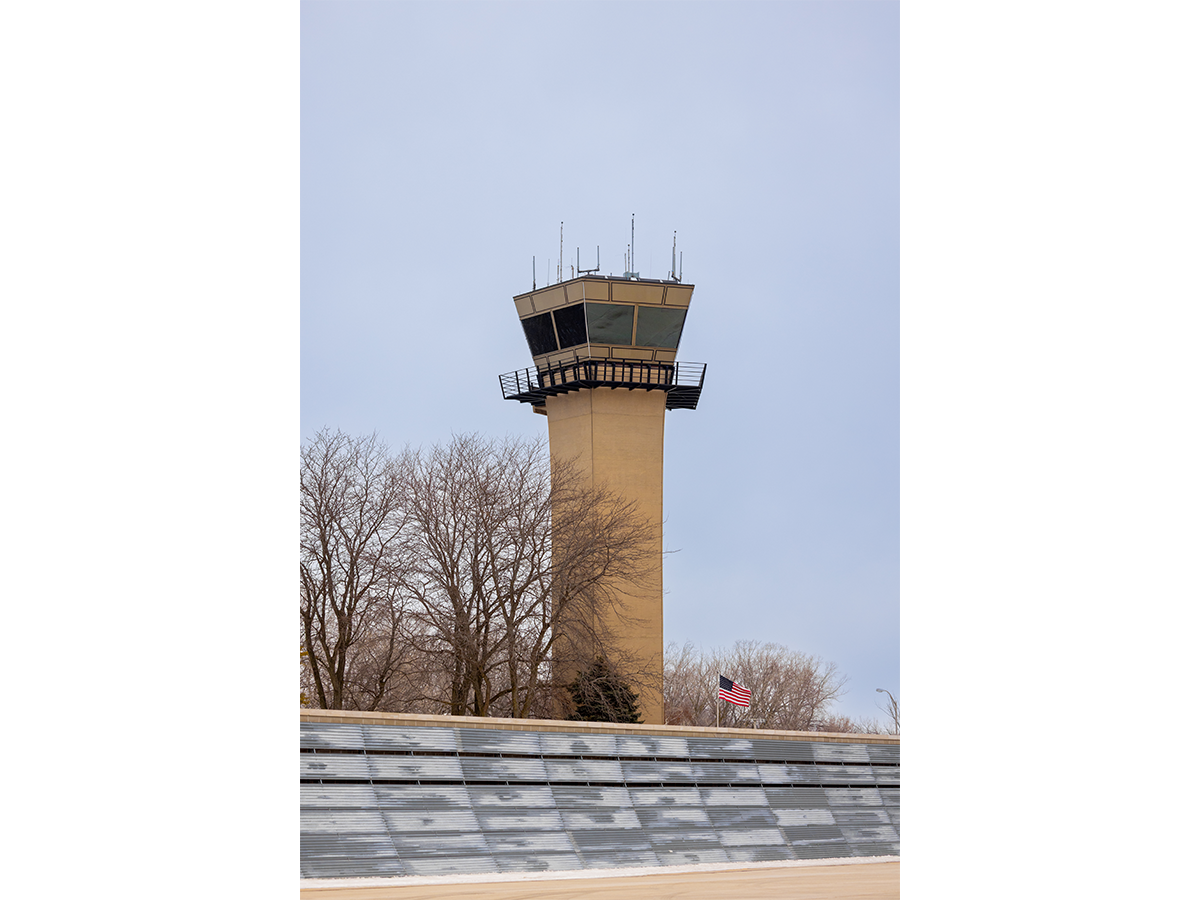
One key element to be addressed is the air traffic control tower, which is pushing 70 years old and is at the end of its life. The airport doesn’t run the tower, as it is a federal entity run and paid for by the Federal Aviation Administration. Dane County Regional Airport would become a supporting party of the tower to facilitate the construction of a new one.
Another issue to be addressed will be the growing number of flights. Starting in June, when direct flights to Boston are added to the airport, Papko will have 18 aircraft “spend the night” — yet the airport only has 16 gates. It makes for congestion on the tarmac.
“It goes to show you the level of growth that we’re already seeing,” he said. “So I’d be ignorant to think that that pace isn’t going to continue, and making sure that we have the facilities that can support that growth is going to be critical.”
Also key to formulating the master plan is public input.
“There’s going to be a lot of opportunity for the public, which matters to me, to be heard,” said Dane County Executive Melissa Agard, who hired Papko. “The folks that live, work and play in Dane County, as well as stakeholders, businesses, will have the ability to be engaged so that myself, as county executive, and Mark as the director of the airport, can ensure that we are building forward for future generations.”
One way the public has weighed in in recent years is on the addition of F-35s to the airport, with concerns about noise, among other issues.
Papko is looking at implementing an FAA airport noise compatibility program.
“The noise compatibility program outlines the potential solutions that the airport could offer up, i.e. a residential sound installation program and the runway 321 extension,” Papko said. “The master plan will show us how to get there and actually put those mitigation efforts into an actionable capital improvement plan.”
Those plans are currently out for comment at the Federal Register Notice, and Papko said once through that process, they can get to the approval of the noise compatibility program, which will be a part of the airport master plan.

Building on its success
The airport hasn’t sat stagnant since the 1990s. In 2002, 250 parking stalls were added to the surface parking lot, and more additions have been made throughout the years. In 2023, it celebrated the opening of its largest expansion project yet when it added 90,000 square feet of operational space, six new gates and traveler amenities.
This south terminal expansion cost $85 million and was funded by a combination of federal grants, airport funds and user fees.
To date, it is the largest single project in the airport’s history, and its success will influence the airport master plan thanks to the positive feedback from those who’ve experienced it.
“It kind of has set the standard for the rest of the airport as we look to what’s next and modernizing and remodeling and freshening up the looks of the spaces, using that south terminal as a kind of guiding beacon on how we want the airport to be reflected,” Papko said.
The expansion has certainly had a hand in bolstering the number of flights, the Chamber’s Brandon said.
“When you’re preparing for growth and being ready for what’s coming, being smart about the investments today yields success in the future,” Brandon said. “And the airport, very much, is an example of, ‘If you build it, they will come.’”

Business spurs destinations
The addition of direct flights to Boston by American Airlines and Delta, which begin in June, had a strong business reason for materializing: both Boston and Madison are cities where biotech companies are thriving.
The Greater Madison Chamber of Commerce conducted its first annual Next Normal regional employer survey in 2024 to see where businesses wanted to be able to fly domestically and there was a resounding answer.
“We asked the entire business community, what if you could have any destination, what would it be? And the No. 1 destination that people wanted was a direct flight to Boston,” Brandon said. “Having that additional connectivity domestically grows our economy in meaningful ways.”
Jason Ilstrup, president of Downtown Madison Inc. and chair of the Dane County Airport Commission, said the business community is celebrating the additions of Boston and Raleigh-Durham direct flights. He said there are not only life science and biotech connections, but opportunities in higher education.
“A lot of business is already happening now,” Ilstrup said. “And so we think that there will be pretty quick success for both of those routes.”
Ilstrup said the Chamber survey was crucial in securing direct flights. Information from Passengers Per Day Each Way (PDEW), which is data generated by a third party, also helped identify where people are flying.
“We know what our biggest underserved markets are, and for the business community, it’s certainly San Francisco, Los Angeles, Houston, Nashville,” he said. “Boston was one of those, but that has been checked off the list.”
Las Vegas is also on that list with the amount of business conferences it hosts, as well as the west coast in general.
Ilstrup said there is a significant effort from the public and private sectors to retain and recruit new airline services.
Along with DMI and the Chamber, he said Epic, UW-Madison and others are working together to obtain more service at the airport.
Agard also is leading the charge by seeking an international designation for the airport.
When first elected in 2024, Agard heard from community members that an international airport would benefit Dane County. Airports in Milwaukee, Appleton and Green Bay already have international flights.
With Madison being such an important economic engine of the state and growing so quickly in population, Agard asked the airport team to begin looking into the steps needed for an international designation.
It is a long-term plan, and most likely will be integrated into the airport master plan.
“It makes a lot of sense with these record-breaking travel numbers, not just with business, but with leisure as well,” Agard said. “We are a top choice for an awful lot of businesses who are considering planting their roots here in Dane County.”
Her budget for 2026 asked the airport to work with U.S. Customs and Border Protection to outline what the application process will look like and what might be the most viable path forward. Other entities like the FAA also will weigh in, and businesses will help make a case to carriers and federal entities of the international goal. There is no set time period it takes for gaining the designation.
“We don’t get to boss the carriers around,” Agard said. “So even after we get that international designation, we need to make sure that we’re cultivating and managing our relationships with carriers to actually get those routes here into Dane County as well.”
Brandon said changing the name from regional to international is also a “statement about who we are and where we’re going to be.”
Something as simple as being able to go through customs in Madison would provide important growth opportunities for the region and airport, Brandon said.
Ready for takeoff
To fund the master plan and the changes that will accompany it, Papko is looking to the federal government for funding grants through programs like the FAA’s Airport Improvement Program and at state grants through the Wisconsin Bureau of Aeronautics. He also expects revenue from airlines, concessions and leasing space to stores at the airport.
The airport will also use Passenger Facility Charges, fees added to flights that can pay for airport capital projects, such as runway construction or terminal improvements.
There will likely be a mixture of funding from a variety of sources, but it’s to be determined based on the airport master plan.
The airport is unique in that even though it is a county entity, it runs itself “sort of like” a business, Papko said, earning money from multiple sources and paying for its own investments partially through revenue it generates.
“It’s important to note that the airport is self-sustaining,” Papko said. “We take no tax dollars to operate here, so our entire operation is self-sufficient. So all the money that we make here is reinvested back into the airport, its facilities and infrastructure. None of that money leaves the airport grounds.
“The momentum that we are carrying forward right now, and then (to be at) at the stage of a master plan to carry that momentum forward… (we’re) at a great point right now.”

