
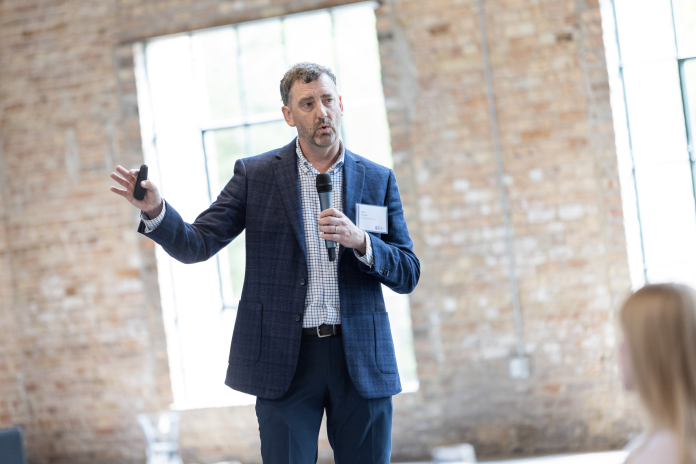
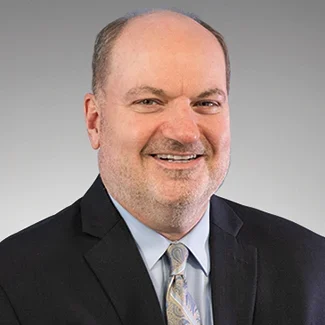
Local real estate experts will gather next month to discuss trends in commercial real estate, development, and construction, as well as offer insight into ongoing and forthcoming construction projects throughout the Madison region, during IB’s second annual Real Estate and Construction Symposium.
The symposium will take place on Thursday, June 13, from 8 a.m. to noon, at the Madison Marriott West Hotel, 1313 John Q. Hammons Drive.
In Business magazine Publisher Dave Neill will moderate the symposium, and he anticipates a frank discussion. “We look forward to a robust presentation concerning the Greater Madison real estate market, both residential and commercial,” Neill says. “We have assembled two panels of experts that are perfectly suited to provide the necessary insight into the factors that are impeding progress and what can be done to remove those barriers.
“We’re also going to put a spotlight on what’s right about the market and why.”
Chris Caulum, vice president–commercial brokerage for Oakbrook Corp., an integrated commercial real estate brokerage firm that publishes quarterly market updates, will deliver the keynote address. Caulum will assess the post-pandemic condition of the Madison office market and other commercial real estate segments. “The Madison office and industrial markets are in a state of change,” he states. “Hear where we’ve been and where we are headed so that you can be better prepared for your next lease, sale, or refinancing.”
Paneling work
Following the keynote address, the first panel, titled “What’s Going On? Trendlines and Worry Lines,” will explore current dynamics affecting the commercial and residential real estate markets. Chief among them are whether the construction and development industry can help address a growing need for affordable housing — single family and multifamily — that corresponds to a growing population.
In an obvious tenant’s market in which commercial tenants have the upper hand in lease negotiations, the panel will also explore tenant attraction and retention strategies that property managers can employ to achieve “win-win” lease negotiations.
Panelists include:
1. Chris Richards, managing director, Colliers, an international real estate services and investment management firm;
2. James West, vice president, Madison office of CBRE, a commercial real estate firm that also has a global reach;
3. Chris Ehlers, president, Veridian Homes, the largest homebuilder in Dane County; and
4. Gretchen Richards, first vice president of investment properties–multifamily for CBRE.
A second panel, titled “Financing: Challenges and Opportunities,” will explore barriers to funding required for real estate development deals. Panelists will explore factors like limitations on public-private partnerships — such as state levy limits on municipalities and counties — plus the use of tax incremental financing, tightening bank credit, and the interest rate environment. While the Federal Reserve has signaled that it soon could start reducing its federal funds rate, which affects the direction of rates on mortgage and consumer loans, some doubt that rate reductions will happen this year. Attendees will also learn how tax credit provisions of the Inflation Reduction Act can aid the financing of development deals.
The second panel includes:
1. Brian Hagen, senior vice president and director of commercial real estate banking, First Business Bank;
2. Laura Cataldo, a director with Baker Tilly’s development advisory practice;
3. Attorney Kevin Ramakrishna, a shareholder with the Reinhart Boerner Van Deuren law firm; and
4. Dave Schmiedicke, finance director for the city of Madison.
Municipal property tax levy limits, imposed by the Wisconsin Legislature, have been the target of criticism from municipal leaders such as Madison Mayor Satya Rhodes-Conway and the League of Wisconsin Municipalities, which advocates on behalf of cities, towns, and villages. They argue that levy limits restrict a community’s ability to make local decisions on affordable housing, economic development, and other matters.
Rhodes-Conway has called for the state Legislature to help municipalities by reversing cuts in state aid to cities, easing property tax levy limits, and allowing municipalities to create new revenue streams such as a local sales tax — if approved by local voters in a referendum.
In Madison, one of those local decisions is how to address the so-called missing middle — mid-sized projects that don’t “pencil out” economically — when it comes to providing affordable housing. Some argue that state restrictions on local property tax increases have prevented the property tax from becoming unaffordable for homeowners. Others note that Gov. Tony Evers’ recent court victory in the controversy over the drawing of state legislative districts paves the way for more opponents of levy limits to be elected to the Legislature. All of this is fodder for the second panel discussion.
Each panel discussion will include time for audience questions.
The symposium is sponsored by Baker Tilly, Colliers, First Business Bank, Investors Associated, the Reinhart Boerner Van Deuren law firm, and Sebert, a landscape construction firm.
For more information or to register, visit the event website at IBMadison.com/RECS.

