











Individually, their carbon footprints might not be sasquatch-like, but collectively, small and mid-sized businesses are contributing mightily to removing carbon from the atmosphere. They also are saving energy, reducing costs, and perhaps most importantly, reflecting the values of their customers.
That sums up the business case for embarking on a sustainable journey, and small and mid-sized business operators aren’t alone on this journey. One of their trusty companions is Lisa Stefanik, director of Focus on Energy, Wisconsin’s statewide program for energy efficiency and renewable energy. “When a business makes a choice to save energy and reduce its costs, that’s a move toward sustainability that also makes smart business sense,” she notes. “Stated simply, businesses that complete energy efficiency projects often see multiple positive outcomes over the life of the equipment they install.”
Small and mid-sized businesses are doing more than following the corporate leaders, but there still are some that are reluctant to do their part to reach the goal of net zero carbon. In this look at small business sustainability, we spoke to Stefanik and several others, including J.P. Brummond, vice president of customer and community engagement, Alliant Energy Corp.; Chris Ivanov, director of forecasting and optimization, Madison Gas and Electric; Rob Jordan, assistant general manager, Smart Motors; Randy Kohn, owner, West Star Organics in Cottage Grove; and David Wood, co-owner, Barnwood Events in Madison. They offered several sustainability pointers to consider.
Point 1: Customers expect it
Every individual, business, or organization that uses energy produced from fossil fuels has a carbon footprint — whether that energy is used to heat or cool a building, propel a vehicle, grow a plant, or make a product. The good news is that there is constant market pressure to improve the energy efficiency of every manufacturing process and end-product that hits the market. American business-to-business and business-to-consumer customers can take a bow for that because the constant churn of innovation has become their basic expectation.
Small businesses such as West Star Organics also deserve applause. Kohn has installed 157 solar panels — two ground mounts next to his greenhouses with 56 panels each and a roof mount on its “red shed” with 45 panels — that offset 100% of West Star’s electrical usage. The estimated annual production of these panels is 99,385 kilowatts (kWh), and they come with a 30-year power guarantee.
Almost 70% of the cost of the solar installation was covered by a combination of incentives and credits, including a tax credit through the Inflation Reduction Act (30% of the cost), a grant from the federal Rural Energy for America Program (REAP) (25%), and a Focus on Energy rebate (13%). With all the incentives factored in, the initial payback is a little over five years. In addition, within a couple months of installation, Alliant Energy raised its buyback rate from $.03/kWh to $.07/kWh, which will offset months of lower solar generation in the winter and higher energy usage during the spring season.
As the operator of a retail nursery of certified organic plants, a solar installation had to be a “natural” for Kohn, especially because it pleases his sustainability-minded customers. As Kohn explains, emphasizing sustainability is no longer just about the product or about the return on investment, it’s about the company’s values as well. “The solar panels were definitely a natural progression for us and fit our model and values,” Kohn says. “There is great interest from our customers, neighbors, and industry colleagues.
“From a business perspective, it made sense, and from a personal perspective, it also made sense. We harness the sun to heat our greenhouses and grow our plants, so why not also use it to power the greenhouses?”
Point 2: There’s a good return policy
At Smart Motors’ main facility at 5901 Odana Road, virtually the entire rooftop is covered by 940 rooftop solar panels installed in 2017. The largest solar panel system installed by an automotive dealership in Wisconsin, the 325-kilowatt DC (direct current) rated structure generates about 37% of the energy needed to run the building annually, and by year eight of its 25-year life expectancy, the system will have paid for itself in terms of energy savings.
“What we’re seeing on average is about $3,500 a month in savings on our electric bill, and so it’s been a good investment for us,” Jordan says. “We still have 18 years left on the usable life, and even at that point, we might be able to push it for another five years or so past that. So yes, we’ve been really happy with the investment so far.”
The National Auto Dealers Association (NADA) notes that energy is one of the top three operating expenses for auto dealerships, and savings from solar is equal to two to three additional vehicle sales per month for the life of an installation. Given that energy is one of the largest operating expenses for auto dealerships, and thus far there has been little maintenance cost for its solar installation, are there any plans to expand the number of solar panels at other Smart Motors locations? Right now, the economics don’t argue for that, but as the price of solar panels continue to come down, that could change.
“It’s something we thought long and hard about when we first put up the panels on the main building,” Jordan explains. “Unfortunately at the time, the economics of the smaller rooftops didn’t make it as attractive because there is a significant amount of investment in the infrastructure from the electric company and getting that to cross connect with MGE. They’re great to work with, but they have costs as well, and so that made it a little bit cost prohibitive to do it on our smaller rooftops.”
There is a certain degradation, about 1–2% per year, anticipated with the solar panels, which must be monitored in terms of annual production and projected date of replacement, but given the value and the return on investment they have provided so far, replacement at the Odana Road facility is a good bet.
Point 3: Change = opportunity
New construction, remodels, and moves are good opportunities to replace older, less efficient lighting. “A lot of times, we see our customers do that when they’re in the process of doing remodels or moving into a new space,” Ivanov says, “and they take advantage of that opportunity to lower their carbon footprint at that point.”
In most cases, the most sustainable decision is to repurpose an existing building, but in the case of Barnwood Events, an old 30-by-32-foot red barn on the far east end of the Larson Road property had suffered too much neglect. Not that co-owners Julie and David Wood didn’t try to repurpose the old structure for their new events venue, but consultants ruled that out. “We wanted to save it, and Julie spent three years trying to find a way to make sense out of it, and every consultant that came said, ‘Lady, you’re crazy,’” recalls David Wood. “So, we kept a few of the boards and some of the artifacts to someday find a way to honor it by doing some display, but the venue is brand-new, ground-up construction.”
It’s ground-up construction with plenty of sustainable elements. Warm wood building materials helped produce a rustic look, but other sustainable elements enhanced energy efficiency. The barn itself is built with large structural insulated panels [SIPs], which are erected with a crane and resemble large, blonde Oreo cookies with 12–15 inches of insulation between the panels. Roughly 600 light-emitting diode (LED) lights populate the chandeliers that hang from the ceiling, and Wood is thankful that they are both energy efficient and long-lasting because of the cost involved with renting a scissor lift to change burned-out bulbs.
The venue’s HVAC system is very sophisticated in that it can monitor how many people are in the room exhaling carbon dioxide. In addition, with the COVID-19 pandemic in mind, the Woods installed a Global Plasma Solutions’ air ionizer to enhance the indoor air quality. “That was about the most cost effective, easy thing we could do to add value to the [indoor] environment,” Wood says. “At that time, we didn’t know what COVID was all about or how long it would last. So, we had to do everything we could to create a better environment for everybody.”
Outside, they got a little help from the Department of Natural Resources (DNR) when managing water flow off the roof by installing bioretention ponds — an environmentally friendly place to collect rainwater from the gutters and downspouts into an underground line that feeds the ponds.
Point 4: Businesses put a charge into electric vehicles
It’s not uncommon to see electric vehicle (EV) charging stations popping up in parking garages at multifamily buildings, but local businesses are getting a charge as well. At Smart Toyota, which sells electric vehicles, management also has invested in EV charging stations at its Odana Road facility, and they are free for anyone to use. According to Jordan, the cost of an EV charger depends on how quickly it’s going to recharge the battery of a vehicle — the faster the charge, the more expensive the charger. “When you’re looking at a business, we’re talking about $40,000, $50,000, or $60,000 in an investment in some of our chargers,” Jordan says. “Some go up to $80,000 or $90,000, but those are the ones that are going to recharge a vehicle in minutes instead of hours.”
Chargers available for home use are not going to recharge a vehicle in 30 minutes. They’re going to take eight to 10 hours, but they’re also going to be at a price point of $800 or so for the charger itself, and then $500 to $700 for the installation cost. For a family that buys an EV, Jordan believes that $1,000–$1,500 is a reasonable investment to install a residential charger.
“With the infrastructure getting rolled out by commercial properties — by businesses — there’s less of a need for people to have that charger at their home,” Jordan adds. “For example, you’ve seen the chargers at Hy-Vee, there are chargers at Kohl’s, and there are chargers here at Smart Motors. They’re popping up in a lot of places, and most of these are the fast chargers, so you can charge 80–90% of the battery in an hour or less.”
In 2008, David Wood purchased his first hybrid vehicle and he has also owned an all-electric vehicle. Influenced by his marketing background, he installed charging stations at Barnwood Events to follow the growing EV trend, and the property now features eight phase two chargers that are supercharged for phase three, with the possibility of adding eight more for a total of 16 charging stations. Wood notes that the charging is provided for free — it’s not a profit center. “It sets the tone that these guys [Barnwood Events] are forward-thinking and they’ve thought of everything,” Wood says of public perception. “It says we care about the environment, so it was a really easy decision to do it.
“The hard part was trying to decide which of the [installation] companies made the most sense,” he adds, “and to make sure that I got technology that matched up with future product out of Detroit versus buying the current stuff that would become obsolete.”
Point 5: Businesses have community partners
Focus on Energy is funded by Wisconsin’s investor-owned energy utilities and participating municipal and electric cooperative utilities. It provides no-cost energy assessments, rebates for energy-saving equipment, and a trade ally network of 2,000 Wisconsin contractors that install the upgrades. Its energy advisors work specifically with business utility customers to tailor energy projects to their business needs. If a business wants to go beyond the basics of saving energy, reducing operating costs, or improving reliability and constructing a new building, Focus on Energy offers energy design assistance as part of construction project planning, ensuring that energy efficiency considerations are discussed or in place at the start of construction.
“We also encourage the business to work closely with their utility representative,” Stefanik says. “By partnering with Wisconsin’s utilities, Focus on Energy participants may be able to not only take advantage of our program’s rebates and technical support, but the utility may have additional programming and resources that the business can further utilize.”
MGE customers can purchase solar through its Renewable Energy Rider (RER) tariff, augmented with support from the city of Madison and Dane County, and through its Shared Solar and Green Power Tomorrow programs where it attempts to harness the power of solar energy through its installations and those of its customers. MGE customers that decide to install a solar array can
take advantage of available tax credits offered through Energy Star and the aforementioned financial incentives — cash rebates for qualified installations — from Focus on Energy, and they might also receive a credit from MGE for the power they generate from solar.
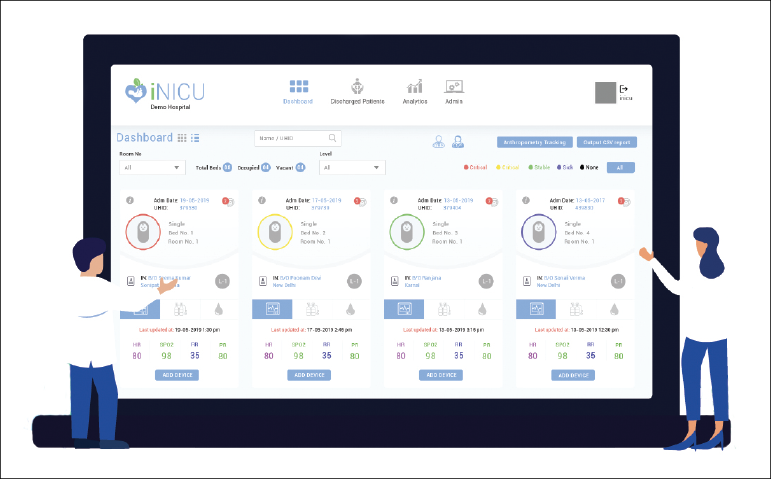
A program for large customers is MGE’s MyMeter program, which offers tools and strategies to reduce their energy use, especially during periods of peak energy demand. MyMeter uses an online dashboard to give participating commercial customers energy usage information in near real-time, 15-minute increments, enabling them to identify energy-saving adjustments to cut costs and reduce their environmental footprints.
By year’s end, this benchmarking approach could be available to all business customers. “You can download your data and then benchmark it against other buildings or other sites that are similar to your site,” Ivanov explains. “That’s a tool we are working to expand and make available to all business customers by the end of the year.”
In its service territory, Alliant Energy Corp. offers community solar and renewable energy partner programs. With community solar, Alliant takes advantage of the scale of a larger solar site, something much larger than can be seen on a residential roof or a small business property. There are cost savings that go with that scale, which allows residential and small business properties — and increasingly, larger businesses — to take advantage of those benefits.
“At a high level, that’s what we’re doing,” Brummond explains. “Our first community solar project was a Fond du Lac site in Wisconsin. We’re currently working on one in Iowa and then another one in Janesville. We’re really excited about those programs, and the intent is to allow smaller business and residential customers to access solar at a larger scale than they normally could.”
Alliant’s renewable energy partner program is more of a custom program geared toward larger customers, usually through a through a contractual arrangement. “We’ll work with them on a custom program to enable them to put in some solar resource,” Brummond notes, “and then usually through a purchase power agreement, we’ll arrange for them to get renewable energy credits and renewable energy from a site.”
The utility also has a customer-hosted solar option where Alliant puts a solar site on a customer’s property. This is also geared toward larger customers but it’s becoming an interesting option for some of Alliant’s small business customers. “We would pay for that [installation],” Brummond explains. “We put it on their property and essentially what we’re doing is leasing the land or leasing that property from them. They’re getting paid in the form of a lease, but that payment can be either in dollars or in renewable energy credits.”
In addition, Alliant is creating a portfolio of renewable energy for a new, Second Nature program that will be available to small businesses. For a flat monthly charge, they will be able to purchase a certain percentage of their electricity through renewable sources.
Alliant also offers energy audits through its business resource center, and it has an energy analytics self-service audit that customers can sign up for on its website.
Point 6: Businesses have governmental partners
To address financial barriers, governmental agencies offer programs to incentivize energy efficiency improvements. The Inflation Reduction Act contains new and updated energy tax credits for companies to use solar energy, funding for advanced manufacturing production, and offers support for clean fuel production and for producing clean commercial vehicles for eligible organizations. More information is available at whitehouse.gov/cleanenergy.
At the state level, the Property Assessed Clean Energy (PACE) program authorizes municipalities and counties to work with private sector lenders to provide upfront financing — usually for 100% of the cost of energy efficiency and renewable energy improvements — to property owners for qualified projects. Hotel Indigo, the first Dane County business to take advantage of PACE financing, repurposed the old Mautz Paint Co. into a more energy efficient boutique hotel with the help of a $1.5 million loan through PACE. According to MGE, the hotel’s energy efficiency program is expected to save $2.7 million over 20 years, which would represent a healthy return on $1.5 million in financing.
The city of Madison has its own loan programs to promote both energy efficiency and societal goals such as universal access to healthy grocery products. The city’s Healthy Food Retail Access Program awarded a $150,000 grant to Madison Oriental Market to fund a renovation project that included the purchase of new, energy-efficient coolers and freezers that could save the market an estimated $8,000 annually.
Even with all this help available, many business operators are unaware of it. Kohn noted that other farmers he’s spoken to did not know that the state has a rural energy program (REAP). “It’s really important for small businesses to do their due diligence on some of these programs. They are there for them to make use of.”
Sustainable expectations
For businesses, the value of sustainability extends beyond dollars and cents. “A lot of times, people just evaluate the financial aspect and sometimes they don’t look at the other benefits or realize what they gain from adding sustainable elements,” says Kohn about his experience at West Star Organics. “It’s not inexpensive, but I’ll throw on my business hat here — there’s some marketing benefits to this. More and more customers want to work with businesses that care. They prefer businesses that are going to take steps toward being more sustainable, that are going to be more energy independent, and that are going to be more environmentally aware.”

