

Businesses and industries are in a constant state of change. No real shocking information there. For as mutable as our working lives are, however, many business leaders still resist change or ignore it in the hopes it will just go away. (For its part, change just keep charging ahead, one big never-ending slap in the face that says, “You can’t escape me, stupid.”)
In order to succeed in an ever-changing business climate, leaders must place as high a priority on people and performance as they do on process and procedure. But how do you prepare for the new normal of constant change?
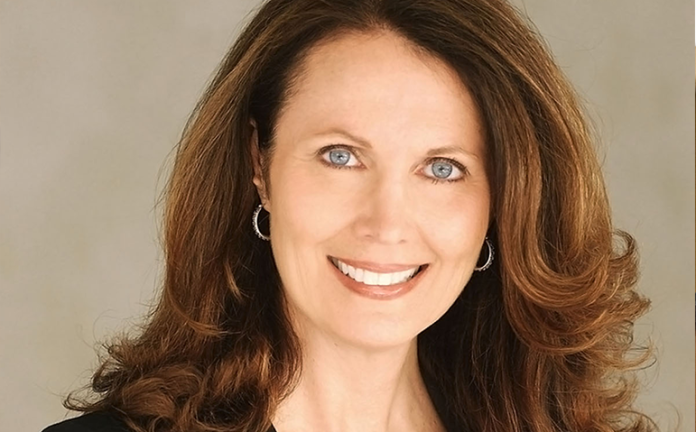
It starts with a new look at a worn out business trope and continues with investing in the personal lives of your employees, says Libby Gill, a former executive at media giants Sony Pictures, Universal Studios, and Turner Broadcasting, and this year’s IB Expo & Conferencekeynote speaker.
After nearly 20 years in senior leadership roles in communications, Gill left the television industry in 2000 to forge her own path as the CEO her own executive coaching and consulting firm, Libby Gill & Co. Now a sought-after international speaker, Gill guides established and emerging leaders to increase passion and productivity in their organizations.
She’ll also publish her fifth book in early spring of 2018, titled Hope Is a Strategy. If that sounds like an intentional reversal of the oft cited “hope is not a strategy” business axiom from author and sales guru Rick Page, it is.
“Frankly, I just got so tired of hearing ‘hope is not a strategy,’” Gill notes. “I’ve found hope to be for me, personally, the driving force to get through changes. It’s a sense of ‘there’s something more, there’s something in the future if we could just keep looking ahead.’ Leaders need to recognize that it’s part of their job to paint that picture of the future, while recognizing the obstacles, and get people really excited about the possibilities.
“With disengagement, which is often where I’m brought in as a coach,” Gill continues, “sometimes it’s working with new leaders and sometimes it’s with teams that are a little bit checked out. How do we get them re-enthused or re-engaged? To me it’s all about infusing that sense of hopefulness and painting that picture of the future.”
Gill says belief driving behavior is the very definition of hope. But it’s also looking at the data.
“The best data for me are Gallup’s engagement surveys that they’ve done for more than 30 years,” Gill explains. “It’s a high number — it took me a moment to really swallow — but their most recent survey said 67% of the workforce in the U.S. is unengaged or disengaged, meaning you wouldn’t say this is my A-plus player, my mover and shaker. They’re just people doing their job.
“That’s okay, we’re not going to get all A-plus people on our entire team,” Gill continues, “but to think that that much of your workforce is kind of going through the motions — and a portion of those are people who are not good for your workforce because they make mistakes in service or safety — there are a lot of pitfalls for having a workforce that’s not deeply engaged. You can give strategies, resources, or tools to your workforce, but if they are feeling hopeless or disengaged from the process, it’s not going to happen. However, if you can get those people committed, enthusiastic, and excited about what they do, then the strategies — business development, new technologies, or whatever it is — are going to be so much more fruitful.”
Gill also notes that getting workers to buy into what the company is doing and make change easier to navigate requires business leaders to take a moment to actually get to know their employees as individuals.
She points to a client who has the typical Monday morning status meeting where everyone on the team or in the office gets together.
“People started to take things for granted when they were no longer new,” Gill says. “You know, newness wakes us up. He decided it was time to reinvigorate those meetings, so he started with just a personal tidbit — just go around the circle and add something about your weekend, your family, your vacation, whatever. Of course, people looked at him suspiciously, like, what seminar did you take or what book did you read, but he kept at it.
“He found that as he kept it and people started to engage on a personal level before going into their work updates, that the communication flow became easier and the cross business-unit collaboration became more intense. It just added that personal element of be who you are, bring your best to the table, and don’t be afraid to share with each other. So it was an opportunity for people to feel really connected.”
Gill says the nature of change itself has changed, in terms of being far more complex than ever before and moving with a greater velocity.
“People’s heads are spinning when they go through a merger or some kind of restructure or new business development,” she explains. “You can’t necessarily slow down the train but you’ve got to take a minute to say here’s where we’re headed so that people get it on an individual level and can internalize it rather than looking at it warily as just another ‘change initiative.’ That seems so basic and yet we’re moving at such a rapid pace a lot of people miss that step.”
Another client, Edmunds, holds a weekly company lunch. The consumer automotive resource company has about 700 employees, with 400 to 500 on site at their headquarters in Santa Monica, Gill says, and yet the company hosts a weekly luncheon with the company chairman and employees “and they fill people in on new developments, milestones, what’s happening, and they also take that time to introduce new hires, do that round of applause for anybody who’s gotten married, had a baby, hit a milestone, run a marathon, etc. Just that moment of personal sharing connects people on an emotional level that ‘business as usual’ does not,” Gill explains.
“Leaders need to take the time to think these are human beings and their livelihoods, at least, if not their lives, are in my hands. It’s up to me to recognize them as individuals, take just that bit of time to understand what makes them tick, and get in their heads to motivate them in a way that’s meaningful to them. I think that makes people feel like, ‘Wow, I’ve got a role here, and even though I might be six or eight layers down I see where I can go, and I see why it connects to the greater vision of the organization.”
(Continued)
Who’s the boss?
In the intense world of television entertainment, Gill says she learned from good and bad bosses. “There are a lot of egos in the entertainment industry, as everyone knows,” she quips.
Her take on what makes a great business leader: “The people who are just sort of magical are the ones who can marry vision with execution. I’ve seen people who are great visionaries, great idea people, but can’t necessarily make things happen. On the other hand there are some people who are amazing implementers but don’t have that broad vision.”
Gill also hears those continued moans and groans about millennials.
“People better watch out because Gen Z is right behind them and they’re going to outnumber millennials by about a million in the next few years. I think we’ve got to stop putting stereotypes and labels on millennials. They’re not all the same — yes they grew up in the same time period and often share similar worldviews because of how they were shaped, but it doesn’t mean they’re all good at technology and it doesn’t mean that they’re all team players. They’re individuals, so part of your job as a leader is recognizing that and customizing your management style and communication style for people.
“It’s funny, the book that I’m writing, one person I just interviewed who works at a big film company said, ‘You know, I just think millennials are better people than we are. They’re purpose driven, they care deeply, but we have to tread a little softly with them because they have the spirit of I want to get ahead and some leaders translate that as I want your job in three months.’
“There may be some truth to that idea that they want to move quickly, but if you can take that energy, desire, and commitment and focus it — just give them the realities of the workplace: No, you’re not going to be a vice president in three months but here’s what you can do — you can train them without killing their spirit.”
Younger workers often just want to be recognized and know they’re on the right path, Gill says. She believes the common wisdom of “they attach to the manager not the company” is true.
“It’s really up to the supervisor to build that relationship and then broaden it out to be part of the company. That’s a step, particularly in communications work, that I see missing a lot. The senior leaders know where the company is going but they don’t necessarily translate that down, so people have a hard time connecting the dots of where the company is going and where they fit into the process. Leaders have to point that out, even to entry level workers — you’re vital here and here’s why.”
Creating engagement, inspiring purpose, and driving action
Gill’s clients include ABC-Disney, AMC Networks, Avery Dennison, CA Technologies, Cisco, Comcast, Deloitte, Eli Lilly, GoDaddy, Kellogg’s, Microsoft, Nike, Oracle, PayPal, Royal Caribbean Cruise Lines, Safeway, The Conference Board, Warner Bros., Wells Fargo, and many more. A frequent media guest, Gill has shared her success strategies on CNN, NPR, and the Today show and in BusinessWeek, Time, The New York Times, Wall Street Journal, and more.
The PR and branding brain behind the launch of the Dr. Phil show, Gill’s focus today is helping individuals and organizations “capture the mindshare” — that is, the heads and hearts — of their customers, colleagues, and communities.
Drawing on her experience, Gill will share provocative leadership strategies to connect the dots between individual accountability and organizational success during her IB Expo keynote presentation on Oct. 18 at the Alliant Energy Center.
The keynote breakfast costs just $40 per person or $260 for a table of eight. Reservations can be made online at MadisonBusinessExpo.com/keynote-breakfast.
Click here to sign up for the free IB ezine — your twice-weekly resource for local business news, analysis, voices, and the names you need to know. If you are not already a subscriber to In Business magazine, be sure to sign up for our monthly print edition here.

