

TAC Stats
• 192 volunteers
• 304 supporting members
• 2 full-time staff
• 2 part-time staff
• 1-2 UW work study students
• 60 paid teaching artists
• 2024 total revenue: $163,000
• 2025 projected total revenue: $244,000
After initially launching on Madison’s northeast side, the Textile Arts Center of Madison has a new location on South Park Street, doubling its space, growing its number of classes and adding to the thriving neighborhood.
Perhaps it’s the universality of textile and fabric arts that has drawn widespread support for TAC and readied it for a significant expansion after just under two years in operation. This fall, the nonprofit will officially reopen in its new home at 1702 S. Park St., bringing opportunities for artistic expression and community-building to a neighborhood rich in local business and nonprofit life.
“Every culture around the world has its own textile traditions and histories and ways of making, so there’s a way into textile arts for every person,” said Elizabeth Tucker, co-founder and executive director of the Textile Arts Center of Madison. “Maybe someone has a quilt that their grandma made, or washcloths that were crocheted for them by a great aunt, or had someone in their family who was a weaver. There’s some sort of connection.”
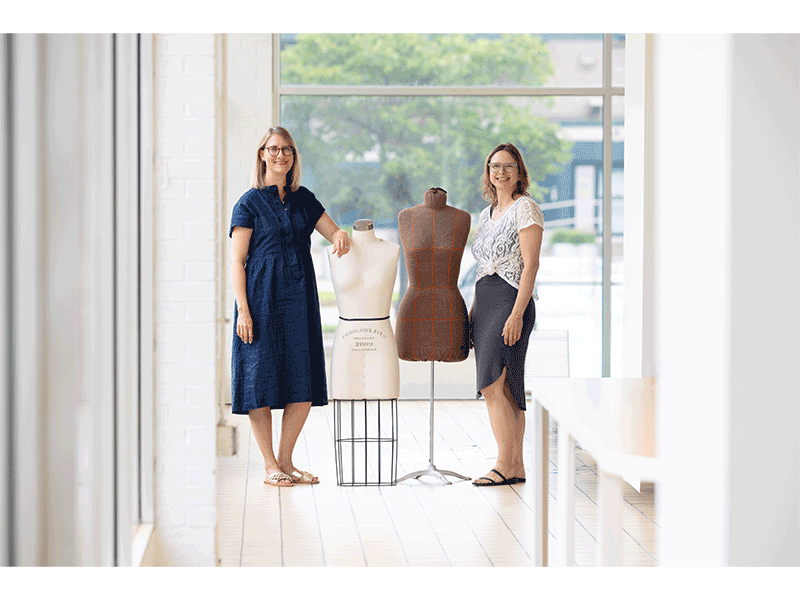
TAC, according to Tucker and co-founder Heather Kohlmeier, TAC’s artistic director, helps to fill a gap in Madison for textile artists and other creative folks by increasing access to classes, arts-related resources, education and networking. While the center has already made a substantial impression across the region, and its programming has drawn a growing local following, Tucker and Kohlmeier expect the new TAC to offer even more ways to make and learn in a bigger, brighter space.
Though still a fairly new organization, TAC projects solid growth this year. The center is supported by contributed and earned revenue. It tallies its contributed revenue from grants, donations and supporting memberships, and earned revenue from education programs and its secondhand supply sales.
“All of those buckets have risen over time,” Tucker said.
For Tucker, launching TAC in 2023 seemed only natural amid the “vibrant and thriving textile arts community” that already existed in Madison in the form of small businesses, course offerings at the University of Wisconsin-Madison, programming from other nonprofit organizations and more.
“There’s a huge textile and fashion design program at UW-Madison, there are guilds in our community for literally every type of fiber art,” she said. “A lot of people are really active in the space, but there was no one organization that brought everybody together and was focused on building community across the different textile art mediums.”
Textile centers in neighboring cities like Minneapolis provided the inspiration for TAC, and Tucker and Kohlmeier brought complementary backgrounds to the endeavor — Tucker as a quilter with professional experience in arts and nonprofit administration, and Kohlmeier as an artist with an MFA and academic training in areas like textile design, sewing and papermaking.
Kohlmeier said her university experience helped her identify other areas of need for Madison makers — among them, access to materials and resources.
“I really wanted to bring them into the community,” she said, “(give) people access to making tools, equipment and materials and also help people to see that making can be art.”
A patchwork of programming
The original TAC rolled out programming in four main areas, which it will carry forward in its new home.
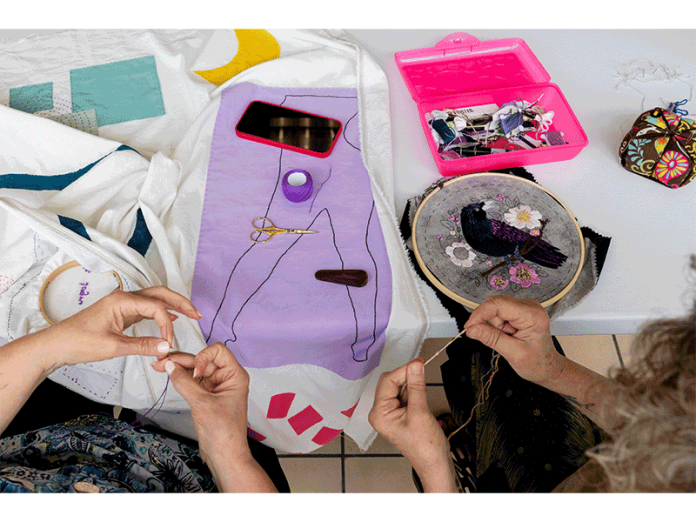
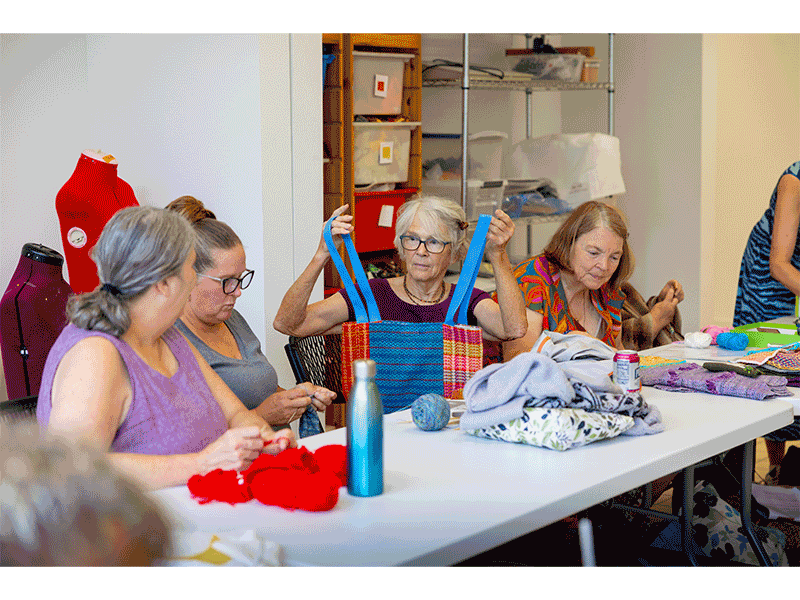
First, it offers a variety of classes and workshops — “anything from sewing, quilting, knitting, crochet, felting, papermaking, dyeing, etcetera,” said Tucker — with options for both youth and adults.
While the former space initially hosted one to two classes a week, and grew to up to four per week, the new space can accommodate as many as eight classes weekly.
“Now we can do twice (as much) because we have multiple classroom spaces,” Tucker said.
Next, TAC hosts exhibitions of contemporary fiber art, including group and solo shows, six times each year. One annual show highlights the fiber works of UW-Madison students and recent graduates, and a member show invites any supporting member of TAC to include a piece for exhibition.
TAC counts just over 300 members, who pay from $50 up to $1,000 annually to support the center.
The nonprofit’s third programming area focuses on creative reuse. TAC takes in donations of textile and fiber arts supplies — equipment like sewing machines and looms, plus fabric, yarn, knitting needles and more — and resells them to help fund its work.
TAC’s two annual sales are open to the community and both have doubled in revenue and attendance over the previous year, Tucker said. The most recent sale in June drew around 500 shoppers.
With the closure of Joann Fabrics, one of the key sources for such supplies, coupled with interest in purchasing secondhand as opposed to buying new, “we expect a lot more potential for growth in those sales,” she said.
“We are helping to keep stuff out of landfills,” Kohlmeier added. “We’re helping to repurpose things, and we’re providing them at a very low cost, so it’s a lot more accessible.”
TAC also re-donates supplies to other area nonprofits and schools. While it has official partnerships with around 30-40 community organizations, Tucker emphasized that donated items can go to any person or group.
“Pretty much anyone that reaches out to us … if we have something that fits their needs, we want to be sure to get that to them,” she said.
“One of my favorite stories in that regard is, we have connected a number of times with the woman who runs the craft room at the Oakhill Correctional Institution. She is teaching the men how to knit, and they knit dog sweaters and then donate them to the Dane County Humane Society. It’s just this really beautiful, full-circle picture of what is possible.”
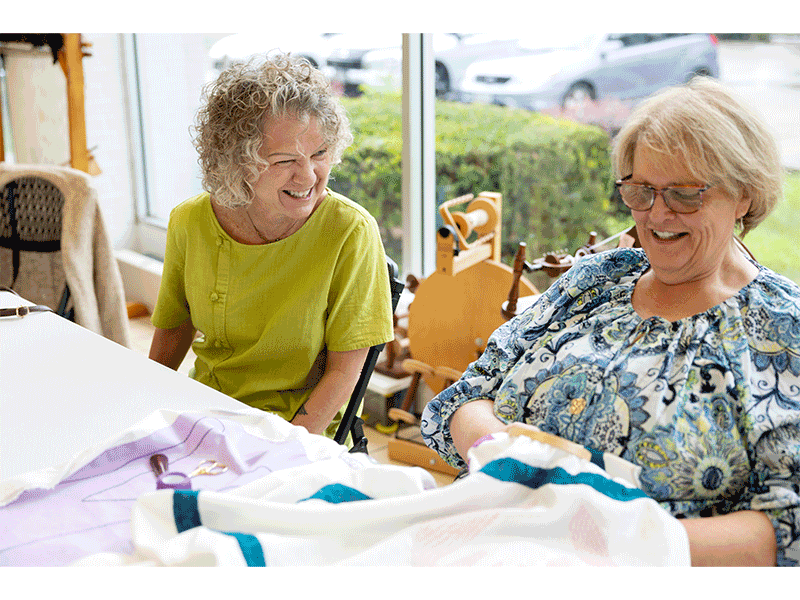
TAC’s fourth programming area centers on free community programs. It hosts open house Community Days, inviting members of the public to the center and offering featured projects to work on, a chance to meet representatives from area guilds, take-home craft packs and more. It also gets beyond its own location by doing programming at local events like festivals.
An ambitious expansion
TAC spent its infancy in an industrial makerspace on the northeast side of Madison, which Kohlmeier said was always planned to be an incubator for the nonprofit rather than its permanent home.
“It was perfect to get started,” she said, “but as we’ve developed our programming, and as we’ve grown, we’ve realized that we actually need individual classrooms and studio spaces.
“Being in that space, it was really difficult to do more than one workshop at a time, and we’ve gotten to the point now where we have a lot of programming, so we knew that we needed something more.”
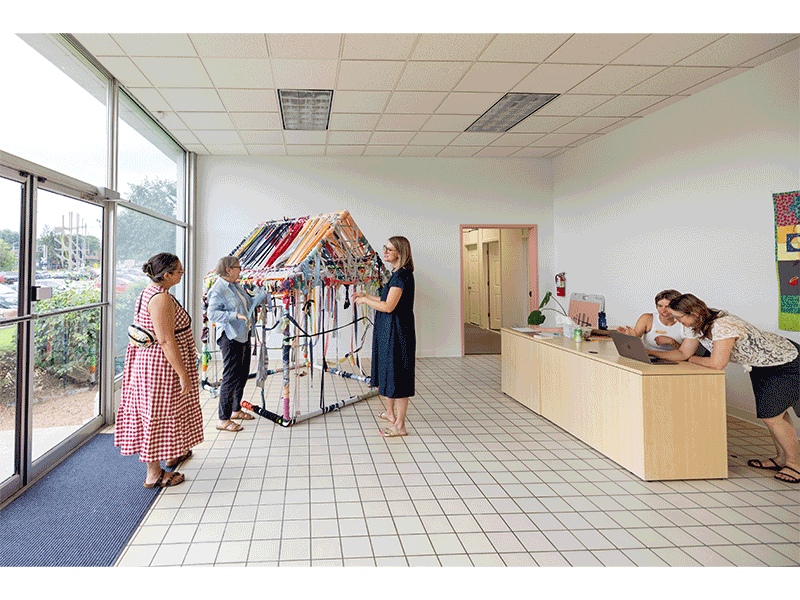
A “long, healthy search” led her and Tucker to the former Thorstad Chevrolet building on Park Street, which — with its high ceilings and huge windows — is able to accommodate multiple classrooms, studios and areas for workshops, in addition to a gallery area and a partner space shared with the Sewing Machine Project, another nonprofit.
TAC relocated in June. Summer in the new space has been busy with camps for youth and a few adult workshops.
This month, TAC’s community engagement efforts will include a two-day appearance and papermaking activity at the east side’s Orton Park Festival, held Aug. 29-31.
This fall will bring another full slate of activities, starting with two events that are free and open to the public. TAC’s opening reception for its fall exhibition, “Statement Pieces,” will take place on Friday, Sept. 5, from 5-8 p.m., and celebrate exhibiting artists, many of whom will be in attendance.
A community open house will follow on Sunday, Sept. 7, from 1-4 p.m., and invite the public to check out the new space. The event will feature fiber arts activities and an opportunity to view the new exhibition.
And the center’s regular programming will return in the fall, with expanded options and some familiar faces.
One of these is Angela Johnson, an artist who teaches Community Service in the Arts courses at UW-Madison and runs a creativity coaching business.
“I was super excited when I first heard (TAC was) opening because there isn’t anything quite like it in the Madison community,” she said.
She said the nonprofit’s exhibitions provide great networking opportunities for local artists and a “sense of camaraderie. … They’ve just built this great sense of community that is really important and isn’t necessarily evident in all organizations.”
She’s taken a couple of classes at TAC, too, focused on embroidery and bookmaking, and this fall she’ll teach the Fall Creativity Coaching Group and Creative Art Journaling.
Looking ahead
Tucker and Kohlmeier have big plans for TAC’s continued growth in its new home. On the community-building front, they’re looking forward to establishing partnerships with their new neighbors.
“You really can’t get better than Park Street,” said Tucker. “There is so much happening over here. … We’re within throwing distance of Centro Hispano and the new Black Business Hub and the Center for Black Excellence and Culture, and a few different community centers, and so many new businesses, so it’s a really important goal of ours to be an active part of our neighborhood.”
Another bright spot on TAC’s horizon is the ability to offer studio memberships — something not possible in the center’s former location, where studio and workshop space was shared. Now, Tucker said, designated, separate spaces will allow artists to work on individual projects while workshops, classes and events are hosted in other areas.
TAC will also launch an artist-in-residence program supported by a major $100,000 grant from the Ruth Foundation for the Arts. The artist will have a dedicated studio space to further their own practice and will contribute toward community engagement initiatives. Applications will go out by summer’s end, and the artist-in-residence will begin with TAC in January.
The months ahead will be busy, but TAC’s founders are grateful for the support that has propelled it into this new era. The nonprofit has been able to hire several employees, in addition to Tucker and Kohlmeier, and its work is also supported by nearly 200 volunteers.
“We’ve been so fortunate so far,” said Tucker. “We’ve been open for … less than two years, and the way the community has come around this idea and what we’re doing has exceeded all of our expectations and goals.
“With everything going on in our world, people are looking for community, they’re looking for creative outlets and they’re looking for opportunities to create and feel things that make them feel connected to others.”

