


In the wake of President Donald Trump’s recent actions to gut funding and staff across multiple government agencies, Madison organizations are reckoning with the alarming costs of losing federal funding for critical programs — and they’re not all monetary.
The outlook has changed drastically for federal agencies like the National Endowment for Humanities (NEH), the Institute of Museum and Library Services (IMLS) and others.
Organizations focused on cultural enrichment, education and programming that addresses climate action, technology needs, citizenship and more stand in the line of fire. While the degree to which these groups rely on funds from federal sources varies, the fact remains that many of these programs and services face major reductions or will end entirely.
Wisconsin Humanities
Wisconsin Humanities, established in 1972 as an independent nonprofit affiliate of the NEH and based out of Madison, was perhaps among the hardest hit by recent funding cuts. Effective April 2, all of Wisconsin Humanities’ awarded grants were canceled in their entirety, and consequently, the organization will soon shut down.
“I was shocked,” said Dena Wortzel, Wisconsin Humanities’ executive director. “For over 50 years Congress has supported the work done by all 56 state and territorial humanities councils — nonprofit affiliates of the NEH whose grants and programs reach people everywhere.
“For 53 years, Wisconsin Humanities used the funds we (received) to strengthen our communities — and our state — through grants and programs that work at the local level in every corner of the state.”
The nonprofit’s educational and cultural programs, Wortzel said, are critical given Wisconsin’s bottom ranking for arts and culture funding. She said they provide statewide support in three ways — through small matching grants that help communities learn and build connections among its members so they may collectively thrive; the Love Wisconsin project that introduces state residents to one another online through storytelling; and the Community Powered initiative to train local leaders in skills that help them address community needs.
These programs are all halted, and with them, the organization’s ability to connect and transform communities.
“We and our statewide volunteer board are working tirelessly to advocate for this work and to seek private funding to help us survive until the time when federal funding returns,” said Worzel. “We are confident that it will, and meanwhile, we will continue to build our base of private donors.”
Madison Children’s Museum
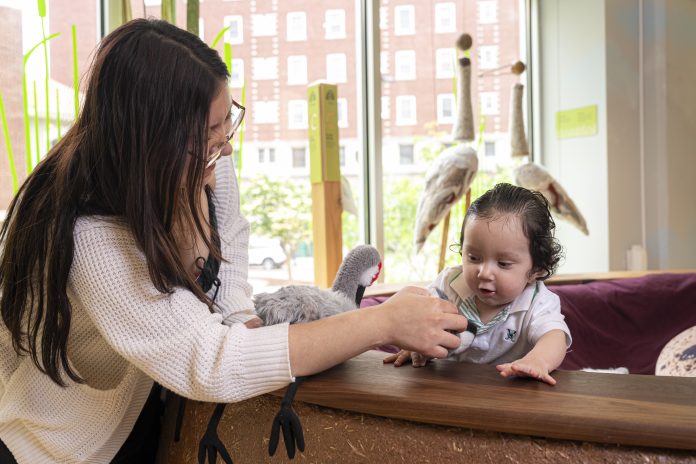
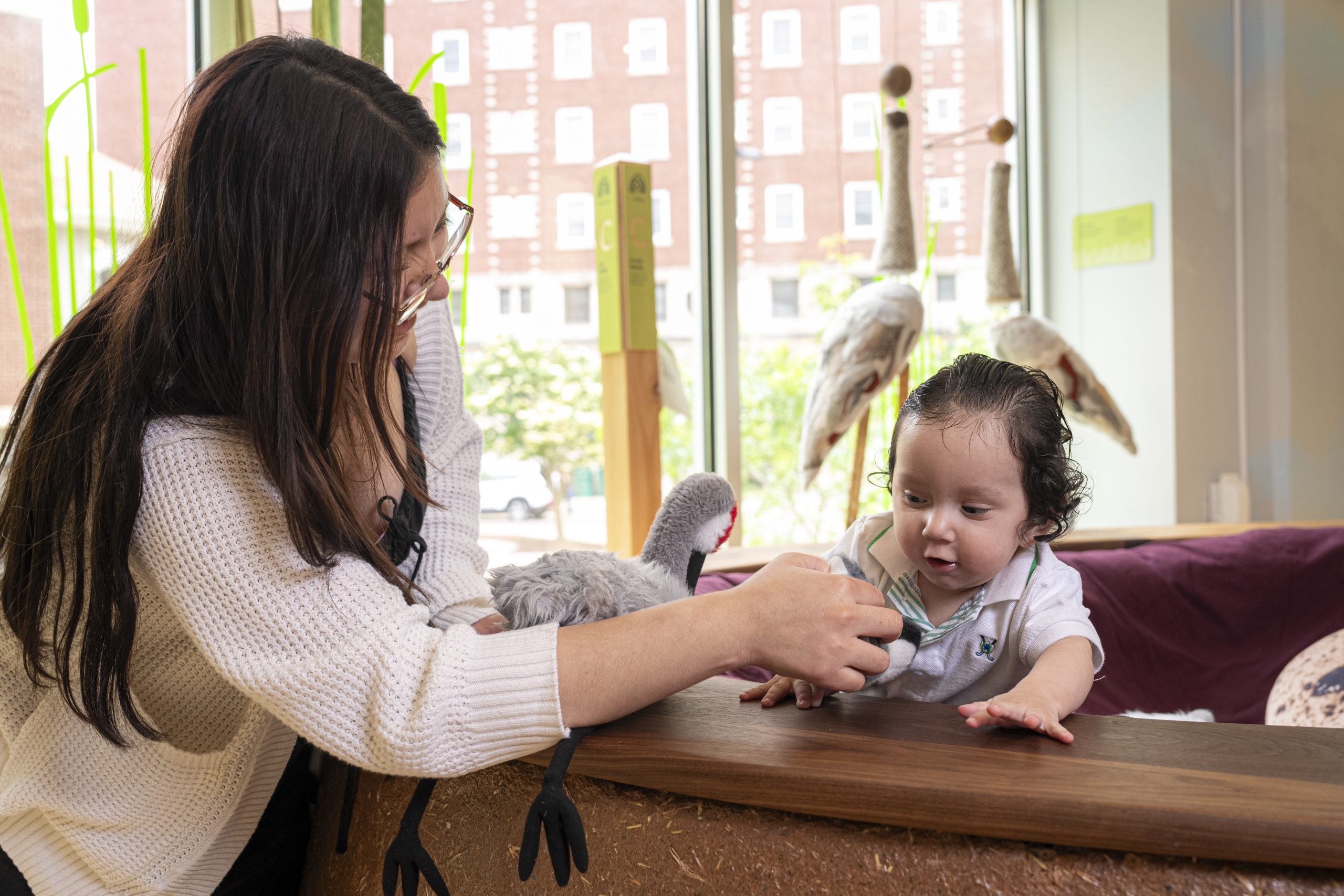
The Madison Children’s Museum was also dealt a blow by reduced NEH funding, as well as cuts to grants from the Institute of Museum and Library Services. Many MCM exhibits and programs have historically received support from a number of federal grants, and while these overall make up just 5-6% of its yearly budget, according to Tom Linfield, MCM’s president and CEO, their unexpected rescission will nevertheless have substantial consequences.
Federal grants secured through a competitive application process have helped fund key MCM exhibits, including one that celebrates Brazil’s music and culture and the recently opened Nice Age Trail, Linfield said. The grants involve regular reporting and oversight, and several have required the museum to raise matching funds.
“This system has worked well for many years and enjoys public support,” he said. “According to a 2017 poll, 96% of people favor maintaining or increasing museum funding. In the last few months, the federal government has upended that system, backing out of its commitments.”
Among MCM’s cancelled grants is an NEH Climate Smart grant of well over $200,000, which supported plans for its Caretakers of Wonder project, focused on connecting children to nature, instilling agency, and helping parents model action in the midst of climate change and related global crises. MCM received one of just five awards distributed nationwide. It is one year into the grant, and Linfield said the museum has already incurred expenses to support the project.
“The federal government owes MCM all of the $268,202 promised,” he said.
The museum and library services grants affected include the museum’s $339,000 Caretakers of Wonder leadership grant, which was reportedly cancelled but fully disbursed, and its $250,000 community engagement and strategic planning grant, of which it has received nearly half. MCM will seek alternative funding to complete that project.
There is a small silver lining, Linfield said. “The museum faces no immediate danger” and will be able to “weather” these cancellations. “But in losing current and future federal grants,” he said, “we lose financial support that has allowed us to innovate, excel and take on leadership roles, both locally and at a national level.”
And some of the long-term fallout, while intangible, is still damaging.
“Trust and confidence form the foundation of relationships between nonprofits and philanthropists working to improve communities,” said Linfield. “Donors need assurance that organizations they fund can complete their initiatives. When the federal government removes support mid-project, it undermines that essential trust in our work.”
Madison Public Library
Like MCM, the Madison Public Library is looking out on a funding landscape that deviates significantly from the norm. The federal order concerning IMLS has had a domino effect, as the institute is the primary funding source of the Wisconsin Department of Public Instruction’s Division of Libraries and Technology, which in turn supports a number of programs and services for libraries across Wisconsin — including the Madison Public Library.
“National Leadership Grants through IMLS have allowed us to partner with libraries and museums around the country to bring innovative programs and services to Madison residents,” said Tana Elias, director of the Madison Public Library, in a recent joint news release with MCM. “Our nationally-recognized Bubbler arts-based learning program was launched with an IMLS grant and is now used as a model throughout the country, and we receive services at the state and system level through IMLS funds that help fund library technology, shared online resources and delivery of materials, making library service more efficient and cost-effective throughout the state.”
An advocacy page on the Madison Public Library website details some of the essential services it provides to the community — a grim reminder of what is at stake if large-scale investment in public libraries is slashed. The organization provides over 5,000 free programs annually for all ages; public computers, free Wi-Fi and access to online databases; a location for in-person absentee voting, voter registration and polling; and millions of books, CDs, DVDs, vinyl records and other media.
“Losing IMLS funds for libraries, museums and other cultural institutions will have both an immediate effect and a long-term impact on those organizations and our communities,” said Elias. “These funds expand access to much needed services and collections in public libraries, and promote innovation, regional investment and efficient resource sharing.
“I urge people to contact their elected officials to let them know how much these services mean to them.”
Literacy Network
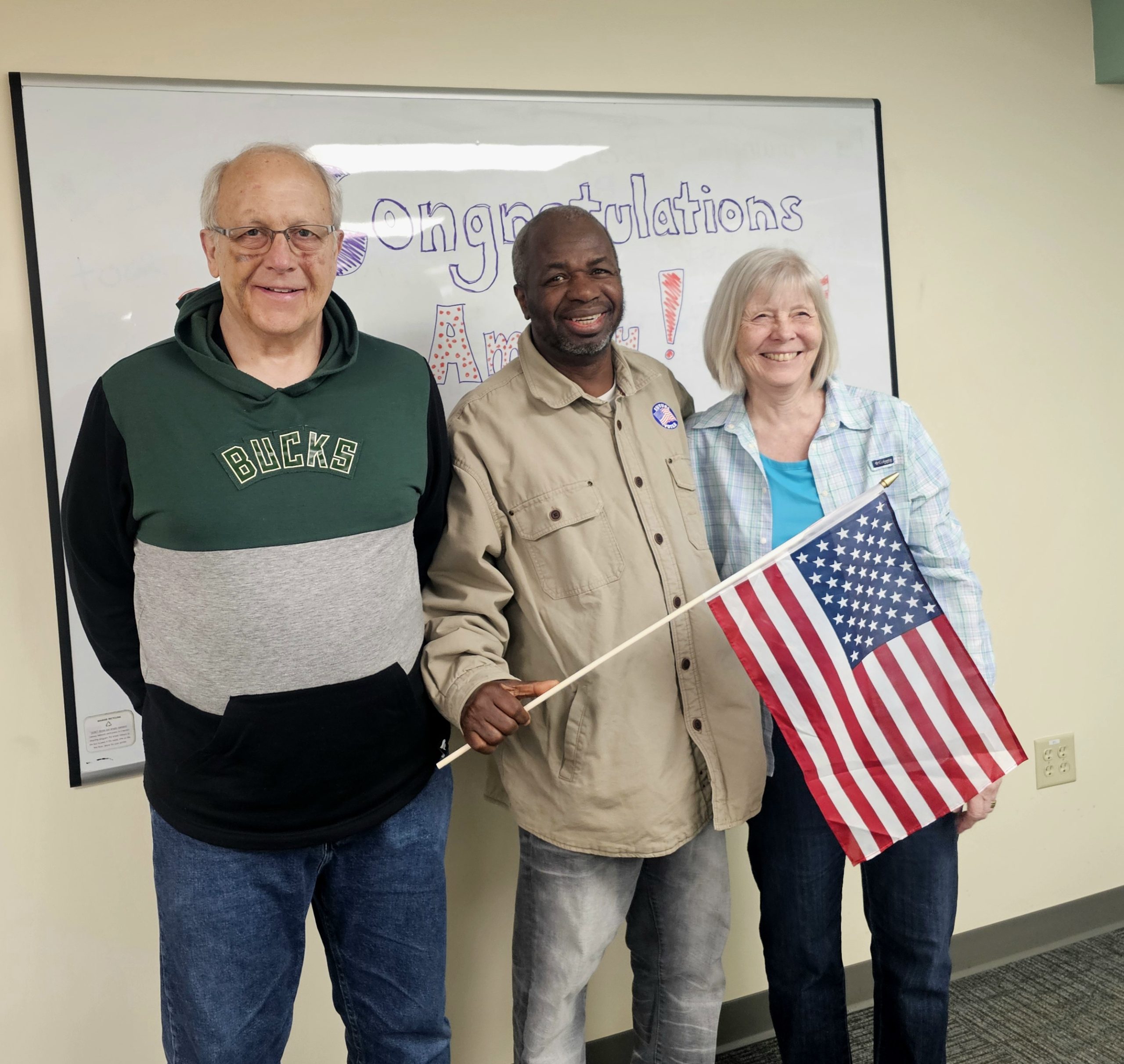
Recent federal turmoil is also limiting opportunities for those seeking a new, permanent home in Madison. Literacy Network’s citizenship grant was terminated late last month by the Department of Homeland Security. The organization’s citizenship program offers lawful permanent residents (LPRs) free classes that encompass English, U.S. history and civics.
The organization said grant funds allowed it to partner with another Madison nonprofit, Centro Hispano, to provide legal assistance for citizenship applications.
“The DHS action is shortsighted,” said Robin Ryan, Literacy Network’s executive director. “This grant supported people who followed the rules for applying for citizenship. It helped low-income adults access free classes and legal assistance to apply for citizenship to obtain security and greater opportunities for themselves and their families.”
So far this year, 20 participants in Literacy Network’s citizenship class have obtained U.S. citizenship, the organization said, and 50 more are studying in preparation to submit their applications. Literacy Network was reportedly set to serve over 100 LPRs this year while funding was still in place.
While the organization plans to continue its citizenship program, it will be unable to expand class sizes as planned and, in fact, will be forced to reduce them. The nonprofit also said it intends to file an objection to the funding termination and will look for alternative resources to provide continued support for its programs — and the Madison metropolitan area’s over 15,000 lawful permanent residents.
“Dane County thrives in part because immigrants choose to become citizens and participate in our democracy,” said Ryan.
While these local organizations represent just a handful of those nationwide facing federal funding cuts, they signal impending losses for the broader community in the spheres of arts and culture, education, enrichment, connection and growth.
Ultimately, the rescission of these promised investments — even those that may be supplemented in the short-term through private donations and alternative funding sources — has the potential to undermine valuable resources and impair community life, local leaders said.

