
Change is coming, and Madison needs to be able to switch course to prepare for and embrace it. Switch was the key theme of the Greater Madison Chamber of Commerce Annual Dinner on Tuesday evening, and with the city’s population expected to grow to about 385,269 residents through 2050, smart, planned growth will be key to maintaining the city’s status as an enjoyable place to live.
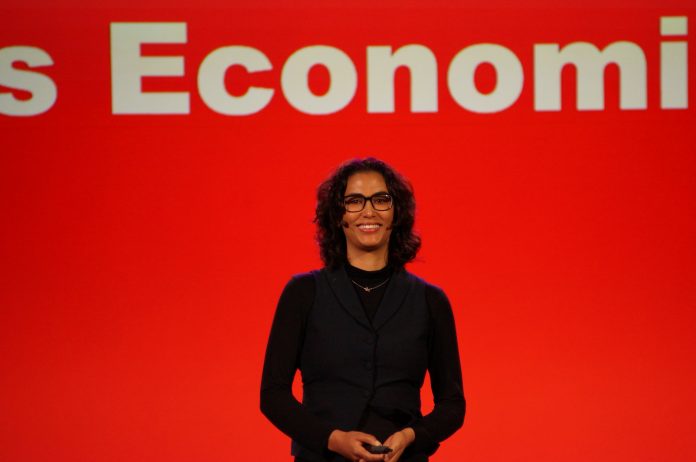
Keynote speaker Daryl Fairweather, chief economist at Redfin, a real estate brokerage and technology firm, moved to Wisconsin during the pandemic after finding clean air and a better living experience. Three out of the four summers she lived in Seattle, the air was toxic for weeks due to Canadian wildfires.
“Sometimes it takes a really big event, like a wildfire or some other catastrophe, to get you to consider your other options,” Fairweather said, explaining how she and her family ended up settling in Lake Geneva, where her partner is from, for a better quality of life.
During her presentation before a sold-out crowd at the Monona Terrace, Fairweather evaluated better options, outcomes and the switches Madison needs to move forward.
Avoiding behavioral biases will be important. As economic decision-makers, people fall victim to psychological fallacies, such as the sunk cost fallacy. Fairweather used the example of a homeowner not wanting to take a new job in a new city due to spending so much money on a remodeling project in their current home.
Because of uncertainty and ambiguity, there is a fear of the unknown. The status quo feels safer, but Fairweather said staying stagnant won’t work for Madison as it grows and the world around it changes.
Fairweather said Madison can expect more climate change refugees like her and her family.
Dane County is not listed as a high-risk area for storms, fire or drought, making it an appealing place to live if climate change trends continue.
“There are going to be more climate migrants or just people looking for better quality of life, coming to Wisconsin, coming to Madison,” Fairweather said. “But growth is hard, and if the population is going to grow, we need to start using backward induction to think about, how can we prepare for that growth?”
What Fairweather means by backward induction is that the city of Madison will need to analyze its endgame to determine the best possible moves to get there, starting now, whether that goal is 20 years or 100 years away.
Fairweather said Madison’s main goal should be a “thriving, affordable Madison metro, with a high quality of life, where people are able to live near their jobs affordably.”
How does that future become a reality? Echoing what city leaders have often said, Fairweather said the housing supply must increase.
“We need to start optimizing our land use to allow for dense housing to be built near job centers and along transit corridors,” Fairweather said.
This means single-family homes with a big yard may be a thing of the past.
“We need to make sure that everyone has a home instead of just reserving the land for the single-family home,” Fairweather said.
Project reviews for housing need to be shorter so there isn’t an added cost. And climate change needs to be accounted for, she said. According to the University of Wisconsin-Madison and the city of Madison, flooding will continue to be an issue, with the isthmus a cause for concern. Investment in infrastructure, like roads that can absorb water and updated sewer systems, will be paramount.
“We need to be proactively preparing for climate change instead of just reacting whenever there’s a natural disaster, because that’s how we can keep costs down,” Fairweather said.
And her last major point focused on taxes — currently, there isn’t an incentive to build new structures. As it works now, a developer pays a higher property tax on new housing builds. The more housing units built, the more property taxes are collected.
“That’s great, but it also is a disincentive to build anything new, because it’s easy for somebody from out of state, from even outside of the country, to come to Madison metro or Wisconsin and buy up land, because they know that those land values are going to be increasing over time,” Fairweather said.
With Madison turning into an attractive climate change refuge, people could simply buy land and watch its value rise without doing anything to it.
“We need to be incentivizing the exact opposite kind of behavior; we want the people who are buying land here to actually be doing something to contribute back to the economy,” Fairweather said,whether it’s building housing or commercial developments.
To counter that issue, Madison could subsidize climate-resilient housing and try to discourage unproductive subsidizing.
Fairweather said these aren’t issues and plans to look at in the future, because climate change, migration and economic growth are happening now.
“The question is whether we are going to be just passive victims of this change, or are we going to be active authors of our future?” she said.
If a plan isn’t cemented, Fairweather warned of sprawl and unaffordable housing, a strain on infrastructure, higher taxes and a lower quality of life. The solutions of the past decade won’t work in the next one, and a switch in thinking and planning will be required if Madison is to move forward.
Fairweather is hopeful that Madison will find the right path by beginning at the end.
“We can use backward induction to envision that future that we all want to live in, and then we can start making the smart choices today that are necessary for us to achieve that future,” she said. “And that means building more housing, investing in resilient infrastructure and reforming our tax code to make sure that the right incentives are in place to get the kind of economic development that we want.”

