

When Madison’s long-delayed Central Park officially opened to the public recently, folks may have paused to notice the lush grass roof topping its restroom pavilion. For visitors from the farthest reaches of the Badger State (i.e., anywhere but the “surrounded 77 square miles”), such a feature may have seemed at best an eccentricity and at worst a hippie flashback or fever dream. But for longtime Madisonians, who can’t walk a mile in their comfortable shoes without running into a community garden or a farmers’ market, such unselfconscious nods to sustainability are old hat.
So it’s no surprise, then, that the kinds of companies that feed locals’ hunger for organic and sustainable produce are thriving in an era when consumers’ awareness of where their food comes from is growing faster than spring kale.
| “There are studies out there … that show that broccoli, for instance, in this country 50 years ago had almost twice as much calcium in it as it does now.” — Sandy Syburg, president, Purple Cow Organics |
And in an age when the word “recycling” trips effortlessly off every tongue from Superior to Beloit, the world’s oldest recycling program is seeing a surge as well. Even New York City — no pristine island paradise — is getting in on the action, with a program designed to turn its famously hard-bitten residents into earthy eco-warriors.
So while it may not enjoy the high profile of some sustainability initiatives, composting is increasingly on the radar of local gardeners, farmers’ market fans, and farm-to-table restaurateurs alike.
The “closed loop” that goes from grower to grocer to composter can be seen at numerous points along the food supply chain, and it’s being celebrated not just on Earth Day but year-round. (See this video, for example, which demonstrates how growers such as Vitruvian Farms in McFarland ship their produce to vendors such as the Willy Street Co-op, which send their food waste to composters like Middleton’s Purple Cow Organics, which in turn sends its compost back to Vitruvian to start the cycle all over again.)
But a new focus on local, sustainable food production — spurred on by popular books, blogs, and websites like Locavores.com — bodes well for businesses like Purple Cow.
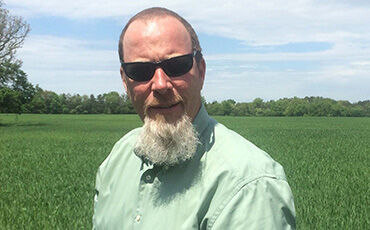
“I absolutely see the trend continuing,” said Sandy Syburg, president and co-founder of Purple Cow Organics. “As little as 10 years ago, there were maybe only a couple thousand farmers’ markets in the country, and I know now there’s over 7,000 of them. So farmers’ markets, knowing your farmer, local food, is certainly increasing.”
Along with a desire for more local fare also comes an awareness of what goes into one’s food, said Syburg.
“I think that local growers, whether it’s farmers, CSAs [community-supported agriculture], or homeowners are reading labels a bit more and they are learning about where those inputs into those gardens are coming from,” said Syburg. “It isn’t completely possible, probably, to do it without shipping your needed inputs some distance. The biggest piece of it is the process of feeding the soil, and actually treating the soil as a living organism. Having the soil feed the plant is a millennia-old process, which was lost in the advent of commercial fertilizers, and we began using those commercial fertilizers to directly feed the plant.”
(Continued)
Purple Cow Organics has been in business since 2010, but Syburg has been a composter for much of his life. Purple Cow was created from the merger of two independent businesses, one in Madison and one in Milwaukee, that were founded about 20 years earlier. The unique name came from a marketing book by Seth Godin. Syburg thought the title was catchy, and when the author gave his blessing, Syburg decided to use the name for his own business.
“The interesting thing about that is, it’s often sort of a misconception that because there’s a cow on the bag that there’s a cow in the bag, but our product is actually completely manure free,” said Syburg. “It’s all made out of plant materials, and fruit and vegetable residuals.”
Better soil, better food
According to Syburg, awareness of the importance of composting is higher than it’s ever been, and with the gardening, farmers’ market, and CSA seasons in full swing right now, those issues are top of mind.
“Awareness is definitely improving,” said Syburg. “In the state of Wisconsin, yard materials were banned from landfills in 1993 and we were in the compost business prior to that, so we’ve seen the migration to an understanding of a situation that was initially thrust upon the state sort of as a waste diversion. … And composting originally started out as a waste minimization process. Take big piles of ‘what the heck do we do with this stuff’ and make it into smaller piles.”
Syburg said that he learned about composting from his grandmother, and he later took those same ideas and processes and applied them on a much larger scale.
“True, high-quality compost is not just some leftovers from a yard or streetscapes,” said Syburg. “It’s the embedded energy of the sun that grew those plants. It’s the minerals and the nutrients that those plants liberated and mined from the soil, and if properly processed as we do into a high-quality soil amendment, it’s miraculous material.”
While some might presume an organic composter works almost exclusively with organic farmers and small organizations like the Willy Street Co-op, Purple Cow counts conventional farmers among its clients as well, and it gets much of the food residuals it uses from corporate producers like Ocean Spray and Nestlé.
“Many of our conventional farmers are learning they can reduce the need for chemical fertilizer inputs or reduce the need for managing crop residues if they approach soil as a living organism and deal with the biological component that’s there,” said Syburg.
There’s also the little matter of the food itself — which can be improved through better soil. It seems like common sense, of course, but it’s something the typical modern consumer tends to overlook — at least in areas outside of Madison.
“One of the ways to increase local food production or increase the volume of it is through amending the soil,” said Syburg. “Food production, vegetables in particular, create a very high demand on the soil, so giving back to the soil is of very high importance. Nature knows that. …
“There are studies out there … that show that broccoli, for instance, in this country 50 years ago had almost twice as much calcium in it as it does now. Farmers are paid to grow pounds of broccoli, not X amount of calcium. So I think what people are learning is that by having really high-quality soil and having the soil feed that plant, the plant has the natural ability to liberate and extract these nutrients that are essential for our own health. And then when you eat that broccoli, you don’t have to go down the other aisle in the grocery store and get a vitamin supplement to fulfill the needs that one can get from their produce.”
For more information on Purple Cow Organics, click here.
Click here to sign up for the free IB ezine — your twice-weekly resource for local business news, analysis, voices, and the names you need to know. If you are not already a subscriber to In Business magazine, be sure to sign up for our monthly print edition here.

