
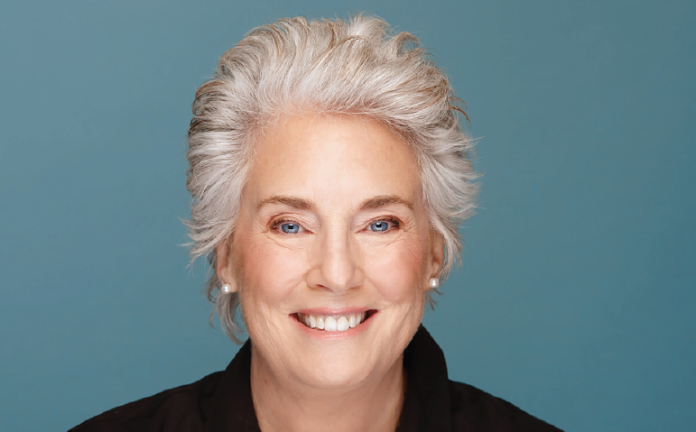

Women’s Equality Day was Aug. 26, and while we’ve come a long way since women got the right to vote 100 years ago, executive coach Susan Hodgkinson believes we still have a long way to go to achieve today’s pressing goals of pay parity and true gender and race equality. For Hodgkinson and other professional women, that’s never been more evident than in the age of COVID-19.
With the 2020–21 school year kicking off, Hodgkinson notes that many women find themselves forced to juggle work with home schooling to an unfair degree, and employers need to be aware of the struggles their female employees face. Hodgkinson, a 30-year executive coach, founder of The Personal Brand Co. and author of The Dignity Mindset: A Leader’s Guide to Building Gender Equity at Work, offers a number of suggestions for businesses to accommodate female employees who may be struggling while working remotely and having school-age children at home.
Let’s start with your own personal motivation for taking on misogyny at work, and that pertains to overcoming sexism at home. You’ve been outspoken about how youstruggled while growing up with a sexist, racist father, which has to be painful to acknowledge, but how did that experience shape you?
“Well, unquestionably, it formed the center of motivation I had as I began to mature into a young adult and go through college, and it influenced the kind of courses that I took. Also, as somebody who was already a real sports lover and player, I also found that it was less interesting and less important that I was really good at this sport or that sport because it really wasn’t anything that would interest my dad, in particular. So, there were a series of things that happened over the course of my young life that came through the lens of the views that my father had about people who weren’t like him. I just knew it was wrong, and I had a mother who ironically had a fabulous moral core and would just say, ‘That’s so wrong. It’s just not the right thing to do,’ but that’s the way our house ran.
“Fast forward all the way to this coaching business that I established 25 years ago. I’ve coached all kinds of high-potential, high-performing people. That’s been my goal from the beginning. I was asking HR folks to give me their greatest and most talented people and let me work with them on the things that I could help them do to advance their careers. Of course, that means there have been all different kinds of people — all races from all parts of the world. One of the things that I discovered in coaching high-potential and high-performing women is that their confidence was suffering tremendously for reasons that didn’t make any sense. So, over the course of the last four or five years, not being able to find a way forward through the issues that they face, I did some research on a larger scale that resulted in this look at the embedded gender biases and racism that exist in our culture and how it so deeply affects people’s mindsets about themselves. Women, men, people of color — they have to really do a whole bunch of work to let it go and to unlearn things that are penalizing them in their adult lives.”
Are these things that you’re referring to really visible, or are they more sublime?
“It’s really both. When you look at things like when people want to argue about whether there is systemic racism and systemic gender bias, you find that there is, but some people simply are not aware of the things they themselves may do or the broader attitudes in our society that create these strata of people. Some are not treated, paid, or advanced equally in their adult lives at work, and sometimes it’s that we don’t even know that the cultural absorption that we have around media, and particularly social media for instance, that has a construction called the ‘Male Gaze.’ It’s not to vilify men, but it’s the way that [feature] films started, and it was analyzed in the 1970s by Laura Mulvey, a professor of media in the U.K. who has now written several books on it. It was how the men in charge constructed the stories, the movies, and the scripts in a way that was pleasing for them. That meant that women were subjugated and subordinated in all those films.
“In 2020, just look at one example of current social media — Wikipedia — which was founded to share knowledge with everybody. It wasn’t founded for somebody to make $1 billion or $1 trillion. In Wikipedia, a closed shop of volunteer writers, and I might add that just about 80% of the writers are men, it was discovered that if you look for biographies of women in the English language on Wikipedia, you’ll find that of all the biographies, women are only 17% of them. First of all, on its face, that’s a problem, but in the hidden space that you talked about, what happens is that we look for famous people, we make Top 10 lists, we examine who has got the focus, the attention, the limelight, and the storytelling around them, and it’s mostly men. An outgrowth of that is that there is a devaluation of women, and I’m afraid there is a desire on the part of many men today, certainly not all, to keep that whole thing going because it works for them.
“So, it’s easier maybe just to turn a blind eye than to understand, ‘Gee, if I woke up today and only 17% of the world answer book had biographies about men in them, how would I feel?’ I’d feel like I wasn’t seen and for women and people of color, they are not.”
You’ve just made a strong case for diversity — diverse boards, diverse workforce composition. How can employers, human resources departments, and managers support women and parents working remotely during COVID? Is it about more than Flexible Spending Accounts?
“If we step back and just think about this notion of awareness gaps, I believe most people are well intentioned. I also believe that a lot of people are not necessarily well informed. If we look at the awareness gap and how it shows up in our lives, in organizations where people are asked whether women are well supported at their company, men answer that question yes on an average of about 78% or 79%, and women answer yes at 53%.
“When you look at work from home, what we know is that working women, if indeed they have a spouse at home and the spouse is a gentleman, they are picking up two-thirds or three-quarters of the housework, along with doing their job. Just the other day, I was meeting two folks for the first time, a wife and her husband and two small children, and she has a very important job as a frontline worker in the COVID world. She talked about how exhausting it was to do that day’s work and then come home and have to home-school for two young children. I turned and looked at her partner and said, ‘Oh, what’s keeping you busy? How is your work going?’ And he said, ‘With the kind of work I’m in, there is absolutely no activity right now whatsoever, so I’m just hanging out.’ I thought to myself how fascinating that they could say that to each other, and both think that’s the way it was working and that was OK.
“So, take a white, dual-working spouse household with small children and think about the stress that they are in and why we need to provide relief in the form of things like a tutor, a virtual tutor. That’s a benefit right now. There could be nothing more relevant to take that load off somebody who had been in Zoom meetings literally all day. That’s really the first important piece. Certainly, those kinds of benefits that take the load off the woman in particular, but also parents who equally bear responsibility in any house.
“The second worry I have, and why I feel strongly about a re-creation of flexible benefits for another group of people who I’ve researched very deeply, is women of color. What we know is that to begin with, the overall pay gap between women and men is a $13,000 gap. We would say the gap with Black women and white men is $23,000 or $24,000. Hispanics, $28,000 — they are making $28,000 less per year than their white male counterparts.
“For Black women, in a situation where they may be the single parent, and they are working and they are taking care of their kids, and they came through an upbringing where no generational wealth transferred to them — they had no inheritance from anybody — and it’s a paycheck-to-paycheck situation. Their kids may or may not have had the access to the best education, as their white counterparts did. They have got this incredible burden of trying to make cash flow work out because there are no savings to dip into. I’ve talked to some of my male clients who have a wife and a traditional relationship where she is at home, and they’ll say, ‘Everything is going great. I feel closer to my family. I still have a break. I can get my work done.’ And it’s not malice, it’s simply an awareness gap that people simply don’t understand. I don’t think either women or men sometimes have the information to put it out on the table and talk about how roles need to look different, and COVID has really brought that to the surface.
“So, yes, relief in the form of flexible benefits that help people where their need is greatest, and also required time off because people are afraid to get off of Zoom in case somebody else says, ‘Well, they are not as important as I am’ and they lose their job. It’s like a tinder box of emotional and mental health problems.”
You also note the value of redefining productivity during COVID-19 because, in your view, the traditional metrics of productivity no longer work. First of all, what’s wrong with those traditional metrics of productivity and, secondly, how can organizations replace them while continuing to support their staffs?
“Well, what happens is that if you look at traditional measures as a bean counter would, its outputs and throughputs and right down the line, the issues are: At what cost is that going on? And is it sustainable? What’s happening in a macro way is that businesses as a whole — and the big corporate leaders that we know who have made big statements like Starbucks or Unilever, even Salesforce around its gender work — is that leaders have shown that they know what it means to take the journey. They do it by taking the first step of searching their own souls for how they view the world and what have they missed? What are they not aware of that they should be aware of? Secondly, how does that transfer into the organization?
“So, how does a leader create an environment of dignity where everyone believes in the equal worth of the human being next to them? Do we set up organizations in a way that their fundamental human needs are met? We’re huge fans of Abraham Maslow and his discussions about fundamental human needs like safety and shelter, esteem and belongingness, and ultimately self-actualization. Only in recent years has that become something that we might think can happen at work, but if you then come back to your question, what can we really measure and then have productivity show up as a lagging indicator?
“The leading indicator is how engaged are your employees? Even the newer language is about the degree to which people feel a sense of belongingness to the organization. When you feel that human need being met, you then by definition have to feel safety, have to feel shelter, and have to feel like the place where I work has got my back. In our leading indicators we can look at, one to five, what’s the level of trust that I have for my manager regarding whether he or she will have my back? When those numbers are up in the fours and fives, belongingness is super high, and when that happens productivity goes right through the roof. That’s the way to do things not only from the standpoint of capturing the highest possible productivity, but also to ensure that people are bringing up those new ideas that we can include in the next round of work that ensures that we’re more productive next time because we had enough engagement to bring innovation and new thoughts into the dialogue — and people listened.”
And that’s the most important metric that you cite — whether management has their backs — because everything else stems from that, whether it’s profit margins or revenues or what have you.
“Yes, I vehemently agree with that. Let’s start with white women. We ask them: How many of you believe that your manager has your back, and that you trust them at a level of four or five? You’ll get some fours. You’ll get some three-and-a-half’s and it’s something that needs to get higher, but it’s not a bad case of the flu yet. For Black women, it’s in the twos or in the zeros, and so what happens is that we have some incredibly engaged, incredibly high-performing, and upwardly mobile and very gifted Black women leaders who are in organizations that see them and understand that. They move past all those artificial boundaries about what’s acceptable behavior from a Black woman because it’s very different and it’s very narrow than what is accepted from a white woman. They are letting her be herself as much as possible in the environment, and upward she shall go. Yet there are so many gifted Black women leaders just standing by and waiting to lead, but they still are sitting on the sideline.
“What I want to say about the whole issue of trust and how that low number is, especially for Black women, that one of the problems we find is they end up saying, ‘How is it going to be any better at the next place? I just asked my boss for a raise and he laughed and told me you’re just so lucky to be here,’ which has been said to me more than once. Ultimately, they couldn’t stay, and this is a horrifying phenomenon because of course their belongingness needs have not been met and they are just showing up because they don’t think they can find something better anywhere else. What a huge opportunity (for another employer).”
You mentioned Maslow’s Hierarchy of Needs. I take it that you don’t think that the white males who are in a position of authority in companies put much stock in that.
“They do, but there is an incredible amount of empathy I have, and also a sense that there is a huge awareness gap that’s finally being talked about in a meaningful way for men, straight white men in particular but men in general. There is a discussion around the fact our society puts you in the ‘man box.’ When you arrive on the planet, you are told how you are supposed to show up and the ways that you can gather esteem from other people, and it’s very much focused on pseudo-predatory behaviors. Even if it’s all in jest, so to speak, those pseudo-predatory behaviors involve making sure that in the structure and chain I can show that I have power somewhere. These are all constructs that come from how our parents raised us and how our parents’ parents raised them.
“In the Journal of Adolescent Health two years ago, there was an extensive study done across 11 countries in the world — the U.S. being one of them — and basically it said boys and girls arrive on the planet and are told exactly how they are supposed to behave. It follows the lines of what I just spoke about. There are plenty of really special men in my work life and in my research and in my home life who can really relate to and understand that, ‘Yes, I’ve already been told what it means for me to be successful. Nobody ever talked to me about what it means to be happy, but I know what my job is supposed to have been from the day I arrived.’
“I very much believe that as we start to unpack that and those artificial rules of society, we can also enable men to make choices about how they want to spend their time on the planet. What makes them feel good intrinsically? At least let that be a choice versus a command. I do see it that way.”
The term systemic racism has become more a part of the public consciousness since the police-involved murder of George Floyd, and some have pointed out that the corporate world is in the best position to fight both systemic racism and sexism. To combat this, what is the most important first step an employer can take if their organization has not been culturally in sync or has implicit or overt bias that has not been addressed?
“The thing that organizations can do, and the ones that I’m consulting with are doing, is starting out with a sense of, ‘Oh, my God, I’m having an awareness gap. I didn’t realize how much pain people in my organization actually have been feeling around the social unrest that we have.’ They are starting by just having the courage to open up a session and a dialogue, not knowing where it will go but saying, ‘I want to learn.’ What I think is going to happen is the learning sessions, the listening sessions, the fact that there is just a small percentage of Black Americans in your company but you let them, if they chose to, talk at a listening session about how they are experiencing life since the murders of Breonna Taylor and George Floyd and in the days well before that. White people in the room are flabbergasted, some of them, and this is the first step to us coming together to change all things that are wrong and heal them.
“So, I see organizations and leadership, the ones who think, “I don’t really understand how I’m supposed to do this, but I know I have to do it, and I’m going to get started right now.’
Oftentimes, it starts with listening and then getting some structure around how to hear people and create some plans of action — plans that are the journey of becoming an inclusive culture over time.”
Click here to sign up for the free IB Ezine — your twice-weekly resource for local business news, analysis, voices, and the names you need to know. If you are not already a subscriber to In Business magazine, be sure to sign up for our monthly print edition here.

