
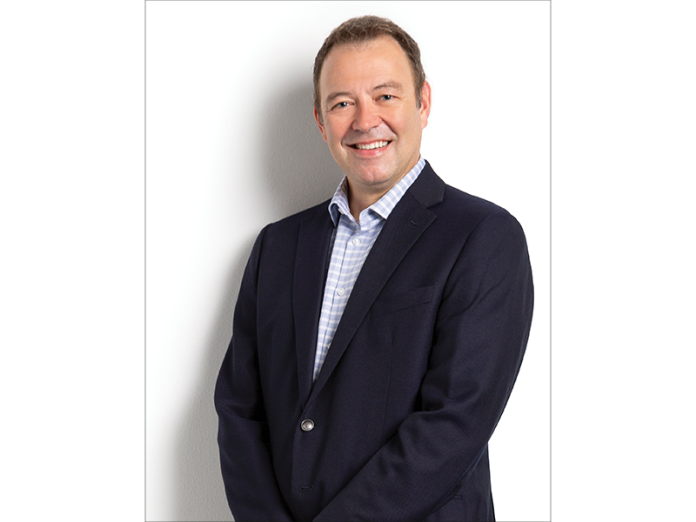
Chad Ruppel may be new to Madison’s Community Development Authority, but after two decades working for the U.S. Department of Housing and Urban Development, he’s very familiar with the issues and opportunities facing the modern affordable housing landscape.
Ruppel began as CDA housing director in June following his late-spring appointment by Mayor Satya-Rhodes Conway. Most recently, he served as director of the Program Support Division in HUD’s office of housing voucher programs, and over the course of his career he’s worked with housing authorities across the U.S.
Much of Ruppel’s prior experience has focused on helping local housing authorities improve policies and processes to fit modern needs, and as he settles into life with the CDA, he’s already identifying ways to stabilize Madison’s housing and thereby improve residents’ quality of life.
What was your experience like working for the U.S. Dept. of Housing and Urban Development?
I most recently was directing a team that did program support for the voucher program — the big “2.4 million households served” … program that HUD offers.
The Emergency Housing Voucher program was a big thing that we worked on. It was sort of a distributed team around the country and a fun opportunity.
Before that, I held a lot of different roles as a program manager and a policy adviser. I was the federal receiver for the Gary (Indiana) Housing Authority. When a housing authority really runs into problems, the federal government will sometimes step in and serve as the manager of that housing authority.
I’ve worked with a lot of other housing authorities around the country (that) were troubled, they needed help with managing their programs, or I worked a lot on public housing repositioning.
The big problem with the public housing program, or the issue that a lot of communities have, is the administrative burden is huge. It’s very hard to do modern rehabilitation and project management at a lot of these sites just because of the way the program was designed.
Through this repositioning, housing authorities are able to take their public housing inventory and transition it to a Section 8 model. It’s run as more modern affordable housing — still providing the same level of subsidy to the residents and the community, still all the same amenities and resident involvement that people expect — but just allowing housing authorities to get better financing in order to sustain the property and put it on better footing going forward.
That’s … something I’m very excited to work with here in Madison.
In your time so far with the CDA, what needs are you seeing?
One of the things that I’m most eager to work on here is helping to continue a trend of innovation and expansion. The biggest problem communities like Madison face is that a lot of the programs that provide deeply affordable housing were developed in the ’70s and ’80s, where the subsidy is largely set.
The formulas really help those communities that benefited from them at the very onset, and Madison, as one of the fastest-growing communities in the country, doesn’t.
We on a per-capita basis get less in terms of the subsidy that a typical HUD program would provide.
Madison has already gone on a route to address that by playing a larger role in tax credit development and just general affordable housing development outside of the typical HUD programs.
It’s exciting to me to be a part of that because I feel like it’s the only way. Under this administration or any administration, it’s going to be hard to get a major expansion of the deeply affordable housing without us being creative and looking for opportunities ourselves.
The only way we can address the major affordable housing need that we have, and the general housing need, is this all-hands approach. Make it easier for the private sector to get involved, and lead the way where we can … to address this massive shortfall.
At the same time, we have an existing stock, an existing staff. A lot of attention still has to be paid to making sure that works well.
There are properties all around the community that residents rely on, that community members expect to be maintained and operated effectively and staff at those sites that need … a chance to grow, an opportunity to be heard and respected for the role that they play.
I think it’s very easy for myself, or for anybody to be so focused on the future and the next thing that we lose sight of the day-to-day operations and the importance of creating an environment where people can grow.
Also, a big part of our affordable housing “menu of options” is our voucher program. There’s almost 2,000 households around the city who get a voucher, and I think a big part of how this program works is having … success with private landlords that would then accept that voucher.
So one of the things that I really hope to do… is work a lot with private landlords to make sure that the city is being a good customer service partner, and making it so they want to accept those vouchers.
What significance does this work carry for you personally?
The mission itself is very fulfilling. Housing is so critical to everything we do. You can’t be successful in school, students aren’t successful without stable housing. There’s all sorts of academic research that points to the achievement of students that have stable and affordable housing, the health outcomes of families and individuals that have stable housing.
Housing is at the root of everything we try to do here in the city. It was a driver for me when I was at HUD, at a national level, and I think it’s even more of a driver here at the local level. I have kids in these same schools, and they have friends that are in a very transitional environment because they don’t have safe and reliable housing.
Being able to provide that at a local level is so rewarding because you can see how it will help the community … particularly those families and children involved.
The Triangle Neighborhood is going to be a huge investment for the community, and again, an area where there is so much opportunity. Being able to secure affordable housing in an area where there is so much growth is so rewarding, and I think it will help a lot of people.
I feel like so often there’s a group of folks, the lower income people here in the city, that are left out, and by working here, working with CDA to make this housing available and expand it, we’re trying to make sure that all of the resources of the Madison area are available to all the residents of Madison.