

With 10 years in the books, Madison’s One City Schools has a lot to celebrate, but it hasn’t all been child’s play, according to founder and CEO Kaleem Caire.
One City hasn’t been immune to the challenges that have plagued the educational environment over the last several years — from staff shortages to budgetary constraints and external factors like a high cost of living and lingering effects of the COVID-19 pandemic. However, it has shown resiliency, continuously evolving to grow its impact among students, staff, and the community.
In founding One City in 2014, Caire says his aim was to create “models of excellence for what schools could look like and outcomes could look like, particularly for students of color in Dane County” and across Wisconsin. He wanted to develop a model both innovative in its educational approach and potentially emulatable.
“Rather than having One City add new buildings all over the state of Wisconsin, we’d prefer to have our model spread by other schools taking on some of the elements of what we do … not sit here and compete with everybody,” says Caire.
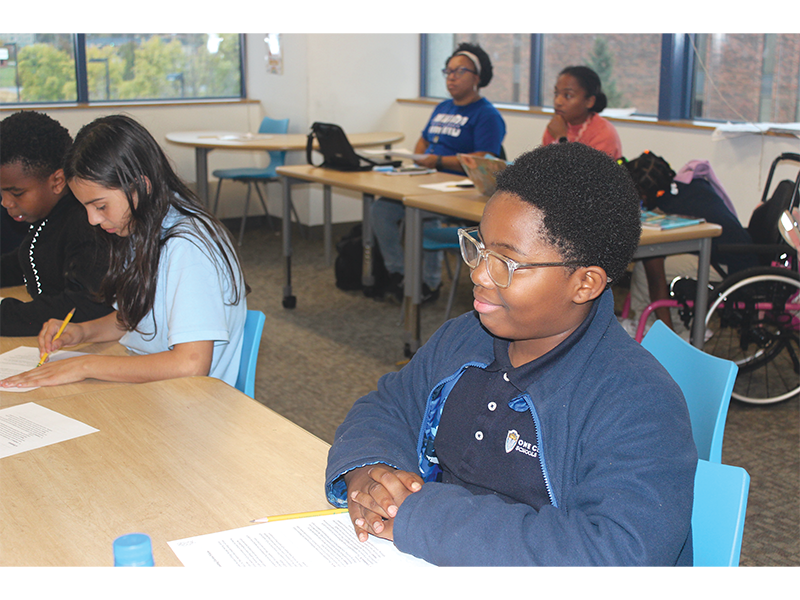
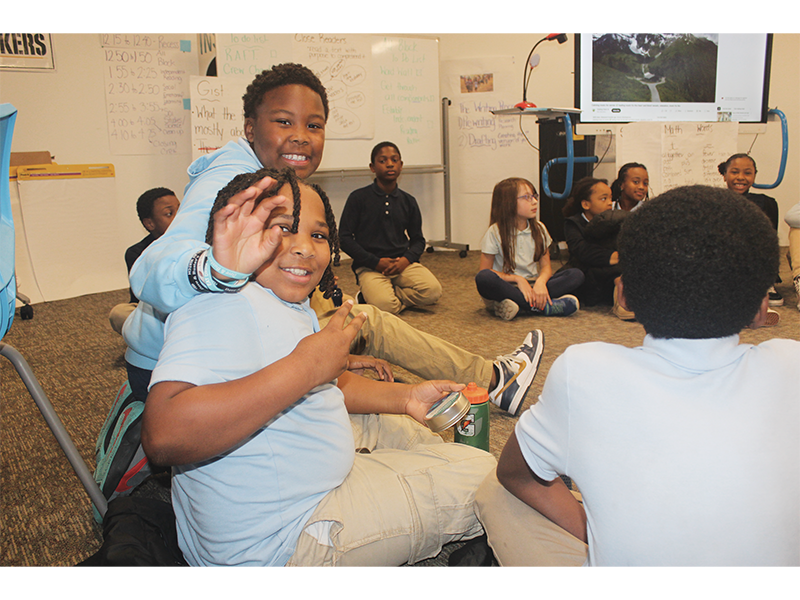
One City takes a ground-up approach to education and focuses on problem-solving through play-based and project-based learning. It operates three schools — One City Preschool, a tuition-based learning center, and One City Elementary School and One City Preparatory Academy, both tuition-free, independent public charter schools. The elementary school serves students from 4K to sixth grade, while the secondary school is for seventh and eighth graders.
Caire discusses the facets of One City’s programming that help cultivate a culture of learning and avoid the pitfalls that can hamper student success. “Children are very curious, they’re very creative,” he says, “but as they get older, the world starts to define for them how they’re supposed to show up every day. So sometimes, in doing that, we start to root out the creativity in a child. … It teaches kids not to use their gifts.
“We have to really start rooting them in the foundations of learning how to read, write, and compute while at the same time really teaching them our habits of character.”
Learning that prioritizes student engagement, retains real-world relevance, and empowers students to address contemporary issues is a key factor in bolstering achievement, Caire says.
“We have a really strong belief that schools need to better prepare children to be big problem-solvers in the future. We’re leaving our kids a lot of problems to solve, and that’s not how we teach them, so our children are feeling more overwhelmed by the things that they see, rather than seeing that these are actually problems that we can tackle.”
So how has One City’s unique model played out over the past decade?
“This past year was the first year we were able to really implement our programming fully,” says Caire. “It’s also the first year we started the year fully funded because [the] Pleasant Rowland [Foundation] gave us $3.5 million.”
He acknowledges that funding has been a consistent challenge — even more so as a public charter school. One City receives only $11,729 in state funding per student, less than half of the per-student funding that the Madison Metropolitan School District (MMSD) gets from public sources. Both MMSD and One City receive some federal aid as well, but Caire says that with One City spending $26,000 per student, it must raise an additional $13,000 for each child enrolled every school year.
“The state needs to continue to put more money into education,” Caire asserts. “The funding model is totally not in the favor of public charter schools, which is why there are only 35 independent charter schools in the state. You’ve got to have the ability to really raise some money.
“It has not been doable,” he emphasizes, “but we’ve been doing it.”
He recalls another one of One City’s most recent obstacles — when the decision was made to close its eighth and ninth grade in 2022–23 amid post-pandemic student struggles.
“We developed this great Early College and Career program, but the kids that showed up were so far behind academically that they couldn’t do the work. So, we started to get a lot of behaviors with it. Teachers started quitting … so it really challenged our program.”
But it wasn’t time to throw in the towel.
“We went to [the Pleasant Rowland Foundation] and said, ‘a lot of people aren’t going to want to fund this right now because they think somehow we’re failing … but if we can just get one full year just to work with the kids we have, we could really help set that foundation for our kids to succeed.’
“We decided not to grow at all, just to stay small,” he says.
This strategy of consolidating operations has helped the organization maintain stability and focus, and that measured growth has yielded steady educational results.
“Last year, we had the greatest increase in student achievement in Dane County,” says Caire. “We saw our kids go from 1.8% proficient to 21% proficient for Black students, and for Latino students it was 16% to 42%.”
Enrollment is up too, with 426 students now enrolled in One City’s charter schools and 64 in its preschool, and staff retention looks stronger than ever. One City employs 113 staff members, 53% of whom are individuals of color. That’s the highest percentage of staff of color of any medium- or large-sized business in Dane County, according to Caire.
“We now are the largest employer ever started by an African American in Dane County — 113 staff, a $12 million budget, a $9 million payroll. It’s an achievement, but it’s also been challenging to get there.”
He says delivering salaries that compete locally, providing subsidized child care, offering professional development opportunities, and maintaining healthy student-teacher ratios — with co-teaching practices up through second grade and assistant teachers for higher grade levels — are some of the ways One City supports its staff members.
The school also offers programming through partner organizations that benefits staff and families, including a taxi program for those facing transportation barriers, a homeownership program that provides an $18,000 down payment among other supports, and its Families and Schools Together (FAST) program, which helps build a sense of community and has seen nearly 20 cohorts and 200 families so far.
Caire says One City’s parent council has also been a critical component to engage families. “I tell people it’s interesting to have your customer be on your board,” he jokes. “They have a huge voice in what happens at our school. To be a school that serves the largest percentage of students of color and the largest percentage of students of poverty in Dane County, and to also at the same time have the greatest level of parental involvement, is huge.”
As One City advances in the 2024–25 school year with strong enrollment, staffing numbers, and family support, Caire is looking forward to what’s next.
Bringing its high school grades back is top of the agenda, he says. One City is chartered through 12th grade but it won’t add all four years at once. Caire says one grade will be added each year to ensure students are fully prepared from a curricular and career-readiness standpoint.
“We’re just going to grow up with these kids,” he says.
Also on the docket are plans to expand One City’s cost-efficient preschool model, particularly in light of recent statewide closures, to other community facilities; to initiate additional local partnerships that serve students, staff, and families; and to establish One City as a source of training for other schools and educational professionals.
In the meantime, Caire says evaluating how and where to continue to scale One City’s local operations — especially with a housing crisis and resultant population turnover — remains a pressing challenge. But the organization is no stranger to adversity and, over the past decade, has proven it can practice the problem-solving skills it teaches.

