

For more than 50 years, retired businessmen and women of the Service Corps of Retired Executives have provided free business counseling to entrepreneurs hoping to get their new ventures off to a strong start and established businessmen and women who are pondering their next move. Now, local SCORE Madison counselors increasingly provide entrepreneur education to nonprofit organizations and the fledgling business entities that rely on them.
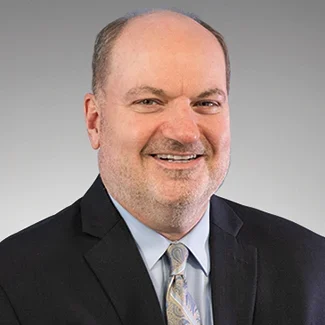
One of the nonprofit beneficiaries of this business counseling is the 6,700-square-foot Food Enterprise and Economic Development, or FEED Kitchens, a food business incubator of the Northside Planning Council of Madison. Without the business acumen of local SCORE counselor Dennis Leong, it would be more difficult for many of the 80-plus businesses that use this facility.
Leong, a member of SCORE’s Nonprofit Committee, heard of FEED Kitchens through a contact at the Small Business Administration, which provides funding to SCORE, and learned that tenants needed business coaching. “It’s not typical that we serve nonprofits,” he notes. “This is something new, even though a number of our counselors are from the nonprofit sector.”
Under the Northside Planning Council’s new MarketReady initiative, which is designed to diversify the vendors that operate in the Madison Public Market when it launches in 2019, Leong has been working with 30 different food vendors, about one-third of which are startups, to help them with fundamentals such as crafting business plans, exploring financing, and reading profit-and-loss statements.
As is often the case, these food entrepreneurs have the expertise to make a product or offer a service, but they need help on the business side. “Most of them are food-oriented businesses because it’s an incubator kitchen,” explains Leong, a former restaurateur. “This is a licensed commercial kitchen. A lot of people come there to prepare food because they would not need a license on their own, so they rent space there.”
FEED-ing business
At its Sherman Avenue location, FEED Kitchens tries to make life easier for food entrepreneurs by offering five commercial kitchens and equipment for baking, produce preparation and processing, deli prep, and meat processing. The facility, which generates its revenue from hourly and monthly rental fees, government grants, and private donations, is available for food businesses and individuals seeking to sell food because not all of them have a legal or affordable place to prepare their food. In addition, it has a training kitchen so that nonprofits and cooking instructors can teach food service and preparation skills.
Adam Haen, business development director of FEED Kitchens, views SCORE as a valued partner in the organization’s work to develop local food-based businesses because he doesn’t have the time to offer a full complement of business counseling to every vendor that uses the kitchens. He notes that SCORE’s free business counseling services helps the facility save staff positions and expands what it can offer. “Having a resource like SCORE is phenomenal, and you don’t have to reinvent the wheel on everything,” Haen states. “Especially a group like SCORE, where you have people who have been very successful in their professional lives and now are retiring and stepping back from it, but still want to be part of the community and share what they’ve learned.
“You have people with a lifetime of knowledge who will teach a class and even more importantly, do one-on-one counseling with startup businesses or businesses that are looking to grow and expand.”
As a result, Haen adds, FEED Kitchens is actually doing what it set out to do — incubate businesses.
Producers of baked goods, salsa, and barbecue sauce, and food cart operators are among those who can be found prepping products at FEED Kitchens. One local entrepreneur who relies on the facility is Josey Chu, proprietor of Madame Chu, a local producer of special Southeast Asian delicacies. A native of Singapore, Chu contends that authentic Southeast Asian cuisine, her definition of comfort food, is under-represented in the western culinary world.
Chu, whose products are handmade in small batches at the FEED Kitchen, has brought her grandmother’s recipes to life with three condiment products — Sambal Nyonya, Ginger Garlic, and Satay Peanut Nyonya — all condiments “you add onto your finished product,” she explains. At the moment, all three are sold at the Willy Street Co-op, but she’s also considering expansion into other grocery stores and acknowledges that she will need the expertise of SCORE to help expand her business.
Thus far, Chu says she has depended on Leong’s counsel to grow her business “in the right way,” with a focus on the cost aspects. For example, she’s learned to be more diligent in not co-mingling personal and business funds to purchase raw ingredients, which she had a tendency to do, and that labor is often a better investment than depreciating equipment when it comes to growing production capability and business value. The counseling with Leong, someone who has “been there,” is boosting her confidence.
“It’s about how to grow wisely,” she states, “and how to grow by investing rather than trying to grow with capital depreciation. That was quite an eye-opener because I always thought the best way to do things is buy a machine and speed it up. For a small business, that might not be an ideal approach.
“Growing doesn’t mean putting the money into a bank,” adds Chu, who now has four employees if you include as-needed help from her husband. “It’s hiring another person who will eventually take over the process of producing the product with other hires, while I’m at the forefront of the marketing and business development.”
(Continued)
Profiting nonprofits
Nationally, SCORE’s 11,000 counselors come from every business sector, including some who have served Fortune 500 companies. SCORE Madison, one of nearly 400 chapters of the national SCORE organization, provides expertise in areas such as accounting, finance, and marketing.
Even though a number of counselors come from the nonprofit sector, SCORE’s free and confidential business counseling is something relatively new for nonprofits. The organization’s nonprofit committee has been working with the United Way of Dane County to develop strategies for expanding SCORE counseling and mentoring services through workshops, seminars, mentoring, and collaboration with other nonprofit service providers.
In Wisconsin and Greater Madison, there are many nonprofits to serve, as roughly 8,000 reporting public charities were identified in Wisconsin in 2011, according to the 2015 Nonprofit Wisconsin Brief Report. After Milwaukee County’s 1,595 nonprofits, Dane County had the second highest total with 1,146 and some of them already are among SCORE’s local nonprofit clients, including the Madison Black Chamber of Commerce, the Madison Alliance for Black Economic Empowerment, the Latino Chamber of Commerce of Dane County, and Second Harvest Food Bank.
The statewide economic impact of nonprofits is considerable. As a percentage of private employment, the Bureau of Labor Statistics says nonprofits employ 12.5% of the Wisconsin workforce and 10% nationally, and the Nonprofit Wisconsin Brief Report estimates that Wisconsin charities raise $38.6 billion in annual revenue. Given the economic benefits they provide, SCORE’s recent focus on nonprofits is based on the parallels between these organizations and private-sector businesses.
“Even though they are nonprofits, they have to have a business side to generate money for the organization,” Leong notes.
For 30 years, Leong was employed by the State of Wisconsin, first as a business consultant with the Department of Commerce and later in the economic development section of the Department of Transportation. Prior to that, he operated a French restaurant called Gourmandise, which was named for a French cheese, in what is now University Square, and his wife, Vada, ran the Manna Bakery. Leong also managed the old Ivy Inn near UW Hospital.
In serving nonprofits, Leong says SCORE Madison provides the same kinds of counseling it would to a private business, starting with an examination of business feasibility. He also notes that nonprofit counseling is catching on. “We’re really growing this,” he states. “They hear that we offer services and I get a lot of phone calls.”
Click here to sign up for the free IB ezine — your twice-weekly resource for local business news, analysis, voices, and the names you need to know. If you are not already a subscriber to In Business magazine, be sure to sign up for our monthly print edition here.

