
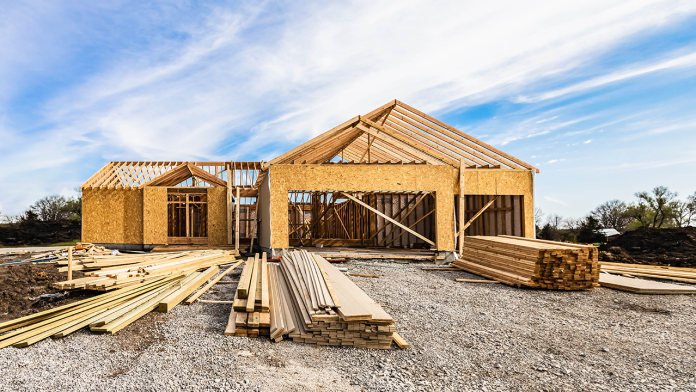

In greater Madison, the median cost of newly constructed homes is nearly $85,000 more than the median cost of existing homes, according to a new report. So what are the implications for a community trying to align housing development with projected population growth?
The report, released in June by Clever Real Estate, a platform that connects homebuyers and sellers with real estate agents, said new homes in Madison cost $484,900 compared to $400,000 for existing homes, a difference of $84,900.
In terms of the size of the gap between new and old, Madison ranked 41st out of 100 metros on the list. The biggest difference between new construction and existing homes is in Miami, ($600,000), and surprisingly, Milwaukee and Cleveland also rank in the top 5 among larger and more expensive metros such as New York and Los Angeles.
Clara Haverstic, a data analyst with Clever Real Estate, and David Stark, president of Stark Company Realtors in Madison, had differing opinions on whether the gap is a bad thing for a housing market that’s trying to play catch up with population growth.
“It serves as an indicator that the new home market is not catering to the demographic that most needs it,” said Haverstic. “Madison is one of those growing areas. It’s a pretty popular city, and the fact that Epic is centered there brings in a lot of people, a lot of young, highly educated workers.
“Affordable housing can mean a lot of different things, and when you see these super high price gaps combined with that growth, it does show that perhaps a city is not meeting the needs of those lower income buyers, which is part of the problem,” she said. “People are getting priced out of the market.”
Stark, who quibbled with the actual size of the local gap — he said it’s probably closer to $45,000, based on his reading of Multiple Listing Service data — said a gap is actually a positive sign.
“There is a gap, there’s no question. There always is and there should be a gap between new construction and all other housing,” he said.
“The extent to which that gap is larger, that means that your used housing stock is more affordable.”
The ultimate solution is to build more housing of all types, he said, even if building affordable housing to the scale necessary is challenging for communities.
“If you build more new housing, that’s going to take up buyers that can afford that and won’t then be competing for some of the housing further down the chain that other used housing buyers, affordable housing buyers, might be looking for,” Stark said.
“So, I would say a gap is not necessarily a bad thing,” he said, “and I would focus on the fact that if the used housing stock is more affordable, that’s a good thing.”

