
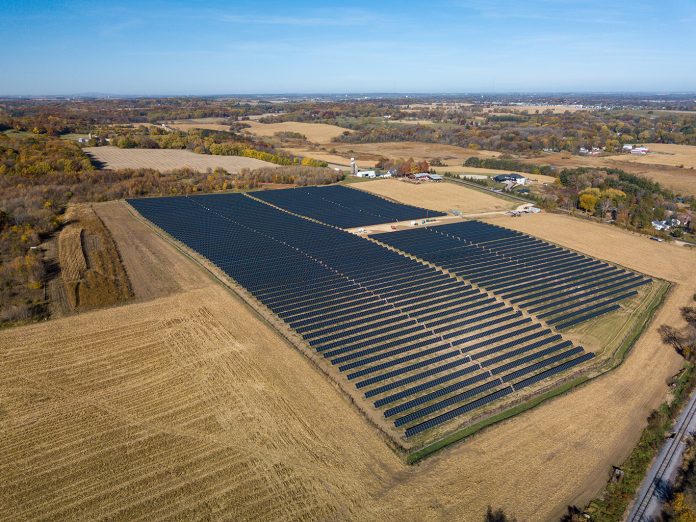

Local utility Madison Gas and Electric says it is on track to meet its plan for net-zero carbon by 2050, thanks to a series of incremental steps including adding new wind, solar and battery storage, and expansions to programs such as Shared Solar.
The company is sticking to its plans despite President Donald Trump’s call to reenergize domestic coal production and prioritize the construction of coal-fired power plants.
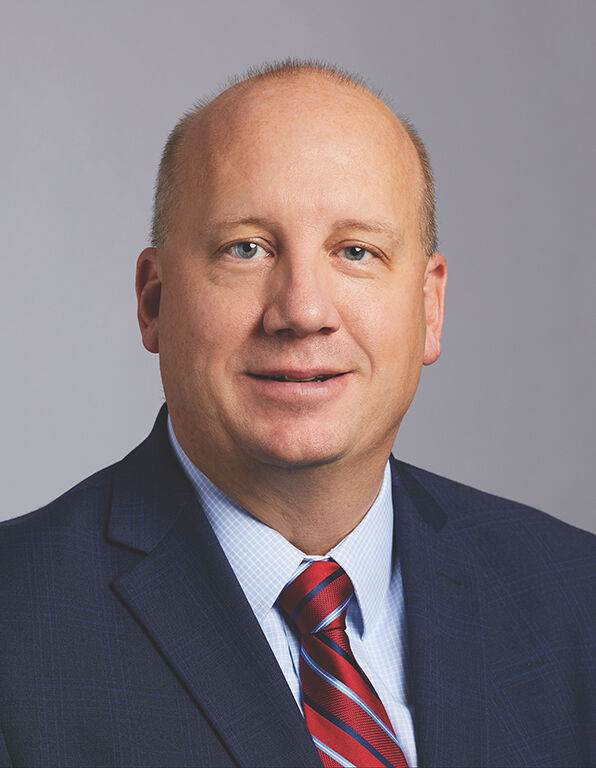
Jeff Keebler, chairman, president and CEO of the electric and gas utility, said not only would Trump’s recent edicts on coal have no effect on MGE’s plans to transition away from coal-fired generation, but its drive to net-zero carbon continues.
This commitment includes the planned suspension of coal-fired generation at its Columbia Energy Center, using coal only as a backup at the Elm Road Generating Station until MGE fully transitions it to natural gas. The company also plans an interim 80% reduction in carbon fueled electricity by 2030.
Keebler said MGE already has reduced carbon emissions about 40% from its baseline 2005 level, which is halfway to the goal of 80% by 2030.
“We do have a lot of renewable energy development going on right now, and we’re investing heavily in it,” Keebler said, noting the April regulatory approval of plans to build a 20-megawatt solar array and 40-MW battery storage system at the Sunnyside Solar Energy Center in Fitchburg by 2026. “A lot of these are local renewable projects.”
Keebler outlined several initiatives to help the utility reach the 2030 and 2050 goals, and how its customers can help.
Natural gas rationale
Keebler said there is enough renewable generation with solar, wind and battery storage to achieve the 80% carbon reduction goal, but some future generation will come from natural gas, a fossil fuel, to balance out its renewable generation. This raises the issue MGE customers are curious about: If you’re using natural gas generation, how do you achieve 80% carbon reduction within five years?
The answer, Keebler said, is that gas generation probably will operate differently than it has in the past.
“We would expect energy being sourced by renewable generation, and then to assure that we have enough energy at all times, natural gas is really there as a backstop,” Keebler said. “So, at the times when the wind isn’t blowing and the sun isn’t shining, natural gas will come on and provide the energy there, but it really provides the capacity and the reliability for the (electrical) grid. That hasn’t changed with any of the (Trump) executive orders.”
Renewable gas
One type of natural gas, renewable natural gas, is more sustainable. RNG is pipeline-quality natural gas that is derived from the biogas of decomposing organic materials.
MGE has a pilot program, RNG-1, approved in its last rate case before the Public Service Commission of Wisconsin, that enables customers to purchase renewable gas to offset emissions from their use of natural gas. MGE buys Renewable Thermal Certificates (RTCs) representing RNG and sells them to MGE customers enrolled in the program.
An RNG-2 pilot, proposed in MGE’s current rate case, would enable customers (e.g., farmers with manure digesters and landfill operators who produce renewable gas) to inject it into the utility’s distribution system. The customers can sell the gas and/or the RTCs to MGE or to a third party interested in sourcing RNG locally to offset emissions from their use of natural gas.
The proposals help to reduce emissions from transportation because the RNG serving MGE’s natural gas distribution system would be locally produced.
They also would help MGE advance another sustainable goal — net-zero methane emissions from its natural gas distribution system by 2035.
Sharing more solar
MGE’s existing Shared Solar program allows residential and business electric customers to derive the benefit of renewable solar generation.
This spring, the utility proposed the Commercial Shared Solar option, a new voluntary community solar program designed to meet the growing demand from commercial customers interested in addressing their own carbon reduction.
Under the proposal, participating customers would pay a small upfront amount to receive solar energy from a local solar array for a five-year period at a fixed rate, with options to extend the agreement beyond the initial five years.
Another offshoot, Shared Solar – Strix, was verbally approved during a May PSCW open meeting. The program will offer participants — residential and small business customers — the option to pay a minimal upfront fee to subscribe to receive energy from the Strix array in Fitchburg.
Residential and small business electric customers who participate will receive carbon-free energy for up to 50% of their annual consumption and would lock in their energy rate for the six-year term of the agreement.
Build baby, build
Meanwhile, MGE’s work on wind, solar and battery installations progresses. Its Darien Solar Energy Center (25 megawatts), Strix Solar (6 MW), and Paris Solar-Battery Park (11 MW) came online earlier this year, and the following installations have projected completion timetables between 2026 and 2030 (some still require regulatory approval):
- Wind: Badger Hollow Wind Farm, 11.2 MW (projected completion in 2027), and Whitetail Wind Farm, 6.7 MW (2027);
- Solar: Sunnyside Solar Energy Center, 20 MW (2026); High Noon Solar Energy Center, 30 MW (2027); Ursa Solar, 20 MW (2027); Dawn Harvest Solar, 15 MW (2028); Good Oak Solar, 9.8 MW (2028); Gristmill Solar, 6.7 MW (2028); and Saratoga Solar, 15 MW (2028);
- Battery storage: Darien Solar Energy Center, 7.5 MW (2026); High Noon Solar Energy Center, 16.5 MW (2027); Koshkonong Solar Energy Center, 16.5 MW (2027); Sunnyside Solar Energy Center, 40 MW (2027); and Saratoga Battery, 5 MW (2028); and
- Under construction: Koshkonong Solar Energy Center, 30 MW (2026).
Using this renewable power to promote the use of electric vehicles is a related component of MGE’s plan. Customers with hybrid or fully electric vehicles have chosen to install a Level 2 charger at home as part of MGE’s Charge@Home program, but the utility also is working with the city of Madison to install pole-mounted EV chargers around the city. The addition of five new pole-mounted EV chargers was announced May 13.
With great dispatch
While reaching the 80% carbon-free goal by 2030 is within reach, Keebler acknowledged that MGE probably will need newer technology to make up that last 20% by 2050. Among the possibilities are: nuclear power, whether that’s small modular (nuclear fission) reactors or whether it’s fusion technology; hydrogen technology as a fuel source; and additional enhancements in battery storage technology that will enable energy utilities to utilize batteries over a longer time period.
In the meantime, as its renewable installations come online, Keebler said natural gas helps enable MGE’s clean energy transition because it complements intermittent renewable energy with reliable, dispatchable energy.
“Natural gas plants can be dispatched quickly during times when it is more challenging for wind or solar generation,” Keebler said.
This makes natural gas a reliable and cost-effective option to serve customers as MGE grows its use of renewables and invests in battery storage. Keebler said renewable resources will come first, and natural gas will fill in to meet demand if there isn’t enough wind blowing, or sun shining, or if battery storage resources are insufficient to meet the need at any given time.
“What’s really important is that we have energy sources that provide clean energy, but we also need what we call dispatchable generation, so it’s the ability to move up and down as our load changes,” Keebler said. “Our customers are using different amounts of power throughout the day. We don’t think that coal is necessary for that.”

