
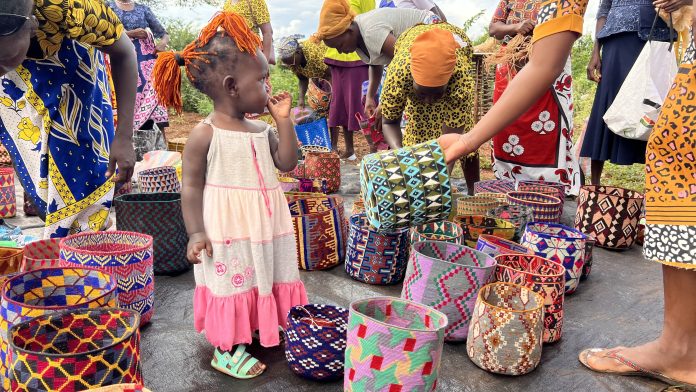
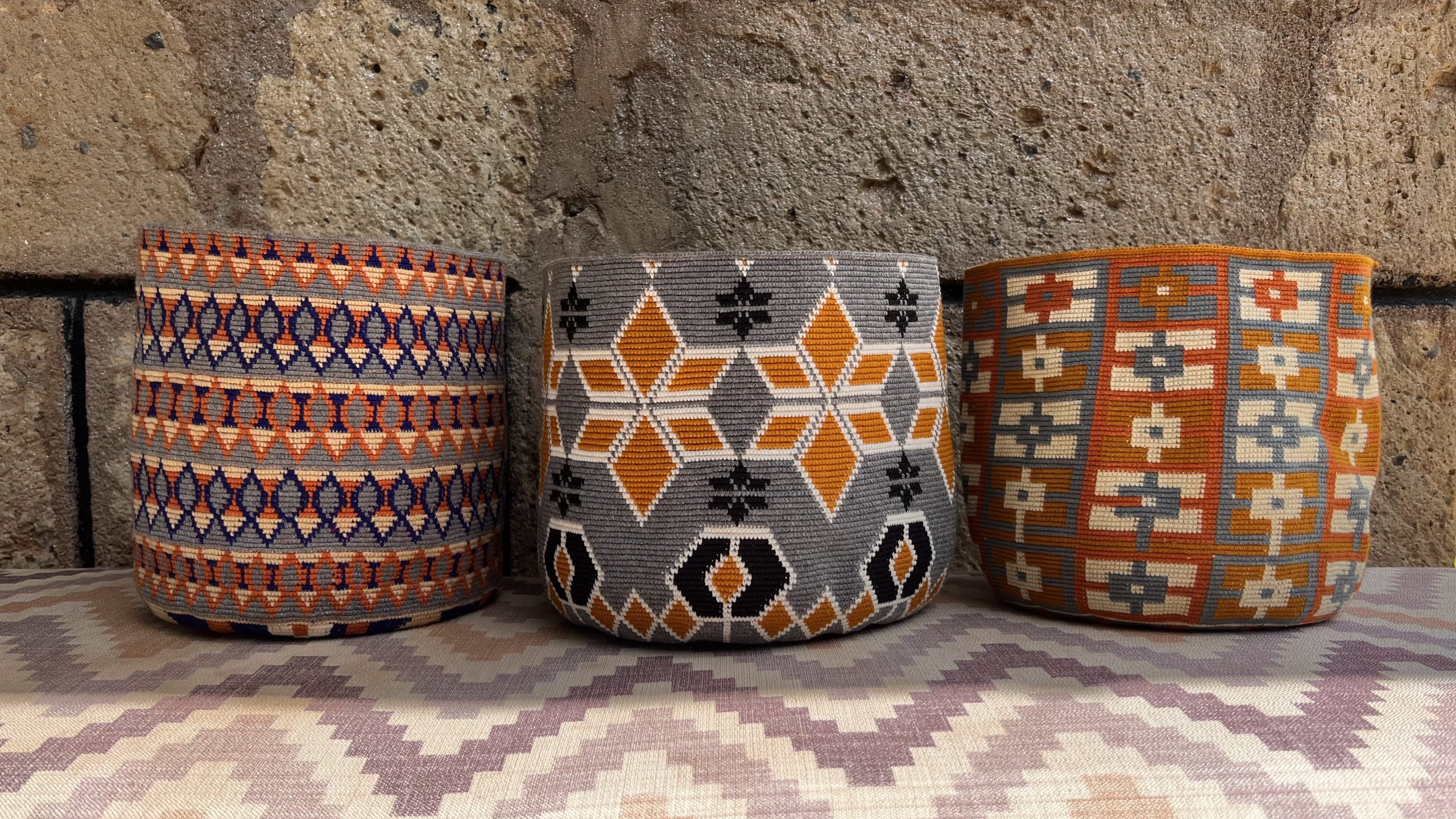
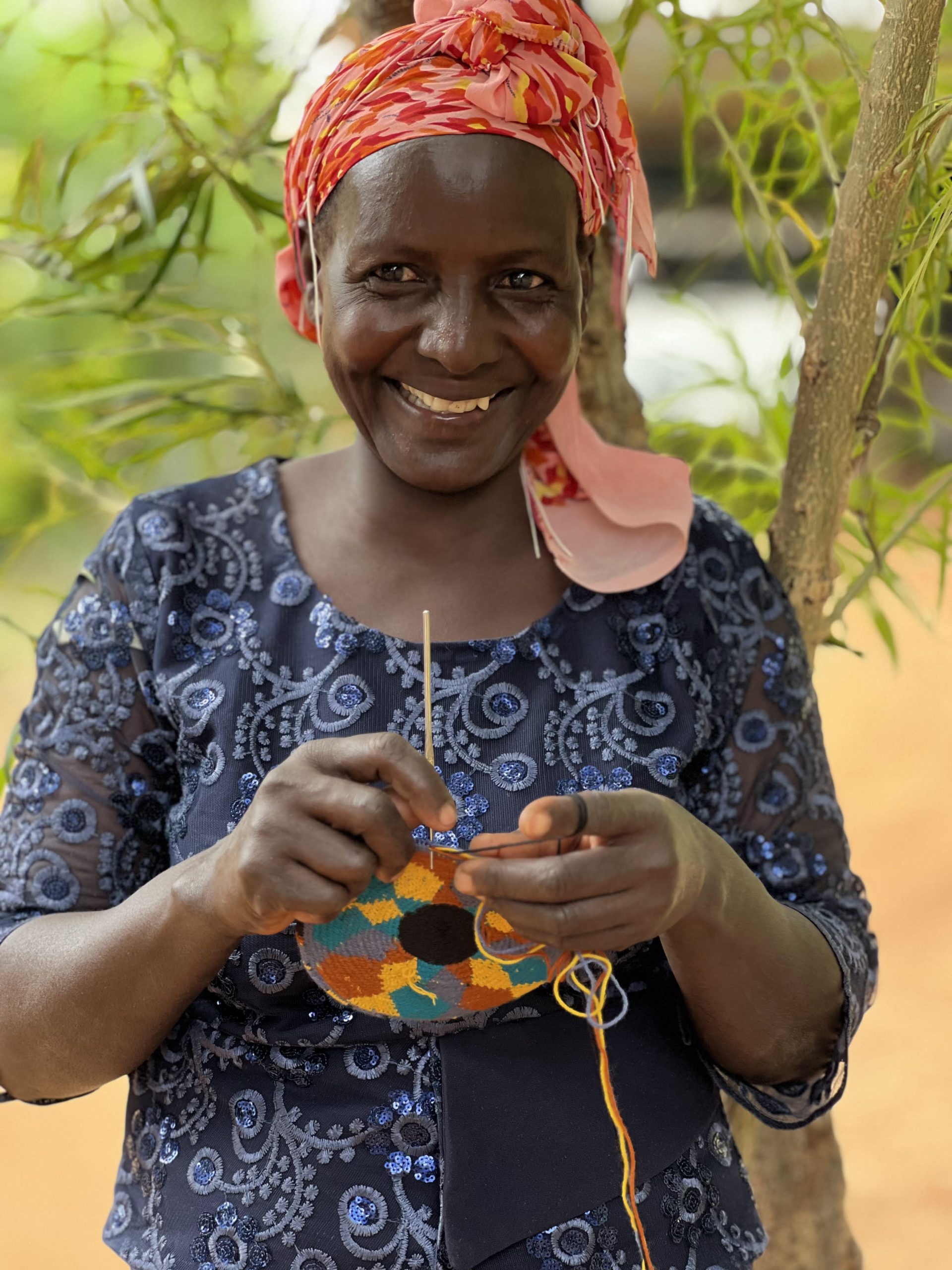
Woven into the patterns of Merry-Go-Strong’s crocheted baskets are multiple story threads.
The local artistic nonprofit founded by Lesley Sager, a retired teaching faculty member at the University of Wisconsin–Madison’s School of Human Ecology, offers colorful works of art, but it also supports the education and well-being of girls in Kenya and bolsters the financial stability of the female artists.
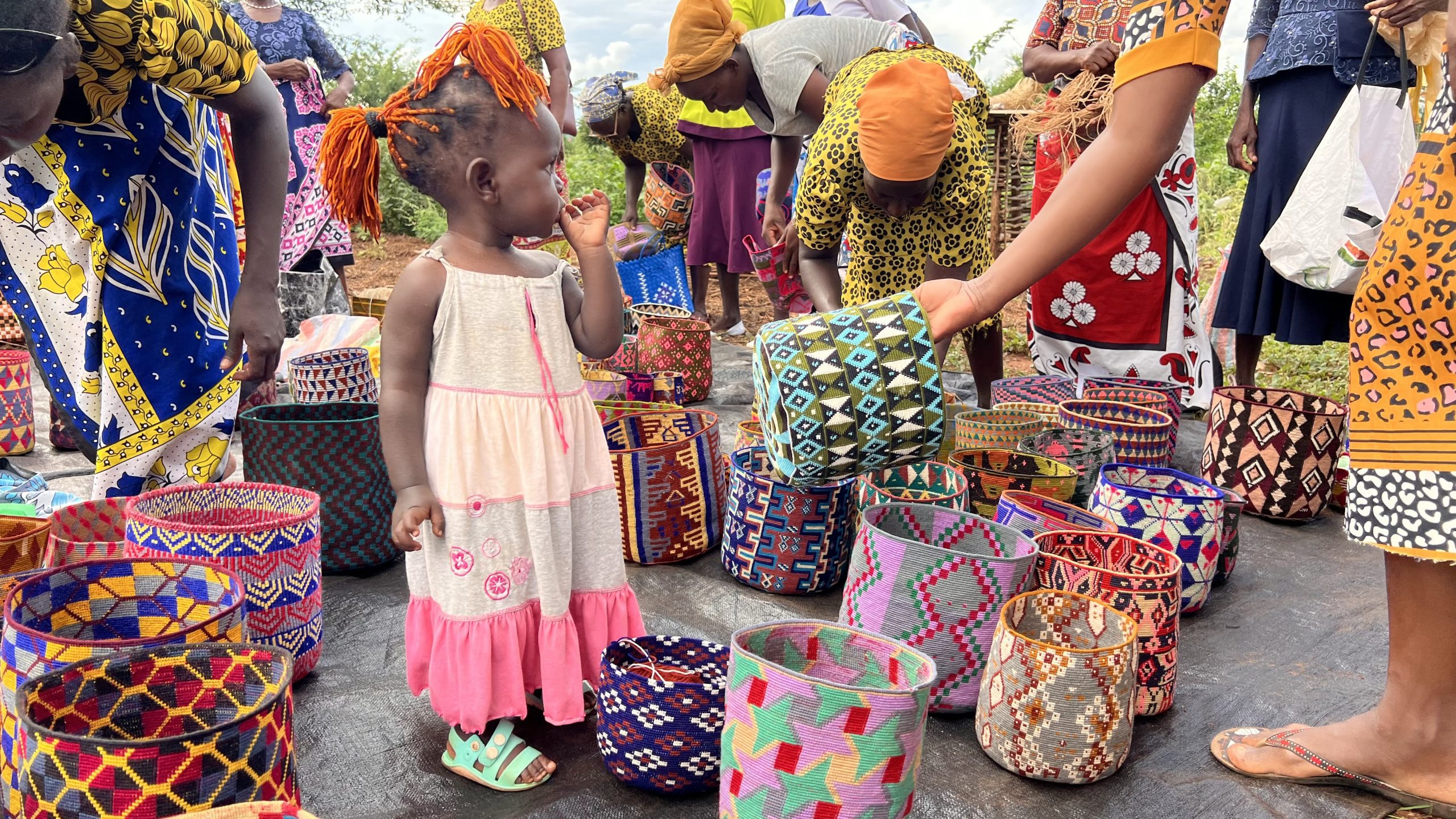
Sager works with women in Kenya who create the vibrant baskets, which are patterned with geometric designs or themes inspired by nature and daily living. The baskets blend a traditional craft with modern colors and design, and are functional as well as stunning objects of art.
Merry-Go-Strong is one of the 40 or so vendors selling their wares at the Madison Fair Trade Holiday Festival on Saturday, Dec. 7, at the Monona Terrace, 1 John Nolen Drive in Madison. The sale runs from 8 a.m. to 3 p.m.
Participating vendors at the fair trade event are vetted to ensure their products are produced in an ethical and humane manner.
Merry-Go-Strong’s story is perhaps as complex as one of its baskets, but is also just as extraordinary.
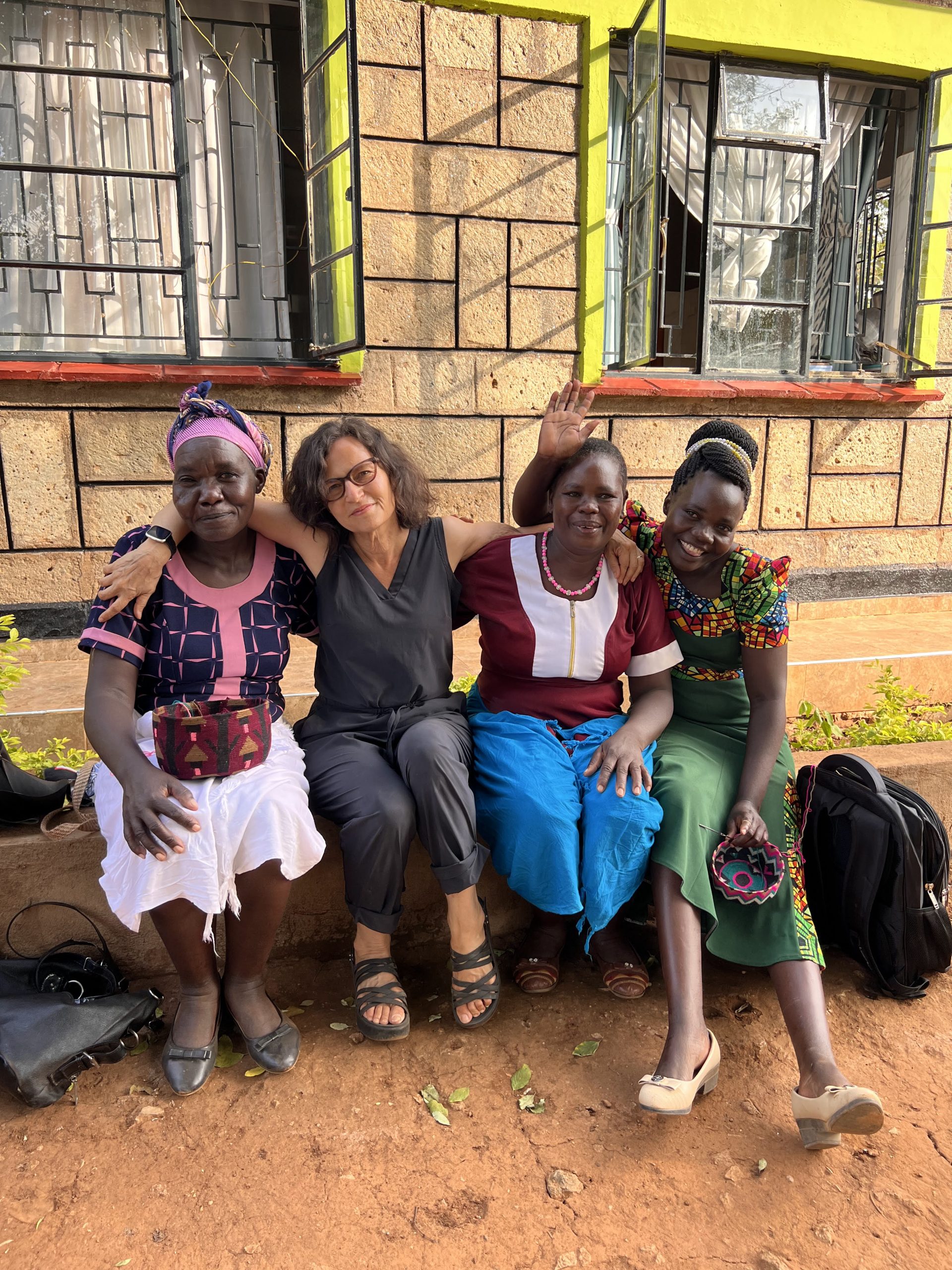
In 2012, Sager first visited Kenya with a friend and over time established connections with people in the community there, like Aniceta Kiriga, director and founder of the Tharaka Women Welfare Programme in Gatunga, Tharaka-Nithi County.The town is about a four-hour drive from Nairobi.
Basketmaking was a traditional craft in the region, and offered a way for women to bring in income to help their daughters pay for schooling.
“Mothers will always take care of their daughters,” Sager said, “and that’s where it all began.”
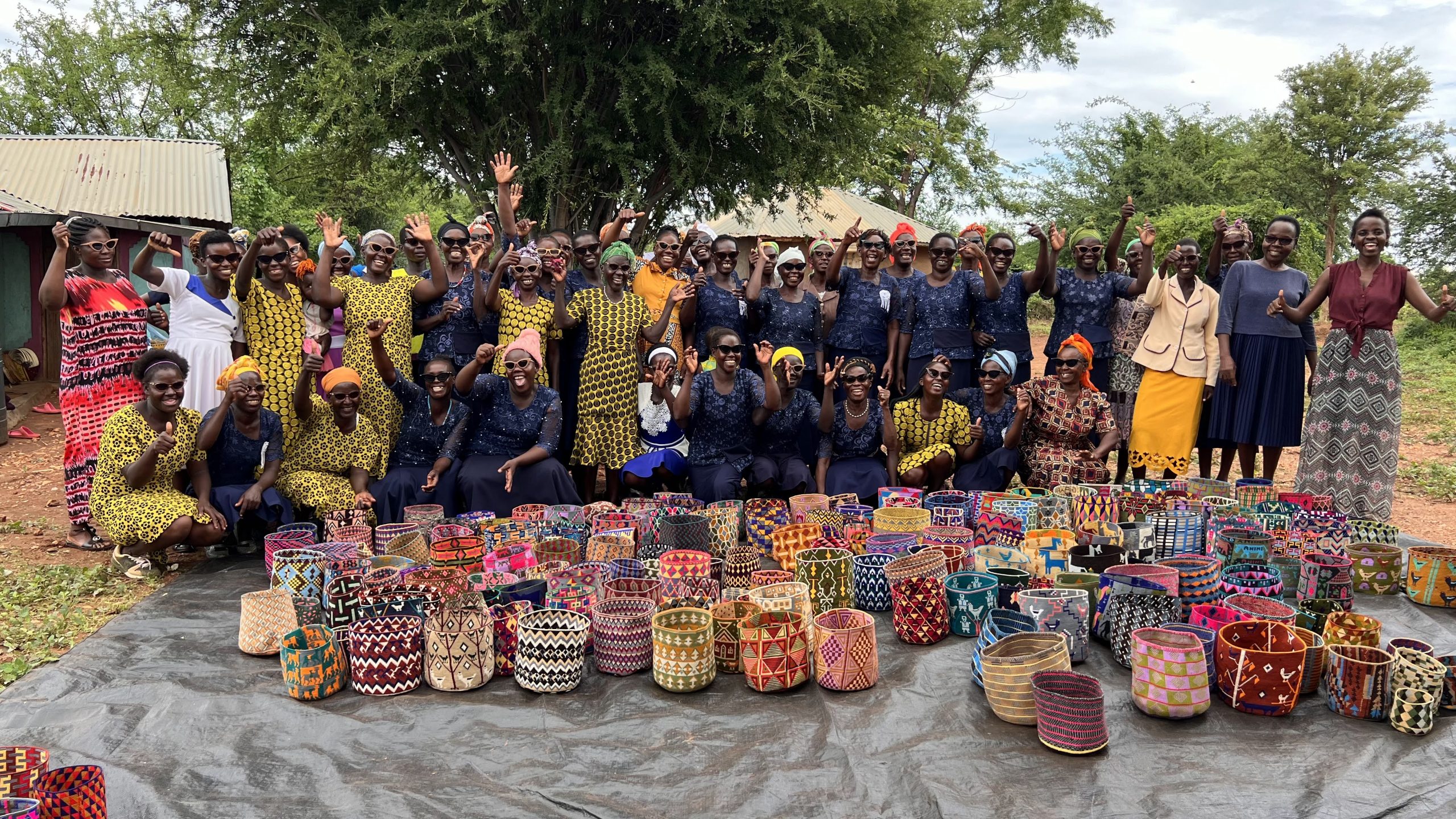
The basket operation started in 2015. Much of it is done by women in adult literacy groups.
Kiriga works with community group leaders and adult literacy teachers in the villages that surround Gatunga. She promotes basketmaking as a way for women in the community to grow their income and support their families.
In an email interview, Kiriga said there are high levels of poverty in the community, where the main source of income is farming and livestock-keeping.
“Basketmaking has empowered the women in that they can put food on the table, pay school fees for their children, buy clothes, and… build houses, among other things,” Kiriga said. “This has also humbled the men leading to less gender-based violence cases.
“Girls from basketmaking families can enjoy staying in school because their mums can afford some of the things that make them absent or drop from school.”
Another key component of Kiriga’s work is the Alternative Rite of Passage, a program she founded that diverts girls from the pain and health risks of Female Genital Mutilation (FGM). Instead, girls participate in a retreat where they learn life skills like goal setting and decision-making, reproductive health, and personal and environmental hygiene, among others.
“The adult literacy groups have grown because of this project and the number of girls who are going through the Alternative Rite of Passage has also grown,” Sager said. Addressing FGM “is a big goal, that and improving the livelihood of women. It’s really important that the entire family is safe and taken care of.”
In terms of the baskets, the quality has grown to be “exceptional” through the years, Sager said. Sager provides the yarn and crochet needles for the women. She buys the yarn in Nairobi.
“I encourage (the women) to express their own individuality and come up with designs that represent who they are,” Sager said.
She buys the baskets directly from the Kenyan artists at a “mutually agreed upon baseline for different sizes of baskets. Then [the price] goes up based on the quality.”
Sager then sells the baskets in the United States at art shows like the fair trade fest, home sales, online, and in a few select shops. The number of basketmakers has grown from 30 makers to over 200.
When Merry-Go-Strong sells a basket, it is sold with a photo of the woman who created it. Baskets cost between $25 and $250.
Accompanying the growth of the organization have been multiple benefits to the community, Kiriga said.
“By working with Merry-Go-Strong, women have benefitted in learning the skills to make baskets, they have earned income through selling them and they have also benefited from donations of other livelihood products like solar lamps, shoes, water tanks, and eye glasses to help women with poor vision to increase their power,” Kiriga said.

