
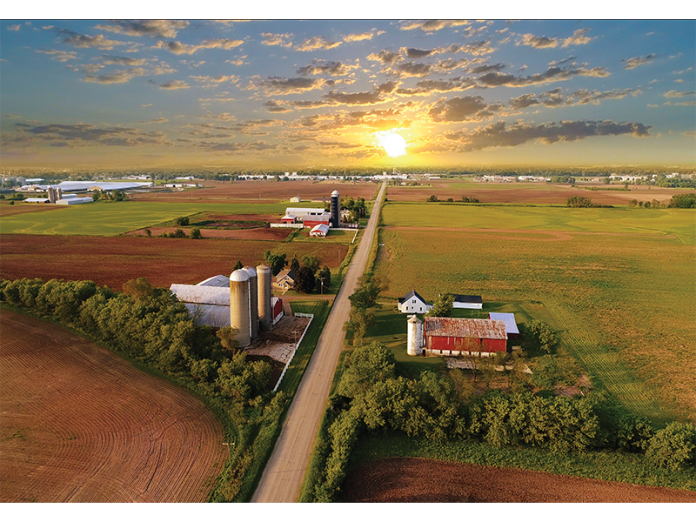

The dairy state is fueled by a strong agricultural workforce, and as Wisconsinites sit down at the breakfast table each morning, there is a good chance the milk in their cereal and cream in their coffee was produced by immigrant labor.
Immigrants have shaped the workforce not just of Wisconsin but of industries nationwide since the turn of the 20th century, or earlier. One of the greatest shifts has been a demographic one: Latino workers now represent a significant portion of Wisconsin’s agricultural labor force.
With the threat of mass deportations of undocumented immigrants by President Donald Trump and his administration, Latino workers — both legal citizens and those who are undocumented — may become targets due to their race or ethnicity. While a great deal of uncertainty persists about how, or when, these deportation policies may be implemented, experts say such actions would have economic and personal consequences that would be felt in the agriculture field and all of Wisconsin.
The political situation has created a fraught climate for those in the industry. In Business Madison contacted a dozen people — including farmers or those who work directly in agriculture — and none of them responded for this story.
According to the state Department of Agriculture, Trade and Consumer Protection, the agriculture industry provides 353,900 jobs and contributes $116.3 billion to the state’s economy.
An estimated 65,000 unauthorized immigrants work in Wisconsin, making up roughly 1.9% of the statewide workforce, a Pew Charitable Trust study from July 2022 found. Agriculture employs the highest percentage of these individuals.
“There’s no doubt that immigrant labor has enhanced and influenced Wisconsin agriculture for decades,” said Pam Jahnke, farm director of the Mid-West Farm Report Network, an agriculture-focused radio program, who grew up on her family’s 200-acre Wisconsin dairy farm.
“In my opinion, Wisconsin agriculture would not have been able to advance and expand as it has without that source of reliable labor. … Populations of rural communities have thinned, so there’s less available labor overall. Farm kids want to pursue their own interests, and it doesn’t always include the farm.”
According to the Department of Workforce Development, most of Wisconsin’s unauthorized immigrants — 52% — come from Mexico, with others coming from El Salvador, India, Guatemala, and Honduras. An April 2023 survey by the University of Wisconsin-Madison’s School for Workers found that over 10,000 of these undocumented immigrant workers perform approximately 70% of the labor on Wisconsin dairy farms.
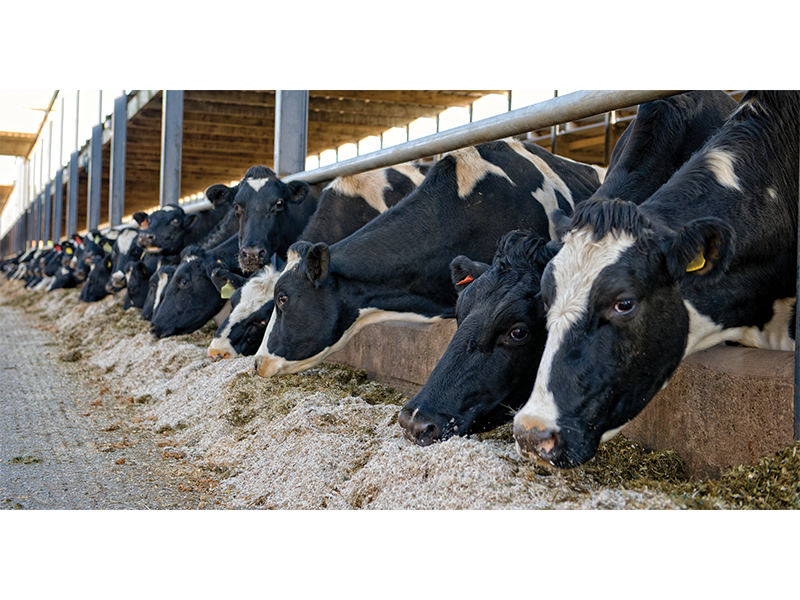
“[The] dairy industry uses lots of labor for both milking and other activities on-farm, as well as in processing,” said Paul Mitchell, a University of Wisconsin-Madison professor of agriculture and applied economics. “These tend to not be temporary, they need them year round.
“We have several other more seasonal ag industries that are important users of temporary labor, such as the potato and vegetable industry and cranberry, which use labor both on-farm and in… handling and processing. Not all of these industries or companies or farms use immigrant labor, but some certainly do.”
Long history of immigrant contributions
Nydia Martinez, director of the Latino Academy of Workforce Development in Madison, calls immigrant workers the “backbone” of statewide agriculture.
“Their dedication and expertise help sustain Wisconsin’s status as ‘America’s Dairyland’ and keep key industries thriving. These are hardworking individuals who not only fill critical labor shortages but also contribute to their communities as neighbors, parents, and taxpayers.”
Martinez pointed out that today’s immigrants, undocumented or otherwise, are not the first to mold Wisconsin’s farms and fuel its larger economy.
“From the German, Scandinavian, and Polish communities that helped establish farming traditions generations ago to today’s Latino, Hmong, and African immigrants who continue that legacy, our state has always been built by the hands of newcomers.
“Agriculture … has thrived because of this continuous infusion of talent, resilience, and dedication from immigrant communities.”
Jahnke said she has observed the contributions of immigrant workers firsthand for decades.
“I remember migrant workers coming into my hometown, a small farming community in northeast Wisconsin, to help harvest pickles for the local canning company. That was in the 70s, and their place in Wisconsin agriculture just continued to grow.”
Implications for the state’s economy
With immigrant labor fueling Wisconsin agriculture historically and today, experts anticipate that deportations could lead to industrywide disruptions.
“Obviously, there’s a lot of implications if this labor source were thinned or eliminated,” said Jahnke, noting that Wisconsin’s immigrant workers currently occupy diverse roles across agricultural sectors with skillsets that take training and time to develop. “We can’t just snap our fingers and replace these people.… Farms are trying to add technology like robotic milkers and automatic feeders to help supplement the workers they have, but it can’t replace a human being.”
“The greater the disruption and labor shortages, the greater the cost,” said UW’s Mitchell, who echoed Jahnke’s prediction of an increased trend toward automation and investment in labor-saving equipment. “The ‘will-they-(or)-won’t-they’ coming out of the (Trump) administration on policies is fairly apparent to anyone following the news. … I think most companies and farms are just waiting to see if anything really happens to their specific labor supply (and will) deal with any actual labor supply issues if they actually arise.”
Tyler Wenzlaff, the Wisconsin Farm Bureau Federation’s (WFBF) director of national affairs, said agriculture is not unique in its dependence on immigrant workers and thus unlikely to be the only industry affected. “When you start to talk about relocating immigrant labor, there are going to be ripple effects throughout the entire economy.”
Martinez agreed statewide industries, employers, and workers are connected and will share the consequences of disruptions to any industry. And consumers will also be affected.
“The possibility of mass deportations poses a serious risk — not just to the individuals and families directly affected, but to Wisconsin’s entire economic infrastructure,” she said. “Agriculture is already facing workforce shortages, and removing thousands of essential workers would only deepen the crisis.
“Local farms, dairies, and food processing plants depend on an experienced workforce to keep operations running. If this workforce is destabilized, we could see higher food prices, labor shortages, and businesses struggling to stay afloat.”
Wenzlaff said the lack of clarity in how deportation policies may be implemented makes it difficult to say for certain how they will transform Wisconsin’s economy.
The state’s rural voters, who largely supported Trump, may experience some of the most direct effects of increased deportations of immigrant laborers.
“There is often a gap between campaign rhetoric and the realities of implementing policy,” Wenzlaff said. “While the initial focus has been on relocating criminal immigrants to their country of origin, the broader impacts of immigration policy changes remain uncertain.”
Fixing a broken system
Modernizing immigration laws,Wenzlaff believes, is one step in the right direction to protect Wisconsin’s labor force — especially in agriculture.
“WFBF supports securing the border but believes the labor challenges facing Wisconsin farmers should be addressed separately,” he said. “It is possible to enforce border security while also ensuring agriculture at a local level has the workforce it needs to thrive. It’s unrealistic to expect workers to enter legally when the current system is broken.”
Expanding the H-2A visa program to include dairy workers, he said, would be an important step and would give Wisconsin farmers access to a stable workforce.
Coinciding with the potential economic ripples of mass deportations are the cultural ramifications — an atmosphere of increased fear, distrust, and instability both in the workplace and beyond it. The lack of clarity in how these policies might be implemented means immigrants with and without documentation — and everyone else who belongs to the industry — could be affected.
“At the Latino Academy, we hear directly from workers and families who fear for their futures,” said Martinez. “Many of our participants have built lives in Wisconsin for years, if not decades. They are parents striving to give their children a better future, young adults pursuing career pathways, and skilled professionals eager to contribute to the state’s economy.
“The uncertainty surrounding their status creates stress, anxiety, and instability — not only for them but for their employers and communities. We must recognize that these workers are not just statistics; they are people with deep ties to Wisconsin who deserve dignity, security, and opportunity.”
Jahnke said it is important for farmers to consult with an attorney and know their rights, particularly in the event that immigration officials appear at their farms. She also emphasized the need to provide resources for employees and address questions they may have.
“To date, I have not heard of any mass sick out where employees aren’t showing up over fear of deportation, but it could happen,” she said.
“Our state’s economic success is directly linked to the well-being of its workforce,” Martinez said. “If we truly want a thriving Wisconsin, we must ensure that immigrant workers — who have long been part of Wisconsin’s story — are welcomed, protected, and given the opportunity to continue contributing to our shared prosperity.”

