

What is there to say about managing different generations in the workplace that hasn’t been said — or perhaps muttered disparagingly — before?
For starters, the power structure of the workforce is changing, dramatically, and it starts with numbers. For a long time, baby boomers were the largest generation on record, but around 2020 they were surpassed by millennials. Now, as more and more boomers retire, experts predict they will be outnumbered in the workforce by Generation Z as soon as this year.
According to Glassdoor, Gen Z, or Zoomers, have been seen as “kids,” but they are increasingly coming of age and making up an important share of the American workforce.
Boomers were the largest generation in the full-time workforce from the late 1970s until late 2011. Gen X had a brief period of generational workforce dominance from 2012 to 2018, when millennials overtook them. Millennials and Gen X still outnumber Gen Z in the workforce, and millennials are poised to dominate the workplace for many years to come. By Glassdoor’s estimates, Gen Z won’t outnumber millennials in the workforce until sometime in the early 2040s.
However, the coming year will still represent a pivotal moment of cultural change that U.S. companies cannot ignore as Gen Z workers — who care deeply about community connections, about having their voices heard in the workplace, about transparent and responsive leadership, and about diversity and inclusion — make up a rapidly growing share of the workforce.
And while Gen Z still has a way to go before it’s the largest group in the U.S. workforce, it’s already proving its strength in numbers by becoming the new largest generation, constituting 32% of the global population — or 2.47 billion of the 7.7 billion people on Earth in 2020 — surpassing the millennials and baby boomers, respectively.
With the oldest members of Gen Z nearing the ripe old age of 30 — yes, you read that right — some may already be assuming leadership positions within their organizations, managing colleagues not just older than themselves but also their parents.
Navigating generational differences is nothing new. Older generations tend to shake their heads in dismay — or occasionally envy — at the antics of their younger counterparts. Younger generations often deride their older colleagues for putting up with — even defending — what they view as antiquated workplace norms. Maintaining workplace harmony can be difficult when generations clash.
So, with four very distinct generations still actively involved in the workforce — five, if you include the last vestiges of the Silent Generation, some of which have yet to retire well into their late 70s and beyond — what’s the best approach for managing them all?
In general, avoid generalizations
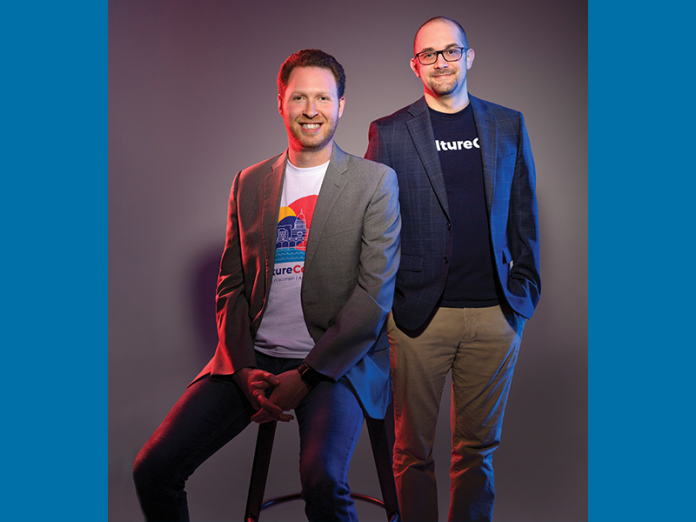
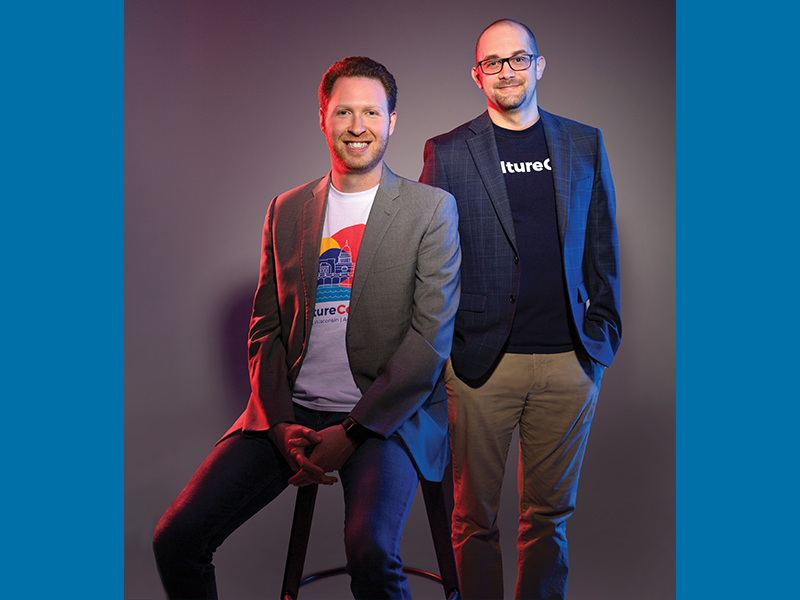
Zach Blumenfeld and Nick Lombardino are co-founders of CultureCon, the Madison-based consulting firm that aims to inspire positive change around organizational culture. Much of the work they do relates to the common workplace challenge of managing multiple generations, and both are quick to point out that it’s easy to fall into the trap of making assumptions about someone based on broad generalizations about the generation they come from.
“Although different generations are born at different times and share different lived experiences, we are all humans,” notes Blumenfeld. “Humans share a desire for connection, respect, transparent leadership, clear communication, and recognition at work.”
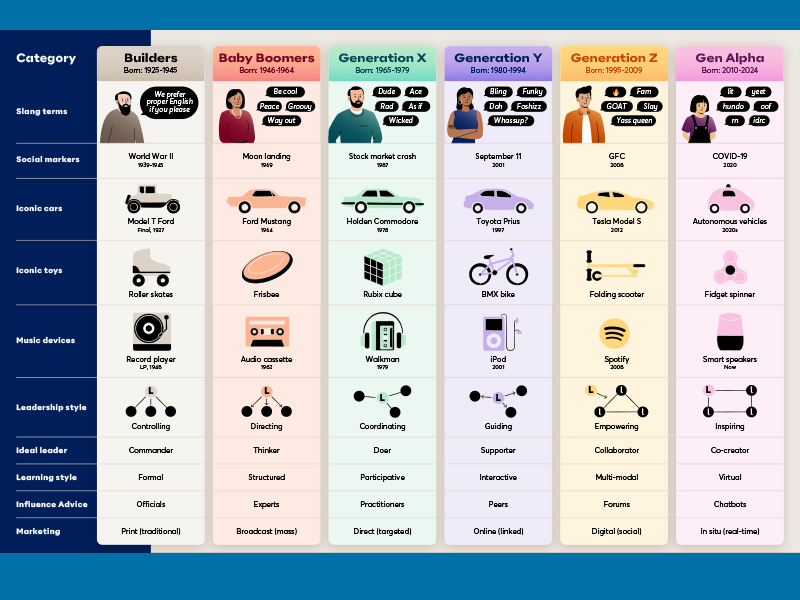
If one were to paint the generations in broad strokes, Blumenfeld says, “Gen Z values digital fluency, social responsibility — how can I make the world a better place? — and personal development. They prefer a workplace and manager that offers autonomy, flexibility, regular feedback, and growth opportunities. Similar to Gen Z, millennials prioritize work-life balance. They thrive under transparent, coaching-style management that fosters collaboration and mission-driven work. Gen X values independence, job security, and a straightforward work-life balance, preferring a hands-off management style that sets clear expectations and provides autonomy. Baby boomers also value job security and are often characterized by their strong work ethic, respect for authority, and appreciation for direct, ‘no fluff’ communication from management.”
“A generation is a long time,” Blumenfeld says. “Different world events that shape a person’s upbringing can be totally different from one side of the generation to the other. A younger millennial may remember 9/11 as one of their earliest memories, but not have been born for the fall of the Berlin Wall. As technology continues to grow at an exponential rate, different people born in a generation can have totally different experiences based on what technology was available to them during their upbringing.”
There are inherent dangers that come from generalizing too much about specific generations as well, not just from the perspective of harming workplace culture but also in missing out on the qualities each generation brings that can be beneficial to the workplace.
“Admittedly, when I’m on the receiving end of ‘generations in the workforce’ conversations, I often catch myself feeling frustrated by the broad strokes generalizations that come about,” says Lombardino. “I have to remind myself that the generalizations are just that, generalizations. They serve to remind us that the different generations in the workforce have been influenced by their unique socioeconomic conditions, technological advancements, and major national/global events that have shaped their views on work, life, and society. These influences, and corresponding generalizations, should be taken into account when considering workplace communication strategies, management styles, and organizational policies to best leverage the unique strengths, preferences, and values of each group.
The danger is taking the generalizations and making assumptions that apply to all individuals that fall into that age range, especially when the assumption is reinforcing negative stereotypes, Lombardino adds. For example, just because someone is a millennial doesn’t mean they’re entitled, and just because someone is a baby boomer doesn’t mean they’re not tech savvy. Ultimately, he says a manager’s responsibility is to recognize and appreciate the diverse perspectives and strengths each individual brings to the team, and to adapt communication, leadership styles, and policies to effectively engage and motivate all employees.
We’ve all likely seen the negatives that come from labeling an entire generation based on the traits of a few — “OK, boomer” — and that’s often magnified by the pervasive reach of social media.
“The trend of labeling the ‘good’ and ‘bad’ traits of each generation and the defensiveness over generational virtues likely stems from our natural human tendency to identify with our peer groups and the pride we may hold in our own generational identity,” notes Lombardino. “The pride can fuel defensiveness over perceived generational strengths and criticisms.”
The people most likely to bridge the gap and find common ground are also the ones who may feel like they don’t really belong to one generation more than another. These members of crossover generations, another form of microgeneration, are born at the tail end of one generation and the beginning of another.
Xennials are one example. According to Pew Research, members of Generation X were born between 1965 and 1980 and millennials were born between 1981 and 1996. Xennials, though, were born sometime between 1977 and 1983. Xennials may feel tied to and simultaneously disillusioned by their dueling generational differences, but they’re also the ones most likely to embrace the values that younger generations are bringing to the workplace because they can see things from more than one perspective more easily.
“[Xennials] naturally embrace the values of younger generations because they grew up closer to the events that helped shape them,” says Blumenfeld. “For example, a Xennial grew up during the rise of social media (Facebook, Twitter, Instagram), but not quite the boom of TikTok or the social media influencer culture. [However,] they’re close enough to feel a part of both probably still.”
Understanding Gen Z
Roughly speaking, Gen Z are those born between 1995–2009, and they are typically the children of Generation X. The arrival of Gen Z into the workforce marks a pivotal shift in corporate culture and expectations. These young professionals are entering their careers amidst challenging times: rising inflation, significant student debt, a housing crisis, and looming economic downturns. Yet, their resilience and unique perspectives are already reshaping the workplace, according to research from Johns Hopkins University.
Gen Z is the most diverse generation to date, and they’re steering the future of work with their strong values on diversity, equity, and inclusion (DEI). They expect workplaces to not just embrace diversity but to actively champion it. A study by Tallo found a striking 67% of Gen Z workers have witnessed workplace discrimination. This generation demands environments where diversity extends beyond race and ethnicity, embracing gender identity and expression. An overwhelming 88% believe it’s crucial for companies to ask about and respect preferred pronouns.
This generation also values work-life balance and mental health, advocating for flexible and hybrid work arrangements. They’re willing to put in the hours, even outside the traditional 9-to-5, as long as it means they can achieve their career goals. Research from the World Economic Forum shows a whopping 73% of Gen Z workers desire flexible work options, recognizing the productivity and mental health benefits of such arrangements.
For Gen Z, a company’s ethics and social impact are just as important as its products or services. A significant 77% of this generation prioritize working for companies whose values align with their own, especially on issues like climate change and sustainability. They seek employers who not only talk the talk but walk the walk on social responsibility.
Despite their drive and aspirations, Gen Z faces challenges in the workplace, including engagement and retention. A lack of connection with their work or company can lead to higher levels of disengagement compared to previous generations. Stress and burnout are also more prevalent, affecting their long-term career trajectories and well-being. In fact, members of Gen Z are predicted to work 18 jobs across six careers during their lifetimes.
According to research from Deloitte Digital, there are three main challenges for Gen Z and their bosses that organizations need to overcome:
1. Contrasting views on the importance of empathy
Gen Z workers highly value empathy from their bosses and consider it a prerequisite to engagement at work, but bosses do not place as high of a value on demonstrating empathy.
According to Deloitte Digital, Gen Zers ranked empathy as the second most important trait in a boss, while bosses ranked it, on average, a distant fifth.
2. Divergent views on the impact of work on mental health
Gen Z workers feel that they are not getting the mental health support they need in the workplace and believe their ideas about how work impacts their mental health differ from those of their bosses.
Deloitte’s survey uncovered that less than half of Gen Zers say their boss helps them maintain a healthy workload, and 28% say they struggle with their mental health because of their boss.
3. Disparate views on the importance of work to personal identity
Gen Z workers and their bosses place different values upon work as part of their identities. Deloitte’s research found that 61% of Gen Zers already in the workforce feel that work is a significant part of their identity, while 86% of bosses say that work is a significant part of their identity. Other areas that lack alignment include rewards and recognition, and training.
Best engagement practices
Of course, the focus for organizations can’t be entirely on the needs of one generation. Managing multiple generations requires intentional effort to ensure everyone stays engaged. Catherine Collinson, founding CEO and president of nonprofit Transamerica Institute and Transamerica Center for Retirement Studies, and Michael Hodin, Ph.D., founder and CEO of the Global Coalition on Aging and its Silver Economy Forum, recommend the following five best practices.
1. Empowering lifelong learning
The career span of today’s workers can easily exceed half a century, necessitating a commitment to continuous learning and skill development. Surprisingly, only 54% of employers emphasize professional growth for all employees, including those over 50. Successful companies leverage job training (46%), mentorship programs (36%), and professional development opportunities (32%) to nurture a culture of lifelong learning. However, less than 30% address generational diversity or offer schemes like reverse mentorships and internships for career starters or those re-entering the workforce.
2. Enhancing work-life balance with flexible work arrangements
While 96% of employers believe they support their employees’ work-life balance, only 75% of employees feel the same. The gap underscores the importance of flexible work arrangements, such as varied schedules, hybrid models, and the ability to shift between full-time and part-time roles. Such flexibility not only aids employees through different life stages but also broadens the talent pool, making the company attractive to a more diverse workforce.
3. Supporting employees with caregiving responsibilities
With 36% of workers acting as caregivers, companies that provide support in this area can significantly boost productivity and employee morale. Offerings like unpaid and paid leaves, online resources, and employee assistance programs are steps in the right direction. Yet, as the need for caregivers grows, enhancing public perception of caregiving roles and improving conditions for professional caregivers will be increasingly vital.
4. Promoting flexible retirement options
As retirement paradigms shift, employees seek flexible transitions rather than abrupt exits. Currently, only a third of employers offer formal phased retirement programs. Providing options for reduced hours, less stressful roles, and involving retiring employees in mentoring and succession planning can retain experienced talent while smoothing the transition for both the employee and the organization.
5. Providing comprehensive benefits for health and financial security
A competitive benefits package is crucial for attracting and retaining employees. While health insurance and retirement plans are highly valued by workers, there’s a disconnect with what employers offer. Expanding benefits to include wellness programs, financial planning services, and voluntary benefits can enhance employee satisfaction and contribute to a healthier, more secure workforce.
Elaborating on best practice No. 3, Lombardino, of CultureCon, notes that providing extra support for employees who are also caregivers outside of work is particularly important for workers who are part of a sandwich generation — simultaneously raising children and supporting their aging parents. “It’s important to acknowledge that these accommodations aren’t ‘sacrifices’ by employers; rather, they are catalysts to enable their employees to show up more engaged and productive. That’s the business imperative. For example, if an employee isn’t able to adequately support the health and well-being of their loved ones (and themselves), they’re going to be stressed, distracted, and less productive at work.
“All of which to say, creating a culture of understanding and openness, where employees feel comfortable discussing their needs without fear of stigma or repercussion, is essential.”
Make way for Generation Alpha
There is a growing generation that few people have heard of. Within the next few years, they will outnumber the baby boomers, and many of them will live to see the 22nd century.
We’re talking about Generation Alpha, the children of Generation Y (millennials), and often the younger siblings of Generation Z. Simply put, Generation Alpha are defined as those born from 2010–2024. Globally, more than 2.8 million were born every week.
Despite their youth, Generation Alpha wields significant influence over brands and market trends. Their impact extends from the realms of social media to popular culture, positioning them as key influencers and consumers of tomorrow. As we approach the end of the 2020s, these young individuals are on the cusp of adulthood, entering the workforce, and beginning to form their own households.
This generation is marked by unparalleled material wealth, technological fluency, and the prospect of longer lifespans than any generation before them. Their educational journeys will extend longer, their entry into the workforce will commence later, and they will likely remain in their parental homes well into their late 20s, stretching the parental role further than ever before.
Generation Alpha also represents a unique cohort caught in a global, albeit unintentional, experiment characterized by early and intense exposure to screens. This “Great Screen Age” serves as both a benefit and a challenge, influencing everything from their attention spans and educational experiences to their digital skills and social interactions.
Zach Blumenfeld, co-founder of CultureCon, notes that millennials tend to value entrepreneurship, creativity, and autonomy, so as their children, “I think Generation Alpha will be the most entrepreneurial generation thus far. They will also bring an increased awareness of inclusivity, equity, social consciousness, and sustainability to the workplace because of the world they grew up in.”

