
A common refrain in the aftermath of George Floyd’s police-involved murder was that America must have a long overdue, uncomfortable conversation about racial inequities. Well, here it is.
When we asked Henry Sanders, publisher and CEO of Madison365 and CEO of 365Nation, to moderate a roundtable panel on Black economic empowerment, we thought we would get some valuable feedback from our expert panel. But what we heard will challenge the community’s self-perception as a progressive bastion and hopefully spark action in our community and inside the walls of our business and nonprofit organizations.
The 2015 police-involved shooting of Tony Robinson in Madison had already started the conversation, but it has intensified in recent months. We hope that IB’s readership will take our panelists’ observations and their recommended solutions to heart, come up with their own ideas, and work to make Madison a better and more inclusive community for everyone.
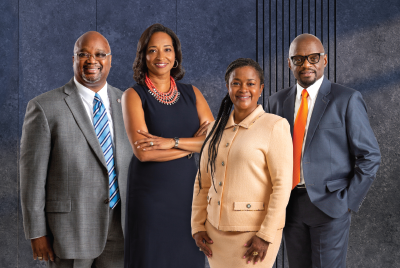
Roundtable panelists:
Dr. Ruben Anthony, president and CEO, Urban League of Greater Madison;
Camille Carter, president and CEO, Madison Black Chamber of Commerce;
Cedric Ellis, executive vice president and chief enterprise services officer,
CUNA Mutual Group
Kimila Daniels, vice president and chief administrative officer, Quartz Health Solutions
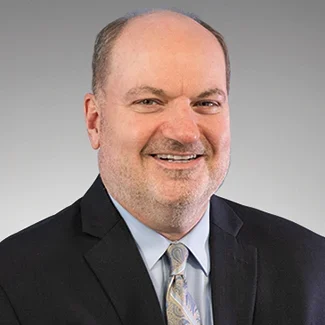
Moderator: Henry Sanders, publisher and CEO, Madison365; CEO, 365Nation
In Business is hosting a follow-up free, virtual panel discussion featuring the participants from this Black Economic Empowerment roundtable on Oct. 28 from 11 a.m. to noon. Spots for this virtual discussion are limited, so click here to register today.
ENTREPRENEURIAL ECOSYSTEM
SANDERS: One estimate, cited last week by Congressman Cedric Richmond, D-Louisiana, during a virtual Biden-Harris “Shop Talk” roundtable program, says 40% of Black-owned businesses nationwide could be wiped out by COVID-19. So, the job of building the economy for African Americans just became more challenging. Regarding a Black entrepreneurial ecosystem in Madison, what pieces are already in place to build upon, and what pieces are still needed?
ANTHONY: Before you can address the ecosystem and what’s there and what’s not, you have to address the climate in Madison. In 2015 in Madison, there was a disparity study done by the city, and it showed that only 2% of the firms that are doing business in the public works area are minority [owned] — not just African American, minority in general. I was talking to one of my friends in corporate America and he said, ‘You know, when the public sector sends a signal that they are going to do 2% or less of minority business, that sends a signal to the private sector, as well. So, we have some work to do in the sense that the infrastructure is broken down because minority-owned businesses are not motivated to come here because they know there is a lack of access to opportunity in government. A lot of times there is lack of access to opportunity in procurement, and you’re going to get less than 2%.
So, if you talk about the ecosystem, there are three things: there is startup, there is maintenance, and there is scale up. When we think about starting up a business, we know there is a need for funds, and there is a need for mentoring. I don’t see that in Madison, so I would say that’s broken down.
We also know that most times when African American or other minority businesses do work in Madison, they have to get certifications. Sometimes, it’s hard to navigate the DBE [Disadvantaged Business Enterprise] certification, the MBE [Minority Business Enterprise] certification, the small business certification, and all those things that they need.
What they also need is startup capital. Startup capital is, a lot of times, missing because they don’t have banking relationships to get it done. So, they need bonding. It’s hard to get bonding. It’s hard to get insurance, and it’s just really hard to get access to opportunities. One of the things that is working along that ecosystem is the fact that we have the UpStart program here [for women and minority entrepreneurs] that’s sponsored by the city of Madison and sponsored by the university [the Wisconsin Alumni Research Foundation, or WARF] to help businesses get a framework for starting up.
Maintenance of the business is a challenge because a lot of times businesses know their craft like a tradesman knows how to do carpentry, but he doesn’t know how to work on his business. He or she might not know how to do accounting. They might not know how to do marketing, and those things happen.
And then, again, the banking relationships make a big difference because once you get that business, you need to create the cash flow to make sure that you can meet payroll. Once you’re out there, you’re out there, so you’ve got to make sure it is the right thing.
And then scale up is another thing. We have to make sure that once businesses are established, that they are maintained and they are solid so that they can grow out to that next level, but they need a reliable customer base, which is not always there. And I’ll stop there to give someone else a chance to have a conversation, but the politics has to be said about what’s happening in the city and then looking at the different parts of this whole ecosystem for minority-owned businesses.
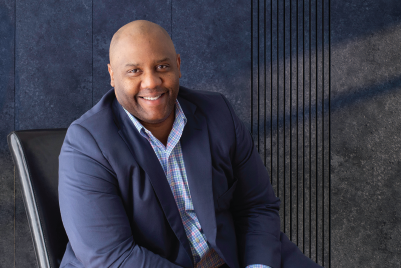
SANDERS: I love that you brought up UpStart because that’s one of the programs that is actually trying to move the needle forward. Camille, let me come at you with the same question.
CARTER: I would echo the sentiment about UpStart. Both Dr. Anthony and I have been students of that program and have seen it from the inside out, and the Chamber is an avid supporter of that program, along with a couple of other initiatives to assist businesses within the maintenance portions and startup portions of their business. When you look at the Madison ecosystem, I take it and divide it into two different parts: the infrastructure and then also the intelligence. Madison is really great about investing in the intelligence of the business. We have a wealth of resources here within our community, and we do a great job of investing in the resources within education, within the innovation structure.
What is missing, and I would compound what Dr. Anthony said, is the infrastructure, the actual execution of how these resources are actually deployed. It really does create a gap, or a further divide of how successful businesses are. We do a very good job of applying financial resources and investing in those resources, but we actually lack in building the conduits to assist that infrastructure, to assist the flow of information from business owner to mentorship to resources. It is in bridging the gap where Madison actually fails.
We are inspired because now, due to the pandemic and due to all of the social unrest and the awareness in the inequities that exist within the workplace, that we as a collective, as a community collective, are now really forced to examine the ecosystem and examine our role in that and really examine why our agencies exist, why our resources are out there within the community. There is more synergy and momentum in trying to develop those ecosystems, but the infrastructure definitely needs an infusion of strategy and a working plan.
SANDERS: Thank you for that. I think you’re right, we do have a lot of intellectual property here. We have a lot of smart people, and so that’s interesting to me. I agree with what you said. Cedric, do you want to jump in on this too, my friend?
ELLIS: Yes, so you know, it’s been interesting. One of the things that Dr. Anthony brought up really sparked interest in what I would like to share. So, he talked about that 2% factor. I work for CUNA Mutual. Procurement actually reports to me. Just to give you an example, we’re in the midst of building a new building on Mineral Point Road. Part of the challenge for me has been, frankly, really being really clear about setting some goals around how much of that investment should be open and could be open to women- and minority-owned businesses. It’s been a fascinating challenge because while I have set goals, and we’re in the early stages of the building, it’s been fascinating just to hear some of what I would call the obstacles to entry and the obstacles to participating for women- and minority-owned businesses.
For instance, one of the things that I’ve begun to challenge CUNA Mutual about was, yes, we have bonding requirements. We have insurance requirements. I started to push CUNA Mutual on, ‘Wait a minute, do we really need that level of bonding? You have a $2 million contract and you’re asking folks to come to the table with a $10 million bond? That doesn’t make sense.’ I’m asking CUNA Mutual — and other businesses need to look at this — to really begin to challenge some of those obstacles to entry, obstacles to participate, to make sure that we’re really leveling the playing field to give women- and minority-owned businesses an opportunity to participate, an opportunity to win some of those bids.
I was equally surprised to learn, as I was talking through what was happening on the investment side of CUNA Mutual, as we took a look at venture capitalism and what that looks like, and how few of the dollars actually go to help women- and minority-owned businesses actually start up. Frankly, if you really want to talk in direct seriousness about Black-owned businesses, those numbers become mind boggling in terms of how that money doesn’t get to Black-owned businesses, Black-owned startups. The thing that comes with venture capital money is mentoring and how to be successful. If you’re not having that kind of engagement and that kind of investment, how do you actually stand up and improve the ecosystem to really set forth Black empowerment?
SANDERS: You said so much there, and I want to come back to what you three just said, but I want to make sure Kimila gets in on this, and she can give her opinion on this, too.
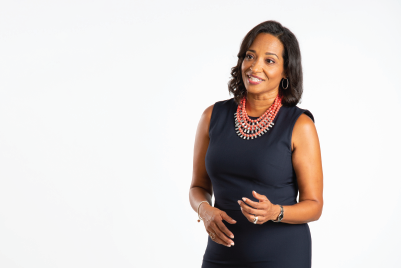
DANIELS: I support everything everyone said, but I approach it from a different perspective because my entire career has been from a private, corporate perspective, and so I always look inward. What do I have control over? And what does my organization have control over? Because quite frankly, a lot of the dollars are with these private corporations, and so when I think about it, I approach it from what Cedric was saying. The mentorship and where are our large companies providing mentorship and dollars in our community?
We have several large companies in our community — CUNA Mutual, UW Hospital. I’m part of that family at Quartz as well as AmFam. We have [J.H.] Findorff. I can go on and list all of them. My perspective is what are they doing to really throw their hat in the game and mentor? So, when these companies are deciding to add another location, and I’ve got to pick on you a little bit Cedric — and I know you have the property and I know you have the land — you’re building a new building or you’re revamping an old one. But I would challenge companies in the future that as they are thinking about expanding their physical footprint, if we’re able to do that after we get a little bit further along the pandemic, why not put your satellite, a satellite business in those areas? So, when we think about south Madison, I’m still going to pick on you a little bit. If CUNA Mutual could put a satellite building or an office building in that location, move some of their staff going to that location, that would bring new dollars into the location and support some of the businesses that are already there. So, we have a commitment from the private sector to put some businesses in those areas, and people that can frequent the shops in that area, that would be helpful.
The same thing with the private businesses, if they can partner. You know, foundations. Foundations can easily set aside $100,000 a year and use those dollars to pick one or two Black, minority-owned businesses to mentor and to give them seed money.
The other thing is — I could go on forever, so I’m going to say this one last point — we have community banks. One of the challenges or barriers with our Black vendors or entrepreneurs is that funding, right? They don’t have the funding that other business owners have. Partnerships with community banks is a lot easier than you think.
ELLIS: And credit unions.
DANIELS: Like a Park Bank or another.
When I think about Old National, when I think about Summit Credit Union, when I think about UW Credit Union, they can take one, or two, or three up-and-coming minority businesses and put them under their wing and make a commitment to provide some funding to them. Not a loan — seed funding. They need seed funding, not a loan. So, I’ll leave it right there. I know you want to come back to some other things.
INVESTMENT INCENTIVE
SANDERS: That was powerful. So, the question I have for you all, though, is: In government, they are mandated that they have to do business with a certain amount of diversity contractors. The private sector doesn’t much, right? So, how do you incentivize the private sector to do what you’re saying, Cedric, and work with more businesses of color? How do you incentivize them to do that? I’ll start with you, Cedric.
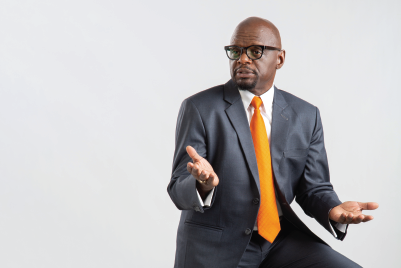
ELLIS: Yes, it’s interesting. So, one of the things that we’ve done is we’re in the early stages of really going deep on setting up our diversity, equity, inclusion, [and] our supplier-diversity stream. But even before we really get that fully established, candidly, we’ve already talked internally about what those goals should look like. We’ve reached out to a number of consultants to actually help us figure out what should that number be. Not just from a vendor-contractor perspective, but it’s going to take bodies to build that building. So, what should that staff look like? And we’re putting in concrete goals and holding — whether it’s Findorff or others that want to get involved as the lead contractors on that — we’re holding them accountable by putting in place some very specific goals and saying, ‘Hey, we’re going to measure you in your success on this, and not only do you put in place those goals, but you talk about what the penalties are if we don’t hit those goals.’ So, we’re being pretty direct about those types of things.
As you said, we’re not required to do it, but we see it as a good course of business to make sure that we’re taking care of the community, that we’re also making sure that we’re creating a level playing field from an equity perspective of getting not just women- and minority-owned businesses involved, but how do we make sure that the labor to build that building is equally involved, is equally representative of the population? So, those are some of the things we’re doing.
SANDERS: Do one of you, Kimila [Daniels] or Camille [Carter], want to jump in on that topic? Dr. Anthony, I’ll come back to you, as well.
CARTER: Everything really boils down to accountability and really having a set of consequences, right? If it’s not required yet, what are the consequences if these goals are not met? If there is nothing that is tied to the outcome, then you’ve got … I guess that would be my challenge is looking at a solution that’s effective and not just nominal and on paper.
ELLIS: So, one of the things I found interesting in the process of building this building was, candidly, when we were in discussions on what to do in terms of minority- and women-owned businesses, folks wanted us to use this list that the state has around certified businesses. I pushed back pretty hard because I know those lists are not diverse, so I was really very specific about, ‘Listen, that’s important, too, but my intent, our intent at CUNA Mutual is really about women, minority-owned, veteran-owned businesses and how do we support them and get them involved in the bid, in the piece of this big pie?’ So, we’re being very intentional, not trying to take the surrogates of small businesses that have been designated by the state but going beyond that.
SANDERS: Dr. Anthony, I know you want to jump in, so I’ll let you get in here. I know you’re champing to get in.
ANTHONY: I want to give Kimila a chance. I do want to talk, but I want to give her a chance to go first, if she has something.
DANIELS: I just want to go back to the question. So, with our organization, one of our major customers is the state, so we do have some requirements. We’re similar to Cedric. We’re looking at our supplier diversity and when I talk to the executive team about moving forward and we looked at the list of certified organizations, their first response is it’s so small, and their impression is this is all we have, and in fact we don’t. And so, when we started this conversation about the barriers to getting certified, being able to really address those in a meaningful way would help quite a bit. I would also like to say, how do we hold ourselves accountable? My process of holding anyone accountable is being very transparent and sharing and communicating what’s happening and what’s not happening.
When I think about, again, speaking from the private sector, it’s about our brand. So, right now, we need to get customers to support our brand, and what does our brand stand for? And what is our mission? And what is our vision? And people need to identify with that, and so if we’re not able to share how we are really approaching being diverse and inclusive, and supporting our minority-owned and women-owned businesses and disabled
veterans, etc., then that impacts our brand and it impacts our customer base. When I think about the society, it used to be where can you get the best price? What’s the name brand thing now? There is a shift, right? People are going to what pulls at their heart strings. What organizations are making a positive impact on our community and the world? And so, if companies can communicate and tell that story, that helps build market share, and it helps build brand loyalty. And that’s how the private corporation survives.
ANTHONY: Those are both some excellent examples from both Cedric and Kimila. We’re working right now with SSM [Health]. SSM is an organization that is not compelled to have goals. We stumbled on this relationship with SSM when they were going to build on the Pick ‘n Save site, and so they would have turned the South Park Street area into a food desert. So, after some conversations that we had with the community, SSM’s Regional President, Damond Boatwright, said we will locate somewhere else, but we want to make sure that we include the community on the project. So, they have a $75 million construction project that they want to do. Now, government is compelled to do it like it was brought up earlier in our conversation — to have goals. The private sector is not, but he [Boatwright] is showing an example of leadership, whereas it’s the corporation’s responsibility to bring this inclusiveness. So, for goals, he’s established a 10% workforce goal, a 10% minority workforce goal. He’s established a targeted business opportunity goal of 2.5 to 5%, and I told you earlier that the study showed that the market can only handle 2%, but they are going out to 2.5–5%. Nothing is compelling them to do it, but it’s their corporate responsibility.
Last but not least, they are doing a mentor-protégé piece where they are bringing 10 to 11 minority companies. Nothing compels him [Boatwright] to do it, but he’s doing it because he says the $75 million is right in the heart — if we do have a Black community here, it’s along South Park Street — and he says, ‘I have to do this because this is what we do.’ And the other thing that he’s doing is tracking and being transparent. So, he’s set these goals and says, ‘As we go along on this process, I want to have the opportunity to course correct. If we’re not doing it or if I need to tune somebody up or I need to tune somebody out, I need to do something to make sure that we get things back on track.’ And he’s come to the community to tell us what he’s going to do, so when you come back and report to us, we’re going to want to know whether you got that or not, but it’s bold and it’s brave and it’s what corporations need to do.”
VETTING THE VENDORS
SANDERS: I have so many questions I want to follow with, but I have to move on to our other wonderful questions, but I hope people pay attention to that. They should be paying each of you because what you just said, that should be a consulting fee for every bit of wisdom you just gave. That was wonderful. Let’s go to a different question here. What initiatives have been or can be put into place to support Black business vendors? Let’s start with you, Camille.
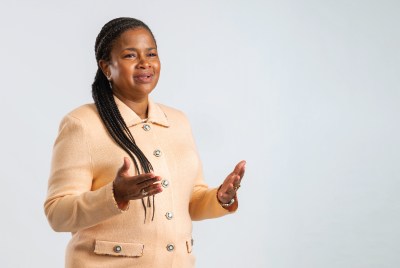
CARTER: Over at the Black Chamber, during the pandemic, it really shined a light on how we help our Black businesses. They are certainly in need of immediate care, and we have lost a percentage of them, but we’re really focusing on strengthening the businesses that are existing and how to help them really connect with their clients to make sure they do stay viable and in business. So, certainly during the initial phases of the pandemic, we were really in an emergency phase of helping businesses, connecting them to financial resources to keep their doors open, to maintain their employees. Now, we’re into a recovery and a resurgence phase, just helping them maintain and also working with a lot of businesses, working on new business plans, and relaunching and restarting themselves.
We’ve done a couple of things new — one thing that’s new and then we’re expanding. Again, businesses, if they don’t have customers, none of this really matters. We see that as a strong priority and connecting our businesses to resources is just that — it’s what we do. We are relaunching our online directory. It did get slowed a little bit due to the emergency services we had to put forth for some of our businesses, but we’re really expanding our directory. We’re now working on the fourth edition of our Black Business Directory and that will be launched online Sept. 15, so we’re really looking forward to making sure our businesses stay connected to broader opportunities. We also do a lot of connecting them directly and even offline, so that’s essential.
We’ve also just had a very successful Black Restaurant Week. It was our fifth year with Black Restaurant Week, in which we really uplifted over 30 Black-owned restaurants and food service businesses in every single way that we could possibly touch them. It was a really big lift because, again, we wanted to connect our businesses with customers, and through this pandemic there were obviously many challenges with that.
And so, out of this desire we really wanted to connect the Buy Black Campaign, making ease of accessibility to our businesses, their products, and Black cuisine. During Black Restaurant Week, we launched our Marketplace BRW, which is our online web store and app. We wanted to leverage technology into the future. We wanted to promote the Buy Black Campaign. We wanted to really bring awareness around our businesses. We launched this tool as a pilot during Black Restaurant Week, but you can look forward to seeing that expanded into a Buy Black Campaign and also aligning with some national agendas, as well, for further purchasing opportunities and being leveraged just across the nation with some of our partnerships, particularly some of our national chambers. So, we’re really looking forward to helping some of our businesses connect and actually be seen by customers.
We’re also working on improving our business readiness curriculum and our offerings and making sure that a lot of our businesses that were not financially ready and equipped to apply for the PPP … As Dr. Anthony mentioned, many of these businesses did not have relationships with banks. Again, I mentioned that I’m a financial professional by design. I’m financially minded, and so fiscally that just does not sit well with me. The health of a business starts with its finances, and so we will be launching a series of curricula this fall that will help businesses and their readiness so that in the future, they are prepared to kind of stay in the game, so we’re really looking forward to that.
SANDERS: Y’all look busy over there. Whew! That was a lot. I’ll bet most people are surprised to hear that there were 30 Black restaurant businesses that you were dealing with. That’s a lot more than most people would think.
CARTER: Well, you know, it’s not just brick and mortar. Again, our society is changing and there are more caterers and food service carts — those mobile concepts. They are inexpensive to run. Having the overhead of a restaurant, obviously, we’ve lost some brick-and-mortar restaurants and we really did have to have an outreach of businesses that are out there hustling their products. They are serving really excellent food and cuisine.
What a lot of people didn’t really know is that we have a Black farmer that sells organic vegetables and produce. We also have a Black-owned meat purveyor who sells organic meats and cheeses, and so we really launched a couple of great initiatives and really connected some great partnerships with the farmers and the meat purveyors with the Edgewater Hotel, which is looking to add to their minority suppliers and being able to leverage minority businesses. So, we were really excited about having Black Restaurant Week to really highlight some of the variety of food services that we have out there available to us.
That is a source of community. That is what we do well. Madison is a foodie town and where would the fabric, the greatness of Madison be without ethnic cuisine? That’s essential to keep that alive for us.
SANDERS: Dr. Anthony, I would direct the same question to you. What initiatives have been put in place to support Black vendors?
ANTHONY: I’m going to mention four initiatives. One initiative will be to provide affordable spaces. A lot of times, minority businesses can’t afford to be in the mall, or they can’t afford to be downtown. They can’t afford to be in expensive places, so they need help in getting in those spaces.
The other thing minority businesses need is a fund to launch businesses. They need that startup money to launch those businesses, so anybody that’s thinking about making it happen, give them the funds to start it up.
And then we’ve already had a lot of conversation about this, the mentor-protégé relationship. Those successful prime businesses out there to grab a small business and show them how to make it happen.
And then again, joint ventures. Joint ventures are permissible. Those companies out there that really want to diversify, we want to diversify business with you, and you have that joint ownership and help us. Those bright ideas that are coming from WARF and other places that are bringing innovation. Bring along some of those minority businesses, as well.
ELLIS: I want to just add, and a number of you already saw some of this, the mayor did leave the Madison Public Market in the budget. I do hope, as it has been shared, that the Madison Public Market will offer open access once that is built. CUNA Mutual is hoping to be one of the sponsors in the build of the Madison Public Market. So, I hope that creates more opportunity such that those heavy, upfront capital costs that a lot of businesses have to face to get started, that it eases some of that burden, as well as providing mentorship and hopefully access to financial relationships to actually help Black-owned businesses get better established. And not only get better established, but how do you work through some of the challenges we face during this pandemic, through things like this pandemic? So, I’m hoping that that initiative actually creates greater access and greater opportunity for more. Not just the 30 that we have, but how do we get more Black-owned businesses started?
SANDERS: I’ll come to you next, Kimila, but you know what? We don’t talk about WARF enough and the impact that WARF could have on businesses. We have a wonderful organization in WARF here in Madison. We don’t talk about it enough. They could help us in so many ways, as far as entrepreneurship. We don’t talk about it enough as people of color. Kimila, I want to put the same question to you.
DANIELS: “Yes, and so I agree with what’s been shared, and so I’ll focus on what’s new. We talked about space for those buildings Ruben mentioned, and we need to be creative in regard to that. So, one open space can be shared by two possible vendors. We’re in a different time right now, so traditionally we talk about the physical footprint. Where I find there is a great opportunity with our Black entrepreneurs and business vendors is helping them build their digital footprint because that is much more manageable, it reaches a much larger audience, and being able to mentor them in that space would be very helpful. We’re known for our tech in Madison, health care, tech, I could go on. Being able to help them build a digital marketing plan, help them be able to build a website that can be managed, how to manage it, how to pull the data from it, and analyze the data would be very helpful.
The other thing is while I really do appreciate restaurants, we need to help our Black entrepreneurs look further than restaurants and retail. It’s about supply and demand, especially when I think about the larger organizations. I’ll throw out one of my own — UW Health. So, if UW Health can mentor a couple of up-and-coming entrepreneurs and help them determine what their product should be, where companies would want to buy their product. So, for example, we’ll do health care. Maybe there is a product they can develop in health care, and then UW Health will commit to buying that product. So, that helps build a business and that’s a couple of things that we need to look at, as a Madison community. We need to think differently. We have a lot of intellectual capital that we talked about earlier. How do we use that in a different way?
Going back to the restaurant example. I think that’s one of the easy businesses for us to start because quite frankly, a large percentage of our Black entrepreneurs, they are funding it out of their pocket because, as Camille said earlier, they don’t have a relationship with a bank. So, it makes it very challenging for them to think bigger. I think we have a social responsibility if we want to really grow Madison and really commit to this, to help them think bigger, help them develop a plan and execute it.
DIVERSE THINKING
SANDERS: This is a great conversation. I want to go to our next question because we have so many wonderful questions, but I do think it’s a question, like you said, about our digital footprint, how we get people to think or focus on that. And how do we get entrepreneurs to think broader than restaurants. I think that’s a really good conversation. Madison has the tools to do it, too. That’s a whole different conversation about how we build that ecosystem.
Let me go to the next question here, and I think this is a question a lot of people are going to want to know about because this is one of the hot topics these days, internally for organizations and nonprofits. This topic is diversity, equity, and inclusion initiatives within business organizations and nonprofits. What best practices advice can you share about ensuring that your organization’s practices, programs, and initiatives are anti-racist? We would imagine this starts with a thorough review, especially with the hiring and recruitment process. Why don’t we start with you, Cedric? What do you think about that?
ELLIS: Low hanging fruit is clearly how do you start to dismantle some of those policies and procedures that actually create an obstacle or prevent what I would call that level playing field, especially when you begin to think a little bit about how you make your organization anti-racist. So, not just looking at policies and programs. Most organizations, as you think about recruiting, need to broaden that net that they are casting. So, whether you are interacting with historically Black colleges and universities, or if you’re not even looking at historically Black colleges and universities, are you looking at the places where you recruit? Are they diverse? Is there a diverse base? And often, folks go to the usual suspects, and candidly, here in Madison, the UW comes first, probably Edgewood [College] and UW–Milwaukee, but the UW System is largely where people go first. And then, they don’t necessarily think a little bit about, ‘Am I actually inviting diversity in that candidate pool?’
One of the things that we started at CUNA Mutual was we literally put in place a slate requirement. So, there was a study that was done that talked about if you really wanted to increase diversity in your organization, that you put in slate requirements. You don’t let anybody hire anyone unless they really brought to the table a diverse slate. We require every job to come to the table, and you have to have at least two folks of color and two women in that candidate pool. And let’s face it — typically what happens is this: Folks go to who they know or somebody they may know in their close-knit whatever, and nine times out of 10, it’s folks that look like them. So, by design, people who look like me automatically don’t get a shot at that opportunity.
The other thing that’s really important in terms of if you really want to begin to have impact around diversity, equity, and inclusion, is that you move it beyond an initiative. You really begin to challenge and dismantle a number of obstacles that your organization has in place that prevents folks of color from being successful in it. And candidly, I’ll use CUNA Mutual as an example. They have not had a problem recruiting diversity. The challenge has become in retaining it. So, you’re getting folks in the front door, and they are leaving through the back door. So, what we begin to do is talk about what’s in our culture? How do you begin to affect that overall fabric of the company that really makes it easier for folks of color to really contribute and participate fully? Some of that has to do with how do you skill up managers and leaders to manage diversity in the workplace? How do you get more folks of color in leadership?
So, it’s been really about challenging the ecosystem at CUNA Mutual, and I would suggest that a lot of other organizations have to take a look at what policies, practices, and what in their culture is preventing them from reaching more diversity, from building a more inclusive population and organization? But organizations really have to move beyond seeing it as an initiative. You have to adjust the fabric of your organization.
SANDERS: Kimila, I want to come to you. Same question. How would you answer that?
DANIELS: Yes, so Cedric has done a nice job talking about the recruitment. There are other things about being an anti-racist organization. I would say that from my experience, first and foremost, everyone needs to be on the same page. And so, until all your leaders are on the same page, then some think it’s optional. So, no matter what policies and procedures you put in place, they will find a way to get around them. Again, private, corporate environment, and I believe what you measure and incentivize is what gets done, and so I would echo what Cedric is saying as far as it shouldn’t be a separate initiative. It should be embedded in the strategic plan of the organization. With that, it needs to have a scorecard. It needs to have metrics. It needs to be reported to the board on how the company is doing. Bonuses — things like that. If your company pays a bonus, that needs to be built around it.
I would also say in regard to moving toward an anti-racist organization, it’s all about the culture. As Cedric was saying, you can bring them in the door, but they are going out the back door because there is something in the culture. It’s the behaviors. It’s the unwritten rules. It’s the norms, the values that are really driving the culture of the organization that are not inclusive, and so we might ask to give you an example of that. Who is in charge of the budgets? Who determines what the money will be spent on? Who determines how much money is going into the development fund to support aspiring leaders and Black leaders? Who determines how much is going into the promotional or advancement pool? Who determines who is going to be on high-profile projects to really give exposure to employees of color?
So, you have to look much deeper than that recruiting. It’s about the retention and the culture and who is invited to the table. Who has control over policies and procedures and things like that? And measures.
SANDERS: I love that. That’s powerful stuff right there. I think you’re right, both of you. I’ve been here my whole life. It’s easy to get people here. It’s harder to get them to stay. They get here and they leave. I’ll bet it’s an average of two years and they’re gone. So, that’s a real issue for us. Camille, I want to come to you with the same question.
CARTER: I would echo what’s been said. Certainly, our organization, from an equity and inclusivity standpoint, we’re there. We welcome businesses and entrepreneurs of all colors, creeds, and so that is in the vein of our work. We do rely on our corporate partners to really support us, and so we’re a part of their process. When there is accountability at the corporate level, from the top down, that’s when we really feel like there is a true partnership. So, it’s really about the culture, it’s really about the accountability, the measurements, and how the work is incentivized. We’re all doing this for reaping some gains and some rewards, so it has to be tied to that.
SANDERS: Thank you for that. Dr. Anthony, I’m curious about what you have to say about that because you have such an interesting background, working for the state. You’re an entrepreneur yourself. Now you’re with the Urban League. What’s your perspective on this?
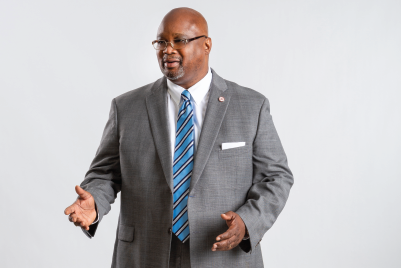
ANTHONY: So, when we talk about diversity, I’ll tell people we have to be careful because I don’t support diversity if it means putting Blacks in the back of the line. Sometimes now with diversity, we’ve got a broader umbrella. Everybody is crammed under there and so employers decide to take somebody else other than Black. And so, when that happens, I’m not with diversity because that’s what’s happening in a lot of places. People are saying, ‘I want to take somebody else, as opposed to taking that Black person,’ so I’m going to keep it real. If diversity is that, I’m not with diversity, OK?
I was part of a conversation last week where a person is doing a master’s thesis, and he’s a public official. He brought a bunch of Black leaders together and he said he wants to build diversity absent of affirmative action. And so right away, I spoke up and said, ‘So you’re taking this one study, OK, and you’re assuming that affirmative action is bad.’ I said, ‘affirmative action doesn’t mean that people are going to be less qualified. It means that people are going to have an opportunity.’
They will have an opportunity through expanded certification, particularly in government if there is underrepresentation in a job classification, and so we need to continue to have expanded certification. If we don’t have expanded certification in areas that are underutilized, we’ll still get ‘good-old-boyism.’ We’ll still get favoritism. Had it not been for the Civil Service Reform Act in government, where it’s forced things like affirmative action and expanded certification, we wouldn’t have even gotten to the interview.
In a lot of cases today in corporate America and in government, we still don’t get into the interview because we get screened out. And so, I agree with Cedric that you’ve got to have a diverse slate, but you also have to have a diverse panel at every step of the interview process. Yesterday, I just witnessed a friend of mine who’s got 30 years of experience get weeded out of the process after he had made it to the final because there was no diversity on that final selection panel. So, all the way through the process, we have to have diversify, and then we certainly have to make sure that we’re looking at the positions that we have in our organization, and when there is underutilization, we have to be intentional about diversifying and not putting the Black person at the back of the line.
DANIELS: Thank you, Ruben. Thank you for being crystal clear on that because you’re right. And I will tell you that’s one of the challenges I face, because I actually have an organization. When I came, I was the first person of color in leadership, the first person of color as an executive. Very few, and so you know what that meant? That meant I had to sit on a lot of interviews, and I was willing to do that. But I think that leaders of companies, they think that who is sitting on these interview panels needs to be at a certain level. I would encourage them to look much broader than other leaders and other managers on these interview panels and go deeper into the organization to pull Black, people of color, and put them on the interview. Sometimes, companies will use it as an excuse. They don’t have enough people inside the organization to be able to put them on interview teams, and I would say that’s just an excuse. They need to look much broader.
The other thing about recruitment, and this just really, man, this really irritates me. Choosing my words here. I am so tired of hearing, ‘We’re looking for the best candidate.’ It’s almost like we’re chasing this unicorn, right? We’re looking for the best candidate, and actually I’m tired of hearing about we’re looking for the right cultural fit because that’s just code for, ‘They’re looking for someone just like them.’ And so, what I would encourage companies to do is to actually look for talent that you have the ability to develop. They have the ability to grow and mature. Not looking for the best fit, but well qualified and has a lot of potential to grow.
SANDERS: I love that, but the challenge of what you just said is that means you have an internal process that actually, as a professional development and a leadership program, you have to have that in place. You have to have a process that intentionally can see those people — especially those people of color — to see their value even if they don’t fit into your culture. What you said is needed, absolutely. But yes, Cedric, were you going to say something?
ELLIS: I don’t know if In Business folks are going to be ready for this, but the crux of the challenge is this: Understand that the way our society has been structured is based on white supremacy. Now, I know that those words just get people on edge, but if you’re constantly using a white standard of measurement as what works, guess what? I’m Black. There is nothing I can do to meet that standard of being white. However, I think we really need to begin to challenge, just as the others have already said, that what do we need for this role? Folks do use the excuse of fit, if you will, as an excuse. When I hear that, you have to call people on that because I know that nine times out of 10, it’s meaning that people like me, people who look like me, don’t fit. So, I really want us to really challenge what’s in the culture that really prevents folks, no matter what walk of life you’re in, from contributing and really begin to challenge how much has white supremacy influenced your organization and your culture? And stop using that as a measurement to weed people out who look like me.
SANDERS: I appreciate this. Kimila, I’ve never had anyone say what you just said, and I think it’s so true about how we look for people, how we hire them, look for people to move up. That’s great stuff.
VANDEN PLAS: Henry, can I interject something?
SANDERS: Yeah.
VANDEN PLAS: I really appreciate what everybody is saying. Don’t worry about being candid. The business community has to hear this, and that’s the purpose of the conversation today.
SANDERS: Amen, Joe. Thank you for that.
DANIELS: There is a difference between having to hear it and wanting to hear it. [laughs]
SANDERS: Again, I’m glad In Business is doing this. This is just for In Business’ audience. They need to hear this, so Kimila, I’m going to come to you next. To drive diversity, it’s been said that Madison businesses should engage in recruiting strategies focused on attracting more Black business professionals from outside the area, such as more emphasis on building relationships with historically Black colleges and universities, most of which are located in the southern United States. What are your respective takes on that idea?
DANIELS: I think it’s a great idea, but I just want to start off by saying that I think the Madison community needs to work on really utilizing the Black talent that we have in and around Madison, and also connecting with historically Black colleges and universities because there is a lot of good, exceptional Black talent in and around Madison. Quite frankly, what we hear a lot is, ‘There are not very many. We don’t have the talent in Madison.’ We do have it. We just need to do a better job of being able to seek them out and draw them to our organizations, and that involves valuing them, right? And not trying to get them to fit into this norm that they can’t fit into.
When I think about developing partnerships with historically Black colleges and universities, I think that’s something we need to do because, quite frankly, we are a UW town. We’re a UW state, right? And the UW is great. Love UW, but what I hear often is that’s the go-to. That limits the pool, so I think as companies can build relationships with historically Black colleges, they should do that, and it’s just not the top three historically Black colleges. They should build it much broader, and it’s not about going to career fairs or posting, it’s about developing a relationship with their career centers. They are constantly talking to them because they need to sell the students on it’s a true relationship. We really want your talent, and here’s what we have to offer.
It’s also very important, given the pandemic, that now we can hire people, they can work anywhere. My organization is looking at broadening our recruiting practices to be across the nation, and they don’t have to show up to a brick-and-mortar building, which increases our recruitment efforts, as well. But I’ll tell you what — there is a lot of good talent in and around Madison. We need to utilize that.
SANDERS: Thank you for bringing that up. I think that’s true. We have such, especially at the university, a lot of talent here. They just don’t feel engaged in the community, right? So, I think we just have to engage them more, and I think they will stay. I’ll approach you, Cedric, with the same question.
ELLIS: I don’t think there is much I can add in terms of what Kimila just shared, but what I will tell you is this: I think that if you look at some of the stats of underemployment in Madison, particularly the underemployment of Black folks, I think that in itself speaks volumes around, you know, you’ve got this food at your table, and you’re choosing not to eat it. I think that we, as organizations, have got to do a better job at that outreach, at presenting those compelling reasons why folks should come work for us, and I’m speaking of all businesses. But we’ve got to be more intentional about that reach-in and stop looking beyond and thinking that there is better talent out there. There is really strong talent right here in Madison, and I think we’ve got to be more intentional about including it.
I do think that it’s beyond that fly-by-night, I’m going to come to your career fair. Just as Kimila said, it’s about building that relationship and while I think we, at CUNA Mutual, have gone beyond the top three [HBCUs], it is about building that relationship. Frankly, without Dr. [Floyd] Rose, we wouldn’t have been able to do that. He was the person that opened those doors and really helped us solidify and build those relationships, so it wasn’t just, ‘Oh, we’re just here to recruit.’ What are we doing to support the students? And how are we making sure that not only once they come in and do an internship at CUNA Mutual, but when they become a full-time employee, how will we support them to be successful at CUNA Mutual? And, how will they enjoy life in Madison? So, we’re trying to look at it more holistically and certainly being more intentional around what we’re doing to support them.
DANIELS: Yeah, I just want to add to that, too. Another resource that is underutilized in this [community] — a little selfish here — is the Divine Nine. We have a nice presence of Black Greek fraternities and sororities here that are connected. They are connected not only to the Madison community, but they are connected to historically Black colleges and other communities. We should be asking them. Companies should be partnering with them. There are these list services that go out with all these positions. Why aren’t we connecting with the sororities and the fraternities and partnering with them to help with recruitment?
SANDERS: Just for the people reading, the Divine Nine [are] fraternities, sororities, just in case people aren’t aware of that. Camille, same question.
CARTER: You know, I agree with everything. I’m glad that Kimila added the last point. I’m big on intersectionality, right? You’ve got to kind of bring these, all of these forces together and intentionally have an experience, intentionally share information and resources. And again, I think Madison has all of that and really has a concerted, sincere desire to close the gap, but what is lacking is that infrastructure at all levels, not just at the entrepreneurial level but human capital, as well, and just making sure that the Madison story is well represented, that our brand is multicultural. That our brand, when we go out and talk about Madison as a community, we really have to speak to what the lifestyles of these individuals, these young professionals, will be.
I’ve talked with multiple interns that have come in, and they come in and they are disconnected. They feel disconnected. They are really struggling in trying to figure out how to fit in with this community, and that is because those intersectional points where a CUNA Mutual can come in and pass off these relationships to the community such that they are incubated and they enjoy their experience, then there will be a greater success of that. And so, there has to be a concerted effort and a collective that is intentional.
DANIELS: I have something else to add, but I’ll let you talk Ruben.
SANDERS: No, no, please add it. If it’s quick, add it to what …
DANIELS: Well, I don’t know how quick it is [laughs]. Camille, when you mentioned telling our story, right? How we’re multicultural. And so, I will say — and Cedric, you can support this — you know, when we’re recruiting and we use relocation firms and things like that to help sell Madison, they tour Madison. They talk about the school districts. They talk about things like that, but what they talk about is the white Madison.
SANDERS: Yup.
DANIELS: And so, when I challenge some of these relocation companies that we have that are stellar in the work they do. They are exceptional. They are exceptional about telling the story of Madison, but it’s only the story of part of Madison. And so, when I think about the relocation companies, and they want to make an impact, it’s to start helping build the whole story. When Cedric and I and other companies are recruiting and pulling them in for the interview, so they learn about Madison, they are learning about what’s here for them to support them.
SANDERS: Yes.
ANTHONY: Henry, I think you might be scared to let me speak again. [laughs] So, in answering that question, I’m going to answer it in the Socratic method of teaching. I’m going to answer it with two hypothetical questions, and the first hypothetical question is: When young Black professionals are fleeing this place, why would other Black folks come here? You know, when we don’t have any Black businesses that we can showcase as successful, and in partnership with private businesses, why would these businesses come here? And so, those are the questions that we have to ask because — just what Camille said — the statistics for Black people and Black businesses here in this community are grim. We’ve got to change that narrative before we can make this an attractive place for folks to come.
We have major brain drain in this place because you have people, when they grow up here and they are brilliant, they run out of here as fast as they can, and that is because it hasn’t been a pleasant place. And my kids have experienced that, and other folks that I know, their children have done it. And so, we’re losing our best and brightest because they don’t think they are going to get advancement opportunities here. They don’t think that they can break the glass ceiling. They go to the same universities. They get the same degrees. And they are going to have an ‘A’ in their class, and somebody else is going to have a ‘C,’ and they are seeing those folks progress in their careers, become an executive, becoming managers, but they are stuck. They can’t break the glass ceiling. They can barely make it beyond entry. So, when we change that narrative, I think we’ll be able to see more folks come here.
I think we have to change that because if we don’t, Atlanta and all these other southern places are way more attractive.
Last piece. The Urban League has partnered with the Rennebohm Foundation to start a program called the RAMP Program, R-A-M-P — Retaining, Advancing, and Mentoring Young Professionals. And so, we’re trying to help keep some of those young professionals here, and more people need to do that because they’re creative and they’re brilliant, but they are fleeing because they don’t think they can make it here. And they can’t find anybody to date here, either.
SANDERS: Now, that is what, especially for our Black women, they have an extremely hard time finding relationships here. That’s not even a business conversation, but that’s a true statement. Kimila, I want to challenge you all about this historical Black college stuff. I want to challenge your thinking about this, but Camille, go ahead.
CARTER: I just want to add to that point as we’re talking about the young professionals. But to close out the conversation about the existing talent, experienced individuals that have been educated here, that have worked here, and are really trying to grow and find deeper opportunities, I often hear again, not being able to connect with employment opportunities that will pay them equal share and really a higher quality of living that they could find or couldn’t find somewhere else. So, it’s not just providing them with the opportunity.
Madison is a very expensive place. I mean, when you’re talking about the compensation of an entry-level individual, based on someone that has come out with their MBA or their Ph.D., and you’re really trying to pay them substandard wages, there is a disconnect and a problem there that I don’t believe has really been explored because it’s all kind of caveated around the brain drain and the immediate flight. But why is the seasoned talent, why are they leaving and going to other places for greener pastures? And it’s really for economic reasons.
DANIELS: Yeah, I would say that’s a great point, Camille, and Ruben, for Black employees, it’s not the glass ceiling, it’s the concrete ceiling. That’s what it’s called.
SANDERS: Yes.
DANIELS: Because it cannot be broken, and it is in relationship to lack of promotional opportunities, lack of development opportunities, and no career trajectory when they are in jobs. We bring them here, we put them in the role, and then they are stuck in that same role forever.
ELLIS: But even stereotypical roles.
DANIELS: Yes.
SANDERS: OK, OK. Now we’re talking some truth. I’m enjoying this so much. I miss you all so much. This is wonderful. OK, I’m going to challenge you on the historical Black college stuff. I think it’s extremely hard to get people from historical Black colleges to move to the Midwest in general and to move to the coast, especially ones from down South. Just to move into the cold is a difference and then there is a culture shift moving from the historical Black colleges to the Midwest in general. Why would we not focus on our campuses in Wisconsin, or in the Midwest where folks are used to this type of environment, and really try to focus on engaging them because at least they have some familiarity with the weather, to some of the microaggressions, to all of those things people have to go through. At least they have somewhat of a knowledge of that. I think it’s a bigger jump for someone who is coming from a Black experience like a historical Black college to the Midwest. So, I’m just curious as to why that route versus the other. They both can be the same paths but we just kind of focused on historical Black colleges. Cedric, it looks like you want to answer that, so I’ll let you answer that.
ELLIS: You know, it’s interesting. So, a lot of our jobs require master’s degrees. Whether that’s appropriate or not, that’s another discussion. But look at the makeup of Madison, UW–Madison, and look at the UW System. I dare to say, it’s not representative in terms of having that concentration, that number of Black students, of Black graduates. I think that if you’re really interested in being representative of the population, you have to look beyond that. I think it’s a misunderstanding. We’ve brought plenty of graduates into Madison who happen to be from historically Black colleges and universities in the south. They are here in Madison. They are not someplace else. Now, mind you, they have had significant challenges because of, you know, as Kimila said earlier, they were sold. You know, Madison is a great place, but they weren’t told the truth about the polarization that actually exists here. Madison thinks it’s a wonderful place in terms of this liberal, progressive place, but what Madison is truly saying is come be like us. Not meeting you, as a Black person, where you are and trying to understand your culture, your beliefs, and the things that are important to you. Madison wants you to become them, and that in itself presents a huge challenge.
But I think that it is a little bit of a misnomer. We have been able to bring them to Madison. We haven’t been able to keep them, or they are presented with some pretty significant challenges. I just don’t think the population is there if you look at, look at the UW System. I don’t know this to be a fact, but I’ll bet you it’s not representative.
SANDERS: Fair points.
DANIELS: I would just add, too, my comments regarding engaging in relationships with historic Black colleges is not an either/or. I’ve made the assumption that we already have relationships and we’re trying to recruit in and around in the Midwest and that kind of thing. And frankly, I’m from the Midwest and when I moved here it was a shock and it’s going to be a shock for any person of color, specifically Black individuals coming here. So, I recommend that we cast that net, as Cedric said earlier, much broader. It’s not either/or.
ANTHONY: Henry, as a person who has graduated, one of my four degrees is from a HBCU — Jackson State. I will tell you that those institutions were more supportive while you were in those colleges. They produce a wider variety of professionals. They produce more computer scientists. They produce more doctors. And so, they have a wider group of folks that find success in those areas. Here, at the universities in Wisconsin, sometimes you don’t. I went to Marquette, I went to UW–Madison, and I went to UWM [Milwaukee]. UWM was the most supportive. And so, sometimes our kids, they might come to Madison and they want to go into the medical school, but they ended up getting diverted and doing something else because they didn’t have the support system. Madison has done the best in the country at producing folks in the field of education, but a lot of those teachers are not coming from Madison because they are not letting a lot of diverse teachers in. So, the HBCUs are doing a better job at producing a wider array of professionals than what we do in Wisconsin.
DANIELS: And I would also add that 20% of the bachelor’s degrees that are earned for Black Americans are earned through historically Black colleges.
CARTER: I guess to close it out, in terms of my last thoughts on that, I think as we are looking creatively at new solutions to our problems, we’re looking at the same problems that we’ve had historically, but we are looking at them through a different, new lens. I want to add that I think and I’m feeling that collaboration is a big piece of that. I would like to put out a challenge or an offer that possibly the leaders within our corporations, our leaders of color, and I know that’s a small cohort of you guys, intersect with, you know, community leaders, the Urban Leagues, the Madison Network of Black Professionals. And then also, many stakeholders of African Americans and possibly come together in a coalition and kind of in a welcoming capacity to welcome new, incoming families at multiple levels.
I mean, just a set of resources for single young professionals or couples that are coming in who really want to get connected with couples. It could be a conglomerate of churches, as well, but really just having a point of connection for the corporations to pass over to our communities because once you bring them into the communities, and I believe as Cedric mentioned, we’re bringing them in but we’re not retaining them. They are reading all the great things about Madison, but at some point, they are believing this is not a good fit because they are feeling disconnected and I think that we, the community as African Americans, can play a deeper role in that. So, I think there is some room for improvement on our parts, as well.
SANDERS: I love that. I love that. So, I’m going to come to our next question here. I’m going to come to you first, Camille, on this one. We’d also like to discuss ways to make executives and diversity managers accountable to meet DEI goals. Is this structured any differently than any other executive accountability program?
CARTER: I think that, again, I’m just a big believer in infrastructure, right? In having intentional points of connection and just being deliberate about what the outcomes are and then finding solutions to make that happen. I see it as very feasible and accountability is key.
SANDERS: What about you, Cedric?
ELLIS: So, I want to move it beyond holding a leader, who might be responsible for diversity, equity, and inclusion, as responsible for creating the change. One, that person is leading an overall practice to actually move the overall strategyand culture of the organization. It’s about holding all leaders, all people leaders, accountable. It’s about shifting the culture to make sure that you’re doing things as inclusive as possible. It’s really about moving beyond. I used to make comments about, ‘Well, you know what? I had a candidate come and talk to me about coming to CUNA Mutual. She happened to be a Black woman. She wanted to get into IT, and it was really fascinating because what did folks do? They tried to pigeonhole her in what I called earlier those stereotypical roles.’ Whether it’s claims, customer service, they are at the lower part of our organization. And it is about are we being intentional at really looking both across and up and down the organization, holding the entire organization accountable? And aligning it with the overarching strategy and not seeing that as this add-on, or this separate program, or this special program.
The fact of the matter is this: Black folks want the same things that everybody else has. We just want to be given a fair chance at getting those things. Nobody is looking for a handout, and I think that’s the misnomer that comes from a lot of white folks. They think that we want a handout. No, we want to be able to move beyond the 400 years of oppression to get to where they might be and beyond.
SANDERS: Thank you. Kimila, you want to answer this one, too?
DANIELS: Yeah, I would say that what we’re trying to do is build our career and grow just like our counterparts. That’s what we’re trying to do, and we want the same thing. I agree with Cedric — all leaders need to be accountable, and I heard this phrase years ago and I repeat it periodically: Where the leaders go, the people follow. And so, I said earlier in our program that all the leaders need to be aligned and it needs to be woven into the fabric of the organization.
What we haven’t talked about is the role that boards play, and so there needs to be work done to diversify boards and have people of color on boards and have Black professionals on boards. Boards need to have diversity statements, anti-racist statements. If you are a board, and you don’t have that in today’s age, that’s a significant gap that needs to be addressed, and then the boards hold the organizations accountable. So, organizations are not going to move forward with a strategic plan that does not have DEI in it if the board recognizes and supports that and holds the executive team accountable.
SANDERS: That’s good stuff. I don’t think we have enough conversations about board representation, nonprofit and private-sector boards, which we don’t talk about a lot. Especially, we never talk about private-sector boards, which we should because that’s a whole different conversation. A lot of those boards are compensated. I mean, it’s just a different value game that we don’t talk about enough. We should be pushing for that a lot more if these private sectors really want to talk about diversity and inclusion. But Dr. Ruben Anthony, sir, I want you to chime in on this, too.
ANTHONY: OK, so Kimila and you guys are stealing all my content. By having me go last, I have nothing else to say because this group is so brilliant that they’ve taken everything from me.
DANIELS: That means we’re aligned.
ANTHONY: We are. I agree. I think that Kimila answered that — a lot of the questions earlier — and Cedric and also Camille answered questions earlier. So, I think that the responsibility does not lie with the DEI expert in the organization. I think that leadership comes from the top and from the CEO on down. They have to instill in the culture that you have to change. They have to embrace diversity and inclusion and really mean that they want to make it happen. Early in the conversation, Kimila talked about accountability and metrics. We have to have accountability and metrics, right? But you also have to do it on an ongoing basis so that you can course correct. So, not at the end of an evaluation period where you can say that you’ve gone wrong, but from the start of a fiscal year you can set those expectations, saying that if you’re not getting there, you can have that conversation saying, “Yeah, you’re not cutting it.’ And it’s not just the DEI person’s responsibility. It’s everybody who is leading in that organization to make it happen, to show that they are making progress. If they are not making progress, then they don’t get the promotions, they don’t get the bonuses. Those that, you know, drink the Kool-Aid and believe that they can follow the vision of the executive to diversify the organization and make equity happen, they will be the ones that should be getting the bonuses and the promotions, but it should not be on one person.
DANIELS: Can I just add one more point?
SANDERS: Absolutely. Absolutely.
DANIELS: So, you know, in our organization, we went through two mergers, and one of the first things we did with our first merger is we developed our values. What are our new values for the organization? And then, when we developed them, we decided that they are really the guide. They are the North Star for the organization, and what that means is, when an employee is not aligned with our values, they are doing something that is not aligned with our values, that’s a deal-breaker. Perhaps we’re not the right organization for you if you can’t follow our values.
I would suggest, with DEI, organizations have the same philosophy around it. Here’s our DEI values. They are woven into the fabric of the organization. If you are not aligned with those, then that’s a deal-breaker for you being an employee with the organization.
ELLIS: I’d like to end with one thing. So, if organizations are really trying to determine what they can do to become anti-racist, there is a paper that was put out by PolicyLink on a CEO’s blueprint to building racial equity or something like that. Don’t quote me exactly, but it’s something around that. There are some really critical points in that paper. I’ve given that to my CEO. We’re talking about it as an organization. So, I would really invite your readers and listeners to really take a look at that and begin to have candid discussions in your organization about adopting that blueprint if you’re really serious about building equity and inclusion in your organization.
REPAIR WORK
SANDERS: Dr. Ruben Anthony, I’m going to start with you with this question. As part of building more capital formation in the Black community, should either reparations for slavery or income equality in the form of the $40,000 guaranteed basic income for every American, an idea that was put forth by U.S. Sen. Kamala Harris, the Democratic Party’s nominee for vice president, be part of the solution?
ANTHONY: Yeah, I want my 40 acres and a mule. I want mine. And then I also think that it’s not just about the Civil Rights movement. It’s about silver and gold. It’s about the silver rights. It’s about giving us access to opportunities that we don’t get. And so, I do believe that not necessarily, you don’t have to call it reparations, but I do think there needs to be a move made by private corporations. One thing that we know is that generational wealth has been passed on from slave labor and from locking us out of having revenue from homeownership and equity and all those things because of redlining and all those other things. So, I do think there needs to be some movement across corporations that have benefitted from this locking African Americans and others outside of having access to capital. There needs to be something done. Now, I don’t think you have to call it reparations, but I wouldn’t mind seeing something happen.
SANDERS: Camille, I’m going to come to you with the same question.
CARTER: Yeah, I firmly believe that — and again, you can call it reparations or just an investment in the Black culture or a reinvestment in the Black culture to close the economy inequality gaps — but that can be done in a multitude of ways. Looking at the tax code, providing some tax incentives, providing, again, some access to capital and some creative financing. There are ways in which we can have some active stimulus that will close the economic and wealth gap that we experience as individuals. You don’t have to call it reparations. Many get really uncomfortable with that term, but definitely we have to put some intentionality behind that.
SANDERS: Cedric, same question. I’m smiling because I want to hear this. I want to hear your answer.
ELLIS: So, I find it really fascinating that the tone police suddenly step in when you start talking about reparations for Black folks who were enslaved, and then you start talking about reparations for the systemic blocking of wealth and freedom and access to things like education. The issue of reparations only gets kind of that hot button when you start talking about it for Black folks. Yet still this country was built on the backs of our ancestors. There is plenty of evidence out there that the readers, watchers, listeners can look up. The book The Color of Law, which really goes through documenting how, legally, the U.S. kind of stacked the cards against Black folks. So, when I hear things like reparations, yes, I think that there needs to be some sort of system that helps better level the playing field.
But I am more interested in dismantling the laws, the things that have been put in place that are now part of American culture and society that really doesn’t offer a level playing field, a level opportunity, a fair opportunity for Black folks to prosper. That really have impacted for generations — education, poverty — and prevented accumulation of wealth. I’d really be interested in doing things to dismantle that and I know folks get highly sensitive. White people get highly sensitive when you start talking about anything that to them feels like redistribution of wealth, when in fact they had already redistributed wealth that we would have been able to get had we been given a fair opportunity.
So yeah, I do think that it’s time that this country begins to have a serious discussion about reparations and what that should look like. But it should be about dismantling these systems that have actually had significant impact on our communities.
SANDERS: Kimila, would you want to answer that one, too?
DANIELS: So, in regard to reparations, I don’t know if that’s the word I would call for. Quite frankly, historically, we haven’t done really well with, what is it? Six times we were rewarded with reparations. Quite frankly, with indigenous people, we awarded them reparations and then the government controlled the dollars, so they actually never saw the dollars or very little of the dollars. So, I don’t know. I guess reparations, from my standpoint, is probably not the right word for it.
I would agree with Cedric. I would be more interested in identifying the barriers to us removing systematic racism. I think there needs to be some intentional investment in reducing the economic divide. I was reading an article a few weeks ago that said that the economic divide between Blacks and whites is still the same as it was in 1968.
SANDERS: Yes.
DANIELS: That’s a problem, and so I think we need to devote our time and energy to breaking down systematic racism, but we also need to invest in the things that are going to help build the black communities. Some of the things we already talked about earlier. How do we invest in Black businesses? How do we close the gap, the educational gap? How do we remove funding barriers for them going to college? How do we remove funding barriers for them being able to have home ownership? So, being intentional about identifying dollars to remove those barriers would be my perspective. We just don’t have a good track record with reparations. I don’t trust that.
Closing the Racial Achievement Gap
Dr. Carlton Jenkins, the new superintendent of the Madison Metropolitan School District (pictured above), receives plenty of advice and good wishes from our roundtable panelists.
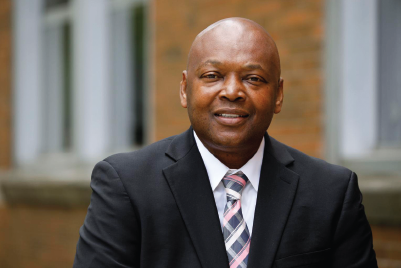
As the Madison Metropolitan School District’s new superintendent of schools, Dr. Carlton D. Jenkins is being counted on to do what few people in his position — here or nationwide — have been able to do, and that’s close a pronounced achievement gap between white students and students of color in a large metropolitan school district.
Judging by the comments of our roundtable panel on Black economic empowerment, Dr. Jenkins will have plenty of support as he tackles this challenge, which presents an opportunity to establish a model for the nation and perhaps change perceptions about Madison and Wisconsin as not particularly good places for African Americans and Latinos to live and work and even learn.
According to an oft-cited 2016 report by Stanford University and the New York Times, Madison’s achievement gap between white students and Black and Latino students is one of the largest in the nation. The analysis said white students here were 1.9 grade levels ahead of the national average, while Black and Latino students were 2.4 and 1.7 grades behind the average, respectively.
Madison certainly isn’t alone. According to the Wisconsin Department of Public Instruction, students in the state’s five largest school districts who identified as Black or Latino performed more poorly as a group in reading and math than students who identified as white on the 2017–18 Wisconsin Forward Exam.
Since K–12 education is basically the starting point for workforce development, the business community has a stake in the success of Jenkins’ tenure. His first year at the helm starts amid a pandemic, which has altered the normal school schedule and will create special challenges for his new administration, but our panelists clearly have high hopes for him and plenty of well-meaning advice for closing the stubbornly persistent racial achievement gap in Madison’s public schools.
Friendly advice
The “advice” portion of the roundtable discussion began with moderator Henry Sanders, publisher and CEO of Madison365 and CEO of 365Nation, expressing the belief that as the K–12 school system goes, so goes Madison. “Our kids do not do well in our K–12 system,” he states. “We do awful, abysmal.”
Jenkins, as a graduate of the University of Wisconsin–Madison, where he earned a Ph.D. in philosophy and a Master of Science in educational administration, and as a former associate principal at Madison Memorial High School, has strong Madison ties. More recently, he served as the superintendent of the Robbinsdale School District in New Hope, Minnesota, a suburb of Minneapolis. His career also has taken him to the Atlanta Public School System in Atlanta, Georgia, where he served as chief academic officer, and the Saginaw Public Schools in Saginaw, Michigan, where he was superintendent of schools. He has also served as an associate principal and principal with the Beloit Public School District.
In addition to earning advanced degrees at UW–Madison, Jenkins holds a Bachelor of Science in health and physical education from Mississippi Valley State University.
Dr. Ruben Anthony, president and CEO of the Urban League of Greater Madison, believes those professional experiences, as well as Jenkins’ own life experiences, should serve him well. “I would agree that first, you have to have the right person at the helm of the school system, someone who has turned around a school system that has been in this situation, and we have that in Dr. Jenkins,” Anthony says. “But also, what we have in Dr. Jenkins is someone who hasn’t been brought up with a silver spoon in his mouth. One of the things that he said, when we did the welcome for him coming into town, he said that when I see those brown and Black kids, I see myself, and so he’s looking at those kids with high expectations, and a lot of times teachers and administrators look at our Black and brown kids with low expectations, and that has caused a lot of the disturbance that we see.
“It is projected, and kids feel that they can’t learn because the teachers have that projection,” Anthony adds. “Now, there are some good teachers out there, and so I think that we have to have, just like we talked about in corporate America, we have to have accountability no matter who is sitting at the helm. And that we have to say that it’s unacceptable for our kids not to be put in that position to learn. We have to see progress.”
According to Anthony, the other thing that we have to make sure of is that Madison schools have the correct cultural sensitivity “and that we have educators that can connect with our schools and educators that are dedicated to teaching everybody that comes through the door,” he states. “In this case, we can’t leave any student behind, and we have to make sure we are bringing the resources there.”
Anthony also urged Jenkins to effectively use community resources because sometimes, school systems don’t integrate the services that Madison has. He cited 100 Black Men of Madison Inc., the Urban League of Greater Madison, and other organizations that can help the school community navigate some cultural barriers and other obstacles that can impact students of color.
“The disparity gaps that we’ve seen here are some of the worst in the nation,” he notes, “and we have to demand that no matter who is sitting at the helm, that we make progress with our children.”
Social infrastructure
Some believe different educational models, including models of interaction between teachers and students — and between the students themselves — are needed for today’s realities. Camille Carter, president and CEO of the Madison Black Chamber of Commerce, wants Jenkins to consider a method of education that has been tried in the past, one that she firmly believes benefited her own family.
Money is not necessarily the solution, Carter states, and she amplified on a point she made about infrastructure throughout the roundtable discussion. That’s not a reference to roads and bridges, but the social infrastructure and sense of community she feels is necessary to make schools work for everyone. “When you look at the infrastructure from a micro level, I’m often reminded of something that was successful for my daughter and many of her peers that was really focused around the concept of community,” Carter explains, “and again, wherever you can artificially restructure the infrastructure to actually build and support communities and strengthen that sense of social infrastructure, then you really have something.
“Our kids don’t respond to all of the, to the glossiness of the schools and the books,” she adds. “They do, but even more so, we really need to build relationships with our children, and the beauty of that is in the community building. And for many, many years, I advocated for a concept called the “open classroom” and I’ve shared that philosophy time and time again with the school district. It was a very inexpensive pedagogy within the schools that worked. It worked because you had the artificial community that had been designed at the teacher level, where you have a K–5 infrastructure, which I think is really fundamental in developing children and making sure that they are on the right path.”
Bias removal
Cedric Ellis, executive vice president and chief enterprise services officer for CUNA Mutual Group, was glad to learn about Dr. Jenkins and read about his career. His advice for Jenkins is to insist on excellence across the school system, and that means removing any bias that exists within educators themselves. “Insisting on excellence in our students, insisting on excellence in our teachers, and that means weeding out teachers who afflict our kids with their bias,” Ellis states.
Kimila Daniels, vice president and chief administrative officer for Quartz Health Solutions, wants Jenkins to focus on accountability and to understand that he’s not alone. “He appears to be the right person for the job because he needs to be able to gather the facts, have the right people at the table to give him the information or data he needs, and then he needs to develop a plan and follow it and be relentless with holding people accountable.
“The only other advice I would give that hasn’t been given here is for him to reach out. There are other Black leaders in the community that are here for him to support him.”
Presented by:



Click here to sign up for the free IB Ezine — your twice-weekly resource for local business news, analysis, voices, and the names you need to know. If you are not already a subscriber to In Business magazine, be sure to sign up for our monthly print edition here.

