
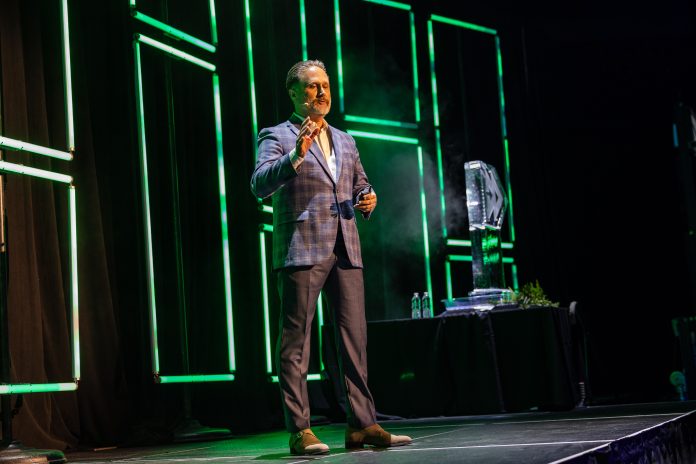

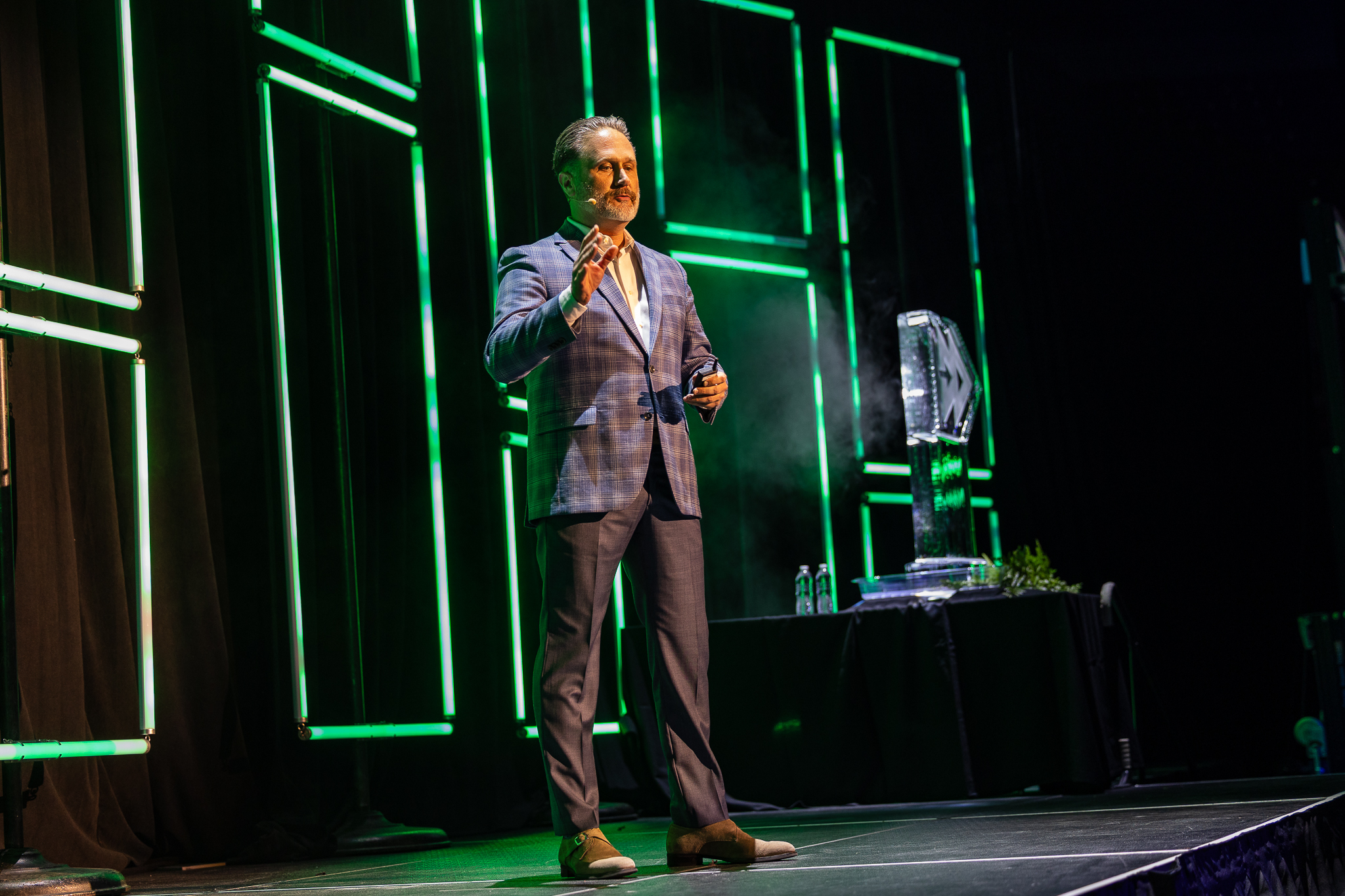
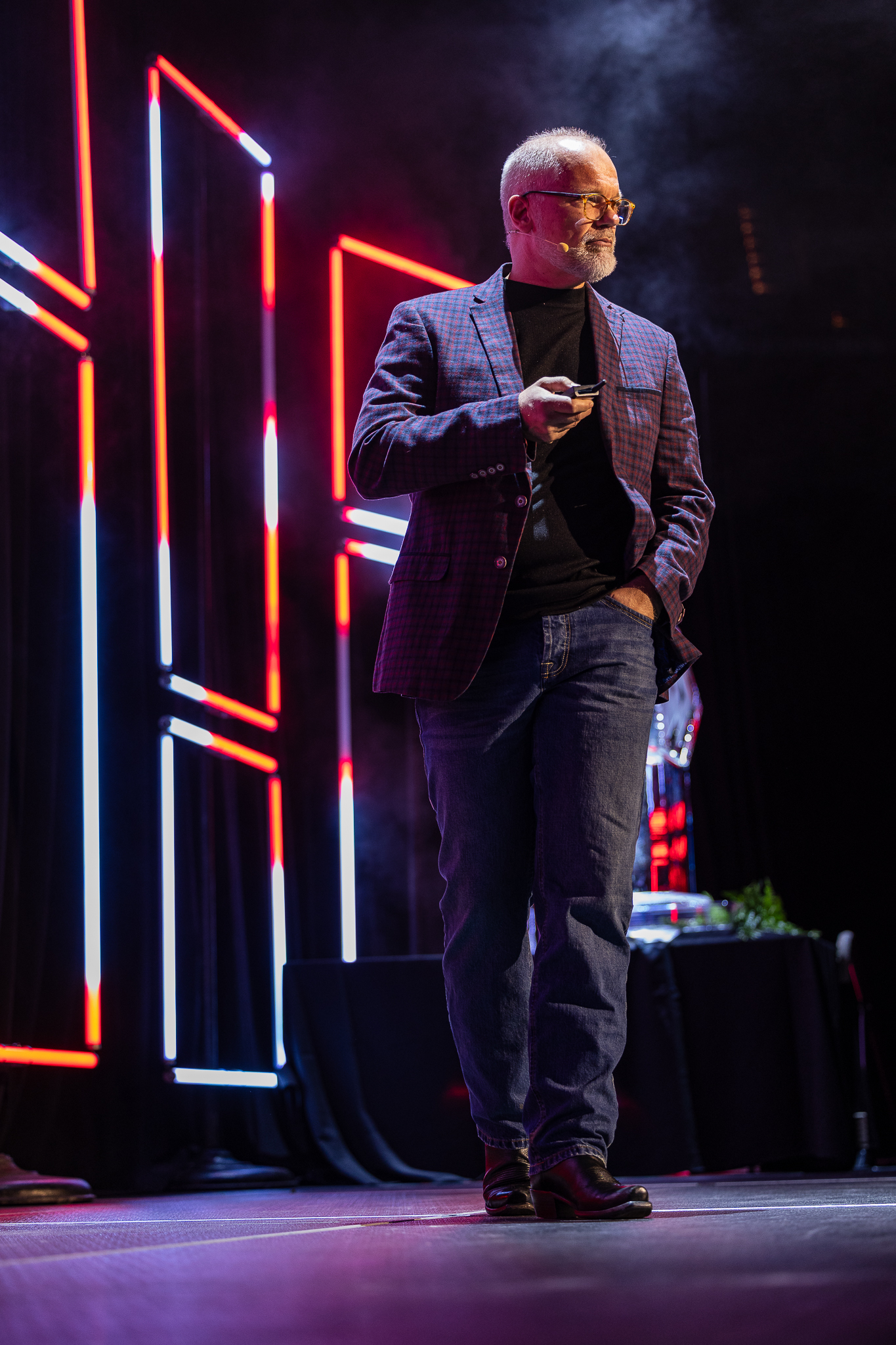
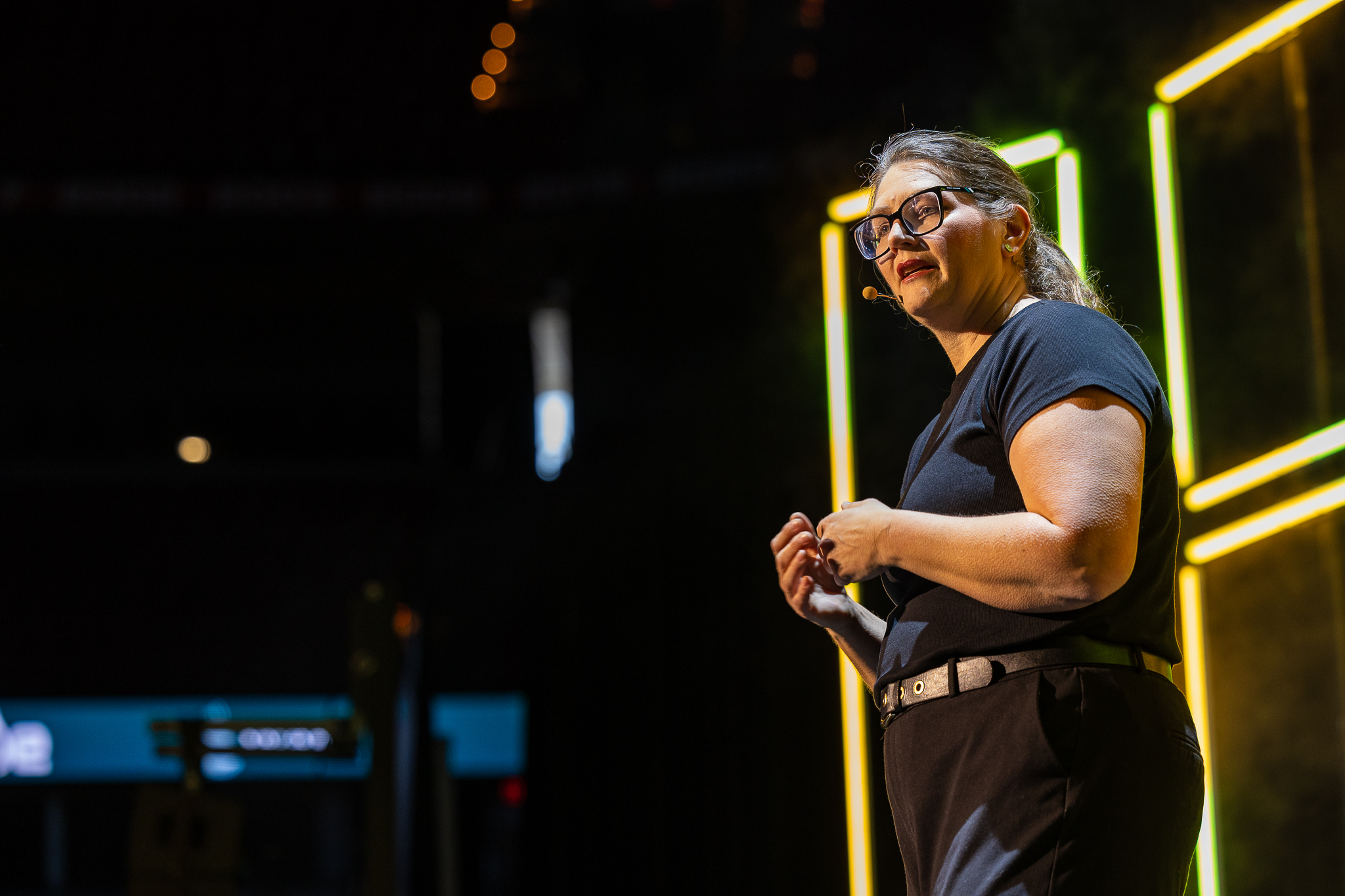
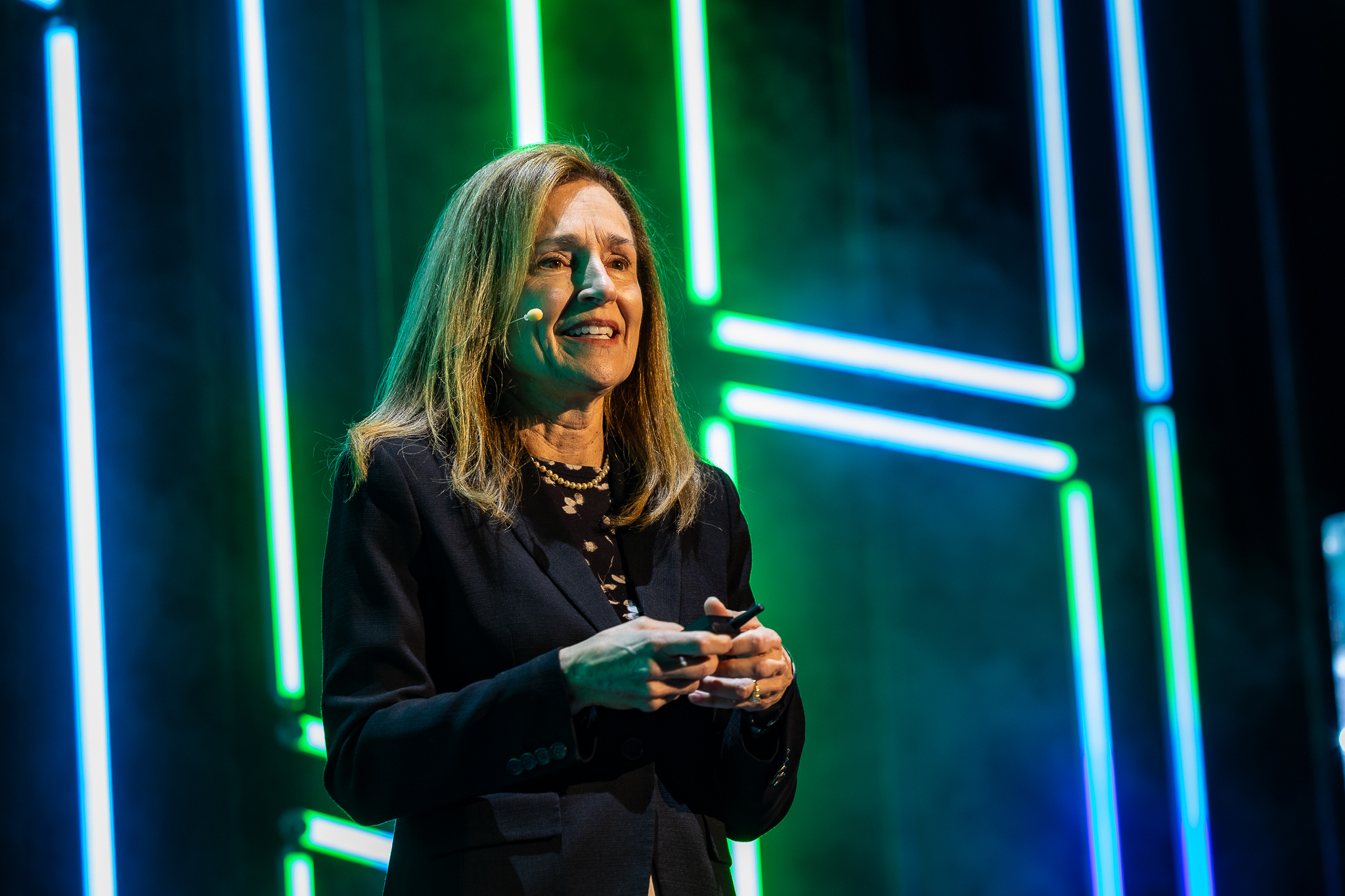
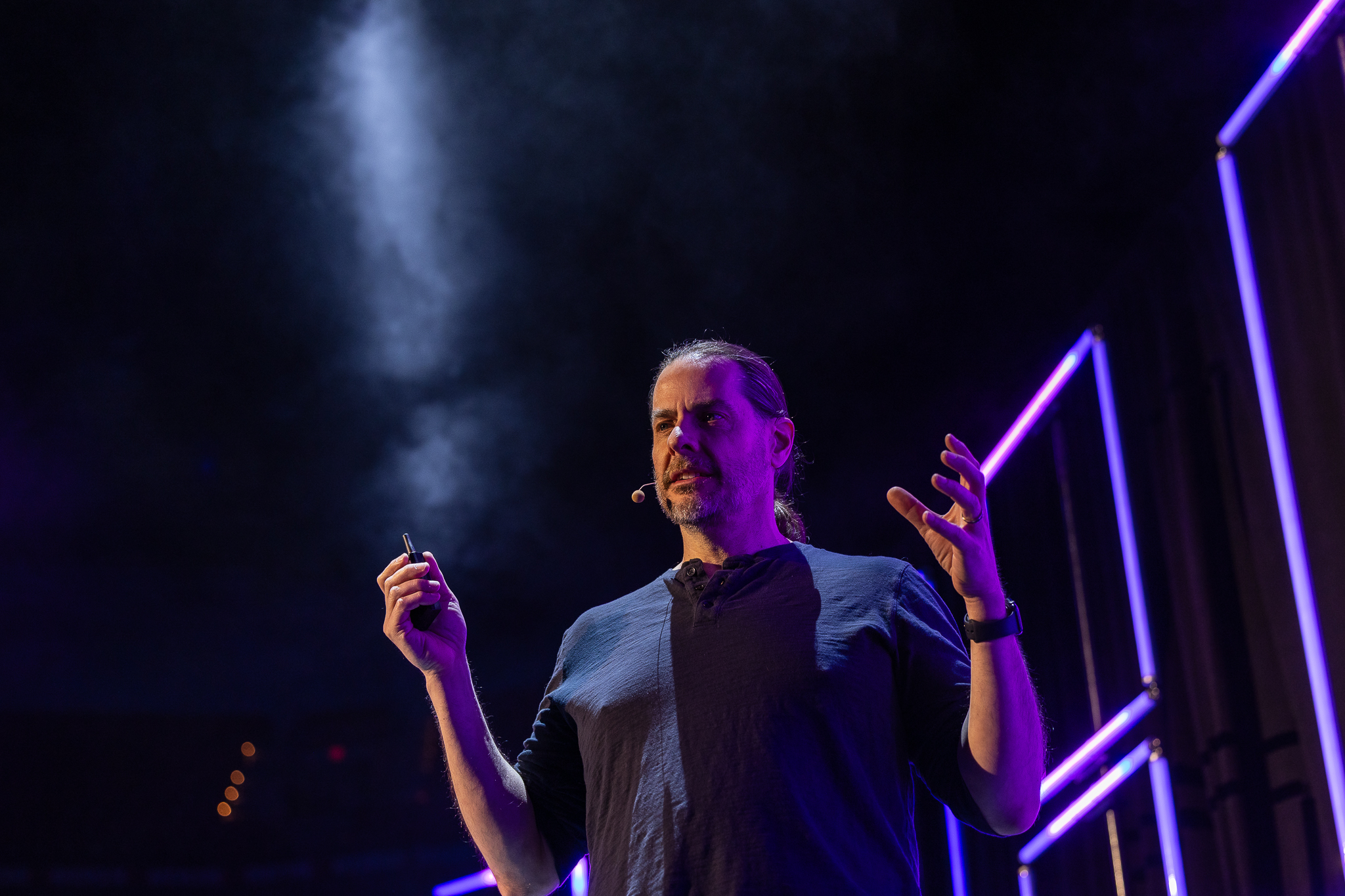
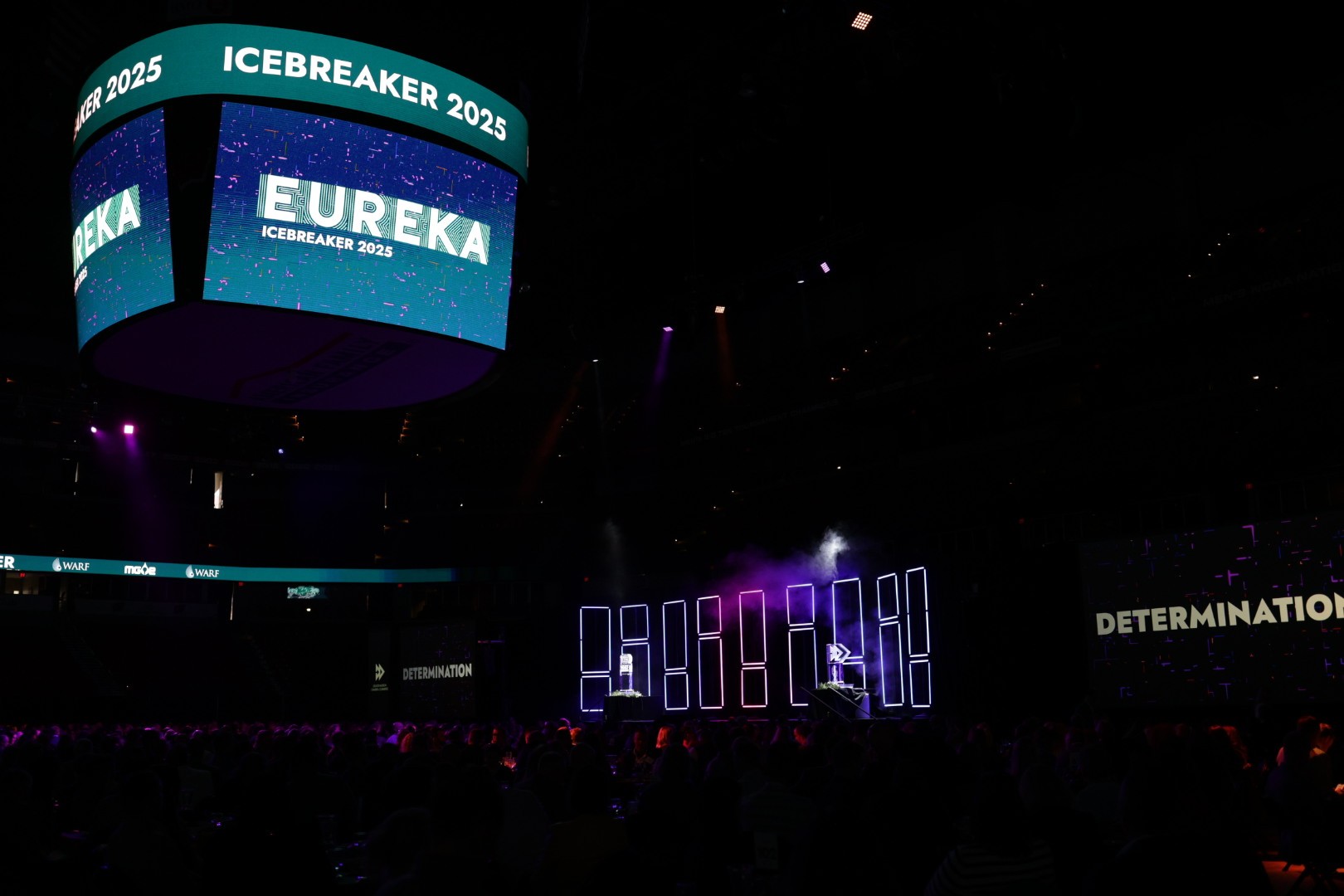
The Greater Madison Chamber of Commerce held its 11th annual IceBreaker event Wednesday at the Kohl Center with over 800 attendees and layer upon layer of “aha” moments. The sold out gathering thematically explored “eureka,” and the concept that great discoveries are the result not only of ingenuity, but of persistent, collaborative efforts.
The event was emceed by Opal Ellyse Tomashevska, director of multicultural business strategy at TruStage and a poet, bestselling author and podcast host.
The program kicked off with words from Erik Iverson, CEO of the Wisconsin Alumni Research Foundation, which is celebrating 100 years of supporting University of Wisconsin-Madison research and ventures that solve global challenges.
“Over our lifetime, we have granted the university over $4.5 billion to support the research and discoveries going on in Madison,” he said. “At WARF, eureka happens 400 times every year.
“Every discovery holds the promise of being a solution to a problem whether to our state, our nation or our globe.”
Zach Brandon, president of the chamber, emphasized Greater Madison’s population growth as a critical factor in sustaining Wisconsin’s population and progress, noting that great strides have been made in attracting talent to the region. The number of residents has accelerated due to an influx of Gen Zers — now outranking Atlanta, Nashville and Austin in that arena — and a spike in international immigration that surpasses births and those who have moved domestically.
“There is no region of the world that is not currently represented in Greater Madison, and that’s something to celebrate,” Brandon said, stressing that diverse voices are crucial to advancements and innovation.
Greater Madison’s greatest draws are the area’s “quality of life, relative affordability, opportunities for research, education and safety,” he said.
According to Brandon, by 2050, the population of Dane County is set to reach 1 million, and that growth will be important because statewide population growth is expected to slow over the coming decades. Regional growth under 13%, he said, will be unable to counteract downward trends statewide. Brandon highlighted the Chamber’s recently launched talent recruitment resource, the Madison Pitch, as a means to bolster population growth and fuel future prosperity.
Butter breakthroughs
The IceBreaker’s main program centered on the stories of three entrepreneurs from the region, each detailing an individual journey and interpersonal connections that spurred their “eureka” moments.
Anna Landmark gave attendees a taste of her own experience, presenting three samples of butter from her award-winning namesake business. Her tale began with Swiss heritage and eight generations of dairy farming that ended with her grandfather.
She detailed a passion for cheesemaking, extensive training through the Center for Dairy Research, years of experimentation and collaboration with mentors and fellow entrepreneurs that ultimately led to the establishment of Landmark Creamery in 2013.
Landmark noted that dairy farmers’ role as entrepreneurs is sometimes overlooked but praised “the support that we get from all levels — from the government, from the industry, from the university. They’re all working really closely together and supporting businesses of all different sizes.”
One “aha” milestone for Landmark was establishing a partnership with Nic Mink, founder of Paoli’s Seven Acre Dairy Co. That collaboration persists to this day.
“Nic had this vision for renovating this factory into an inn and restaurant,” said Landmark. “And key to that vision was some sort of dairy production. … Everything kind of clicked into place.”
Landmark is also celebrating recent wins as well as a result of her continuous innovation.
“The butter you’re tasting — the cinnamon maple — was awarded first place for all flavored butters at the U.S. Cheese Championship just last month. You are tasting the best flavored butter in the United States.”
Family ties
Suzanne Winter’s career “eureka” moment was also driven by personal experience — but for her and her family, the discovery was cause for concern rather than celebration. Amid a career working to defeat cancer, she and multiple family members sharing a genetic mutation were diagnosed with the disease.
Now, as the CEO of Accuray — which moved its headquarters from Sunnyvale, California, to Madison in 2023 — Winter uses innovative radiation technologies like TomoTherapy, originally developed by UW-Madison professor Thomas Rockwell Mackie, to improve patient outcomes.
Accuray’s progress toward a cure for cancer, “really all started here in Madison. It started at UW. It started as a result of the incubation and funding from WARF … (with) truly groundbreaking innovation.”
She said the rise of AI has also enhanced predictive modeling that can help focus radiation on tumors rather than healthy tissue. Her work through Accuray continues to spur innovation, expand patients’ access to care and connect the global community in radiation medicine.
While Winter acknowledged the burden that cancer diagnosis and treatment places on patients, she said she views her own experience as a gift: With over 1,000 systems in more than 60 countries, Accuray is positioned to reduce this burden for others across the globe.
“No one wants to be part of this club, but certainly I think it gave me insight into what we can do now as a company using this experience,” she said.
Neutron dance
Rounding out the program was Greg Piefer, founder and CEO of Janesville-based SHINE Technologies, which develops fusion technologies.
“We sit at a moment of unprecedented technological change,” he said, contending that access to energy will be a key global challenge in the coming decades. “We need new energy sources, or conflict is inevitable.”
Piefer’s childhood fascination with “Star Trek” was the inspiration behind his philosophy that technology can and should bear solutions for global problems. He believes nuclear fusion may reshape the economy as an inexhaustible source of energy.
Fusion comes with a unique set of obstacles, however, as a highly expensive technology that has consequently proven difficult to commercialize. Piefer’s “eureka” moment came when he realized that markets existed for the neutrons produced by nuclear fusion. His discoveries, like Winter’s, turned out to have an application in health care as well, driving advancements in radiography.
“There are radioactive isotopes that can attach to a (cancer-fighting) drug, and they emit radiation that travels less than one millimeter in the human body, so you can actually ‘smart-bomb’ all of these targets,” Piefer said. “Through these therapies, we’re seeing massive improvements to cancer patients.”
The ability to sell his product in applicable markets is helping sustain Piefer’s work to further develop and improve fusion technologies until they become a more cost-effective and scalable energy source. He said fusion has already seen a nearly 1,000-fold reduction in cost, and while it needs much more, the cheaper it gets, the more potential it has to meet the world’s energy needs.
Editor’s note: A previous version of this story has been updated to correct the quote attributed to WARF CEO Erik Iverson.

